



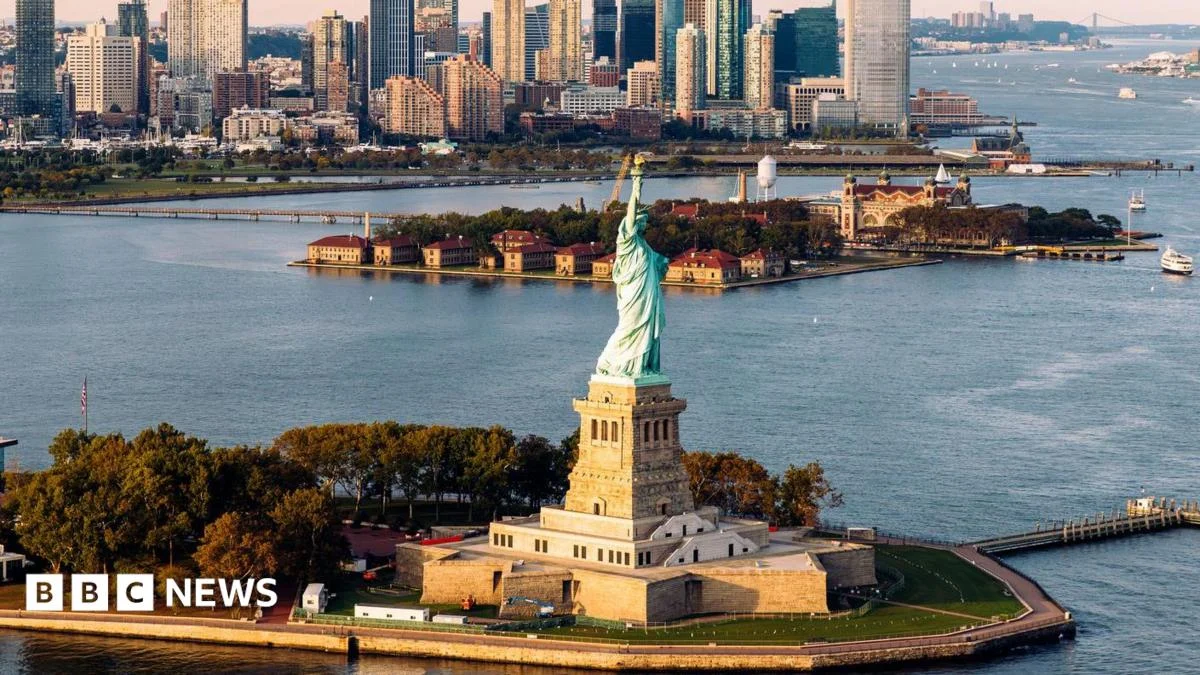
The operator of a boat that tragically capsized near the Statue of Liberty, resulting in the deaths of a young woman and an infant, has been arrested and charged with multiple counts of reckless endangerment, New York police announced. The incident, which unfolded in the waters of New York Harbor on a Saturday night, triggered a massive multi-agency search and rescue operation and has since ignited intense scrutiny into maritime safety regulations and the prevalence of illegal charter operations in the city’s bustling waterways.
A Tragic Evening on New York Harbor
The serene backdrop of the iconic Statue of Liberty was shattered by chaos on a recent Saturday evening when a pleasure craft carrying more than a dozen individuals suddenly overturned. The alarm was first raised at approximately 10:25 PM local time (03:25 BST) when a distressed 911 call reported a capsized vessel near Liberty Island, a location frequented by tourists and recreational boaters alike. The initial moments of the crisis saw immediate and heroic action from a nearby "Good Samaritan" vessel, which swiftly moved to the scene and managed to pull 12 people from the frigid waters before official rescue teams could arrive. This rapid response was crucial in preventing further casualties, underscoring the critical role of civilian assistance in maritime emergencies.
However, the initial relief was quickly overshadowed by the grim realization that not everyone on board had been accounted for. As the full scale of the disaster became apparent, a vast search and rescue effort was initiated, mobilizing an impressive array of resources from various emergency services. The United States Coast Guard (USCG) deployed two of its specialized boats, while the New York City Fire Department (FDNY) dispatched four fireboats. The New York Police Department (NYPD) contributed two police boats and a police helicopter, their powerful searchlights cutting through the night to scan the dark waters. This coordinated response, involving federal, state, and city agencies, highlighted the inherent dangers and complexities of maritime rescues, particularly under challenging nighttime conditions.
Intensive Search and Grim Discovery
The search intensified as rescue teams worked methodically to locate the missing passengers amidst the debris and turbulent currents. Divers from the NYPD’s elite Harbor Unit were deployed into the dark, cold waters, facing limited visibility and the immense pressure of time. Their arduous efforts culminated in a tragic discovery: the bodies of a 27-year-old woman and a five-month-old infant girl. Both victims were immediately transported to a nearby hospital, where medical personnel made valiant attempts to revive them, but sadly, they were pronounced dead. The names of the deceased, in accordance with official policy pending family notification, have not yet been publicly released, adding to the somber veil of privacy surrounding the victims’ families. The devastating loss of a young mother and her baby sent shockwaves through the community, casting a pall over the usually vibrant New York Harbor.
The survivors of the incident, numbering twelve, were also taken ashore and assessed by emergency medical services. The USCG reported that all survivors were in stable condition, a testament to the swift rescue efforts and the resilience of those who endured the harrowing experience. However, the psychological impact of witnessing such a tragedy and experiencing the terror of being submerged in the harbor’s waters will undoubtedly be profound and long-lasting.
Operator Charged with Reckless Endangerment
In the aftermath of the tragedy, law enforcement officials swiftly turned their attention to the circumstances leading to the capsizing. The operator of the ill-fated vessel, identified as a 46-year-old resident of Manhattan, was subsequently arrested. He faces 13 counts of reckless endangerment, a serious charge under New York State law that alleges he created a substantial risk of serious physical injury or death to others. The number of counts likely reflects the number of individuals whose lives were put at risk, including the twelve survivors and potentially the two deceased.
Reckless endangerment charges typically arise when an individual’s actions demonstrate a conscious disregard for a substantial and unjustifiable risk, leading to the potential for severe harm. In this context, investigators will be examining all factors related to the boat’s operation, including speed, navigation, passenger load, the vessel’s condition, and the operator’s conduct leading up to and during the incident. Legal experts suggest that a conviction on such charges could carry significant penalties, including imprisonment, reflecting the gravity of putting so many lives at risk. The operator is expected to be arraigned in court, where bail conditions will be set, and a legal process will begin to determine culpability and justice for the victims.
Probing the Allegation of an Illegal Charter
A critical aspect of the ongoing investigation, spearheaded by the USCG, is determining whether the boat was operating as an illegal charter. This inquiry holds significant implications for maritime safety and public trust. An "illegal charter" is defined by the USCG as any passenger-for-hire vessel operation that lacks the mandatory credentials, proper safety equipment, and a valid certificate of inspection. These regulations are not mere bureaucratic hurdles; they are fundamental safeguards designed to protect passengers.
Legitimate commercial charter vessels undergo rigorous inspections to ensure structural integrity, proper maintenance, adequate life-saving equipment (such as life jackets for every passenger, flares, and communication devices), and fire suppression systems. Operators of these vessels must also possess specific licenses, demonstrating their competency, knowledge of maritime rules, and ability to handle emergencies. Illegal charters, by contrast, often circumvent these vital requirements, posing inherent and often unseen dangers to unsuspecting passengers. They may be operated by unqualified individuals, be poorly maintained, lack sufficient safety gear, or operate without proper insurance, leaving victims with little recourse in the event of an accident.
The USCG has long warned the public about the perils of illegal charters, particularly in popular tourist destinations like New York Harbor, where demand for water excursions is high. The potential for operators to cut corners on safety for financial gain creates a perilous environment. This incident serves as a stark reminder of the USCG’s commitment to enforcing maritime law and protecting the public from these illicit operations. Penalties for operating an illegal charter can include substantial fines, civil penalties, and even criminal charges, along with the seizure of the vessel.
The Complexities of a Multi-Agency Rescue
The rescue operation itself was a testament to the professionalism and dedication of New York’s emergency services. The collaboration between the USCG, NYPD, and FDNY was seamless, reflecting extensive training and preparedness for such critical incidents. Captain Doreen McCarthy of the USCG commended these efforts, stating, "We are extremely grateful for the heroic, swift actions of our partner agencies and Good Samaritan vessel who assisted in rescuing survivors from the water."
Nighttime water rescues present unique challenges. Limited visibility complicates search patterns, while cold water temperatures significantly increase the risk of hypothermia for anyone immersed for an extended period. The currents in New York Harbor, influenced by tides and commercial vessel traffic, can also make it difficult to locate and retrieve individuals or debris. Rescuers, often working under immense pressure and in physically demanding conditions, must contend with these factors while simultaneously managing the emotional toll of searching for missing persons. The successful rescue of 12 individuals under these circumstances underscores the effectiveness of the coordinated response and the bravery of all involved.
The Unseen Dangers of New York’s Waterways
New York Harbor is one of the busiest and most complex waterways in the world, serving as a critical artery for commercial shipping, ferries, recreational boating, and tourist excursions. Its waters are teeming with activity, from massive container ships and cruise liners to smaller fishing boats and pleasure craft. This constant flow of traffic, combined with varying water conditions, presents inherent risks that necessitate strict adherence to maritime regulations.
According to USCG statistics, recreational boating accidents remain a significant concern across the nation. While precise figures for New York Harbor specifically may vary annually, common contributing factors to boating accidents nationwide include operator inattention, improper lookout, inexperience, excessive speed, machinery failure, and the influence of alcohol. Overloading a vessel beyond its certified capacity or operating a boat not designed for specific conditions can also lead to catastrophic failures. This incident will undoubtedly prompt a renewed focus on these factors within the context of New York’s waterways. The water temperature in late September/early October in New York Harbor, while not freezing, can still lead to rapid onset of hypothermia, further complicating rescue efforts and increasing the urgency of immediate retrieval from the water.
Broader Implications: Safety, Regulation, and Public Trust
The tragic capsizing near the Statue of Liberty carries significant broader implications for maritime safety and regulatory oversight in New York City. The incident is likely to trigger a comprehensive review of existing regulations pertaining to recreational and commercial boating in New York Harbor, potentially leading to increased enforcement efforts and public awareness campaigns.
Authorities are expected to intensify their efforts to identify and prosecute illegal charter operators, emphasizing the importance of choosing licensed and inspected vessels for any passenger-for-hire service. This could involve more visible patrols, targeted inspections, and public education initiatives advising consumers on how to verify the legitimacy of charter companies. The public’s trust in the safety of water-based recreational activities, a vital component of New York’s tourism industry, has been shaken, and restoring that confidence will require demonstrable action from regulatory bodies.
Furthermore, the incident underscores the profound responsibility of every boat operator, whether commercial or recreational, to prioritize safety above all else. Adherence to rules of the road, proper maintenance of vessels, ensuring adequate safety equipment is on board, and operating within one’s capabilities are non-negotiable aspects of safe boating. The legal proceedings against the operator will not only seek to hold an individual accountable but also serve as a stark warning to others who might consider disregarding safety protocols.
This tragedy, occurring at such an iconic and symbolic location, amplifies the call for vigilance and robust enforcement. As the investigation continues to unfold, the hope is that lessons learned from this devastating event will lead to tangible improvements in maritime safety, ultimately preventing similar losses of life in the future and ensuring that New York’s beautiful waterways can be enjoyed safely by all.