



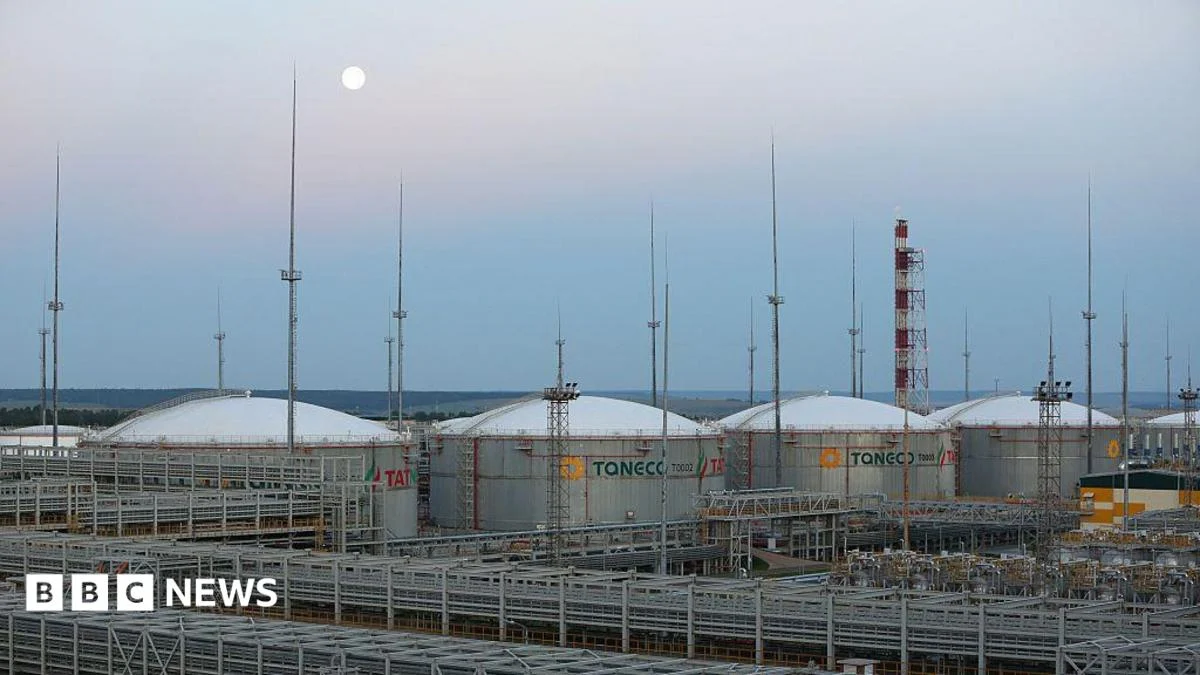
A Ukrainian drone strike on the Russian republic of Tatarstan has resulted in the deaths of at least 13 people, with 75 more injured, according to Russian officials, marking one of the deadliest single attacks on Russian territory since the commencement of Moscow’s full-scale invasion of Ukraine. Among the victims was one child, underscoring the tragic human cost of the escalating conflict now reaching deep into Russian heartland. The city of Nizhnekamsk, located over 1,100 kilometers (680 miles) from the Ukrainian border, was the primary target, demonstrating Kyiv’s increasing capability to conduct long-range operations against critical Russian infrastructure.
The Deepest Strike Yet: Geographical Significance and Target Identification
The considerable distance of Nizhnekamsk from the Ukrainian frontier – exceeding 1,100 kilometers – places this incident among the deepest penetration strikes carried out by Ukrainian forces into Russian territory. This logistical feat highlights a significant evolution in Ukraine’s drone technology and operational planning. Tatarstan, an economically vital republic within the Russian Federation, is a major industrial and oil-producing region, contributing substantially to Russia’s overall economic output and, critically, to its war effort.
Specifically, the Tanevo oil refinery in Nizhnekamsk was confirmed to have been hit by Ukraine’s Armed Forces. This facility is a crucial component of Russia’s energy infrastructure, responsible for refining crude oil into various petroleum products, including gasoline, diesel, and aviation fuel, which are essential for both civilian consumption and military logistics. The attack on such a distant and strategically important target suggests a deliberate strategy by Kyiv to degrade Russia’s capacity to finance and sustain its military operations. Ukrainian defence technology manufacturer FirePoint stated that its FP-1 drones were utilized in the assault, providing insight into the type of sophisticated unmanned aerial vehicles now being deployed for these long-range missions. These drones are designed for extended flight times and precision targeting, enabling them to bypass multiple layers of Russian air defense systems typically concentrated closer to the border and military installations.
Casualties and Human Toll: A Deepening Tragedy
The reported casualty figures—13 fatalities and 75 injuries, including a child—represent a grim milestone in the conflict’s expansion into Russia. Russian authorities have emphasized the civilian nature of the casualties, with Russia’s Investigative Committee stating that "civilian individuals who were not involved in any military operations were present" at the time of the strikes. While the BBC has not independently verified this specific claim, the declaration by local officials and the Investigative Committee paints a picture of broader impact beyond military-industrial targets. Such casualties inevitably intensify the humanitarian discourse surrounding the conflict and the rules of engagement in modern warfare. The head of Tatarstan, Rustam Minnikhanov, confirmed the strike and extended his condolences to the families of the deceased, while Nizhnekamsk mayor Radmir Belayev expressed profound grief, stating, "This is a tremendous pain for all of us." A period of mourning has since been declared in Tatarstan, underscoring the severity of the emotional and social impact on the local populace.
Chronology of Attacks and Escalation
The strike on Nizhnekamsk was not an isolated incident. Local sources indicate the assault lasted for several hours overnight and into the morning. Moreover, oil refineries in Nizhnekamsk had already been targeted on June 12, suggesting a pattern of repeated attempts to disrupt these vital facilities. This earlier strike, while perhaps less severe in its immediate human toll, laid the groundwork for the more devastating attack, indicating a persistent Ukrainian focus on this strategic region.
This recent incident fits into a broader timeline of increasingly sophisticated and deep-reaching Ukrainian drone operations. Over the past year, Ukraine has significantly ramped up its long-range drone attacks on Russian territory, primarily targeting energy infrastructure, military depots, and logistics hubs. These attacks have often included facilities hundreds of kilometers from the front lines, such as oil depots in the Leningrad region, metallurgical plants in Lipetsk, and various industrial sites across western Russia. Each successive strike has demonstrated an improvement in drone capabilities, flight range, and target precision, posing a significant challenge to Russia’s extensive but geographically dispersed air defense network.
Strategic Rationale: Targeting Russia’s War Economy
Kyiv’s rationale for these deep strikes is explicit and consistent: to target facilities that contribute revenue and logistics to Russia’s war on Ukraine. Andriy Kovalenko, head of Ukraine’s Centre for Countering Disinformation, articulated this strategy, stating, "The facilities Ukraine targets are used to carry out attacks against Ukraine, manufacture weapons, support Russia’s war effort." By striking oil refineries, Ukraine aims to reduce Russia’s capacity to produce refined petroleum products, which are crucial for its military vehicles, aircraft, and logistics chains. This strategy also seeks to diminish Russia’s export revenues from oil and gas, which form the bedrock of its federal budget and its ability to finance the ongoing conflict.
The economic impact of these strikes is multi-faceted. Disruptions to refinery operations can lead to increased domestic fuel prices within Russia, creating internal economic pressure and potentially eroding public support for the war. Furthermore, repeated damage to refining capacity can force Russia to reroute its crude oil exports or rely more heavily on crude oil sales rather than higher-value refined products, potentially reducing overall profits. Energy sector analysts estimate that Ukrainian drone attacks have, at various points, impacted a significant percentage of Russia’s primary oil refining capacity, forcing temporary shutdowns and repairs that incur substantial costs and delays.
Official Responses and Blame Attribution
The official responses from both sides highlight the deeply entrenched narratives of the conflict. Moscow confirmed that industrial facilities were targeted but vehemently stressed that residential areas were also struck, leading to civilian casualties. The Russian Investigative Committee has initiated a criminal investigation into the strike, characterizing it as an act of terrorism and emphasizing the presence of non-military personnel among the victims. This narrative aims to galvanize domestic support by portraying Ukraine as indiscriminately targeting civilians and to elicit international condemnation.
Conversely, Ukraine’s Kovalenko directly attributed any civilian deaths in Russia to President Vladimir Putin and the decisions made within Russia itself. "Every civilian death in Russia is on [President Vladimir] Putin," Kovalenko asserted, adding that "Russians should direct their grievances at Putin and at the decisions made within their own country. Without Putin, there would have been no aggression. Without the aggression, these people would still be alive." This statement places the onus of the conflict’s human cost squarely on the Russian leadership, reframing civilian casualties on Russian soil as a direct consequence of Russia’s initial aggression against Ukraine. Kyiv’s tacit acknowledgment of the strike on Tanevo, coupled with the manufacturer’s confirmation, reinforces Ukraine’s strategic intent while deflecting blame for civilian harm onto the aggressor state.
Implications for Russia’s Air Defense and Domestic Stability
The success of a deep strike over 1,100 kilometers into Russian territory raises significant questions about the efficacy and deployment of Russia’s air defense systems. Despite Moscow’s claim of shooting down over 450 Ukrainian drones overnight (a figure that likely encompasses numerous smaller, shorter-range drones and may include those targeting other regions), the penetration to Nizhnekamsk indicates a persistent vulnerability. Russian air defenses are extensive but are primarily designed to protect major cities, military bases, and front-line areas. Covering the vast expanse of the country against a growing fleet of long-range, relatively low-cost drones presents an immense challenge. The successful bypass of these defenses by FP-1 drones suggests either gaps in coverage, technological limitations in detection at such ranges, or saturation tactics employed by Ukraine.
Domestically, such strikes, particularly those resulting in civilian casualties, could have a dual impact. On one hand, they might foster a sense of grievance and solidify support for the government’s military actions. On the other, they could slowly erode public confidence in the government’s ability to protect its citizens and territory, especially in regions previously considered far removed from the conflict. The declaration of mourning in Tatarstan indicates a recognition by local authorities of the profound impact on their communities, which could potentially translate into pressure on Moscow to enhance defensive measures or reconsider aspects of its war strategy.
The Broader Drone War: A Shifting Battlefield
The incident in Tatarstan is emblematic of the evolving nature of the Russia-Ukraine conflict, which has increasingly become a war of attrition extending beyond conventional front lines. Both sides are employing drones extensively, not only for reconnaissance and tactical strikes but also for strategic assaults on critical infrastructure. Russia continues its regular large-scale aerial attacks on Ukrainian cities and residential centers, often involving combined drone and missile strikes. Recent examples include an attack on Kyiv that killed 21 people last week and an artillery attack on Kharkiv that killed five people overnight, near the front line.
Ukraine’s response, exemplified by the Tatarstan strike, represents a strategic adaptation to Russia’s overwhelming numerical superiority in traditional military hardware. By leveraging asymmetric drone warfare, Ukraine seeks to inflict economic pain, disrupt logistics, and generate psychological pressure on Russia, forcing it to divert resources from the front lines to homeland defense. This reciprocal targeting of civilian and industrial infrastructure, albeit with differing justifications from each side, signals a dangerous escalation that broadens the scope of the conflict and deepens its human cost, far beyond the initial battlefields. The ability of Ukraine to consistently strike deep into Russia underscores that no part of the belligerent nations remains entirely immune from the conflict’s reach.