
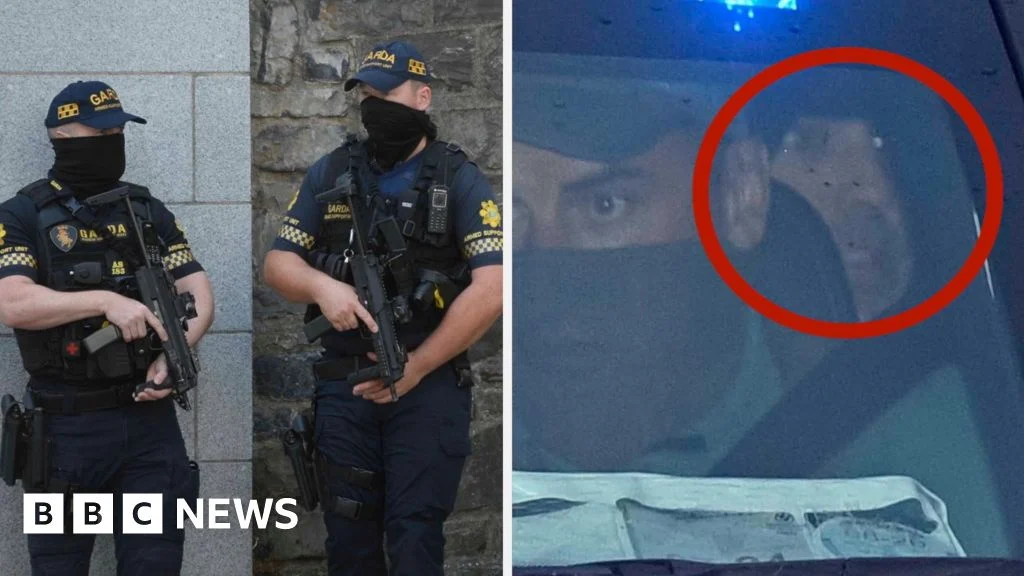
Suspected cartel leader Daniel Kinahan has appeared in front of a special non-jury court in Dublin, marking the dramatic culmination of a decade-long international pursuit following an extradition treaty between Ireland and the United Arab Emirates that brought his extensive period of exile in Dubai to an abrupt end. Kinahan, aged 49, faces serious charges of directing the activities of a criminal organisation between 18 October 2015 and 6 April 2017. He has consistently denied all charges against him, maintaining his innocence despite years of intense scrutiny from law enforcement agencies worldwide. His apprehension and subsequent return to Irish soil represent a significant victory for international law enforcement and a clear message to those who believe they can operate above the law from seemingly untouchable havens. The charges against him relate to his alleged leadership of what has been described as a billion-dollar criminal enterprise, a network with far-reaching tentacles across multiple continents, involved in drug trafficking, arms dealing, and money laundering.
The Rise of a Global Criminal Enterprise
To understand the significance of Daniel Kinahan’s arrest, one must delve into the origins and evolution of the Kinahan Organised Crime Group (KOCG). The cartel, allegedly founded by his father, Christy Kinahan Sr., in the late 1990s and early 2000s, rapidly expanded from its initial base in Dublin to establish a formidable international presence. Under Daniel Kinahan’s alleged direction, the organisation reportedly transitioned into a highly sophisticated, global syndicate, leveraging international connections to facilitate large-scale narcotics shipments, particularly cocaine from South America into Europe, and to launder vast sums of illicit proceeds through complex financial structures and legitimate-looking businesses.
The KOCG’s operations have been linked to an extensive network spanning Europe, the Middle East, Asia, and North America. Intelligence reports and law enforcement investigations suggest the group has established deep ties with other major criminal organisations, facilitating cross-border trafficking and providing a range of illicit services. This expansion saw the Kinahan cartel become one of the most feared and influential criminal entities globally, allegedly generating immense wealth through its illicit activities. Estimates from various intelligence agencies have placed the cartel’s annual revenue in the hundreds of millions, if not billions, of euros, cementing its status as a major player in the global underworld.
A Decade in Exile: The Dubai Years
For nearly a decade, Daniel Kinahan resided openly in Dubai, seemingly beyond the reach of European law enforcement. Despite Interpol Red Notices and mounting international pressure, the UAE had, until recently, proven to be a challenging jurisdiction for extradition requests. From his base in the Emirates, Kinahan allegedly continued to direct the cartel’s operations, leveraging the country’s status as a global business hub. His public profile, particularly his involvement in professional boxing as an advisor and promoter, further complicated efforts to portray him solely as a criminal figure. He co-founded MTK Global, a boxing management company, which later ceased operations in the face of intense scrutiny following US sanctions. This dual identity allowed him to project an image of legitimacy while allegedly orchestrating a vast criminal empire from a distance.
However, the tide began to turn in recent years. International cooperation intensified, driven by a shared understanding of the transnational nature of organised crime. The United States, in particular, stepped up its efforts. In April 2022, the U.S. Department of the Treasury’s Office of Foreign Assets Control (OFAC) designated Daniel Kinahan, along with his father Christy Kinahan Sr., and brother Christy Kinahan Jr., and several associated businesses, as significant foreign narcotics traffickers under the Kingpin Act. This move effectively froze any assets they held in the U.S. and prohibited U.S. persons from engaging in transactions with them. Furthermore, the U.S. government offered a reward of up to $5 million for information leading to the arrest or conviction of each of the three Kinahans. This unprecedented pressure, coupled with concerted diplomatic efforts from Ireland and other European nations, significantly altered the landscape.
The Extradition Breakthrough: A Diplomatic Triumph
The eventual extradition of Daniel Kinahan can be attributed to a confluence of persistent international diplomatic pressure, enhanced intelligence sharing, and, critically, the finalisation of an extradition treaty between Ireland and the UAE. For years, the absence of such a treaty had been a major impediment, allowing individuals like Kinahan to evade justice by exploiting jurisdictional gaps. The signing and ratification of this treaty marked a fundamental shift, providing the legal framework necessary for cooperation on criminal matters.
The process involved extensive collaboration between An Garda Síochána (Ireland’s national police force), the Police Service of Northern Ireland (PSNI), the UK’s National Crime Agency (NCA), the U.S. Drug Enforcement Administration (DEA), Europol, and UAE authorities. This multi-agency effort, coordinated at the highest levels, demonstrated a unified international resolve to dismantle major criminal networks. The UAE’s decision to cooperate fully, following years of being perceived as a sanctuary for wanted individuals, signals a significant policy shift and a commitment to combating global financial crime and money laundering. This cooperation included the freezing of significant assets linked to the Kinahan cartel within the UAE, a crucial step in disrupting their financial infrastructure.
A Chronology of Key Events
- Late 1990s – Early 2000s: Emergence of the Kinahan Organised Crime Group, allegedly founded by Christy Kinahan Sr., initially focused on drug trafficking in Ireland.
- Mid-2000s: The group expands its operations internationally, establishing a foothold in Spain’s Costa del Sol, a notorious hub for organised crime.
- 2010 onwards: Daniel Kinahan allegedly assumes a more prominent leadership role, overseeing the cartel’s expansion into major international drug routes and complex money laundering schemes. He relocates to Dubai.
- October 2015 – April 2017: The period for which Daniel Kinahan is specifically charged with directing the activities of a criminal organisation in Ireland. This period saw intense feuding with rival criminal gangs, particularly the Hutch gang, resulting in numerous fatalities.
- February 2016: The Regency Hotel shooting in Dublin, a pivotal event in the Kinahan-Hutch feud, which drew unprecedented public and media attention to the cartel’s activities and led to intensified Garda investigations.
- 2017 onwards: Increased pressure from Irish and European law enforcement, leading to significant arrests and seizures related to the KOCG, but Daniel Kinahan remains in Dubai.
- April 2022: The U.S. Department of the Treasury designates the Kinahan family and associates under the Kingpin Act, offering multi-million dollar rewards for information. This marked a turning point in international pressure.
- Mid-2022 onwards: Heightened diplomatic engagement between Ireland, the UK, the U.S., and the UAE, focusing on extradition treaties and enhanced law enforcement cooperation.
- Recent Weeks/Months: Under the new extradition framework, formal requests are processed, leading to the arrest of Daniel Kinahan and his subsequent transfer to Irish custody.
- Present Day: Daniel Kinahan appears before the Special Criminal Court in Dublin, charged with directing a criminal organisation.
The Charges and the Legal Road Ahead
Daniel Kinahan’s appearance before the Special Criminal Court underscores the gravity and complexity of the charges against him. The court, established to deal with terrorism and organised crime cases where the ordinary courts might be inadequate due to witness intimidation or other factors, operates without a jury. This structure is intended to safeguard the integrity of the justice system in high-risk cases. The specific charge of "directing the activities of a criminal organisation" carries significant penalties under Irish law and reflects the alleged hierarchical nature of the KOCG, placing Kinahan at its apex.
While Kinahan has maintained his innocence, the prosecution faces the formidable task of presenting evidence gathered over years of international investigation. This will likely involve extensive intelligence, financial forensics, witness testimony, and data analysis from multiple jurisdictions. The legal proceedings are expected to be protracted, given the international scope of the alleged crimes and the anticipated robust defence. The outcome will not only determine Kinahan’s personal fate but also set a significant precedent for how international organised crime figures can be brought to justice.
Official Reactions and Broader Implications
The news of Kinahan’s extradition has been met with widespread commendation from law enforcement and political figures. An Garda Síochána Commissioner, Drew Harris, is expected to highlight the long-term, painstaking work involved in bringing this case to fruition, emphasising the unwavering commitment to tackling organised crime at its highest levels. Similarly, the Irish Minister for Justice will likely praise the unprecedented level of international cooperation, particularly with the UAE, as a testament to the effectiveness of global alliances in combating serious criminality.
From an international perspective, U.S. officials and representatives from Europol and the NCA will undoubtedly view this as a landmark success, validating their coordinated strategy of sanctions, intelligence sharing, and diplomatic pressure. It sends an unequivocal message to other high-ranking criminal figures who believe they can operate with impunity from foreign shores: there are no longer truly safe havens.
The broader implications of this extradition are far-reaching:
- Disruption of Organised Crime: The removal of a key alleged leader like Daniel Kinahan can cause significant disruption to the Kinahan cartel’s operations, potentially leading to power vacuums, internal strife, and a re-evaluation of its strategies.
- Strengthened International Cooperation: This case sets a powerful precedent for future extraditions, demonstrating that persistent international collaboration can overcome complex legal and diplomatic hurdles. It will likely encourage further tightening of anti-money laundering and anti-crime measures in jurisdictions previously seen as lax.
- Enhanced Deterrence: The successful extradition acts as a strong deterrent to other criminal leaders, signaling that the global net is tightening and that long-term exile is no guarantee of immunity.
- Justice for Victims: For the communities and families impacted by the Kinahan cartel’s violence and drug trade, this development offers a glimmer of hope for accountability and justice, reinforcing public trust in the rule of law.
- Financial Disruption: The ongoing efforts to trace and seize assets linked to the Kinahan cartel will continue, aiming to cripple their financial infrastructure and prevent the proceeds of crime from being reinvested.
Daniel Kinahan’s appearance in a Dublin court is more than just another criminal prosecution; it is a profound testament to the relentless efforts of law enforcement agencies across continents and a powerful symbol of the international community’s resolve to dismantle sophisticated criminal enterprises, wherever they seek refuge. The journey from Dubai to Dublin represents a pivotal moment in the ongoing battle against transnational organised crime.