

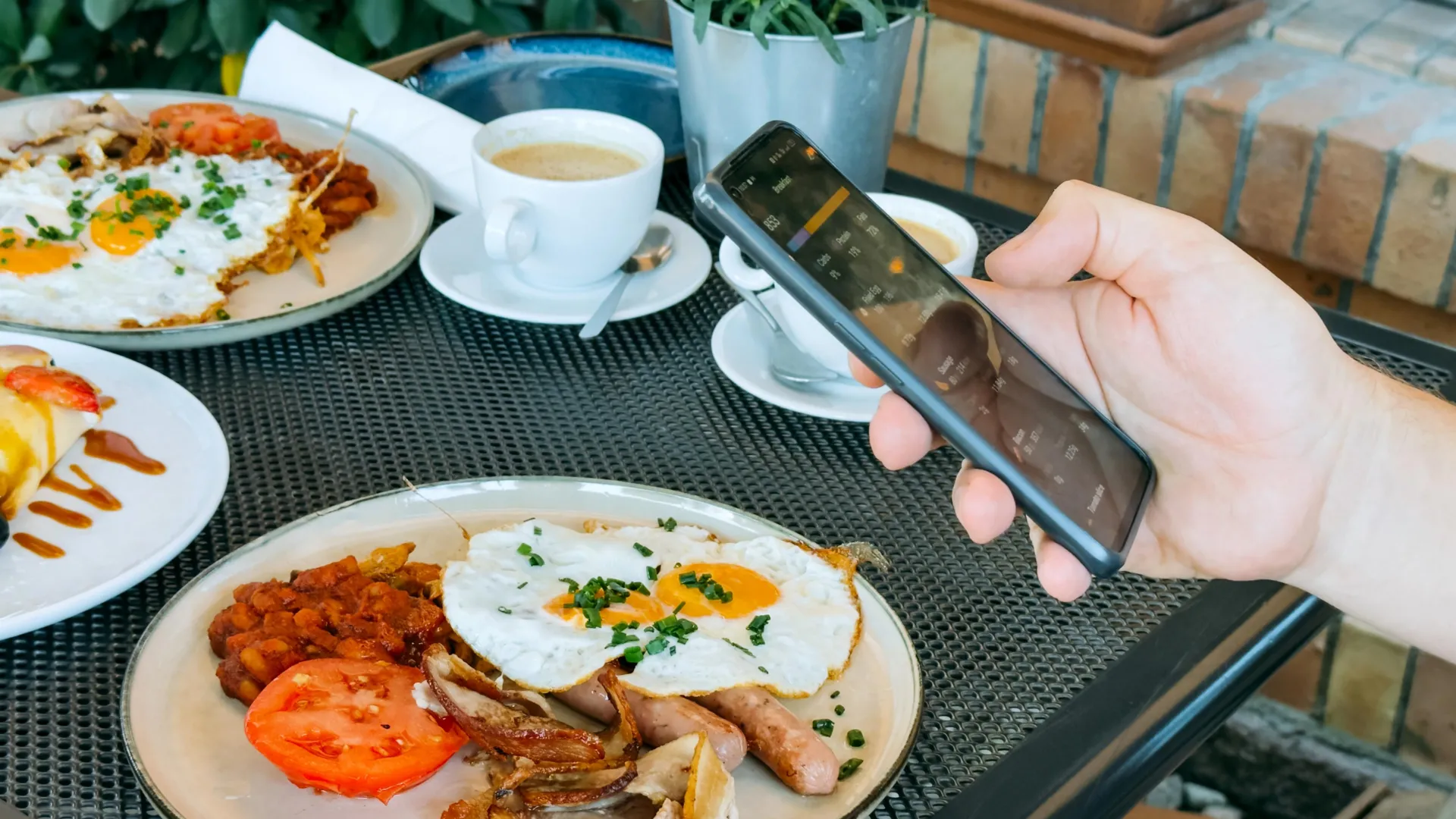
A groundbreaking study presented at the NUTRITION 2026 annual meeting of the American Society for Nutrition has cast a critical spotlight on the accuracy of artificial intelligence-powered calorie tracking applications that utilize smartphone photographs. While these innovative tools promise a swift and effortless method for individuals to monitor their dietary intake by simply snapping a picture of their meal, new research indicates a significant tendency to underestimate the actual caloric and fat content present on the plate. This discrepancy could have considerable implications for individuals striving to manage their weight, health conditions, or adhere to specific dietary plans, potentially leading to inaccurate assessments of their nutritional consumption.
The research, conducted by a team of scientists at the National Institute of Diabetes and Digestive and Kidney Diseases (NIDDK), part of the National Institutes of Health (NIH), evaluated the performance of four popular photo-based calorie tracking applications. The findings suggest a consistent pattern of underestimation, with calorie and fat estimates averaging approximately one-third lower than the precisely measured nutritional values of the tested meals. This revelation challenges the prevailing convenience offered by these apps, urging users to exercise caution and perhaps supplement their digital tracking with more traditional, albeit more laborious, methods.
The Promise and Peril of AI in Dietary Tracking
In an era increasingly dominated by digital solutions for everyday challenges, the advent of AI-powered calorie tracking apps has been hailed as a revolutionary step in personal health management. These applications leverage sophisticated image recognition algorithms to identify various food items within a photograph. Once the foods are identified, the AI proceeds to estimate portion sizes, a critical determinant of caloric intake. Subsequently, these estimations are cross-referenced with extensive nutrition databases, allowing the app to generate a detailed breakdown of calories, macronutrients (protein, carbohydrates, and fats), and other essential nutrients.
The appeal of such technology is undeniable, particularly for individuals actively engaged in weight management or seeking to improve their overall health. Aaron Hengist, a postdoctoral visiting fellow with the NIDDK’s Intramural Program, highlighted the widespread adoption of these apps. "Photo-based calorie tracking apps are very popular, especially for people trying to manage their health or lose weight," Hengist stated. "However, the accuracy of many of these apps has not been thoroughly evaluated. Our study helps address this question by looking at whether these apps can reliably estimate calories." This sentiment underscores a critical gap in the market: the rapid proliferation of user-friendly technology often outpaces rigorous scientific validation.
Rigorous Testing: A Controlled Environment for Unbiased Evaluation
To address this gap, the NIDDK research team embarked on a meticulously designed study. The project is an integral component of a larger, ongoing nutrition study at the NIH Clinical Center, which is exploring the intricate ways the human body metabolizes nutrients under two distinct dietary regimens: a low-carbohydrate ketogenic diet and a standard diet. This dual-diet approach provides a valuable backdrop for assessing the AI apps’ performance across different nutritional profiles.
A cornerstone of the study’s methodological rigor was the use of meals prepared in a highly controlled metabolic kitchen. Within this specialized facility, every ingredient is weighed to an extraordinary precision, accurate to the nearest 0.1 gram. This meticulous preparation process ensures that the researchers possess an exceptionally accurate benchmark against which to evaluate the performance of the AI applications. This level of control is paramount, as it minimizes variables that could otherwise confound the results, such as inconsistencies in ingredient amounts or cooking methods.
The researchers collected a diverse array of 102 standardized photographs, each depicting a meal that had been precisely prepared for the ongoing diet study. These images were then systematically fed into four of the most widely recognized photo-based calorie tracking applications: MyFitnessPal, LoseIt!, CalAI, and Appediet. The objective was to meticulously compare the nutritional estimates generated by each app against the known, scientifically verified nutritional content of the meals.
"By using meals prepared in a tightly controlled metabolic kitchen, we were able to compare the apps’ estimates against a precise reference," Hengist elaborated. "This kind of direct, high-quality comparison hasn’t been available before." This direct comparison is crucial, as it moves beyond anecdotal user experiences and provides empirical data on the apps’ actual performance.
Quantifying the Discrepancy: Hundreds of Calories Undercounted
The results of the app evaluations painted a clear, albeit concerning, picture. Across all four tested applications, the estimated calorie totals for the meals were, on average, significantly lower than the actual caloric content. The deficit ranged from approximately 250 to 345 calories per meal. This substantial underestimation could lead individuals to consume more calories than they believe they are, potentially hindering their weight loss or maintenance efforts.
Beyond just total calories, the apps also demonstrated a consistent underestimation of fat content, with figures being approximately 30 grams lower than the measured reality. Fat, being the most calorie-dense macronutrient (9 calories per gram compared to 4 calories per gram for carbohydrates and protein), plays a significant role in overall caloric intake. An underestimation of fat can therefore have a disproportionately large impact on the total calorie count.
Interestingly, the study also revealed some nuanced differences in app performance. MyFitnessPal and LoseIt! exhibited a tendency to be more accurate when analyzing meals with higher caloric density. Conversely, their estimations became less reliable with lower-calorie meals. This suggests that the AI’s algorithms might be better calibrated for detecting and quantifying larger quantities of food, but struggle with smaller, more nuanced portions, or perhaps with less visually distinct food items.
Regarding macronutrient consistency, all four apps performed more reliably when estimating carbohydrate content compared to fats and proteins. Carbohydrates often have more distinct visual markers and are less prone to the subtle variations in density and preparation that can affect fat and protein estimations.
Olivia Charles, a postbaccalaureate intramural research training fellow at NIDDK, who presented these findings at NUTRITION 2026, emphasized the practical implications for app users. "People using a photo-based tracking app without adjusting the portions or entering the amounts of food should take the results with a grain of salt," Charles advised. "These apps tend to underestimate calories, especially from fats, so what they actually ate is likely higher than what the app shows." This advice is critical for users who rely solely on the app’s automated estimations without manual verification.
The Keto Challenge: A Complex Nutritional Landscape for AI
Furthering their investigation, the researchers delved deeper into factors that might influence the accuracy of these AI tools. They subsequently tested over 200 additional meals, seeking to identify specific meal characteristics that posed greater challenges for the applications.
Preliminary findings from this expanded analysis suggest that meals prepared according to a low-carbohydrate ketogenic diet may present particular difficulties for AI-driven calorie estimation. Ketogenic diets are typically characterized by a high intake of fats and a significantly reduced intake of carbohydrates. Given the observed tendency of the apps to underestimate fat content, it stands to reason that meals rich in fats, a hallmark of the keto diet, would be more susceptible to inaccurate estimations. The visual cues for high-fat foods can be less distinct, and the precise quantification of fats in complex dishes can be a significant hurdle for image recognition technology.
The researchers posited that a hybrid approach to calorie tracking might offer the most robust solution for individuals seeking accuracy. They suggested that combining the convenience of photo-based AI tools with more traditional methods of food intake assessment—such as manual logging, weighing food portions, or consulting detailed nutritional labels—could significantly enhance the overall precision of dietary monitoring. This integrated strategy would allow users to benefit from the speed of AI while mitigating its limitations through human oversight and more established tracking techniques.
Context of the NUTRITION 2026 Meeting
The presentation of these findings occurred at NUTRITION 2026, the premier annual scientific conference organized by the American Society for Nutrition (ASN). Held from July 25-28 in National Harbor, Maryland, a location just outside the bustling capital of Washington, D.C., the event serves as a critical platform for researchers, clinicians, policymakers, and industry professionals to convene, share cutting-edge research, and discuss the latest advancements in the field of nutrition science.
NUTRITION 2026 is renowned for showcasing innovative research across a broad spectrum of nutritional topics, from basic science and public health to clinical nutrition and food systems. The conference provides an invaluable opportunity for the scientific community to engage with emerging data, foster collaborations, and translate scientific discoveries into actionable insights for improving public health.
Olivia Charles presented the research on Saturday, July 25, during the President’s Oral Session, a prestigious segment of the conference dedicated to highlighting high-impact research. The session took place in the Grand Ballroom of the Gaylord National Resort & Convention Center, a prominent venue that hosts numerous national and international gatherings. The abstract detailing this research was made available, offering a preliminary glimpse into the study’s methodology and key findings.
It is important to note that abstracts presented at NUTRITION 2026 undergo a rigorous review and selection process by a committee of expert scientists. However, these presentations represent preliminary findings and have generally not yet completed the full peer-review process required for publication in established scientific journals. Therefore, the results should be interpreted with the understanding that they are subject to refinement and further validation in peer-reviewed literature before being considered definitive.
Broader Implications for Public Health and Technology Development
The implications of this study extend beyond individual users of calorie tracking apps. For public health initiatives aimed at combating obesity and diet-related diseases, the reliance on potentially inaccurate digital tools raises concerns. If a significant portion of the population is miscalculating their caloric intake, public health messaging and interventions might need to account for this technological bias.
Furthermore, the findings provide valuable feedback for the developers of AI-powered health applications. The study highlights specific areas where current AI models may fall short, particularly in accurately assessing fat content and potentially in differentiating complex meal compositions, such as those found in ketogenic diets. This research can serve as a catalyst for further innovation and refinement of these technologies. Developers may need to invest in more sophisticated image recognition models, incorporate richer contextual data, or explore multimodal approaches that integrate sensor data or user input more effectively.
The future of dietary tracking likely lies in a synergistic approach. As AI technology continues to evolve, its ability to accurately interpret visual cues from food will undoubtedly improve. However, the inherent complexity of food, individual dietary habits, and the nuances of human metabolism suggest that a solely automated approach may never fully replace the need for critical thinking and manual verification by the user. The NIDDK study serves as a crucial reminder that while technology can offer unprecedented convenience, it must be rigorously tested and understood within its limitations to truly serve the goals of health and wellness. The ongoing dialogue between researchers, developers, and the public will be essential in shaping the next generation of accurate and reliable health-tracking technologies.