An emerging AI startup, Artisan, has found itself embroiled in a significant intellectual property dispute, facing accusations of copyright infringement for allegedly incorporating the widely recognized "This is Fine" meme into a recent advertising campaign without the creator’s permission. The meme, depicting an anthropomorphic dog calmly sitting in a burning room and uttering the stoic phrase, has become a pervasive cultural touchstone, often used to satirize denial in the face of overwhelming crisis. Its creator, cartoonist KC Green, has publicly condemned Artisan’s use of his artwork, asserting that it constitutes theft and vowing to explore legal avenues.
The Allegation Unfolds: A Viral Meme Reimagined for AI Promotion
The controversy erupted following a Bluesky post that circulated widely across social media platforms, showcasing an advertisement prominently displayed in a subway station. The ad features a rendition of Green’s iconic burning dog, albeit with a crucial alteration: the canine character now states, "[M]y pipeline is on fire." This modified image is overlaid with a direct call to action, urging passersby to "Hire Ava the AI BDR." The ad directly promotes Artisan’s flagship product, an AI-powered Business Development Representative (BDR) named Ava, designed to automate sales outreach and lead generation.
Upon seeing the circulating image, KC Green, the original artist behind the "This is Fine" comic, swiftly responded on Bluesky. He confirmed that he had been receiving numerous alerts about the ad from his followers and emphatically stated that its use was "not anything [I] agreed to." Green minced no words in his condemnation, declaring that his art had "been stolen like AI steals," a pointed jab at the often-criticized practice of AI models being trained on vast datasets of copyrighted material without explicit artist consent. In a strong show of defiance, Green also controversially encouraged his followers to "please vandalize it if and when you see it," a statement that underscores his frustration and sense of violation.
The Enduring Legacy of "This is Fine": A Cultural Phenomenon
To fully grasp the magnitude of this dispute, it is essential to understand the profound cultural penetration and significance of the "This is Fine" meme. The original comic panel first appeared in KC Green’s webcomic series, "Gunshow," in 2013. Part of a two-panel strip, the first shows the dog optimistically trying to reassure itself despite an escalating emergency, culminating in the second panel where it is engulfed in flames, yet still smiling and repeating, "This is fine."
The meme’s popularity soared in the mid-2010s, particularly around 2016, when it became a ubiquitous visual shorthand for situations involving self-delusion, cognitive dissonance, or a desperate attempt to maintain composure in the face of inevitable disaster. Its adaptability and relatable portrayal of modern anxieties quickly cemented its place in internet culture, transcending niche online communities to become a universally understood expression. The meme has been employed across countless contexts, from political commentary and social critiques to personal anecdotes and corporate communication, often to highlight a perceived lack of urgency or an inadequate response to pressing issues. Its widespread recognition has made it one of the most durable and frequently referenced memes of the past decade, a testament to its enduring resonance. While Green has not entirely disavowed the meme, even turning it into a game titled "This is Fine: Maximum Cope," he has openly acknowledged that it has "escaped from his control," a common sentiment among creators whose work achieves viral meme status.
Artisan’s Business Model and Previous Controversies
Artisan, the AI startup at the center of this controversy, positions itself as a pioneer in automating business development functions through artificial intelligence. Their core offering, Ava, aims to streamline sales pipelines, identify leads, and engage potential clients, thereby reducing the need for human BDRs. The company operates within a rapidly expanding market for AI-powered sales and marketing tools, which analysts project will continue to see significant growth as businesses seek greater efficiency and cost-effectiveness. The global market for AI in sales, for instance, was valued at over $2 billion in 2022 and is expected to grow substantially in the coming years.
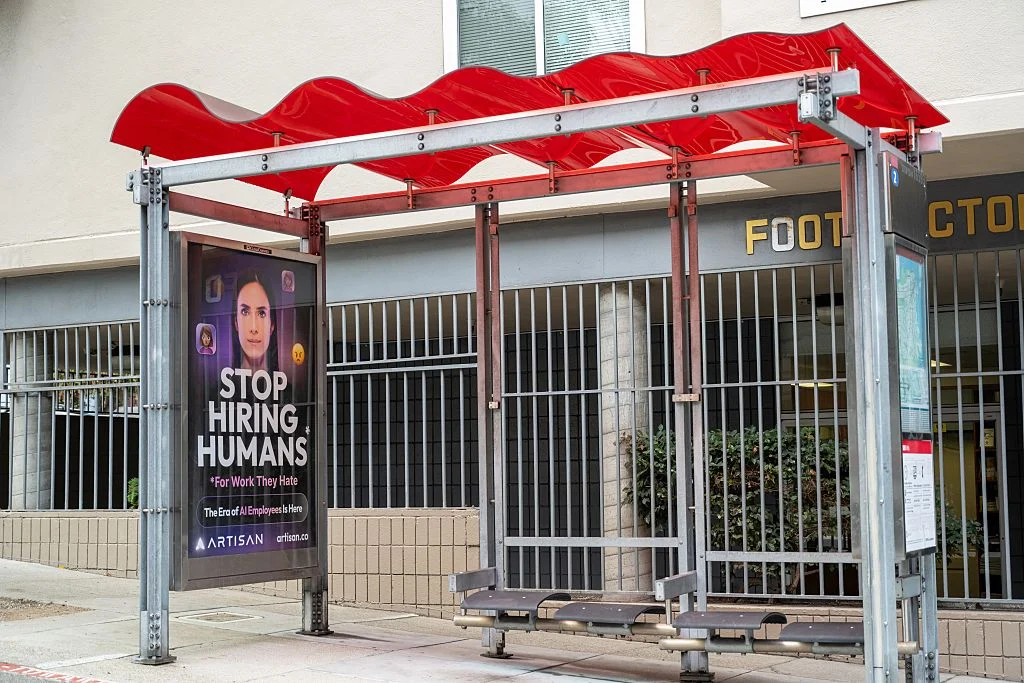
This is not Artisan’s first brush with public criticism regarding its marketing tactics. The company previously garnered controversy for a billboard campaign featuring slogans such as "Stop hiring humans." While founder and CEO Jaspar Carmichael-Jack attempted to clarify that the message targeted "a category of work" rather than "humans at large," the campaign was widely perceived as insensitive and tone-deaf, especially in an era of increasing automation anxiety and job displacement concerns. These past incidents suggest a pattern of aggressive, attention-grabbing marketing strategies that, intentionally or unintentionally, push the boundaries of public discourse and, in this latest instance, potentially intellectual property law.
Official Responses and the Prospect of Legal Action
Following TechCrunch’s inquiry regarding the alleged copyright infringement, Artisan issued a brief statement acknowledging Green’s work: "We have a lot of respect for KC Green and his work, and we’re reaching out to him directly." In a subsequent communication, the company confirmed that it had scheduled a direct discussion with the artist. This response indicates an attempt by Artisan to de-escalate the situation and potentially resolve the matter privately, perhaps through licensing or a settlement.
However, KC Green appears resolute in his stance. In an email to TechCrunch, he confirmed his intention to pursue legal recourse. "I will be looking into [legal] representation, as I feel I have to," Green stated. He expressed a profound sense of weariness and frustration at the prospect, lamenting that it "takes the wind out of my sails" to divert his time and energy into navigating the American court system. Green articulated his preference for dedicating his efforts to his true passion: "drawing comics and stories." His concluding remarks were a defiant message to those he perceives as exploiting creative works: "These no-thought A.I. losers aren’t untouchable and memes just don’t come out of thin air." This statement underscores a broader sentiment among artists that AI companies often undervalue or outright disregard the human creativity that underpins much of the digital content they utilize.
The Broader Landscape of Digital Copyright and Memes
The Artisan case highlights a critical and increasingly contentious issue in the digital age: the legal status and commercial exploitation of memes and viral content. While memes are inherently designed for widespread sharing and adaptation, their commercial use without permission often crosses a legal line into copyright infringement. Creators of original artwork, even when it becomes a meme, retain their intellectual property rights.
This isn’t an isolated incident. Numerous artists have faced the challenge of protecting their work once it achieves meme status and is subsequently monetized by third parties. A notable precedent involves cartoonist Matt Furie, creator of Pepe the Frog. When his character was appropriated and weaponized by right-wing extremist groups and later used by Infowars in a poster, Furie successfully sued the conspiracy theory site for copyright infringement. The case ultimately resulted in a settlement, demonstrating that creators do have legal avenues to reclaim control and seek compensation when their art is exploited commercially or in objectionable ways. These cases serve as a stark reminder that while the internet fosters a culture of remix and appropriation, fundamental copyright principles still apply, particularly when commercial gain is involved.
AI and Intellectual Property: A Growing Battleground
The dispute with Artisan also intersects with the burgeoning and highly controversial field of artificial intelligence and its relationship with intellectual property. Many generative AI models, including those that can create images or text, are trained on vast datasets that often include copyrighted material scraped from the internet without explicit consent or compensation to the original creators. This practice has sparked widespread outrage among artists, writers, and musicians, who argue that their work is being exploited to build profit-generating AI tools, effectively devaluing human creativity and livelihoods.
The Artisan ad, by allegedly directly lifting and slightly modifying an existing copyrighted image rather than generating an entirely new one, presents a more direct copyright infringement claim than the more nebulous arguments surrounding AI training data. However, Green’s specific mention that his art was "stolen like AI steals" ties the incident directly into this larger debate. It frames Artisan’s actions not merely as a traditional copyright violation but as part of a broader systemic issue where technology companies, particularly in the AI space, are perceived as dismissive of creators’ rights. This incident, therefore, becomes another significant test case in the ongoing struggle to define the boundaries of intellectual property in the era of advanced AI. Legal scholars and artist advocacy groups are closely watching such developments, as they could shape future legislation and industry standards regarding AI ethics and copyright compliance.
Implications for Creators and Companies
The unfolding situation between KC Green and Artisan carries significant implications for both individual creators and the burgeoning AI industry. For artists, it underscores the persistent challenge of enforcing copyright in a hyper-connected digital world where content can go viral and be repurposed almost instantaneously. While the internet offers unprecedented platforms for exposure, it also creates new vulnerabilities for intellectual property. Green’s willingness to pursue legal action, despite the personal toll, could serve as an important precedent, empowering other meme creators and artists to defend their rights against unauthorized commercial use.
For AI companies like Artisan, this incident serves as a crucial reminder of the legal and ethical complexities inherent in their operations, particularly concerning marketing and content creation. While innovative technology is their core offering, respecting intellectual property rights remains paramount. The negative publicity and potential legal costs associated with such disputes can severely damage a company’s reputation, erode public trust, and distract from its core business objectives. As the AI industry matures, greater scrutiny will undoubtedly be placed on its adherence to ethical sourcing of data, transparent content creation processes, and respect for existing intellectual property frameworks. The outcome of this particular case could influence how AI startups approach marketing, content generation, and, more broadly, their engagement with the creative community. It highlights the growing tension between rapid technological advancement and the established principles of intellectual property, a tension that will likely continue to define legal and ethical debates in the coming years.
As Artisan and KC Green prepare for what could become a significant legal battle, the incident serves as a powerful microcosm of the larger challenges facing creators and innovators in the digital age. It’s a stark reminder that even the most widely disseminated and seemingly public content, like an iconic meme, still carries the indelible mark of its human creator, whose rights demand respect and protection.