


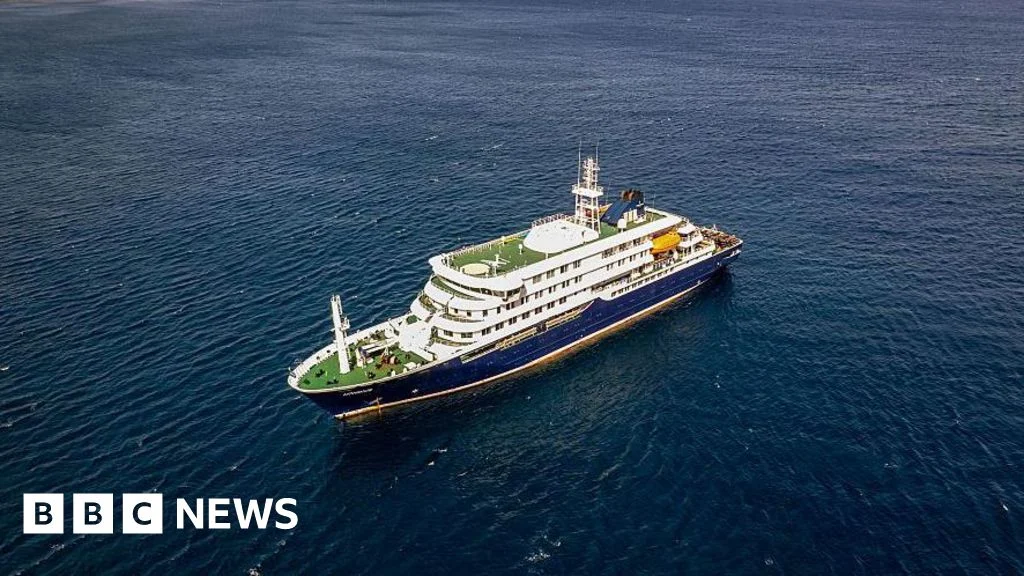
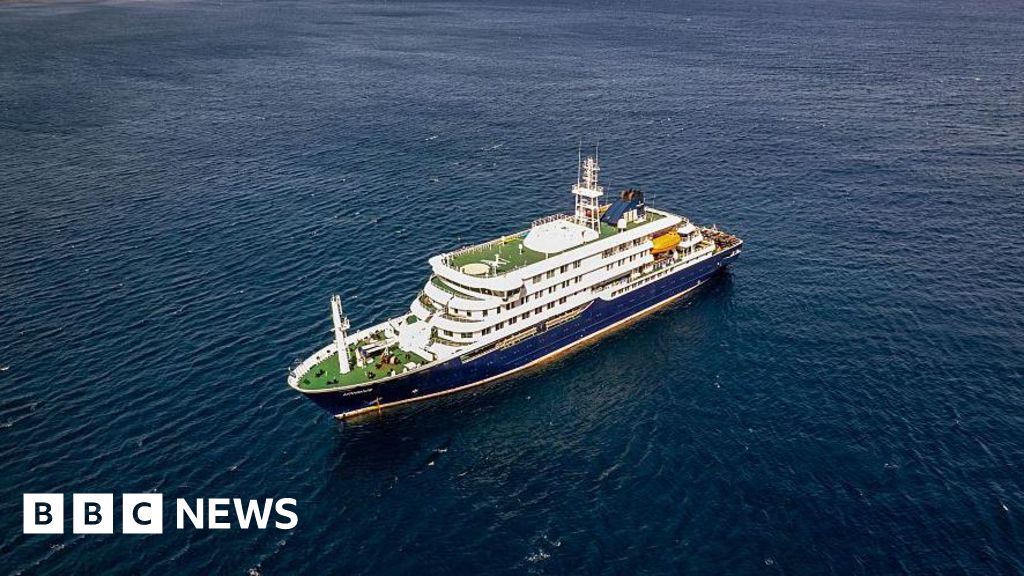
A somber shadow has fallen over an extended trans-Atlantic voyage, as a suspected hantavirus outbreak aboard the MV Hondius cruise ship has led to three confirmed fatalities and multiple other cases, triggering an urgent international public health response. The World Health Organization (WHO) has confirmed the deaths and is actively coordinating with various member states and the ship’s operator to manage the unfolding crisis, which includes one confirmed and five suspected cases. The incident has cast a spotlight on the complexities of managing infectious disease outbreaks in a maritime setting, particularly during prolonged voyages through remote areas.
The vessel, operated by Oceanwide Expeditions, was midway through an ambitious journey from Ushuaia, Argentina, to Cape Verde when the serious health emergency was declared. Among the affected is a 69-year-old UK national, now in intensive care in Johannesburg, South Africa, having been medically evacuated from the ship. South African health officials have subsequently confirmed his diagnosis of hantavirus, underscoring the severity of the situation. The UK Foreign Office has announced it is closely monitoring the reports and stands ready to provide consular support to British nationals affected by the incident.
Hantavirus, a zoonotic pathogen primarily transmitted to humans through contact with the urine, droppings, or saliva of infected rodents, poses a significant public health concern due to its potential to cause severe and often fatal respiratory illness. While human-to-human transmission is exceedingly rare, the confined environment of a cruise ship raises unique epidemiological challenges, prompting rigorous investigation into the source and potential spread of the infection. The unfolding events aboard the MV Hondius highlight the critical importance of robust health surveillance and rapid response mechanisms in international travel and tourism.
The Emerging Chronology of a Maritime Health Crisis
The MV Hondius embarked on its expedition from Ushuaia, the southernmost city in Argentina, on March 20, commencing a lengthy journey across the Atlantic with an anticipated arrival in Cape Verde on May 4. The 107.6-meter (353-foot) polar cruise ship is designed to accommodate 170 passengers across 80 cabins, supported by a complement of 57 crew members, 13 expedition guides, and one onboard doctor. This diverse international manifest, comprising approximately 150 tourists from various countries, became the focal point of a rapidly escalating health emergency as the ship traversed vast oceanic distances.
Reports of illness began to surface during the voyage, culminating in a series of critical medical events. The first confirmed fatality involved a 70-year-old Dutch man, who developed acute symptoms including fever, headache, abdominal pain, and diarrhea. His condition rapidly deteriorated, and he tragically died upon arrival at the British overseas territory of St Helena, an isolated island in the South Atlantic, where the ship made an emergency stop. Shortly thereafter, his 69-year-old partner, also Dutch, fell ill on board. She was subsequently evacuated to South Africa for urgent medical attention but succumbed to the illness in a Johannesburg hospital.
As the situation intensified, a third fatality was reported, with sources indicating this individual remained aboard the vessel. Details regarding this third deceased person’s nationality or the exact circumstances of their death have not been fully disclosed by official channels, adding to the layers of complexity surrounding the incident. Simultaneously, discussions were reportedly underway to arrange for the isolation and treatment of two other symptomatic passengers in Cape Verde, the ship’s original destination, before the MV Hondius would theoretically continue its journey towards Spain’s Canary Islands. This sequence of events paints a stark picture of a health crisis evolving in a challenging, remote maritime environment, necessitating intricate logistical and medical coordination across multiple jurisdictions.
Understanding Hantavirus: A Zoonotic Threat
Hantavirus is not a single entity but a genus of single-stranded, enveloped RNA viruses belonging to the family Hantaviridae. These viruses are zoonotic, meaning they are primarily transmitted from animals to humans, with rodents serving as the main reservoir hosts. Different hantavirus species are typically carried by specific rodent species and are geographically distributed. For instance, in the Americas, hantaviruses such as Sin Nombre virus (SNV) are associated with deer mice and primarily cause Hantavirus Pulmonary Syndrome (HPS). In Europe and Asia, hantaviruses like Puumala virus and Seoul virus are associated with voles and rats, respectively, and typically cause Hemorrhagic Fever with Renal Syndrome (HFRS). Both HPS and HFRS are severe and potentially fatal illnesses.
HPS, the more common form in the Western Hemisphere, is characterized by a rapid onset of respiratory distress. Initial symptoms often mimic the flu, including fever, muscle aches, fatigue, headaches, and gastrointestinal issues like nausea, vomiting, and diarrhea. Within days, however, the illness can progress rapidly to severe respiratory symptoms, including coughing and shortness of breath, as the lungs fill with fluid. The fatality rate for HPS can be as high as 38%, making it a highly dangerous infection.
HFRS, prevalent in the Eastern Hemisphere, also begins with flu-like symptoms but can lead to kidney failure, hemorrhagic manifestations, and shock. The severity varies depending on the specific hantavirus species, with fatality rates ranging from less than 1% to over 15%.
The primary mode of transmission to humans is through inhalation of aerosolized virus particles from rodent urine, droppings, or saliva. This can occur when disturbed contaminated areas release airborne particles, or when people directly handle infected rodents. Less commonly, bites from infected rodents can transmit the virus. A critical distinction for public health management, particularly in a confined setting like a cruise ship, is that while generally not transmitted human-to-human, some hantaviruses, notably the Andes virus, have been documented to spread person-to-person. This rare but significant exception underscores the need for extreme caution and thorough investigation in any suspected outbreak, especially where close human contact is unavoidable. The identification of the specific hantavirus strain involved in the MV Hondius outbreak will be crucial in determining the precise risks and appropriate containment strategies.
The Challenges of Disease Management at Sea
The management of infectious disease outbreaks on cruise ships presents a unique set of challenges that differ significantly from land-based scenarios. Cruise vessels, by their very nature, are semi-closed environments where pathogens can potentially spread rapidly among a concentrated population of passengers and crew from diverse geographical origins. While ships are equipped with medical facilities and staff, these are typically designed for routine medical emergencies and minor illnesses, not for managing large-scale outbreaks of highly infectious or rare diseases requiring specialized isolation and intensive care.
International Health Regulations (IHR) provide a framework for global health security, obligating countries to report certain public health events and implement measures to prevent international spread. For cruise ships, this translates into stringent sanitation protocols, regular health screenings, and the capacity for onboard medical assessment and initial containment. However, diagnosing a rare disease like hantavirus at sea, particularly in its early, non-specific stages, can be difficult. The lack of immediate access to advanced diagnostic laboratories and specialized medical expertise can delay identification, allowing for potential further exposure.
Once an outbreak is suspected, decisions regarding medical evacuations, isolation of sick individuals, and disinfection protocols become complex, involving multiple national authorities, port states, flag states, and the ship’s operator. The geographic location of the vessel at any given time dictates which countries’ health systems become involved, necessitating rapid communication and coordination across different regulatory frameworks and languages. The MV Hondius incident, spanning multiple continents and involving evacuations to South Africa and potential isolations in Cape Verde, exemplifies these logistical and diplomatic hurdles. The necessity for swift action, coupled with the potential for legal and economic repercussions for the cruise line, adds further pressure to an already critical situation.
Official Responses and International Coordination
The global health community has mobilized swiftly in response to the unfolding crisis. The World Health Organization (WHO) is at the forefront of the international effort, leveraging its role as a central coordinating body. The WHO confirmed the three fatalities and the overall case count, emphasizing its commitment to facilitating communication and action between affected member states and the ship’s operators. Their responsibilities include assisting in the medical evacuation of symptomatic passengers, as well as providing guidance for a comprehensive public health risk assessment for all individuals still on board. This involves advising on epidemiological investigations, containment measures, and long-term monitoring.
South Africa’s health ministry, through spokesperson Foster Mohale, has been a key source of information regarding the fatalities and the care of affected individuals. Mohale detailed the tragic deaths of the Dutch couple, providing specific information about their symptoms and the locations of their passing – St Helena and Johannesburg. The prompt identification and isolation of the UK national in Johannesburg also highlights the rapid response capabilities activated by South African health authorities once the ship reached their vicinity or medical evacuations were initiated. Their role is critical in managing the clinical aspects of the outbreak and ensuring appropriate patient care and infection control within their borders.
The UK Foreign Office has affirmed its commitment to supporting British nationals affected by the incident. Their involvement underscores the consular responsibilities of governments when their citizens are involved in international health emergencies. This typically includes liaising with local authorities, providing travel advice, assisting with medical arrangements, and offering support to families.
Oceanwide Expeditions, the operator of the MV Hondius, is undoubtedly working in close cooperation with all relevant health authorities. While specific public statements from the company have been limited in the initial reporting, their primary responsibilities include ensuring passenger and crew safety, adhering to international health and safety regulations, and facilitating investigations. This would involve providing passenger manifests, medical records, and detailed logs of onboard events to health officials. The decision-making processes regarding the ship’s itinerary, disembarkation points, and the care of remaining passengers and crew would be made in concert with the WHO and national health agencies.
The authorities on St Helena played a role in the initial handling of the first fatality, providing immediate assistance as the ship diverted. Similarly, Cape Verde’s health infrastructure is being assessed for its capacity to manage potential isolations and further medical care, as the ship reportedly intends to make a stop there. This multi-jurisdictional cooperation is fundamental to containing the outbreak and mitigating further risks.
Broader Implications for Cruise Travel and Global Health Security
The hantavirus outbreak aboard the MV Hondius carries significant implications, extending beyond the immediate tragedy to touch upon the broader cruise industry, global public health protocols, and the very nature of expedition travel. For the cruise industry, this incident will inevitably lead to heightened scrutiny of health and safety protocols, particularly for voyages that venture into remote regions. Expedition cruises, by their design, often take passengers to less-developed areas where human-wildlife interactions might be more frequent or where medical infrastructure is limited. This raises questions about pre-screening procedures for passengers, the scope of onboard medical facilities, and emergency evacuation plans for rare and serious infectious diseases. Consumer confidence in cruise travel, which has already faced challenges from previous disease outbreaks, could be impacted, potentially leading to increased demand for transparency regarding health risks and response capabilities.
From a public health perspective, the incident underscores the continuous challenge of global health security in an interconnected world. The rapid spread of information, and unfortunately sometimes misinformation, necessitates clear and authoritative communication from bodies like the WHO. The case highlights the importance of robust international surveillance systems, rapid diagnostic capabilities, and coordinated cross-border responses for emergent or re-emergent zoonotic diseases. The investigation into the source of the hantavirus on the MV Hondius – whether it was contracted by individuals prior to boarding, or if rodents managed to gain access to the ship in port or during shore excursions – will be critical for informing future prevention strategies for the maritime sector.
For travelers, particularly those considering expedition-style voyages, the event serves as a stark reminder of the importance of travel health awareness. This includes understanding the specific health risks associated with destination regions, consulting with travel health professionals before departure, ensuring comprehensive travel insurance that covers medical evacuation, and adhering to personal hygiene and safety guidelines to minimize exposure to potential pathogens.
Ultimately, the MV Hondius hantavirus outbreak is a complex epidemiological event that demands thorough investigation and transparent communication. It will likely contribute to evolving best practices in maritime health management, informing policies aimed at safeguarding the health of passengers and crew on voyages that increasingly traverse the globe’s most remote and biodiverse environments. The collaborative efforts of international health organizations, national governments, and the cruise industry will be paramount in navigating this crisis and strengthening resilience against future health threats at sea.