

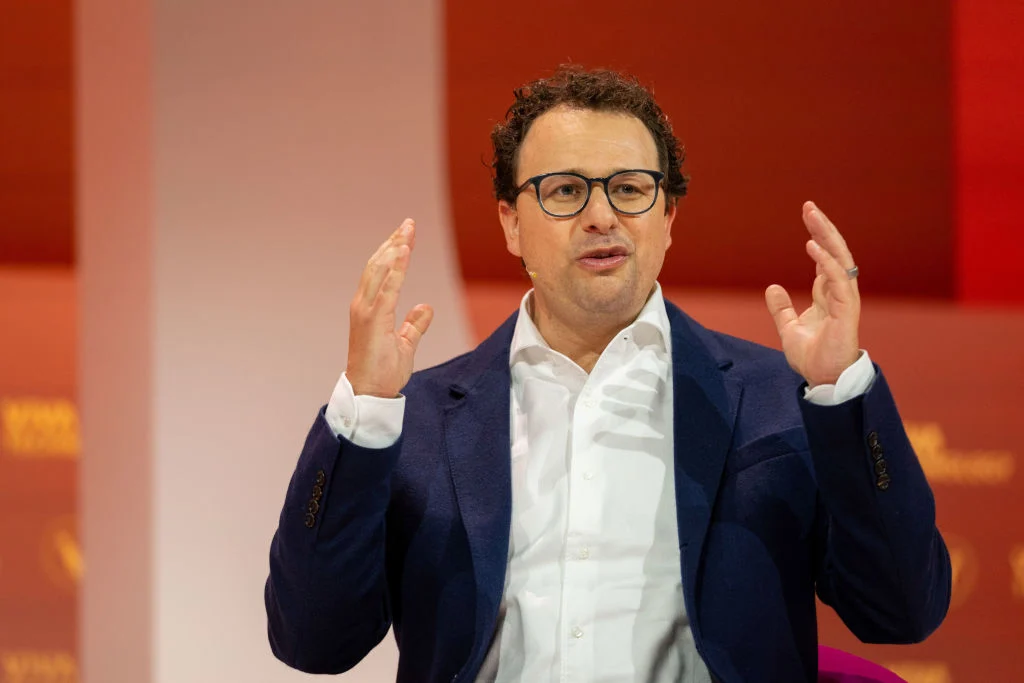
Anthropic founder and CEO Dario Amodei, a prominent voice in the artificial intelligence community, issued a definitive statement on Monday afternoon, directly addressing persistent industry speculation that his company was covertly supporting U.S. government initiatives to restrict or ban open-weight Chinese AI models, or even open-weight models more broadly. Amodei’s intervention sought to dispel these rumors, emphasizing Anthropic’s long-held position on AI development and safety. "Anyone who has read my past writing should know that I don’t regard such bans as a useful measure, but let me state it clearly so that there is no doubt: Anthropic has never advocated for a ban on open-weights models," he wrote in a blog post, underscoring his message with emphatic formatting. This clarification arrives at a critical juncture for the AI industry, which is increasingly navigating complex geopolitical dynamics, national security concerns, and the fundamental tension between open innovation and controlled development.
The Genesis of Speculation: A Converging Debate
The backdrop to Amodei’s statement is a rapidly intensifying debate within the AI sector and among policymakers regarding the security and proliferation of advanced AI capabilities. Open-weight models, often referred to interchangeably with open-source models in public discourse, are those where the underlying model architecture, parameters, and sometimes even training data are made publicly available. This transparency allows developers, researchers, and businesses to inspect, modify, and build upon these models, fostering rapid innovation and democratizing access to powerful AI tools. However, this openness also raises concerns for some about potential misuse or the acceleration of capabilities by adversarial actors.
The murmuring about Anthropic’s alleged stance intensified following an open letter published on Friday, spearheaded by Nvidia founder and CEO Jensen Huang. Huang, making his inaugural post on the social media platform X, shared the letter which garnered signatures from a formidable coalition of AI industry leaders, including Meta, Microsoft, Hugging Face, and Mistral, alongside Nvidia itself. The letter implored policymakers to resist imposing "premature restrictions" on open-weight AI models, arguing that such measures could stifle innovation, disadvantage U.S. companies, and undermine the collaborative spirit that has fueled much of AI’s recent progress. While the letter carefully avoided explicit mention of China, the industry conversation surrounding it was unmistakably centered on allegations of intellectual property (IP) theft and the rapid advancements of Chinese AI laboratories. These labs are reportedly leveraging methods like "distillation," a technique where one AI model is used to bombard another with prompts to learn its underlying mechanisms and capabilities, effectively reverse-engineering proprietary technology.
Anthropic’s Differentiated Perspective on Openness and Risk
Amodei’s Monday blog post meticulously delineated Anthropic’s nuanced perspective, drawing a clear distinction between the inherent value of open-weight models and the distinct threat posed by certain state actors. He posited that "Open-weights models that don’t have dangerous capabilities are a public good: they don’t cost anything besides the compute needed to run them, and they provide value to businesses, developers, and researchers." This statement firmly positions Anthropic as a proponent of accessible AI, particularly for models that do not exhibit what he terms "dangerous capabilities." He affirmed that his longstanding fears regarding AI’s future do not encompass businesses utilizing open-weight models, even those originating from China.
However, Amodei’s support for open-weight models is not without caveats. His profound anxieties about AI’s trajectory are instead directed towards the potential for "authoritarian governments" to develop AI models more powerful than those in democratic nations, thereby achieving "permanent military superiority" or employing AI for the systematic repression of their own populations. While acknowledging concerns about various authoritarian regimes, he specifically identified the Chinese Communist Party (CCP) as the "most capable" in this regard, highlighting its technological prowess and state-backed investment in AI research and deployment.
Beyond geopolitical dominance and domestic repression, Amodei also articulated grave fears about AI’s potential to facilitate "biological attacks," an escalation from traditional cybersecurity threats. In his view, open-weight models present a heightened risk in these specific, high-stakes scenarios due to the inherent difficulty in applying effective "guardrails" or monitoring their usage once released into the public domain. He reinforced this concern by citing a report from the UK AI Security Institute, which underscored the irreversible nature of open-weight model releases, stating that "once open-weights are released they cannot be withdrawn." This perspective stands in direct contrast to arguments made by many open-source advocates, who contend that widespread access to powerful, openly available models, not controlled by a single entity, actually enhances global security by empowering a broader community of defenders to identify vulnerabilities and develop countermeasures.
A Chronology of Mounting Tensions and Calls for Clarity
The current debate is not an isolated incident but rather the latest development in a prolonged period of escalating U.S.-China technological competition, particularly in the realm of advanced semiconductors and artificial intelligence.
- Early 2020s: The U.S. government began implementing stringent export controls on advanced semiconductors and chip-making equipment to China, aiming to hobble Beijing’s ability to develop cutting-edge AI and military technologies. These restrictions have since been progressively tightened, impacting companies like Huawei and SMIC.
- July 21, 2026 (hypothetical date based on article content): Reports emerged that the U.S. was threatening sanctions against Chinese AI models over allegations of intellectual property theft, signaling a potential new front in the tech war. This move directly targeted the output of Chinese AI development rather than just the inputs.
- July 24, 2026 (hypothetical date): Nvidia CEO Jensen Huang utilized X to share the open letter, signed by major tech firms, urging against "premature restrictions" on open-weight AI models. This collective industry voice underscored the widespread concern within the private sector about potential overreach by policymakers.
- July 27, 2026 (hypothetical date): Dario Amodei published his blog post, responding directly to the industry murmurs and clarifying Anthropic’s position, differentiating between beneficial open-weight models and the specific national security risks posed by authoritarian states.
This timeline illustrates a rapid succession of events, highlighting the urgency and complexity of the issues at hand, forcing industry leaders to publicly articulate their positions.
Proposed Solutions and the Vision for Global AI Safety
Despite his anxieties, Amodei offered concrete policy recommendations aimed at mitigating the identified risks, particularly those stemming from China’s AI ambitions. He advocated for reinforcing existing U.S. policies that restrict China’s access to powerful AI chips, a strategy that has been a cornerstone of American tech policy for several years. Furthermore, he called for a formal crackdown on distillation, urging policymakers to take decisive action against this method of IP expropriation. The U.S. has already indicated its willingness to impose sanctions if IP theft involving American models is definitively proven.
Intriguingly, Amodei also expressed strong support for a burgeoning global effort, partly led by the U.S., to establish an international organization dedicated to model safety testing. This initiative would gain particular efficacy, in his view, if all nations, including China, were to agree to submit their most capable AI models for evaluation. "I think this idea is actually close to a consensus: I have been heartened both that the Trump administration has moved in this direction in recent months, and by recent industry proposals that would apply such testing to the most capable models regardless of their country of origin or whether they are open or closed (while exempting less capable models, such as those from startups and academia, entirely)," Amodei wrote.
He acknowledged the formidable challenge of securing global participation but expressed cautious optimism. "Note that to be effective, testing would need to be global, which means even the CCP would need to be on board. I think this may actually be possible… limited cooperation around preventing AI biological weapons may be possible because it is in China’s interest too." This suggests a potential avenue for collaboration on specific, universally recognized existential risks, even amidst broader geopolitical rivalries. The idea of a global AI safety institute, similar in concept to organizations that monitor nuclear proliferation or chemical weapons, is gaining traction among policymakers and researchers concerned about catastrophic AI risks. Such an entity could establish benchmarks, conduct audits, and share findings to build trust and mitigate shared dangers.
Broader Implications for the AI Landscape
The ongoing debate, catalyzed by Amodei’s statement and the industry open letter, carries significant implications for the future trajectory of AI development, regulation, and international relations.
- Innovation vs. Security: The core tension between fostering open innovation and ensuring national security will continue to shape policy. A complete ban on open-weight models, as feared by some, could severely hamper the growth of startups, academic research, and the broader developer ecosystem, especially in areas where proprietary models are too expensive or opaque. Conversely, an unchecked proliferation of extremely powerful models could exacerbate existing geopolitical risks.
- Geopolitical Alignment: The U.S. and its allies are grappling with how to maintain a technological edge over rivals like China without completely isolating themselves from global AI progress. The calls for restrictions on chips and IP theft highlight a strategy of containment, while the push for global safety testing suggests a desire for cooperative risk mitigation where possible.
- Defining "Dangerous Capabilities": Amodei’s distinction between generally useful open-weight models and those with "dangerous capabilities" will necessitate clear, internationally agreed-upon definitions. This is a complex technical and ethical challenge, as the line between beneficial and harmful applications of AI can be fluid and context-dependent.
- The Role of Industry: The collective voice of major AI companies, as demonstrated by the open letter, underscores the industry’s desire to shape policy rather than merely react to it. This proactive engagement is crucial for ensuring that regulations are technologically informed and do not inadvertently stifle progress.
- The Future of Open Source AI: Despite the concerns, the open-source AI movement continues to thrive, with platforms like Hugging Face hosting hundreds of thousands of models and attracting millions of users. The economic value generated by open-source AI is substantial, enabling smaller companies and researchers to compete with well-funded tech giants. Any policy that unduly restricts this ecosystem would have significant economic ramifications. The open-source community argues that distributed scrutiny enhances security, as more eyes can find and fix vulnerabilities, making models more robust in the long run.
The discourse surrounding open-weight models, national security, and international cooperation is poised to remain a central theme in AI policy for the foreseeable future. Amodei’s intervention, far from settling the debate, serves to clarify Anthropic’s position while simultaneously highlighting the profound complexities and high stakes involved in governing the most transformative technology of our era. The path forward will likely involve a delicate balancing act, seeking to harness AI’s immense potential for good while rigorously addressing its inherent risks, potentially through a combination of strategic restrictions and unprecedented global collaboration.