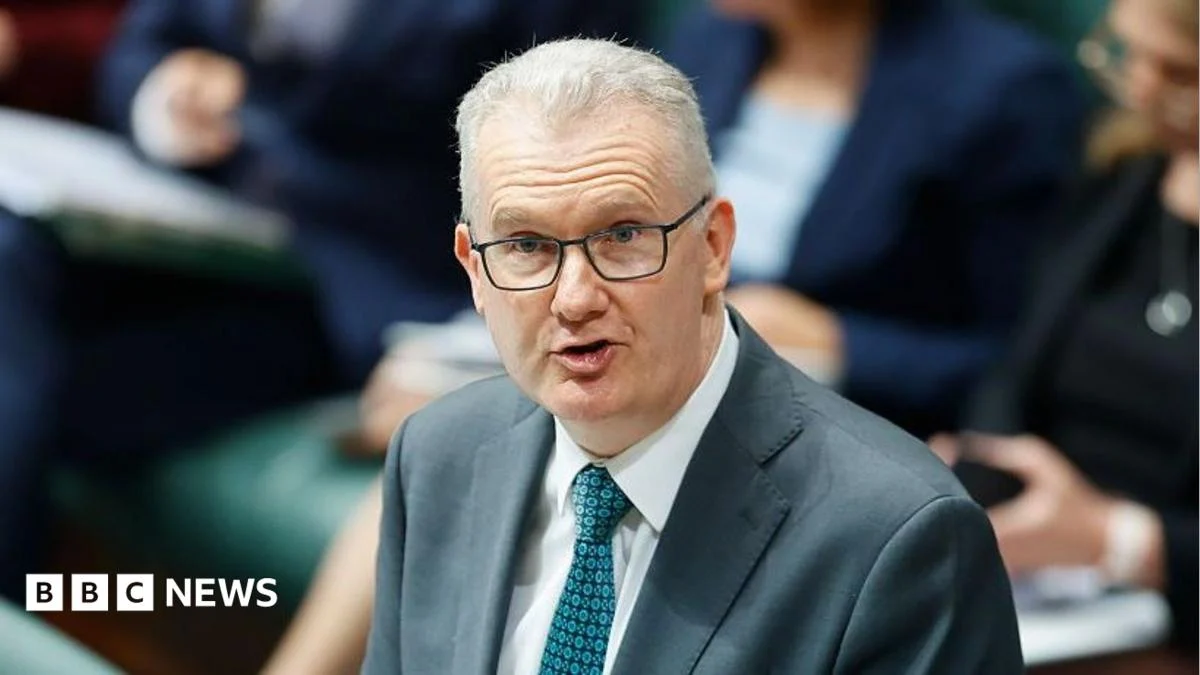
Australia has announced a significant tightening of its immigration rules, primarily targeting international students, individuals colloquially termed "visa hoppers," and working holidaymakers. The comprehensive reforms, detailed by Home Affairs Minister Tony Burke on Thursday, aim to curb the nation’s soaring migration intake and alleviate mounting pressure on housing, infrastructure, and public services. The government’s move signals a strategic pivot towards a more controlled and selective immigration program, designed to align with long-term national interests while addressing immediate socio-economic challenges.
Key Pillars of the New Migration Strategy
The core of the new policy framework introduces stringent measures across several visa categories. For international students, a critical shift is the near-total cessation of their ability to bring family members to Australia. This change will apply to new applicants, with exemptions carved out for PhD students, those already residing in Australia, and applicants from Pacific and Southeast Asian nations. The government asserts that PhD students often have different life circumstances and longer study durations, warranting the continued allowance for family accompaniment.
A major focus is also placed on tackling "visa hopping," a practice where temporary visa holders, particularly students, repeatedly extend their stay by enrolling in subsequent, often lower-level, and sometimes less rigorous courses. Under the new rules, international students seeking to extend their stay will be required to pursue a higher qualification, effectively pushing them "up the scale" – for instance, from a bachelor’s to a master’s degree. This aims to reinforce the integrity of the student visa program, ensuring it serves genuine educational advancement rather than merely as a pathway to extended temporary residency.
Furthermore, the popular Working Holiday Maker (WHM) visa program, a vital source of labour for Australia’s agricultural and hospitality sectors, will undergo significant modifications. While the scheme allows individuals aged 18 to 30 (and up to 35 for some nationalities) to work and travel for 12 months, with options to extend for a second and third year, the extension process will now incorporate a ballot system. The cap for second-year extensions will be reduced to 45,000, down from the 57,000 who qualified last year, and the third-year extension ballot will be limited to just 5,000, a drastic reduction from 31,000 in the previous year. Notably, British working holidaymakers will remain unaffected by these specific ballot changes, a provision stemming from the free trade agreement between the UK and Australia.
The Rationale: Balancing Growth with Control
Home Affairs Minister Tony Burke, in a speech titled "The work of managing the migration program: who arrives, who stays, who leaves," articulated the government’s stance. He acknowledged that immigration has historically been a "strength" for Australia, contributing significantly to its economic and cultural fabric. However, he stressed the imperative for a "high level of control" to ensure that the migration program remains sustainable and beneficial for the nation. The overarching goal is to recalibrate Australia’s net overseas migration (NOM) to a more manageable figure of 225,000 people annually by 2028, a substantial reduction from recent peaks.
The government’s strategy is a direct response to a surge in migration numbers following the reopening of international borders post-pandemic. After years of historically low migration due to strict COVID-19 travel restrictions, Australia experienced a rapid influx of temporary migrants, including students and skilled workers, as the nation sought to address critical labour shortages. While this rapid recovery aided economic rebound, it also exacerbated existing pressures on Australia’s urban centres. The current adjustments are framed as necessary to bring the migration program back to a sustainable trajectory, ensuring that population growth does not outstrip the nation’s capacity to provide adequate housing, infrastructure, and services.
A Nation Under Pressure: The Socio-Economic Backdrop
The timing of these reforms is no coincidence, coming amidst intensifying public debate over Australia’s population growth and its associated challenges. Recent figures released by the Australian Bureau of Statistics underscored this urgency, revealing that Australia’s population grew by 1.4% in the 12 months to March 2026, reaching 27.9 million. This total figure encompassed both natural increase (births minus deaths) and a significant net overseas migration of 292,100.
The rapid population expansion, largely driven by post-pandemic migration, has placed considerable strain on Australia’s major cities. Housing affordability has plummeted, with rental vacancy rates reaching historic lows in many urban areas and property prices continuing their upward trend. The cost of living has soared, impacting household budgets across the country, while public services such as healthcare, education, and transport infrastructure are struggling to keep pace with demand. For instance, according to recent reports, rental prices in major cities like Sydney and Melbourne have seen double-digit percentage increases over the past year, making it increasingly difficult for both established residents and new arrivals to secure affordable accommodation. This confluence of factors has fuelled public concern and made migration a potent political issue.
Political Landscape and Policy Evolution
The issue of immigration has become a significant battleground in Australian politics. One Nation, a populist right-wing party known for its anti-immigration stance, has seen a surge in support in recent months and recently detailed its own migration policy. The party proposed a drastic cut of 750,000 temporary migrant visas over three years and advocated for capping net overseas immigration at 130,000 annually. This proposal drew a sharp rebuke from Minister Burke, who warned that such drastic cuts would risk "smashing parts of the Australian economy," highlighting the intricate balance between migration levels and economic stability. The Liberal-National Coalition, while generally supportive of managed migration, has also called for stricter controls, reflecting a broader political consensus that current levels are unsustainable.
These latest changes are not isolated but form part of a broader, evolving migration strategy. In July, the government introduced policies to prioritise applications for family visas lodged onshore (where the applicant is already in Australia) over those submitted overseas. Similarly, skilled migrants already within Australia who applied for permanent visas were given precedence over those applying from abroad. The government also temporarily paused applications for working holiday visas from 24 countries, though the UK was not among them. These incremental adjustments demonstrate a concerted effort to exert greater control over who enters and who remains in Australia, aiming to ensure that migration pathways align with the nation’s economic needs and social capacity.
Stakeholder Reactions and Expert Analysis
The new restrictions have elicited a range of reactions from various stakeholders. The Australian international education sector, a multi-billion dollar industry, is expected to express significant concerns. Universities Australia and other peak bodies representing vocational education and English language colleges have previously warned that overly restrictive policies could damage Australia’s reputation as a study destination and impact its ability to attract top talent. Violet Roumeliotis, CEO of Settlement Services International, an organisation dedicated to assisting new arrivals, articulated a common sentiment among advocacy groups, suggesting that the migration debate is increasingly "driven by short-term politics rather than what is best for the country." She specifically cited the proposed changes to family visas for international students as an example that would make it harder for Australia to compete globally for "future talent." Critics argue that while managing population growth is important, severing family ties for students could deter highly skilled individuals who might otherwise choose Australia for their education and subsequent careers.
Conversely, some community groups and economic commentators who have voiced concerns about infrastructure strain and housing shortages are likely to welcome the government’s decisive action. However, industries heavily reliant on temporary migrant labour, such as agriculture and parts of the hospitality sector, are bracing for potential challenges. The National Farmers’ Federation, for instance, has consistently highlighted the critical role of working holidaymakers in filling seasonal labour gaps, particularly during harvest periods. Reduced caps and a ballot system for extensions could exacerbate existing labour shortages in regional areas, potentially impacting agricultural output and increasing costs for consumers.
Economic analysts are also evaluating the potential impact of these changes. While a reduction in net overseas migration might ease pressure on housing and infrastructure, it could also temper economic growth, as migrants contribute significantly to demand, labour supply, and innovation. The curtailment of international student numbers, particularly those who might have stayed on to work, could also affect the pipeline of skilled labour in various sectors. Balancing these competing economic and social objectives will be a critical challenge for the government in the coming years.
Looking Ahead: The Future Trajectory of Australian Migration
Australia’s history is inextricably linked to migration, a force that has shaped its demography, economy, and culture. From the post-World War II immigration boom that fuelled national development to the diversified intake of recent decades, migration has been central to the nation’s story. The current policy adjustments represent a significant shift from the relatively open door approach seen in the immediate post-pandemic period, signalling a return to a more cautious and deliberate strategy.
The government’s aspiration to bring net overseas migration down to 225,000 by 2028 reflects a long-term vision for sustainable growth. This involves not only controlling the numbers but also ensuring that the quality and composition of the migrant intake align with national priorities, focusing on highly skilled individuals and genuine students who can contribute to Australia’s economy and society. The emphasis on "up-skilling" for international students and a more controlled WHM program suggests a desire to optimise the benefits of temporary migration while mitigating its potential downsides.
As Australia navigates the complexities of managing its population growth in an era of global competition for talent, these reforms will be closely watched. Their success will depend not only on achieving numerical targets but also on maintaining Australia’s reputation as an attractive destination for education, work, and settlement, while ensuring the well-being of its current residents and the long-term prosperity of the nation. The government’s challenge lies in striking a delicate balance: addressing immediate domestic pressures without inadvertently stifling the essential flow of talent and diversity that has historically underpinned Australia’s success.