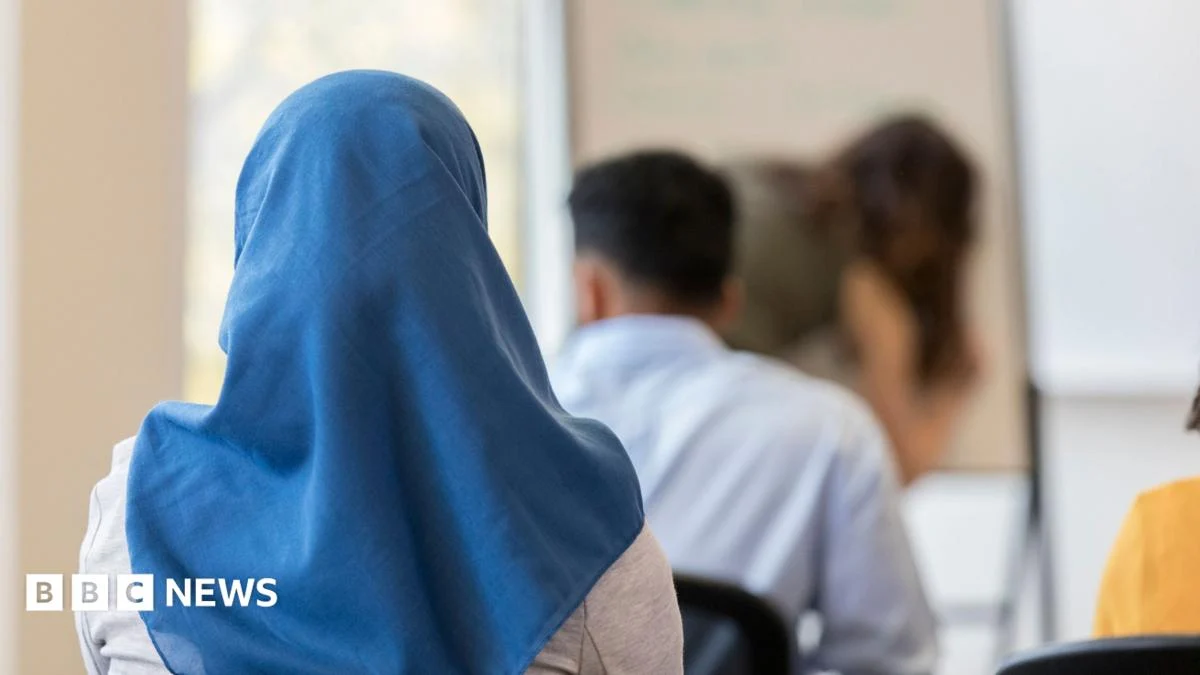
As the new school year commences across Austria, a contentious law prohibiting headscarves for girls under the age of 14 in educational institutions has officially come into force, immediately sparking widespread debate and drawing sharp criticism from religious and civil liberties groups. This legislative measure, which explicitly targets "traditional Muslim" head coverings such as hijabs and burkas in both public and private schools nationwide, represents a significant policy shift with profound implications for religious freedom, gender equality, and social integration within the Alpine nation.
Background and Legislative Intent
The law’s enactment marks a pivotal moment in Austria’s ongoing discourse surrounding the role of religion in public life and the integration of minority communities. The legislation, championed by the conservative People’s Party (ÖVP), garnered support across a spectrum of centrist parties, including the Social Democrats (SPÖ) and the liberal Neos, forming a broad legislative alliance to push the measure through. Proponents of the ban articulate it as a "clear commitment to gender equality" and a necessary step to "protect the rights of young girls."
Integration Minister Claudia Bauer, a prominent figure from the conservative ÖVP, has been a vocal advocate for the ban, framing the headscarf as "a sign of oppression and a means of controlling girls from the earliest childhood." This perspective underscores a central argument of the law’s supporters: that the headscarf, particularly on pre-pubescent girls, is not a matter of free religious expression but rather a symbol of patriarchal control that hinders a child’s independent development and integration into Austrian society. The government maintains that by removing such symbols from schools, it is fostering an environment where all girls can thrive free from perceived societal pressures related to religious attire, thereby promoting genuine equality and autonomy.
The move comes against a backdrop of increasing political focus on integration issues in Austria, a country with a significant Muslim minority, primarily of Turkish and Balkan origin. The debate around religious symbols in public spaces, particularly in schools, is not new to Austria or indeed to Europe, reflecting a broader tension between secular values, individual religious freedom, and national identity.
Opposition and Constitutional Concerns
Despite the government’s stated intentions, the new law has met with formidable opposition, drawing accusations of discrimination and potential unconstitutionality. Critics argue that the ban disproportionately targets Muslim girls, fueling anti-Muslim sentiment and further marginalizing an already vulnerable community.
Carla Amina Baghajati, a spokesperson for the official Islamic Community in Austria (IGGÖ), expressed the organisation’s firm opposition to the ban. In an interview with the BBC, Baghajati asserted, "We believe it unjustifiably restricts the fundamental right to freedom of religion and disproportionately affects Muslim girls." She further elaborated that "Rather than protecting children, it singles out a specific religious practice and risks excluding the very children it claims to support." The IGGÖ views the law not as a measure of protection, but as an act of state interference in religious practice, particularly concerning a choice that for many families is deeply rooted in their faith and cultural identity.
The IGGÖ has pledged its full support for legal challenges by girls and their families "who believe that their fundamental rights are being infringed" and who wish to bring their cases before the Constitutional Court. This stance is significant, as the Austrian Constitutional Court has a precedent of striking down similar legislation. In 2020, the court nullified a previous ban on headscarves in primary schools, ruling that it contravened the principle of Austria’s religious neutrality. This prior judgment provides a strong legal basis for potential new challenges, suggesting that the current, broader ban for girls under 14 may face a similar fate if it is deemed to violate the same constitutional principles. The concept of religious neutrality in Austria is generally understood to mean that the state should not favour or disadvantage any particular religion, and critics argue that singling out the Islamic headscarf constitutes a clear breach of this neutrality.
Enforcement and Practical Challenges
The implementation of the ban places new responsibilities on educators, raising concerns about the practicalities and potential ramifications within schools. Teachers are tasked with enforcing the new regulation. The prescribed enforcement procedure involves a series of talks with the student and their legal guardians if a child is observed wearing a headscarf. Should repeated violations occur, child services must be notified, escalating the matter beyond the school’s immediate purview. As a final resort, guardians could face substantial fines of up to €800 (£685), a measure that highlights the serious nature with which the state intends to enforce the ban.
However, many teachers have publicly expressed apprehension about their new role. Sigi Maurer of the Green Party, an opposition figure, openly criticized Education Minister Christoph Wiederkehr, from the liberal NEOS, accusing him of "creating new conflicts and offloading them onto the teachers." Maurer highlighted that teachers are "already under enormous strain" with their existing educational and pastoral duties, and that Wiederkehr’s policy effectively seeks to "foist the role of police officers onto them." This sentiment reflects broader concerns within the education sector about the additional burden, potential for confrontation with parents and students, and the distraction from core educational objectives that the enforcement of this ban might entail. Teachers fear being caught between state mandates and the cultural sensitivities of their student body, potentially damaging trust and fostering resentment within school communities.
Broader Political Landscape and European Context
The headscarf ban is also viewed through the lens of Austria’s broader political landscape, where debates over immigration, integration, and national identity frequently take center stage. The opposition far-right Freedom Party (FPÖ) has, predictably, criticized the current ban for not going far enough. The FPÖ advocates for a much more expansive prohibition, calling for a general ban on headscarves and face coverings in schools for all students and teachers alike. Ricarda Berger of the FPÖ articulated this hardline stance, stating unequivocally that there is "no place for political Islam in Austria, and certainly not in our schools."
This rhetoric aligns with the broader political discourse championed by figures like Austria’s Chancellor Christian Stocker, leader of the ÖVP, who recently called for a constitutional ban on "political Islam." In an interview with Austrian public broadcaster ORF, Stocker declared his aversion to living in an "Islamic state," signaling a deep-seated concern within conservative circles about the perceived influence of religious ideologies in the public sphere. These statements underscore a growing European trend where anxieties about national identity and cultural cohesion are often articulated through the lens of religious attire and symbols.
Austria’s new law also exists within a wider European context where several countries have grappled with similar issues. France, for instance, has had a ban on wearing any conspicuous religious symbols, including headscarves, turbans, and kippas, in schools for more than 20 years. This comprehensive French legislation, rooted in a strict interpretation of laïcité (secularism), applies equally to all religious symbols. The Austrian law, however, differs significantly from French legislation in that it specifically targets head coverings worn by Muslim women, leading critics to argue it is discriminatory in its application.
Furthermore, Austria, like several other European countries including France, Belgium, and Denmark, already bans the full face veil (niqabs or burkas) in public spaces. While these bans typically cite security or public order concerns, the targeting of the headscarf for younger girls in schools represents a distinct legislative effort, shifting the focus from public safety to perceived issues of childhood autonomy and gender equality within specific religious practices.
Carla Amina Baghajati of the IGGÖ highlighted a deeper concern regarding "a troubling trend" across Europe "in which complex social challenges are reduced to symbolic measures aimed at minority groups." She argued that "Such approaches may generate political attention, but they rarely solve the underlying problems." This perspective suggests that while these bans might appease certain political factions and garner public support, they often fail to address the root causes of social or integration issues, and instead, risk exacerbating divisions and alienating minority communities.
Implications and Future Outlook
The enforcement of Austria’s headscarf ban is expected to trigger a period of intense legal and social contention. The IGGÖ’s commitment to supporting legal challenges means that the Constitutional Court will likely be called upon once again to rule on the legality of such a prohibition. The outcome of these potential legal battles will be crucial, not only for the affected girls and their families but also for defining the boundaries of religious freedom and state authority in Austria.
Beyond the legal sphere, the law’s impact on social cohesion and the integration of Muslim communities in Austria remains a significant concern. Critics fear that rather than promoting integration, the ban could lead to increased alienation, with some families potentially opting for homeschooling or private religious schools, thereby inadvertently creating parallel societies. The symbolic nature of the headscarf, for many, is intrinsically linked to their religious identity and community belonging. Removing it by force from educational settings could be perceived as an attack on their faith and culture, fostering resentment and distrust towards state institutions.
The debate also highlights a fundamental philosophical tension: how does a modern, pluralistic society balance individual religious freedom with collective values such as gender equality, secularism, and national identity? For proponents, the ban is a necessary assertion of progressive values against what they perceive as regressive religious practices. For opponents, it is an overreach of state power, infringing on fundamental rights and singling out a specific religious minority.
As Austria navigates this complex issue, the international community will be watching closely. The outcome of this legislative experiment will undoubtedly contribute to the ongoing European discourse on multiculturalism, religious accommodation, and the rights of minority groups in an increasingly diverse continent. The true measure of the law’s success or failure will not only be determined in the courts but also in its long-term impact on the lives of young girls and the fabric of Austrian society.