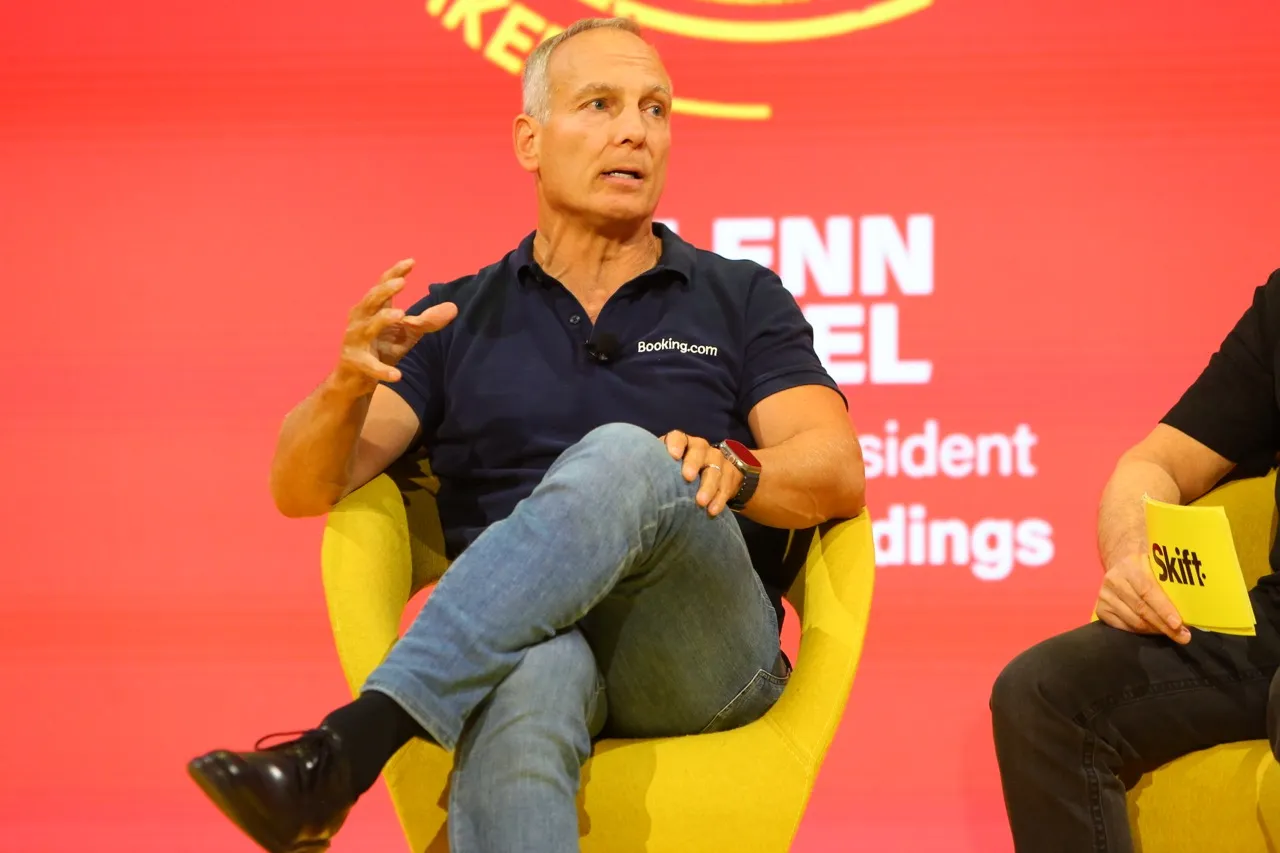
The landscape of the global travel industry is currently undergoing a radical transformation driven by the rapid maturation of generative artificial intelligence and the emergence of autonomous "AI agents." At the center of this technological shift is Booking Holdings, the world’s largest online travel agency by market capitalization. During the Skift Global Forum 2026, held this Tuesday in New York City, Booking Holdings CEO Glenn Fogel addressed the rising tide of Silicon Valley startups and specialized AI tools that promise to automate the entirety of the travel planning and booking process. Despite the buzz surrounding new entrants like Instinct—an AI agent designed to execute complex tasks through simple text interfaces—Fogel maintained a posture of calculated confidence, arguing that the true value in the travel sector lies not just in the algorithm, but in the institutional trust and customer support infrastructure that major players have built over decades.
The Skift Global Forum, an annual gathering of the industry’s most influential executives, served as the backdrop for Fogel’s remarks. This year’s event focused heavily on the transition from "conversational AI" to "actionable AI," where software no longer just provides recommendations but actively manages transactions, modifies itineraries, and handles sensitive financial data. Fogel’s appearance on stage was one of the most anticipated moments of the forum, as it provided a rare glimpse into how the incumbent giants of the "Connected Trip" vision are reacting to the perceived threat of agile, AI-first competitors.
The Challenge of Autonomous AI Agents
The primary subject of Fogel’s critique was the "newer breed" of AI agents, exemplified by Instinct. These tools are designed to bypass traditional user interfaces, allowing travelers to delegate the heavy lifting of research and booking to a digital assistant. For the Silicon Valley venture capital community, these agents represent a potential "disintermediation" of platforms like Booking.com and Expedia. If a consumer can simply tell a bot to "book the best four-star hotel in Rome for under $300 with a gym," the traditional search-and-filter model of the online travel agency (OTA) could theoretically become obsolete.
However, Fogel dismissed the technical barrier to entry as the primary hurdle. "If we want to do Instinct, how hard do you think that would be?" Fogel asked the audience during his keynote session. "It wouldn’t be that hard if that’s all you had to do." His point was clear: creating a functional interface that can process natural language and trigger an API call is a solvable engineering problem that Booking Holdings is already addressing. The real challenge, according to Fogel, is the "last mile" of travel—the complex web of customer service, fraud prevention, and merchant relationships that occurs after the "book" button is pressed.
The Trust Moat and Financial Security
Fogel’s central argument revolved around the concept of a "trust moat." In an era where deepfakes and AI-driven scams are becoming increasingly sophisticated, travelers are more cautious than ever about where they share their credit card details and personal identification. Fogel argued that while a consumer might trust an AI agent to suggest a restaurant or draft a packing list, they are far more hesitant to allow an unproven startup’s algorithm to handle a multi-thousand-dollar vacation transaction.
"When it comes to safeguarding credit card details and other sensitive info, travelers want to deal with real people," Fogel stated. This sentiment underscores a broader industry trend where established brands are leveraging their history of reliability as a competitive advantage against "black box" AI systems. Booking Holdings, which operates brands including Booking.com, Priceline, Agoda, and OpenTable, processes hundreds of billions of dollars in gross bookings annually. The scale of their security infrastructure and their ability to provide human intervention during travel disruptions are assets that Fogel believes cannot be replicated by code alone.
A Chronology of Booking Holdings’ AI Integration
To understand Fogel’s current stance, it is necessary to look at the timeline of Booking Holdings’ adoption of artificial intelligence. The company has moved from early-stage machine learning to full-scale generative AI integration in less than four years:
- Early 2023: Following the public release of GPT-4, Booking Holdings began experimenting with "AI Trip Planners" on the Booking.com and Priceline platforms. These were primarily recommendation engines designed to help users narrow down destinations.
- Late 2024: The company expanded its partnership with OpenAI, integrating more advanced natural language processing capabilities into its customer service stack to handle routine inquiries regarding cancellations and refunds.
- 2025: Booking Holdings announced a major ad deal with OpenAI and a deep integration with Google’s Gemini-powered travel tools. This allowed Booking’s inventory to be surfaced directly within third-party AI ecosystems, ensuring the company remained the underlying fulfillment engine even if the user interface changed.
- 2026: At the current Skift Global Forum, Fogel’s comments signal a shift in strategy. The company is no longer just "using" AI; it is positioning itself as the necessary human and financial layer that makes AI travel booking safe and viable for the mass market.
Supporting Data: The Scale of the Operation
The skepticism Fogel expressed regarding AI startups is backed by the sheer volume of data and logistics Booking Holdings manages. As of the most recent fiscal reports leading into 2026, Booking Holdings continues to dominate the OTA space:
- Gross Bookings: The company reported over $150 billion in annual gross bookings, a testament to the volume of financial transactions it secures.
- Inventory: With over 2.7 million reported listings, including hotels, homes, and apartments, the complexity of maintaining real-time pricing and availability is a task that requires massive computational power and direct relationships with property managers—something an independent AI agent lacks.
- Customer Support: The company employs thousands of customer service agents globally. In the event of a natural disaster, flight cancellation, or overbooked hotel, these human agents provide a level of resolution that autonomous AI agents are currently unable to match.
Industry analysts suggest that while AI agents can "plan," they often struggle with "re-planning" when things go wrong. A 2025 study by travel consultancy Phocuswright indicated that 68% of travelers still prefer human-led support when dealing with booking errors or emergency changes, a statistic that aligns with Fogel’s emphasis on human oversight.
Strategic Partnerships and the OpenAI/Google Nexus
While Fogel downplayed the threat of standalone AI agents, he was vocal about the importance of strategic partnerships with the companies building the underlying technology. Booking Holdings’ deal with OpenAI is not merely about using a chatbot; it is about ensuring that when a user asks ChatGPT to "find me a hotel," the data and the booking engine behind that response are powered by Booking.com.
Similarly, the integration with Google’s ecosystem allows Booking Holdings to maintain its lead in the "search" phase of the traveler’s journey. By embedding its inventory into Google’s AI-driven search results, Booking ensures that it captures the intent of the traveler at the earliest possible moment. This "infrastructure-as-a-service" model allows Booking to benefit from AI advancements without being disrupted by them.
Broader Industry Implications and Analysis
Fogel’s remarks at the Skift Global Forum highlight a growing divide in the travel industry. On one side are the "Pure AI" advocates who believe the user interface is the most important part of the experience. On the other side are the "Fulfillment Giants" like Booking Holdings and Expedia Group, who believe that the backend—the supply, the payments, and the support—is the true value proposition.
The implications of this debate are significant for the future of travel. If Fogel is correct, the "AI Revolution" in travel will not lead to the death of the OTA, but rather to its evolution. We are likely to see a hybrid model where AI handles the "front-end" inspiration and organization, while established platforms handle the "back-end" execution and risk management.
Furthermore, Fogel’s focus on trust suggests that the next phase of competition in the travel sector will not be fought over who has the fastest algorithm, but who has the most secure and reliable brand. As AI makes it easier to generate fake reviews and fraudulent listings, the "verified" nature of a platform like Booking.com becomes its most valuable asset.
Official Responses and Market Reaction
While representatives from Instinct and other AI startups have yet to issue a formal rebuttal to Fogel’s comments, the sentiment in the Silicon Valley tech community remains one of disruption. Proponents of autonomous agents argue that the "trust" Fogel speaks of can eventually be built through blockchain verification and superior AI performance, potentially cutting out the high commission fees charged by OTAs.
Market analysts, however, reacted positively to Fogel’s pragmatic approach. Following his session at the forum, several travel industry analysts noted that Booking Holdings’ focus on the "Connected Trip"—a seamless integration of flights, hotels, and ground transport—is more likely to resonate with consumers than a fragmented experience managed by multiple independent AI bots.
Conclusion: The Future of the Connected Trip
As the Skift Global Forum 2026 continues, the consensus among legacy travel leaders appears to be aligning with Fogel’s vision. The "Connected Trip" remains the ultimate goal, where AI acts as a sophisticated layer of glue that binds various travel services together, rather than a replacement for the services themselves.
Glenn Fogel’s message to the industry was clear: Booking Holdings is not afraid of the technology; it is embracing it. However, the company remains steadfast in the belief that travel is a fundamentally human experience that requires a foundation of trust, security, and accountability—elements that, for now, remain outside the reach of even the most advanced AI agents. The coming years will determine if the "trust moat" is deep enough to withstand the rapid evolution of autonomous technology, but for Booking Holdings, the focus remains on the traveler, the transaction, and the human support that follows.