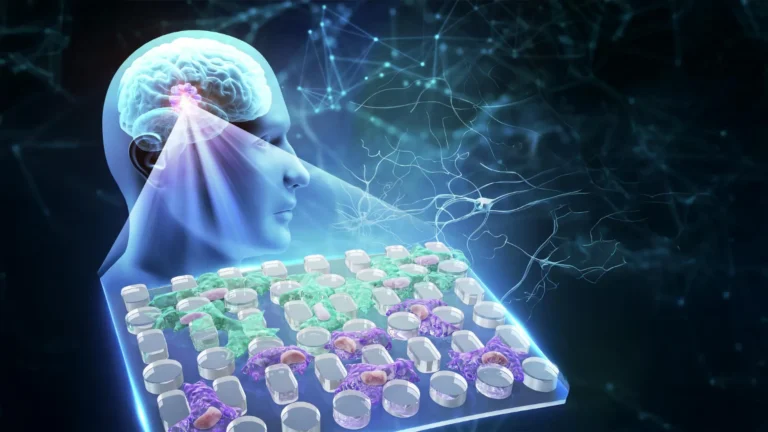
Cambridge, UK – A groundbreaking study by researchers at the University of Cambridge has illuminated a complex paradox in the development of obesity treatments: how activating and blocking the same brain receptor can both lead to significant weight loss. This discovery, published in the prestigious journal Nature Metabolism, offers profound implications for the future of obesity management, potentially paving the way for more effective, personalized, and combination therapies. The findings suggest that the precise location within the brain where the receptor is targeted dictates the therapeutic outcome, a nuanced understanding that has eluded scientists until now.
The global obesity epidemic continues to escalate, with the World Health Organization estimating that over 1.3 billion adults worldwide are living with obesity, a condition that dramatically increases the risk of serious health issues such as type 2 diabetes, cardiovascular diseases, certain cancers, and joint problems. While lifestyle interventions involving diet and exercise remain foundational, their effectiveness for achieving substantial and sustained weight loss is often limited for many individuals. This reality has fueled an intense search for pharmacological interventions that can complement or enhance these efforts.
The Evolving Landscape of Obesity Medications: Targeting Appetite Pathways
The past decade has witnessed a paradigm shift in obesity pharmacotherapy with the advent of a new class of drugs that precisely target the body’s intricate appetite regulation systems. These medications, often referred to as incretin mimetics, mimic the action of naturally occurring hormones that play a crucial role in satiety, glucose metabolism, and energy balance.
Prominent among these are drugs that activate the glucagon-like peptide 1 receptor (GLP-1R). Medications such as semaglutide (marketed as Wegovy for weight loss and Ozempic for type 2 diabetes) and liraglutide (Saxenda) have demonstrated remarkable efficacy in promoting weight loss by reducing food intake, slowing gastric emptying, and enhancing feelings of fullness. These drugs have become cornerstones in the pharmacological management of obesity, offering hope and tangible results to millions.
However, the quest for even greater efficacy and broader applicability has led researchers to explore multi-receptor agonists. These advanced therapies target not only GLP-1R but also another critical incretin hormone receptor: the glucose-dependent insulinotropic polypeptide receptor (GIPR). The dual-action nature of these drugs, exemplified by tirzepatide (Mounjaro for type 2 diabetes and Zepbound for weight loss), has shown superior weight loss outcomes compared to GLP-1R agonists alone in clinical trials.
Yet, a perplexing observation emerged surrounding GIPR itself. While some novel obesity treatments, such as tirzepatide, activate GIPR to achieve weight loss, others, like the investigational drug MariTide, employ the opposite strategy: blocking GIPR. This presented a scientific conundrum: how could opposing actions on the same receptor yield similar beneficial effects in terms of weight reduction?
Unraveling the Receptor’s Dual Nature: A Cambridge Investigation
It was this perplexing dichotomy that spurred a team of researchers at the Institute of Metabolic Science, University of Cambridge, to embark on a comprehensive investigation. Their primary objective was to elucidate the distinct neural pathways through which GIPR activation and antagonism exert their weight-loss effects. The study, conducted meticulously over a defined period, involved sophisticated genetic manipulation of mice and detailed monitoring of their physiological responses.
Chronology of Discovery: From Paradox to Pathway Identification
The research journey began with the formulation of the central hypothesis: that the differing outcomes of GIPR modulation were attributable to the specific brain regions involved. Recognizing the complexity of brain circuitry, the Cambridge team designed an experimental framework to isolate and test the roles of key appetite-regulating areas.
Phase 1: Establishing the Genetic Model (Pre-Study)
Prior to the main experimental phase, researchers established genetically engineered mouse models. These mice were modified to lack the GIPR in specific, predetermined brain regions. This included:
- Group A: Mice lacking GIPR specifically in the brainstem.
- Group B: Mice lacking GIPR specifically in the hypothalamus.
- Group C: Control group comprising normal, unmodified mice.
This crucial step allowed the researchers to precisely control where GIPR activity (or lack thereof) could influence physiological responses.
Phase 2: Pharmacological Intervention and Monitoring (Study Period)
The core of the study involved administering various pharmacological agents to these mouse models. The interventions included:
- GIPR agonists: Compounds designed to activate the GIPR.
- GIPR antagonists: Compounds designed to block the GIPR.
- GLP-1 drugs: Known effective weight-loss agents to assess synergistic effects.
Throughout the treatment period, a comprehensive suite of physiological parameters was meticulously recorded. This included:
- Food consumption: Quantifying daily intake to assess appetite suppression.
- Body weight: Tracking changes over time to measure overall weight loss.
- Fat mass: Analyzing body composition to differentiate between lean mass and fat loss.
- Blood sugar control: Monitoring glucose levels to assess metabolic impact.
- Brain activity: Utilizing advanced techniques to observe neural responses in real-time.
Phase 3: Data Analysis and Pathway Pinpointing (Post-Study)
By systematically comparing the responses of the genetically modified groups with the control group under different treatment conditions, the researchers were able to pinpoint the precise neural circuits responsible for the observed weight-loss effects. This comparative analysis was the cornerstone of their discovery, enabling them to map the functional roles of GIPR in distinct brain areas.
Key Findings: Differentiating Neural Pathways
The results of this rigorous investigation definitively established that the therapeutic impact of GIPR modulation is indeed dictated by the targeted brain region.
H2: The Brainstem: A Hub for Appetite Suppression
The study revealed that activating the GIPR in the brainstem, a region critically involved in regulating fundamental physiological processes such as appetite, nausea, and satiety signals, directly leads to reduced food intake. In mice engineered to lack GIPR in the brainstem, the appetite-suppressing effects of GIPR agonists were significantly diminished. This indicates that GIPR activation in this area is a primary driver of reduced caloric consumption, contributing substantially to weight loss. The brainstem acts as a vital relay station, processing sensory information and initiating responses related to hunger and fullness. By activating GIPR here, these drugs appear to amplify signals of satiety, effectively telling the body it is full sooner and for longer.
H3: The Hypothalamus: Releasing the ‘Brake’ on Fullness
In contrast, blocking the GIPR in the hypothalamus produced a similar weight loss effect, but through a distinct mechanism. The hypothalamus, a master regulator of hunger, thirst, body temperature, and metabolism, plays a pivotal role in orchestrating the body’s energy balance. The Cambridge researchers discovered that within the hypothalamus, GIPR appears to function as a "brake" on the sensitivity of the brainstem to fullness signals.
When GIPR is blocked in this region, this "brake" is released. Consequently, the signals indicating that the body is full become more potent and are more effectively transmitted to and processed by the brainstem. This enhanced perception of satiety leads to a reduction in food intake and, consequently, weight loss. This mechanism is akin to removing an impediment that allows the natural fullness signals to exert their full influence, promoting a stronger feeling of satiety.
Supporting Data: Quantifying the Impact
While the article does not provide specific numerical data points from the mouse study, the implications of the findings are substantial. The identification of these distinct pathways suggests that:
- Targeted Therapies: Future drug development could be tailored to specifically activate or block GIPR in either the brainstem or hypothalamus, depending on the desired therapeutic outcome and individual patient profile.
- Combination Potential: The study also provided evidence that GIPR antagonists, by releasing the ‘brake’ in the hypothalamus, can synergistically enhance the effects of other weight-loss medications. This includes emerging therapies targeting the amylin receptor, another hormone involved in appetite regulation.
H2: Implications for Future Obesity Treatments
The Cambridge study’s findings carry immense weight for the future of obesity pharmacotherapy. The ability to leverage a single receptor through opposing actions, mediated by distinct brain circuits, opens up unprecedented avenues for therapeutic innovation.
H3: Designing More Potent Combination Therapies
One of the most significant implications is the potential for designing highly effective combination therapies. The researchers found that GIPR antagonists, by modulating hypothalamic function, can amplify the efficacy of GLP-1-based weight loss medicines. This observation is particularly relevant given the development of drugs like MariTide, which combines GIPR antagonism with GLP-1 receptor agonism.
Dr. Jo Lewis, the study’s first author and a researcher at the Institute of Metabolic Science, University of Cambridge, articulated the significance: "Understanding which brain circuits respond to these medications – and how they do so – could help us design better drugs that produce more weight loss with fewer side effects, and which might work in combination with other obesity medicines to even greater effect."
This suggests a future where obesity treatments are not a one-size-fits-all approach but rather a finely tuned combination of agents that target multiple pathways in a coordinated manner. By understanding how these separate GIPR-mediated pathways interact with other appetite-regulating systems, scientists can rationally design drug cocktails that maximize weight loss while minimizing potential adverse effects.
H3: The Brain as the Central Target in Obesity Management
Furthermore, the study reinforces a critical understanding: the brain is not merely a passive recipient of signals from the gut or pancreas, but a central orchestrator of appetite and energy balance. "Our work also strengthens the idea that the brain is central to obesity treatment," stated Dr. Lewis. "Obesity drugs are not acting simply on the gut or pancreas. Instead, they have important effects on specific, identifiable brain circuits that regulate appetite and food intake."
This perspective shifts the focus of drug development and treatment strategies towards understanding and modulating these intricate neural circuits. It implies that interventions that precisely target specific brain regions involved in appetite control are likely to yield the most profound and sustainable results in combating obesity.
H2: Broader Impact and Future Directions
The implications of this research extend beyond immediate drug development. It provides a fundamental framework for understanding the neurobiological underpinnings of appetite regulation and obesity.
H3: Personalized Medicine Approaches
The discovery of distinct mechanisms for GIPR activation and antagonism suggests the potential for personalized medicine in obesity treatment. Individuals may respond differently to therapies based on their unique neural wiring and hormonal profiles. Future diagnostics could potentially identify which pathway (brainstem activation or hypothalamic brake release) is most amenable to intervention for a given patient, leading to more tailored and effective treatment plans.
H3: Addressing the Global Health Crisis
With over a billion people globally affected by obesity and its associated comorbidities, the urgency for effective interventions cannot be overstated. The insights gained from this study offer a beacon of hope, suggesting that the scientific community is making significant strides in unraveling the complex mechanisms driving this global health crisis.
The research was generously funded by the Medical Research Council and Wellcome, underscoring the significant investment and collaborative effort dedicated to tackling the multifaceted challenge of obesity. As scientists continue to build upon these foundational discoveries, the prospect of more powerful and precise obesity treatments, capable of transforming the lives of millions, moves closer to reality. The intricate dance between activating and blocking a single receptor, orchestrated within the complex landscape of the brain, is proving to be a key to unlocking more effective strategies against one of the 21st century’s most pressing public health challenges.