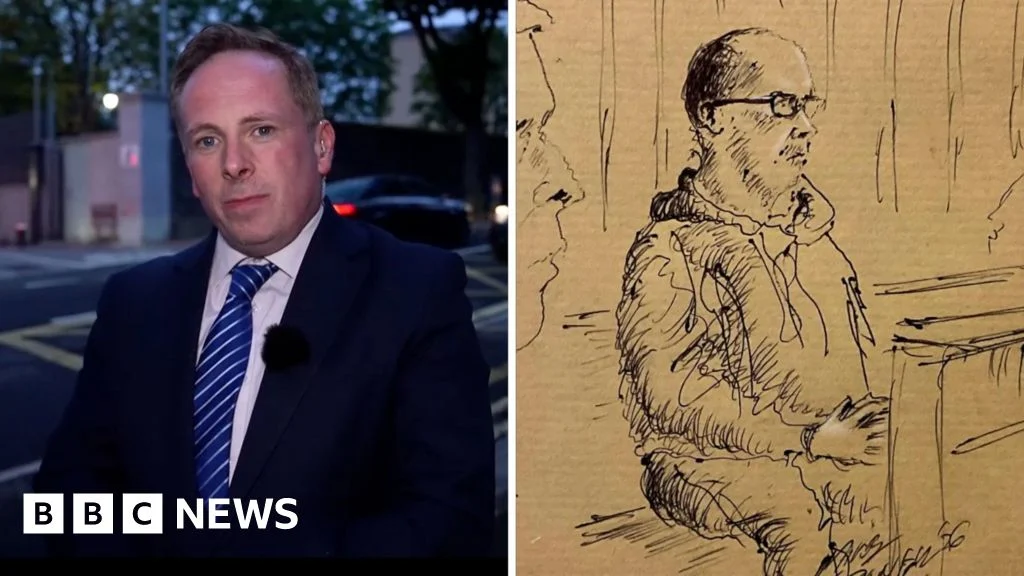
Suspected crime boss Daniel Kinahan appeared before the non-jury Special Criminal Court in Dublin on Sunday, marking a significant development in the global efforts to dismantle one of the world’s most notorious criminal syndicates. His extradition from Dubai, where he was arrested in April, represents a monumental success for international law enforcement and a clear message against the impunity of transnational organised crime leaders. The 49-year-old was formally charged with directing the activities of a criminal organisation between October 2015 and April 2017, a period notorious for an escalation of gangland violence in Ireland, largely attributed to the Kinahan-Hutch feud. Following his appearance, Kinahan was remanded in custody, telling the court, "I think we all know I won’t be getting bail," acknowledging the gravity of the charges and the stringent legal framework under which he is being prosecuted. This high-profile court appearance draws a sharp focus on the long-standing campaign by authorities across multiple continents to bring the alleged architect of a vast criminal enterprise to justice.
The Court Appearance and Immediate Aftermath
Daniel Kinahan was brought before the Special Criminal Court, a three-judge, non-jury court established to deal with cases of terrorism and organised crime where juror intimidation is a concern. Dressed in a dark suit, Kinahan maintained a composed demeanour during the brief hearing. The charges read out against him detail his alleged role in orchestrating a criminal enterprise over a critical 18-month period. This timeframe is particularly salient as it encompasses the height of the violent feud that gripped Dublin, claiming numerous lives and casting a dark shadow over the city. The decision to remand him in custody was widely expected, given the severity of the charges and the potential flight risk associated with an individual of his alleged standing in the criminal underworld. The absence of bail reflects the court’s assessment of the ongoing threat posed by the organisation he is accused of directing and the overwhelming evidence gathered by prosecuting authorities. His statement regarding the unlikelihood of bail underscored the reality of his situation, having been a fugitive from justice for an extended period.
Chronology of a Global Manhunt and Extradition
The journey to Kinahan’s appearance in a Dublin courtroom is a complex narrative spanning years, involving multiple international jurisdictions and unprecedented levels of cooperation.
- Early 2000s: The Kinahan organisation, initially founded by Daniel’s father, Christy Kinahan Sr., began its transformation from a Dublin-centric gang into a significant international player, establishing bases in Spain’s Costa del Sol.
- Mid-2010s: The cartel’s operations expanded significantly, dealing in multi-tonne shipments of cocaine and other illicit drugs, firearms, and engaging in large-scale money laundering across Europe, Africa, and South America.
- February 2016: The Regency Hotel shooting in Dublin marked a turning point. The audacious daytime attack, targeting senior Kinahan figures at a boxing weigh-in, ignited the Kinahan-Hutch feud, propelling the cartel and its violent activities into intense public and international law enforcement scrutiny. This event is often cited as a key catalyst for the concentrated efforts that followed.
- 2016-2017: The period cited in Kinahan’s charges. This era saw a dramatic escalation of tit-for-tat killings across Ireland and Spain, with law enforcement agencies in both countries launching extensive investigations.
- 2017-2022: As pressure mounted in Europe, key Kinahan figures, including Daniel, relocated to Dubai, seeking refuge in a jurisdiction with less stringent extradition agreements at the time. Despite their geographical shift, international surveillance and intelligence gathering intensified.
- April 2022: A watershed moment occurred when the United States Department of the Treasury’s Office of Foreign Assets Control (OFAC) announced unprecedented sanctions against Daniel Kinahan, his father Christy Kinahan Sr., brother Christopher Kinahan Jr., and several associates, offering a $5 million reward for information leading to their arrests or convictions. This move, coordinated with authorities in Ireland, the UK, and Spain, designated the Kinahan organisation as a Transnational Criminal Organisation (TCO), effectively freezing their assets and cutting them off from the global financial system.
- April [Current Year]: Following sustained diplomatic and law enforcement pressure, Daniel Kinahan was arrested in Dubai. His subsequent extradition to Ireland underscores the evolving landscape of international cooperation and the diminishing havens for alleged crime bosses. The process of extradition itself was meticulous, involving extensive legal and diplomatic engagement between Irish and Emirati authorities.
- Sunday [Current Date]: Daniel Kinahan’s arrival and court appearance in Dublin, marking the culmination of years of dedicated work by multiple law enforcement agencies.
The Kinahan Cartel: A Global Criminal Enterprise
The Kinahan cartel, often referred to as the Kinahan Organised Crime Group (KOCG), has been described by the UK’s National Crime Agency (NCA) as responsible for trafficking "tonnes of drugs and firearms around the world for more than 20 years." Its evolution from a street-level gang in Dublin’s inner city to a sophisticated global syndicate is a testament to its ruthlessness, adaptability, and extensive network.
Founded by Christy Kinahan Sr. in the late 1990s, the organisation initially focused on drug dealing within Ireland. However, by the early 2000s, it began to expand its operations internationally, particularly by establishing a strong foothold on Spain’s Costa del Sol. This strategic move allowed them to bypass traditional Irish criminal middlemen and establish direct links with international drug suppliers, particularly from South America and North Africa. The cartel became proficient in logistics, using legitimate-looking businesses and complex financial structures to launder vast sums of money derived from their illicit activities.
Under the alleged leadership of Daniel Kinahan, the cartel reportedly diversified and scaled up its operations. It cultivated relationships with various criminal networks across Europe, including biker gangs and other established organised crime groups, facilitating the distribution of illicit drugs such as cocaine, cannabis, and heroin. The NCA and An Garda Síochána (Irish police) have consistently highlighted the cartel’s involvement in multi-million-pound drug shipments, often concealed within legitimate cargo, and the large-scale importation of illegal firearms, contributing significantly to gangland violence in Ireland and the UK.
The cartel’s modus operandi has been characterised by extreme violence, intimidation, and a strict code of silence. It has been linked to numerous murders and violent assaults, particularly during the protracted feud with the Hutch gang. This internal Irish conflict, which played out prominently between 2016 and 2018, brought unprecedented scrutiny from international law enforcement agencies, transforming what might have been viewed as a domestic gangland issue into a global priority.
International Pressure Mounts: Sanctions and Law Enforcement Cooperation
The turning point in the international pursuit of the Kinahan cartel leadership came with the coordinated actions initiated in April 2022. The US Treasury Department’s designation of the Kinahan organisation as a Transnational Criminal Organisation was a powerful strategic move. This designation, typically reserved for groups like the Yakuza or MS-13, allowed for the unprecedented use of financial sanctions against the cartel’s key figures and associated businesses.
The sanctions imposed by OFAC had far-reaching consequences:
- Asset Freezes: All property and interests in property of the designated individuals and entities subject to U.S. jurisdiction were frozen, and U.S. persons were generally prohibited from engaging in transactions with them.
- Financial Isolation: The sanctions effectively aimed to cut the Kinahans off from the global financial system, making it exceedingly difficult for them to conduct business, launder money, or travel internationally. Banks, financial institutions, and businesses worldwide became wary of any dealings with individuals or entities linked to the Kinahan network, fearing secondary sanctions.
- Information Gathering: The $5 million reward offered by the U.S. Department of State’s Transnational Organized Crime Rewards Program incentivised individuals with information to come forward, providing a critical tool for intelligence gathering.
These U.S. sanctions were a direct result of extensive intelligence sharing and collaboration between An Garda Síochána, the UK’s National Crime Agency, and various U.S. federal agencies, including the FBI and DEA. The NCA stated that the Kinahan organisation was one of the "most dangerous organised crime groups in the world," with its operations having a direct impact on the safety and security of communities across the UK. Gardaí, for their part, have maintained a relentless focus on dismantling the cartel’s operations within Ireland, leading to numerous arrests, drug seizures, and the disruption of criminal networks.
Europol and Interpol also played crucial roles in facilitating cross-border intelligence exchange and operational coordination. The collaboration with authorities in the United Arab Emirates was particularly vital, as Dubai had long been perceived as a safe haven for international criminals. The sustained diplomatic and law enforcement engagement with the UAE eventually led to the arrests of Daniel Kinahan and several of his close associates in April [Current Year], demonstrating a clear shift in the UAE’s stance on hosting alleged crime figures.
Official Reactions and Statements
While specific live statements regarding Daniel Kinahan’s recent court appearance are generally reserved until legal proceedings are more advanced, the overarching sentiment from law enforcement and government officials has consistently underscored a firm commitment to tackling organised crime.
An Garda Síochána has repeatedly emphasised the long-term, sustained nature of their efforts against the Kinahan organisation. Garda Commissioner Drew Harris has often spoken about the "relentless pursuit" of those involved in organised crime, highlighting the importance of international cooperation. The force views such extraditions as a vindication of years of painstaking investigative work and a significant blow to the morale and operational capacity of criminal gangs.
Similarly, the UK’s National Crime Agency has consistently reiterated its determination to target the leadership of international drug trafficking networks. Senior NCA officials have previously stated that bringing individuals like Kinahan to justice is crucial not only for prosecuting past crimes but also for preventing future harm to communities affected by drug-related violence and exploitation.
From a governmental perspective, Irish Ministers for Justice have consistently reaffirmed the State’s commitment to upholding the rule of law and protecting its citizens from the scourge of organised crime. The successful extradition of a high-profile figure like Kinahan is seen as a powerful demonstration of the State’s capacity to reach beyond its borders to ensure justice.
The U.S. authorities, through statements from the Treasury Department and Department of State, have lauded the success of their sanctions regime and the collaborative efforts that led to arrests. These statements often serve as a warning to other transnational criminal organisations that the U.S. will leverage all available tools, including financial and diplomatic pressure, to disrupt their activities globally.
The Significance of the Special Criminal Court
The decision to try Daniel Kinahan in the Special Criminal Court is highly significant. Established in 1972 during the Troubles to deal with paramilitary offences, its remit has since expanded to include serious organised crime cases. The court operates without a jury, with three judges presiding over trials, a measure designed to prevent juror intimidation or interference, which can be a pervasive threat in cases involving powerful criminal organisations.
Critics of the Special Criminal Court often raise concerns about due process and the right to a trial by jury, a cornerstone of common law systems. However, proponents argue that its existence is a necessary evil in the face of exceptional threats to justice. For cases involving individuals like Kinahan, where there is a documented history of violence, witness intimidation, and attempts to subvert the legal process, the non-jury format is deemed essential to ensure a fair and uncompromised trial. The court’s procedures are robust, adhering to strict rules of evidence and allowing for appeals to higher courts, thereby attempting to balance constitutional rights with public safety and the effective administration of justice.
The use of this court for Kinahan’s trial underscores the Irish State’s assessment of the extreme nature of the alleged crimes and the potential risks associated with a conventional jury trial. It signals a commitment to employing the most stringent legal mechanisms available to prosecute those accused of orchestrating large-scale criminal enterprises.
Implications for Transnational Organised Crime
The extradition and subsequent charging of Daniel Kinahan represent a landmark moment in the global fight against transnational organised crime.
- A Blow to Leadership: While no single arrest can entirely dismantle a vast criminal network, the removal of a key alleged leader like Kinahan is a significant blow to the cartel’s operational capacity, command structure, and morale. It creates a vacuum at the top, potentially leading to internal power struggles and disrupting established supply chains and financial conduits.
- Deterrent Effect: This case sends a powerful message to other international crime bosses that perceived safe havens are shrinking, and that sustained international cooperation can eventually overcome geographical and jurisdictional barriers. The success of the U.S. sanctions, combined with effective extradition protocols, provides a blueprint for future actions against similar organisations.
- Strengthened International Cooperation: The Kinahan case is a testament to the increasing effectiveness of multilateral collaboration between law enforcement agencies, intelligence services, and governments. It highlights the importance of shared intelligence, coordinated operations, and diplomatic pressure in tackling criminal networks that operate without regard for national borders.
- Impact on Drug Trafficking: Disrupting a major player in the global drug trade like the Kinahan cartel will inevitably have an impact on the flow of illicit narcotics. While other groups may attempt to fill the void, the disruption can lead to temporary shortages, price fluctuations, and increased risks for traffickers.
- Rule of Law and Public Confidence: For communities in Ireland, the UK, and Spain that have suffered from the violence and social decay wrought by the Kinahan organisation, this development offers a measure of justice and reassurance. It reaffirms the principle that even the most powerful alleged criminals are not above the law and can be held accountable.
What Lies Ahead
Daniel Kinahan’s appearance in court is merely the beginning of what is expected to be a lengthy and complex legal process. The prosecution will now begin to present its extensive evidence, much of which has been gathered over years through intelligence operations, surveillance, and international cooperation. The defence will undoubtedly mount a vigorous challenge, scrutinising every aspect of the evidence and legal procedures.
The case will likely involve testimony from numerous witnesses, potentially including former associates who have turned state’s evidence, and detailed financial analysis tracing the cartel’s illicit gains. The verdict, whenever it comes, will have profound implications, not only for Daniel Kinahan personally but also for the ongoing efforts to dismantle the remnants of the Kinahan cartel and other transnational criminal organisations. Authorities will remain vigilant, knowing that the fight against organised crime is a continuous battle that requires sustained effort, resources, and unwavering international collaboration. The extradition and trial of Daniel Kinahan stand as a potent symbol of this global commitment.