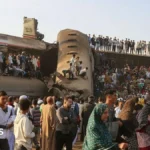



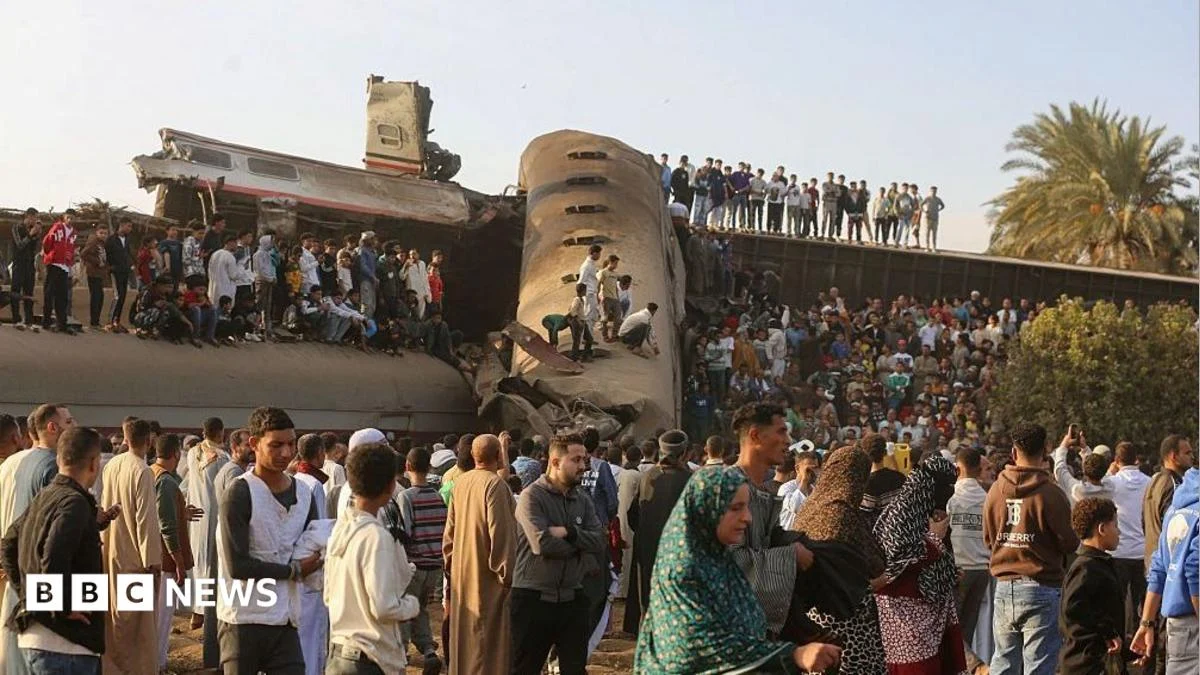
A devastating train collision near the historic city of Giza in Egypt has claimed the lives of at least seven individuals and left more than 100 injured, triggering a massive emergency response and reigniting critical discussions about the safety and modernization of the nation’s aging railway network. The incident, which occurred on Sunday, saw two southbound passenger trains collide, with several carriages subsequently derailing and plunging down an embankment, presenting a grim scene of twisted metal and human suffering. This catastrophic event has prompted an immediate, high-level investigation ordered by President Abdul Fattah al-Sisi, who has vowed to hold all negligent parties accountable, as the public prosecutor’s office warned that the death toll could still rise.
Chronology of a Catastrophe
The tragic sequence of events unfolded on Sunday in the area between Kafr Ammar and Al-Raqqa stations, situated within the Al-Ayyat district, south of Giza. According to initial reports from the Egyptian Railway Authority (ENR), the collision involved two trains traveling on the same line. One service, originating from Giza and heading towards Fayoum, reportedly crashed into the rear of another train, which was stationary on the tracks. This second train was on a longer journey, traveling south from Cairo to Aswan, a major route connecting the capital to Upper Egypt. The impact was severe, leading to multiple carriages overturning and, in some cases, splitting apart or tumbling down a nearby embankment, illustrating the immense forces involved.
Eyewitness accounts and early images from the scene depicted a chaotic and harrowing situation. Uninjured passengers and local bystanders immediately sprang into action, clambering into the mangled carriages in a desperate search for survivors and those trapped. The sheer scale of the accident quickly overwhelmed initial local capabilities, necessitating a swift and robust response from national emergency services. Ambulances, rescue teams, and law enforcement personnel converged on the site, establishing a triage area and commencing the arduous task of extricating victims from the wreckage. The driver of one of the trains was tragically confirmed to be among the fatalities, underscoring the immediate and severe impact of the crash on those operating the locomotives.
Immediate Aftermath and Medical Response
In the immediate wake of the disaster, a coordinated emergency response was launched across the Giza and Cairo regions. The Egyptian government announced that hospitals in the vicinity had been placed on "heightened alert" to manage the anticipated influx of casualties. Dr. Khaled Abdel Ghaffar, Egypt’s Health Minister, provided updates on the nature of injuries, confirming that many patients were being treated for severe conditions, including multiple broken bones and significant head injuries. The sheer number of injured individuals – exceeding 100 – placed immense strain on medical facilities, requiring rapid mobilization of surgical teams and emergency medical supplies.
The Egyptian Red Crescent played a crucial role on the ground, deploying teams to the crash site to provide immediate first aid, psychological support to victims and their traumatized families, and assist with the coordination of rescue efforts. Their presence offered a vital humanitarian lifeline amid the devastation, addressing both the physical and emotional needs arising from the accident. The ongoing efforts involved complex recovery operations, with cranes being dispatched to the scene to carefully lift and remove the wrecked train carriages, a process expected to cause significant and prolonged disruption to rail services between Giza and the Upper Egypt region. The full timeline for the resumption of normal operations remained unclear, adding to the ripple effect of the incident on daily life and commerce.

Official Reactions and Presidential Directive
The severity of the train crash quickly drew the attention of Egypt’s highest authorities. President Abdul Fattah al-Sisi issued a stern directive, ordering all relevant state bodies to launch a comprehensive and transparent investigation into the circumstances surrounding the accident. In a public statement, President Sisi emphasized the imperative to "investigate the circumstances of the accident, and hold accountable anyone found to have been negligent." This presidential mandate underscores the government’s commitment to uncovering the truth behind the collision and assigning responsibility, a response that reflects the gravity of the incident and the persistent public demand for improved safety standards within the national railway system.
The public prosecutor’s office, acting on the presidential directive, immediately initiated its own independent inquiry. This involves examining critical evidence from the scene, interviewing survivors, witnesses, railway personnel, and scrutinizing operational data, including signal logs and communications records. The early warning from the prosecutor’s office that the death toll could rise further underscored the preliminary nature of the casualty figures and the ongoing challenges faced by rescue teams in fully assessing the extent of the disaster. Domestically, the incident sparked immediate public outrage and a wave of criticism, with calls for the resignation of the transport minister echoing across social media platforms and in public discourse, reflecting deep-seated frustration with recurring rail accidents.
Internationally, expressions of solidarity and condolence poured in. Saudi Arabia’s Ministry of Foreign Affairs conveyed its "solidarity" with Egypt and extended wishes for a speedy recovery to the injured, highlighting regional support during times of crisis. Similarly, Turkey’s Ambassador to Egypt took to X (formerly Twitter) to extend "heartfelt condolences and sincere sympathy" to the victims, their families, and the Egyptian people, reflecting the broader international community’s concern and empathy following such a tragic event.
Egypt’s Troubled Railway History: A Pattern of Negligence
This latest train disaster is not an isolated incident but rather a grim recurrence in Egypt’s long and often tragic railway history. The nation boasts one of the oldest railway networks in Africa and the Middle East, with its first line inaugurated in 1854. While historically vital for connecting vast stretches of the country, the system has suffered from decades of chronic underinvestment, aging infrastructure, inadequate maintenance, and outdated signaling systems. These systemic issues have frequently been cited as root causes for a string of deadly accidents, eroding public trust and placing immense pressure on successive governments to undertake comprehensive reforms.
The location of this recent crash, near Al-Ayyat, holds a particularly somber significance. It is tragically close to the site of Egypt’s deadliest train disaster, which occurred in February 2002. In that horrifying incident, a fire engulfed a passenger train traveling from Cairo to Luxor, resulting in the official deaths of more than 370 people, although some unofficial estimates placed the toll considerably higher. The memory of that catastrophe, caused by a cooking gas cylinder explosion in a crowded carriage, remains seared into the national consciousness. Furthermore, the same general area witnessed two additional significant crashes in 2009, each claiming dozens of lives, reinforcing a distressing pattern of accidents attributed to a combination of human error, technical malfunctions, and infrastructure decay.
Data from the Egyptian Central Agency for Public Mobilization and Statistics (CAPMAS) has consistently highlighted the alarming frequency of railway accidents. While the government has made efforts to reduce these figures, incidents often spike, drawing renewed public scrutiny. For instance, in some years, hundreds of train accidents have been reported across the network, ranging from minor derailments to catastrophic collisions. Experts and transport analysts have frequently pointed to the need for a holistic overhaul, encompassing not just physical infrastructure upgrades but also improvements in operational protocols, staff training, and rigorous enforcement of safety regulations.

Efforts Towards Modernization and Persistent Challenges
In recent years, the Egyptian government has acknowledged the critical state of its railway network and has initiated ambitious plans for modernization. These efforts include significant investments aimed at upgrading signaling systems from antiquated mechanical ones to modern electronic controls, procuring new rolling stock, and renovating tracks and stations. Major projects have been announced and are underway, often with international financing and technical expertise, to enhance safety and efficiency across the network. The goal is to transform the railway system into a modern, reliable, and safe mode of transport for millions of Egyptians who rely on it daily for commuting and inter-city travel.
However, the scale of the challenge is immense. The network spans thousands of kilometers, and the process of modernization is both capital-intensive and time-consuming. Critics argue that despite announced projects, the pace of implementation has been slow, and existing safety deficiencies persist. The current accident serves as a stark reminder that even with modernization efforts, the transition period remains fraught with risks, and the cumulative impact of decades of neglect cannot be undone overnight. Issues such as lax enforcement of safety procedures, insufficient maintenance schedules, and the potential for human error within an overburdened system continue to pose significant threats.
Broader Impact and Implications
Beyond the immediate human tragedy, the train collision carries broader implications for Egypt. It deepens public skepticism regarding the efficacy of government reforms and the safety of state-run services. For a country heavily reliant on its domestic tourism sector and aspiring to attract more international visitors, such incidents can damage its image and deter travel. Moreover, the disruption to the vital rail corridor between Cairo/Giza and Upper Egypt impacts commerce, agricultural supply chains, and the mobility of a significant portion of the population.
Politically, the accident puts increased pressure on the Ministry of Transport and the Egyptian National Railways (ENR) to demonstrate tangible progress in improving safety. The calls for ministerial resignations are indicative of a public that has grown weary of promises without corresponding improvements. The ongoing investigation will not only seek to identify the immediate causes but also likely delve into systemic issues, potentially leading to a renewed push for accelerated reforms, stricter oversight, and increased accountability at all levels of the railway administration. The tragedy underscores the urgent need for a sustained, comprehensive approach to ensure that Egypt’s railway system can safely serve its people and support the nation’s development goals. The coming weeks and months will reveal the full extent of the accident’s ramifications, both in terms of human cost and the trajectory of Egypt’s crucial infrastructure development.