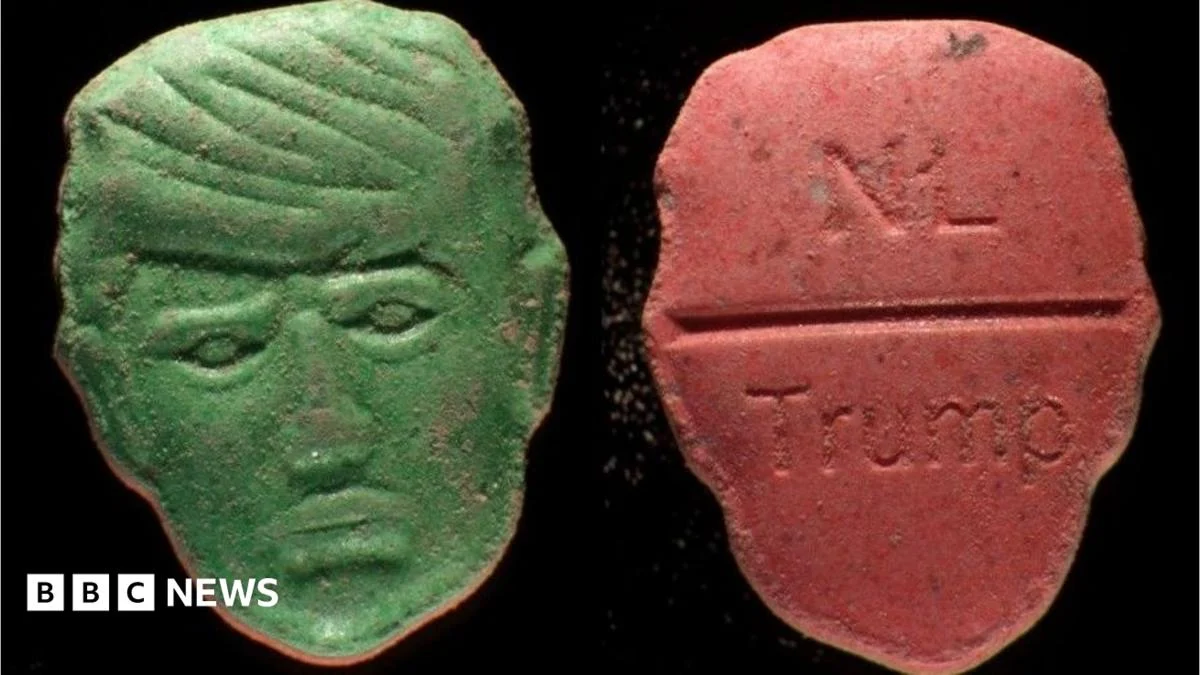
The Trimbos Institute, a leading Dutch drug addiction and mental health research organization based in Utrecht, has issued an urgent "red alert" to drug users across the Netherlands following the discovery of potentially lethal ecstasy pills featuring the likeness of former US President Donald Trump. These distinctive pills, which depict Trump’s face on one side and are stamped with the words "Trump" and "NL" on the other, were found to contain dangerously high concentrations of PMMA (para-methoxymethamphetamine), a highly toxic and slow-acting stimulant. The institute’s unequivocal warning – "Do not use this pill under any circumstance" – underscores the severe public health risk posed by these adulterated substances, which can induce severe overheating with potentially fatal consequences. This incident highlights the ongoing challenges faced by public health bodies and law enforcement in combating the illicit drug trade and its inherent dangers.
The Perilous Discovery: PMMA-Laced "Trump" Pills
The alarm was raised in August after several of these distinctive pills were submitted to drug testing centers operated by the Trimbos Institute. Forensic analysis quickly revealed the presence of PMMA, a substance pharmacologically similar to MDMA (3,4-methylenedioxymethamphetamine), the active ingredient commonly found in ecstasy pills. However, the crucial difference lies in their respective pharmacokinetic profiles and effects. While MDMA typically produces a rapid onset of euphoria and increased energy, PMMA’s effects are significantly delayed, often taking several hours to manifest. This delayed action, coupled with a less pronounced initial stimulating effect, creates a perilous scenario: users, not feeling the desired effects, may be tempted to ingest additional pills, leading to a cumulative and ultimately toxic dose. The Trimbos Institute explicitly warned that such a mistake dramatically increases the risk of overdose, which can result in symptoms including severe nausea, dangerously elevated heart rates, convulsions, and hyperthermia—an extreme rise in body temperature that can lead to organ failure, brain damage, and death. Anniek Groothuis, a spokesperson for the Trimbos Institute, confirmed to the Associated Press that, as of the warning’s issuance, there had been no reported cases of death or serious illness directly attributed to these specific pills, a testament to the proactive nature and effectiveness of the institute’s testing and alert system. Nevertheless, the potential for harm remains exceptionally high.
Understanding PMMA: A Silent Killer in the Illicit Market
Para-methoxymethamphetamine (PMMA) and its close analogue, PMA (para-methoxyamphetamine), have a notorious history within the illicit drug market, recognized globally as dangerous adulterants or substitutes for MDMA. Both compounds belong to the amphetamine class but possess distinct pharmacological properties that make them far more hazardous than MDMA, especially when consumed unknowingly. Unlike MDMA, which primarily affects serotonin pathways, PMMA has a more complex and potent effect on neurotransmitters, including norepinephrine and dopamine, in addition to serotonin. The critical danger stems from its slow metabolic breakdown and its potent ability to increase body temperature (hyperthermia), a core mechanism of its toxicity.
When a user ingests an MDMA pill, they typically experience effects within 30 to 60 minutes. If the desired sensation is not achieved, a responsible user might wait or avoid further doses. With PMMA, however, the delay can stretch to two or three hours. During this latency period, a user, assuming the initial dose was weak or ineffective, might consume more pills. This stacking of doses leads to a rapid accumulation of PMMA in the body, overwhelming its metabolic capacity and triggering a sudden, severe toxic reaction. The resulting hyperthermia can quickly escalate to life-threatening levels, causing rhabdomyolysis (muscle breakdown), kidney failure, liver damage, cardiovascular collapse, and cerebral edema. The absence of the typical euphoric or empathogenic effects associated with MDMA, replaced by an uncomfortable and dangerous stimulating effect, further complicates the user’s ability to recognize the danger until it is too late. Numerous fatalities linked to PMMA and PMA have been reported worldwide, underscoring the critical importance of drug testing services and public awareness campaigns.
The Trimbos Institute: A Pillar of Dutch Public Health
The Trimbos Institute plays a pivotal role in the Netherlands’ comprehensive public health strategy, particularly concerning addiction and mental health. Founded in 1996 through a merger of several organizations, Trimbos acts as a national knowledge institute, conducting research, developing evidence-based interventions, and advising policymakers on drug, alcohol, and tobacco use, as well as mental health issues. Its drug testing services are a cornerstone of the Dutch harm reduction approach. Unlike countries where drug testing is illegal or heavily restricted, the Netherlands operates a network of testing centers where individuals can anonymously submit illicit drugs for chemical analysis. This pragmatic approach acknowledges the reality of drug use and aims to mitigate its harms by providing users with accurate information about the substances they intend to consume.
The "red alert" system employed by Trimbos is a critical component of this strategy. When dangerously adulterated or high-dose substances are identified, the institute rapidly disseminates warnings through its website, social media, and collaborations with local health services, outreach workers, and media outlets. This proactive communication is designed to reach potential users before serious incidents occur. The effectiveness of such a system is evident in cases like the current "Trump" pill alert, where early detection and widespread dissemination of information can prevent hospitalizations and fatalities, ultimately saving lives. The institute’s work exemplifies the Netherlands’ unique stance on drug policy, balancing legal prohibitions with robust public health interventions.
Dutch Drug Policy: A Pragmatic Paradox
The Netherlands has long been recognized for its distinctive and often debated approach to drug policy. While the production, sale, and use of ecstasy (MDMA) and other hard drugs remain unequivocally illegal under the Opium Act, the Dutch system incorporates a pragmatic, harm-reduction philosophy. This contrasts sharply with the "war on drugs" rhetoric prevalent in many other nations. The policy distinguishes between hard drugs (like ecstasy, cocaine, heroin) and soft drugs (like cannabis). While soft drugs are "tolerated" under strict conditions (e.g., coffee shops), hard drugs are subject to rigorous enforcement.
However, even within the realm of hard drugs, the emphasis extends beyond mere prohibition to include public health and safety. The existence and funding of drug testing services like those offered by Trimbos are a direct manifestation of this harm reduction principle. The underlying rationale is that since illicit drug use cannot be entirely eradicated, it is imperative to minimize the associated risks. This involves providing accurate information, promoting safer use practices (e.g., advising against mixing drugs, starting with small doses), and offering support services for addiction. A 2024 Dutch government report underscored the persistent popularity of ecstasy as a party drug, noting that in 2022, a "record 550,000 people" had taken the drug at least once. This statistic, while highlighting the societal challenge, also reinforces the critical need for effective harm reduction measures, as prohibition alone has not deterred widespread use. The "Trump" pill incident serves as a stark reminder of the ongoing tension between legal frameworks and public health realities in the illicit drug market.
A History of Dangerous Adulterants and Novelty Branding
The appearance of PMMA in ecstasy pills is not an isolated incident but part of a recurring pattern in the illicit drug trade. Throughout the 2000s and 2010s, outbreaks of PMMA/PMA-related deaths occurred in various countries, including Canada, the UK, Australia, and parts of Europe, often linked to periods of MDMA scarcity or adulteration by unscrupulous manufacturers seeking to cut costs or mimic MDMA’s effects without understanding the profound dangers. These incidents consistently highlight the extreme variability and unpredictability of the black market.
The use of distinct, often pop culture-inspired designs for ecstasy pills is also a long-standing phenomenon. Manufacturers often press pills into recognizable shapes or stamp them with logos, symbols, or even celebrity faces, believing this enhances their marketability, creates a "brand" identity, or simply makes them more appealing to users. This strategy, however, often masks the true chemical composition and potency of the substance, creating a false sense of security or quality. The "Trump" pills are a prime example of this trend, leveraging a highly recognizable, albeit controversial, public figure to create a distinctive product.
This is not the first time Donald Trump’s image has been exploited in the illicit drug market. In 2017, German police in Osnabrück confiscated approximately 5,000 carrot-colored ecstasy tablets pressed into the shape of the then-US president’s head. These pills, which were believed to have been promoted online under the audacious slogan "Trump makes partying great again," were discovered during a traffic stop and led to the arrest of a father and son. That incident, much like the current one in the Netherlands, garnered significant media attention, underscoring the bizarre intersection of illicit drug manufacturing and contemporary political iconography. Such branding tactics often aim to capitalize on novelty and social media virality, inadvertently increasing the risk of exposure to potentially dangerous substances.
Law Enforcement Challenges and International Cooperation
The illicit drug trade operates across international borders, posing significant challenges for law enforcement agencies. The production of synthetic drugs like ecstasy and its analogues often occurs in clandestine laboratories, frequently in one country, with distribution networks spanning multiple nations. The "Trump" pills, stamped with "NL," suggest a potential Dutch origin or at least a specific target market within the Netherlands, but the precursor chemicals and expertise could originate from anywhere.
Police forces, in collaboration with customs and border control agencies, are constantly working to disrupt these supply chains, interdict shipments, and dismantle manufacturing operations. However, the sheer volume and adaptability of the illicit market make this an arduous task. The public health warnings issued by institutes like Trimbos serve as crucial intelligence for law enforcement, identifying emerging threats and potentially guiding investigative efforts. The need for international cooperation is paramount, as drug manufacturers and traffickers exploit differences in national laws and enforcement capabilities. Information sharing between police forces, intelligence agencies, and public health bodies across Europe and beyond is essential to effectively combat the spread of dangerous drugs like PMMA.
Broader Implications for Public Health and Drug Education
The "red alert" issued by the Trimbos Institute carries significant broader implications for public health and drug education. Firstly, it reinforces the unpredictable and inherently risky nature of consuming illicit drugs. Without professional testing, users have no way of knowing the actual content, purity, or dosage of what they are taking. The incident serves as a powerful cautionary tale against complacency and the dangers of relying on street names, visual appearance, or anecdotal information about drug effects.
Secondly, it highlights the enduring importance of harm reduction strategies, particularly drug checking services. In environments where drug use persists despite legal prohibitions, providing safe and accessible testing facilities is a vital public health intervention. These services not only identify dangerous substances but also offer a non-judgmental point of contact for health information and referral to support services.
Thirdly, the incident underscores the continuous need for innovative and targeted drug education campaigns. Such campaigns must reach diverse populations, including young people and festival-goers, who are often the primary consumers of recreational drugs like ecstasy. Education efforts should focus on the specific dangers of adulterants like PMMA, the importance of seeking testing, recognizing overdose symptoms, and knowing how to respond in an emergency. The use of a recognizable figure like Donald Trump on these pills might inadvertently make them more memorable or intriguing, necessitating even more robust and clear counter-messaging from health authorities.
In conclusion, the discovery of potentially lethal PMMA-laced "Trump" ecstasy pills in the Netherlands represents a serious public health threat. The swift action by the Trimbos Institute, issuing a "red alert" and providing critical information, exemplifies the proactive harm reduction approach adopted by the Dutch. This incident is a stark reminder of the hidden dangers lurking in the illicit drug market, underscoring the vital roles of drug testing, public awareness, and international cooperation in safeguarding public health against evolving and often deadly threats. The ongoing challenge for societies remains how to effectively balance legal prohibition with pragmatic public health interventions in the face of persistent drug use.