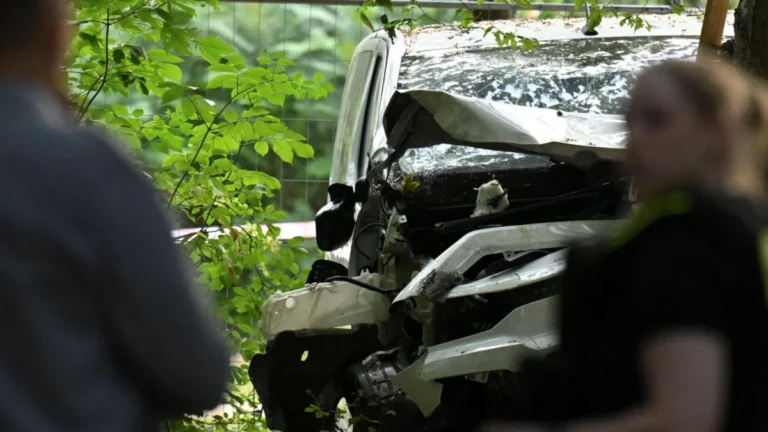



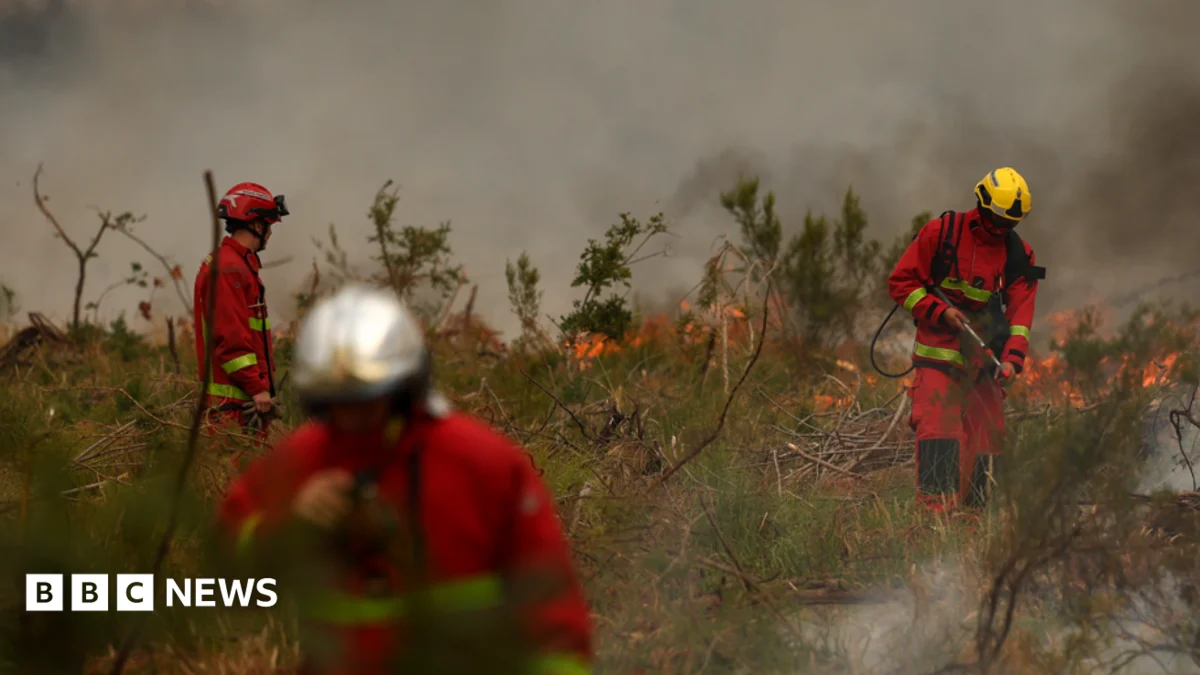
Firefighters across southwestern France are engaged in an arduous battle against colossal wildfires threatening the historic city of Bordeaux, forcing the evacuation of tens of thousands and straining emergency services to their limits. The inferno, fueled by an unprecedented heatwave and prolonged drought, has consumed vast swathes of land, creating a crisis that mirrors similar devastations sweeping across Spain, where another 90,000 people have been displaced. The dual emergencies underscore the escalating challenges posed by climate change-induced extreme weather events, prompting urgent calls for collective action from European leaders.
The French Front: Gironde Under Siege
The heart of the French crisis lies in the Gironde region, famed globally for its exquisite vineyards, where multiple fires have converged into a formidable blaze. On Sunday, Bordeaux Mayor Thomas Cazenave confirmed the main fire front was approximately 15 kilometers (9 miles) from the outer reaches of the city’s wider metropolitan area and 25 to 30 kilometers (15 to 19 miles) from its urban core. While downplaying immediate evacuation prospects for Bordeaux itself, the proximity highlights the grave threat posed by the rapidly advancing flames.
Overnight into Sunday, approximately 55,000 residents were compelled to flee their homes in villages scattered to the south of Bordeaux. These evacuations, conducted under the ominous glow of the approaching fires, added to the staggering tally of over 220,000 people displaced across southwestern France since the fires began their destructive march. The scale of this displacement is unparalleled in recent French history, transforming communities into temporary refugee centers.
The sheer ferocity and unpredictable nature of the fires have been a defining characteristic of this crisis. Captain Nicolas Braz, a veteran leader of the firefighting operation, described the phenomenon as creating "its own winds – complete with whirlwinds," rendering the situation "erratic and unmanageable." This pyro-convective activity, where intense heat generates its own localized weather systems, makes containment efforts exceptionally difficult and hazardous for the thousands of personnel on the ground. France’s Interior Minister Laurent Nunez echoed these concerns on Sunday, stating that the situation in the region remained "very unfavorable" and that the wildfire was "moving erratically towards the Bordeaux metropolitan area," painting a grim picture for the coming hours and days.
A Nation Ablaze: Context and Scale of the French Crisis
The fires in Gironde are part of a broader, devastating pattern across France. An area of 42,000 hectares has been incinerated in the southwest alone, marking it as one of the largest forest fires to strike the nation since World War Two. This figure contributes to a grim national total of approximately 98,000 hectares burned across France since the start of the year, far exceeding the annual average and indicating a severe escalation in wildfire activity. The ecological impact is profound, with irreplaceable forests, wildlife habitats, and agricultural land turning to ash.
The scale of the rescue effort in Gironde is immense, reflecting the severity of the threat. A multinational force comprising 2,500 firefighters, including specialized teams from Switzerland, has been deployed. They are supported by 1,500 military personnel, providing crucial logistical and operational assistance, and nearly 1,200 police and gendarmes who are coordinating evacuations, securing affected areas, and ensuring public safety. The coordinated response highlights the collaborative efforts required to combat such a widespread disaster, yet resources remain stretched thin across multiple active fronts.
Logistical Chaos and National Disruptions
The widespread nature of the fires has led to significant logistical disruptions across the region. The A63 motorway, a vital artery connecting France to Spain, has been closed for a 60-kilometer (37-mile) stretch, severely impacting travel and commercial transport. The closure of such a critical route underscores the broader economic and social ramifications extending beyond the immediate fire zones.
Bordeaux Airport, a key international gateway, also experienced significant operational challenges. On Sunday afternoon, flight boards displayed widespread delays for all departures and arrivals from 17:15 onwards. At least 28 Easyjet flights were affected, many without updated departure or arrival times, and five cancellations included crucial connections to the UK. Airport authorities informed BBC News that air traffic control restrictions were implemented to "facilitate the work of the emergency services" by dedicating airspace to firefighting aircraft, including water-bombing planes and reconnaissance drones. The duration of these restrictions remained uncertain, adding to the travel chaos for thousands of passengers.
Even a national symbol like the Tour de France was impacted. The final stage of the iconic cycling race, scheduled to conclude in Paris on Sunday, was notably shortened from 133 kilometers to 89 kilometers (82 miles to 55). This unprecedented decision was made to allow security forces, typically assigned to the event, to be redeployed to the critical firefighting efforts in the southwest, emphasizing the national priority placed on combating the inferno.
President Emmanuel Macron, addressing the nation amidst the crisis, pledged that France would "rebuild" and assured that his government would "be there for as long as is needed." These statements aim to reassure a populace grappling with the immediate devastation and the daunting prospect of recovery.
The Spanish Inferno: A Parallel Crisis
Simultaneously, Spain is battling its own catastrophic wildfires, forcing extensive evacuations and causing immense destruction. Over 90,000 people have been evacuated from regions surrounding Madrid and Ávila, as fires rage uncontrolled across central Spain. Minister for Ecological Transition, Sara Aagesen, reported on Sunday that approximately 77,000 hectares have been affected by the fires in Spain, a testament to the country’s severe vulnerability to extreme heat and drought.
The wildfire in the Ávila region has been described as the largest in Spain’s recent history by Minister Aagesen, highlighting the unprecedented scale of the current crisis. The situation worsened overnight into Sunday, as a new and formidable front opened near the coastal city of Valencia, a popular tourist destination. Valencia’s regional President Juanfran Pérez Llorca, speaking late on Saturday, delivered a stark assessment: "The fire is beyond our capacity to extinguish," conveying the overwhelming nature of the blaze. Pilar Bernabe, the central government’s delegate to Valencia, warned that conditions were likely to deteriorate further throughout Sunday, with high temperatures and critically low humidity creating a perfect storm for rapid fire spread.
The human cost of these fires has been tragically confirmed. On Saturday, one civilian was killed in a smaller fire within the Valencia region, marking the first reported civilian fatality in Spain’s current wildfire crisis. This follows the earlier deaths of two firefighters who succumbed to their injuries while battling the blaze near Bordeaux in France, underscoring the extreme dangers faced by emergency personnel. Late on Saturday, at least eight municipalities near Toledo were also ordered to evacuate, though the precise number of affected residents remained unclear.
Spanish Prime Minister Pedro Sanchez, visiting an area ravaged by wildfires to the west of Madrid on Sunday, acknowledged that "difficult hours lie ahead" but also noted "positive" indications overnight towards containing some of the blazes. His visit served to reassure affected communities and to underscore the government’s commitment. Significantly, Sanchez seized the opportunity to call for "a major public pact on the climate emergency," directly linking the current disasters to the broader challenge of global warming. Madrid’s regional president, Isabel Díaz Ayuso, echoed the gravity of the situation, describing it as the "worst fire in the history of the region," further emphasizing the unprecedented nature of the ecological catastrophe unfolding across the Iberian Peninsula.
Meteorological Factors and the Shadow of Climate Change
The intensity and widespread nature of these wildfires are inextricably linked to the extreme meteorological conditions gripping Southern Europe. Both France and Spain have endured prolonged periods of exceptionally high temperatures, with multiple heatwaves pushing thermometers well above seasonal averages, often into the low 40s Celsius (over 100 Fahrenheit). These scorching conditions have exacerbated an already severe drought, turning vast expanses of forests and scrubland into tinder-dry fuel. The dry vegetation, combined with brisk and often erratic winds, creates an ideal environment for fires to ignite, spread rapidly, and become uncontrollable. The phenomenon of "fire whirlwinds" described by Captain Braz is a direct consequence of this extreme heat and rapid combustion.
Scientific consensus overwhelmingly points to climate change as a major contributing factor to the increasing frequency and intensity of such extreme weather events. The current heatwaves and droughts are consistent with projections of a warming planet, where longer, hotter, and drier summers create fertile ground for devastating wildfires. The calls for a "major public pact on the climate emergency" by Prime Minister Sanchez are a direct acknowledgment of this underlying crisis, highlighting the need for robust climate adaptation strategies and aggressive emissions reductions.
Broader Impact and Long-Term Implications
The immediate human cost in terms of lives lost, homes destroyed, and communities displaced is profound. However, the long-term implications of these wildfires extend far beyond the immediate crisis.
Economically, the impact on regions like Gironde, with its globally significant wine industry, will be substantial. Vineyards, a source of livelihood for thousands, face potential destruction or severe damage, leading to significant financial losses and impacting global supply chains. Tourism, a vital sector for both France and Spain, will also suffer as popular destinations are either directly affected or become inaccessible. Infrastructure, from motorways to power grids, incurs damage, necessitating costly repairs and reconstruction efforts.
Environmentally, the scale of destruction is immense. The burning of tens of thousands of hectares of forest results in significant carbon emissions, further contributing to climate change. Biodiversity is severely impacted, with countless animal and plant species losing their habitats. Soil erosion becomes a major concern in the aftermath, particularly with anticipated heavy rains, potentially leading to landslides and further ecological degradation. Air quality across affected regions and even hundreds of kilometers away is severely compromised by smoke plumes, posing health risks to vulnerable populations.
Socially, the trauma of evacuation, the loss of homes, and the uncertainty of the future will have lasting psychological effects on affected communities. The demand on public services, from healthcare to social support, will remain high for months, if not years, as regions embark on the long and arduous journey of recovery and rebuilding.
As firefighters continue their relentless struggle against these monstrous blazes, the events unfolding across France and Spain serve as a stark and urgent reminder of the accelerating climate crisis and the imperative for concerted global action to mitigate its devastating consequences. The challenge is not merely to extinguish the current fires but to adapt to a future where such infernos may become the norm, demanding a fundamental rethink of land management, urban planning, and energy policies.