


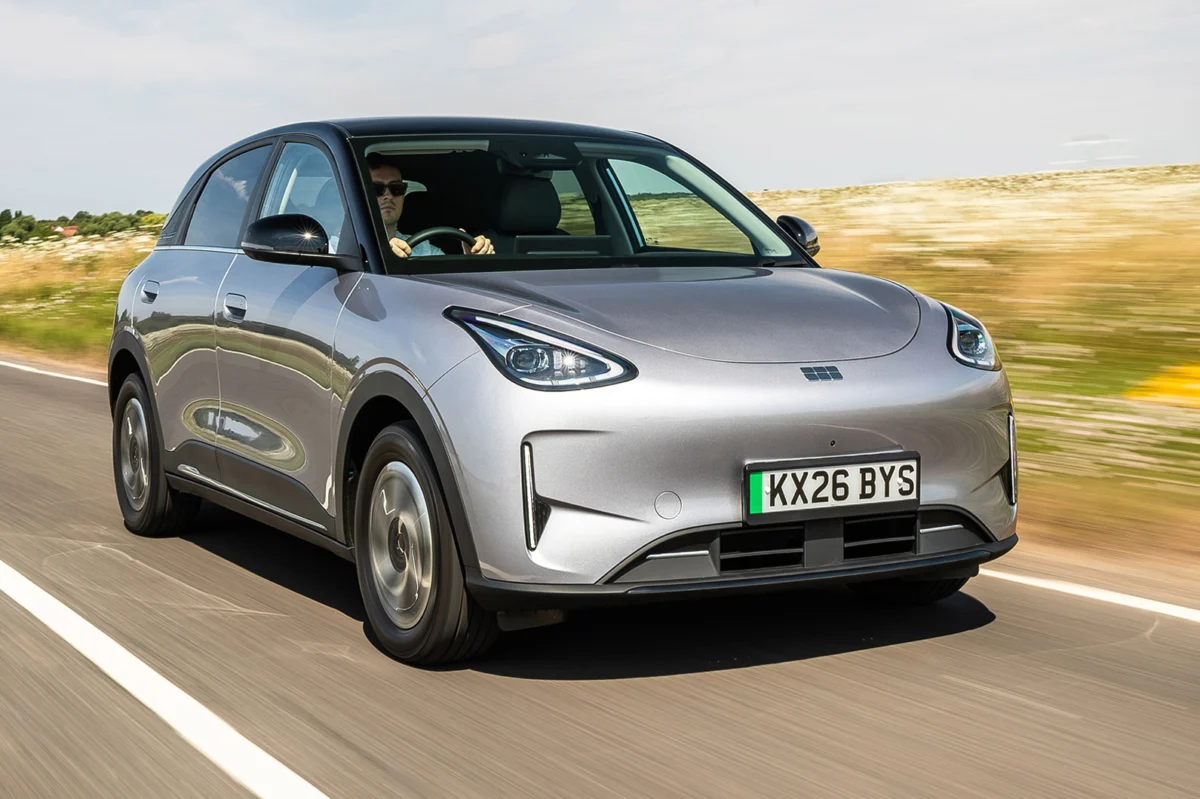
Geely Auto Group has officially introduced the EX2, a compact electric hatchback designed to navigate the increasingly crowded European B-segment while offering interior dimensions typically reserved for larger C-segment vehicles. Measuring 4,135mm in length, the EX2 occupies a unique middle ground in the automotive market, positioned as a larger alternative to urban mainstays such as the Renault 5, Mini Cooper, and Fiat Grande Panda, yet remaining more compact than established electric hatchbacks like the Cupra Born or the Renault Megane E-Tech. This strategic sizing reflects Geely’s broader ambition to capture a diverse demographic of urban commuters who require maneuverability without sacrificing cabin utility. The vehicle represents a significant step in Geely’s global expansion, leveraging the company’s extensive engineering resources to challenge both domestic European manufacturers and other Chinese exporters in the transition to electrification.
Engineering and Platform Dynamics
At the heart of the Geely EX2’s mechanical identity is its rear-wheel-drive (RWD) configuration, a choice that distinguishes it from many of its front-wheel-drive competitors in the budget-conscious small car segment. According to Geely’s engineering division, the decision to utilize an RWD layout was driven by a desire to meet the rigorous handling expectations of European drivers, who historically prioritize steering precision and balanced weight distribution. By relocating the electric motor to the rear axle, Geely has managed to uncouple the drive forces from the steering rack, theoretically providing a more "premium" driving feel and reducing torque steer—a common issue in high-torque electric vehicles.
The removal of the internal combustion engine and the absence of front driveshafts have yielded significant practical benefits. The EX2 features a front trunk, or "frunk," providing additional storage space that is often missing in small EVs. Furthermore, the lack of mechanical obstructions at the front allows the wheels to achieve a high steering angle. This engineering choice results in a turning circle that Geely claims is comparable to the LEVC TX—the iconic London black cab. This comparison is particularly poignant given that Geely has owned the London EV Company (LEVC) since 2013, suggesting a cross-pollination of urban mobility expertise within the Geely portfolio.
Powertrain Specifications and Battery Capacity
The EX2 is launched with two distinct powertrain configurations, tailored to different price points and usage patterns. The entry-level variant is equipped with a 35.4kWh lithium-ion battery pack paired with a modest 81bhp electric motor. This configuration offers a range of approximately 157 miles (253 km) under standard testing cycles. While these figures place the base EX2 in direct competition with smaller city cars like the Renault Twingo E-Tech, the EX2’s larger physical footprint suggests it is aimed at buyers who need more space but have limited daily range requirements.
For consumers seeking greater versatility, the higher-specification EX2 features a 47.1kWh battery and a more robust 114bhp motor. This version extends the driving range to 214 miles (344 km), aligning it closely with the entry-level versions of the Fiat Grande Panda, the Mini Cooper E, and the short-range Renault 5. Despite these options, industry analysts have noted the absence of a "long-range" flagship model. In a market where competitors are increasingly pushing toward the 300-mile mark, the EX2’s ceiling of 214 miles may limit its appeal to buyers who frequently undertake long-distance motorway journeys.
Design Philosophy and Aesthetic Positioning
Visually, the EX2 follows a design language that Geely has previously deployed on models such as the EX5 and the Starray. The styling is characterized by clean lines and a conservative silhouette, which some critics have described as generic. While the car avoids being a direct imitation of existing European models, it incorporates several familiar design tropes found across the contemporary EV landscape. The vehicle sits on 16-inch wheels wrapped in 205/60 high-profile tires. While this setup prioritizes ride comfort and reduces manufacturing costs, it contributes to what designers call an "under-wheeled" appearance, where the wheels seem small in proportion to the vehicle’s body.
To differentiate the EX2 in a market that increasingly values personalization and bold aesthetics—epitomized by the retro-futurism of the Renault 5—Geely has introduced a palette of "actual colours." Moving away from the greyscale dominance of many modern automotive lineups, the EX2 is available in various pastel shades. However, industry observers suggest that the EX2’s understated styling may struggle to garner the same level of "curb appeal" as its more avant-garde rivals from Mini or Alpine.
Geely’s Strategic Context and Market Timeline
The release of the EX2 is a pivotal moment in Geely’s timeline of global integration. Founded in 1986 and entering the automotive sector in 1997, Geely has transformed from a domestic Chinese manufacturer into a global powerhouse through a series of high-profile acquisitions and partnerships. The company’s portfolio now includes Volvo Cars, Polestar, Lotus, Zeekr, and a significant stake in Mercedes-Benz.
The EX2 is part of a wave of "New Energy Vehicles" (NEVs) that Geely is deploying to capitalize on the European Union’s mandate to phase out internal combustion engines. While the EX2 is pitched as an affordable entry point, it arrives at a time of heightened geopolitical and economic scrutiny. The European Commission’s ongoing investigations into Chinese EV subsidies and the potential for increased import tariffs provide a challenging backdrop for the EX2’s launch. Geely’s strategy appears to involve competing on the basis of "value for money"—offering more interior space and sophisticated RWD architecture for the price of a smaller, front-wheel-drive competitor.
Comparative Market Analysis
When placed against its primary rival, the MG 4 EV, the Geely EX2 occupies a slightly different niche. The MG 4 has been a runaway success in Europe, praised for its driving dynamics and aggressive pricing. The EX2 is positioned closer to the "MG 4 Urban" trim in terms of performance and range but offers a different aesthetic and ergonomic proposition.
Data from the European Automobile Manufacturers’ Association (ACEA) indicates that the B-segment remains one of the most vital sectors for EV adoption, as urban dwellers seek to avoid low-emission zone charges. However, the EX2 faces stiff competition from the Stellantis group, which is rolling out the Citroën e-C3 and the Fiat Grande Panda on its "Smart Car" platform. These vehicles are designed specifically to hit the sub-€25,000 price bracket, a target that Geely must meet or beat to ensure the EX2’s commercial viability.
Official Responses and Industry Implications
While Geely has not released specific sales targets for the EX2 in the UK and European markets, company representatives have emphasized the vehicle’s role in "democratizing premium technology." In a recent statement regarding their small-car strategy, Geely executives noted that the EX2’s RWD platform was a deliberate investment to ensure the brand is not viewed merely as a budget alternative, but as a technical contemporary to European marques.
Industry experts suggest that the EX2’s success will depend heavily on Geely’s ability to establish a robust service and parts network in Europe. Unlike Volvo or Polestar, which benefit from established luxury positioning and infrastructure, the EX2 must prove its reliability to a more price-sensitive and pragmatic buyer base. The inclusion of a frunk and the taxi-like turning circle are seen as "tangible" benefits that sales teams can use to lure customers away from more established European brands.
Broader Impact on the Automotive Landscape
The arrival of the Geely EX2 signals a shift in the "size-to-price" ratio of the electric vehicle market. For years, EV buyers were forced to choose between small, expensive city cars or large, even more expensive SUVs. The EX2 attempts to bridge this gap by offering C-segment utility at a B-segment price point. If successful, this could force European manufacturers to accelerate their development of more space-efficient platforms.
Furthermore, the EX2 highlights the increasing importance of software and interior technology in the small car segment. While the exterior design may be conservative, Geely is expected to equip the EX2 with a high-definition infotainment suite and comprehensive ADAS (Advanced Driver Assistance Systems) to meet Euro NCAP’s stringent safety requirements. As the market matures, the "generic" styling of the EX2 may matter less to consumers than its practical range, its ease of parking in dense urban environments, and its ability to carry a family of four in relative comfort—areas where the EX2 appears well-positioned to compete.
In conclusion, the Geely EX2 is a calculated entry into the heart of the European EV market. By combining an unconventional RWD layout with pragmatic space management and a competitive, albeit limited, battery range, Geely is testing the appetite of European consumers for a high-value, functional electric hatchback that prioritizes substance over stylistic flair. As the first units begin to reach showrooms, the EX2 will serve as a bellwether for Geely’s ability to navigate the complex regulatory and competitive waters of the Western automotive industry.