


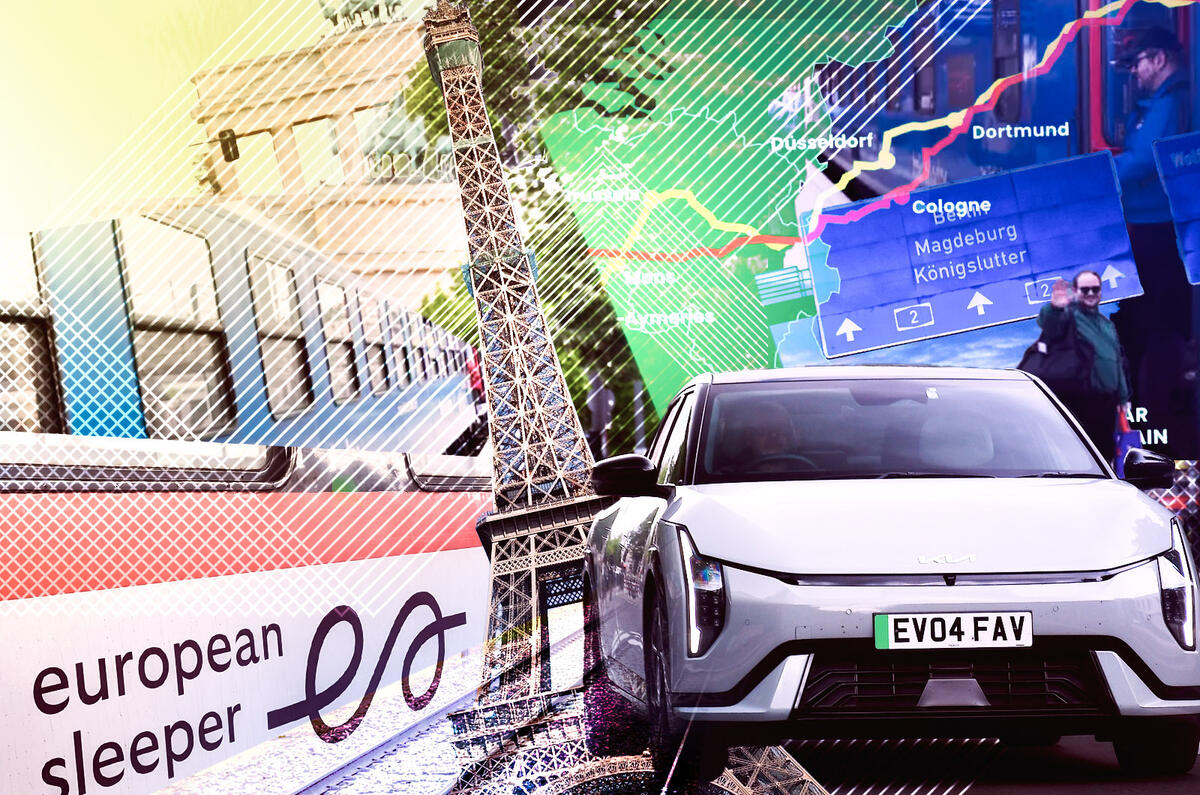
The resurgence of cross-border rail travel in Europe has set the stage for a classic logistical confrontation: the efficiency of modern electric vehicles versus the revitalized convenience of the sleeper train. As the European Union pushes for a significant reduction in aviation-related carbon emissions, the 1,050-kilometer (approximately 652-mile) corridor between Paris and Berlin has become a primary battleground for sustainable long-distance transit. This journey, historically dominated by short-haul flights or grueling day-long drives, has been transformed by the reintroduction of the ÖBB Nightjet service, prompting a rigorous test of whether a high-performance electric vehicle, such as a Kia EV6 or EV9, can outpace the iron road.
The premise of the challenge is rooted in the practicalities of modern travel. While a flight between Paris and Berlin takes roughly 105 minutes, the door-to-door time—including airport security, check-in, and transfers—often exceeds six hours. In contrast, the sleeper train promises a "time-neutral" journey, allowing passengers to travel while they sleep. The electric vehicle (EV) offers a middle ground of total autonomy, but it is beholden to the constraints of charging infrastructure, battery efficiency, and the physical limits of the driver.
The Contenders: Technology on Rails vs. Innovation on Rubber
On one side of the race stands the ÖBB Nightjet. Operated by the Austrian Federal Railways (ÖBB) in cooperation with SNCF and Deutsche Bahn, this service returned to the Paris-Berlin route in late 2023 after a nine-year hiatus. The train represents a €720 million investment in new rolling stock designed to make rail travel a viable alternative to flying. It departs Paris Gare de l’Est in the evening and arrives at Berlin Hauptbahnhof the following morning, offering various tiers of accommodation from seating carriages to private "sleeper" cabins with en-suite facilities.
On the other side is the Kia EV6, a vehicle built on the Hyundai Motor Group’s Electric-Global Modular Platform (E-GMP). The EV6 is specifically chosen for this journey due to its 800-volt charging architecture, which allows it to replenish its battery from 10% to 80% in just 18 minutes under optimal conditions. With a WLTP range of up to 328 miles, the Kia is theoretically capable of completing the 650-mile trip with only two or three strategic charging stops. However, the reality of high-speed Autobahn driving and varying weather conditions often reduces real-world range, making the race a high-stakes game of energy management.
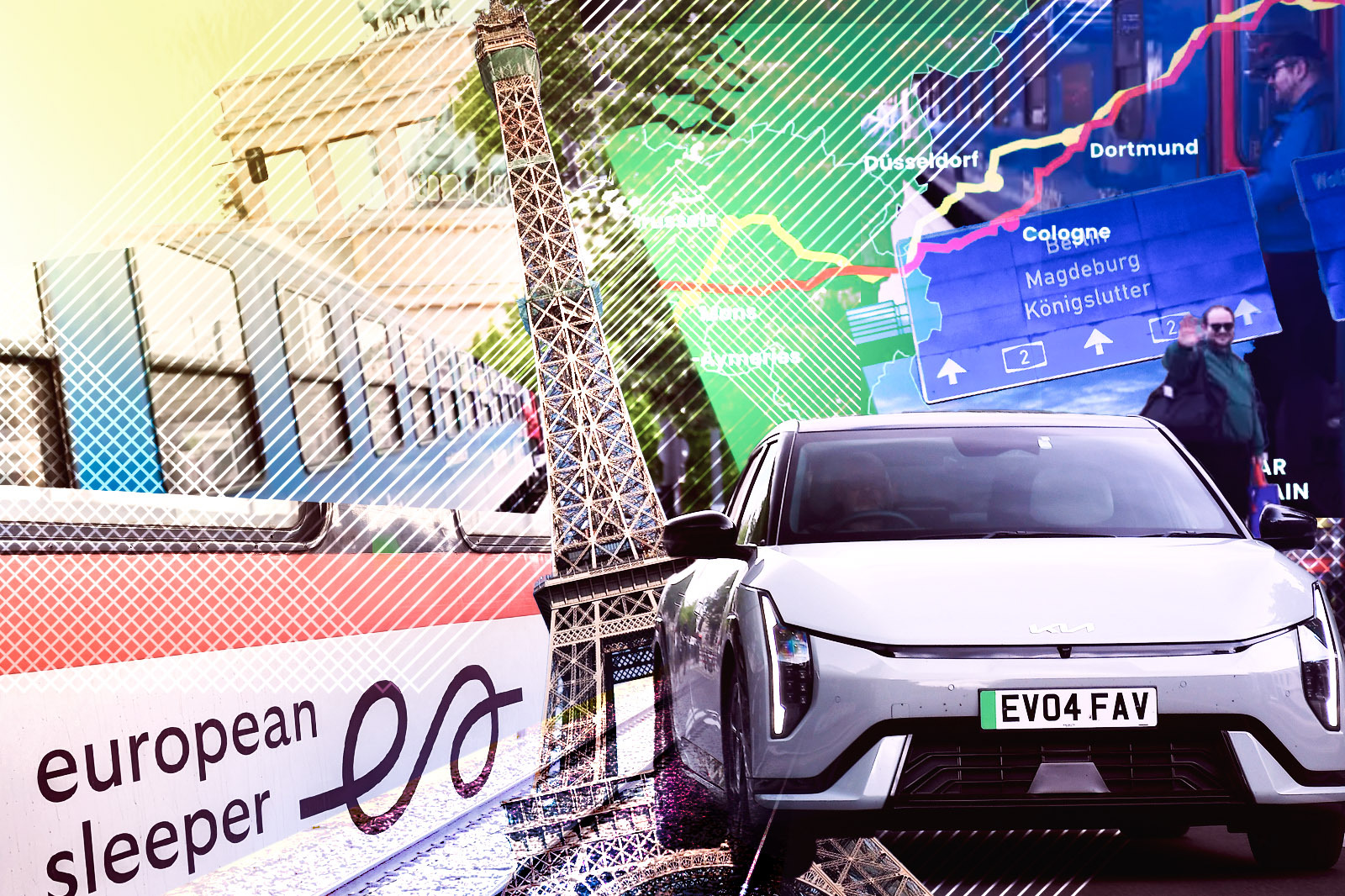
Chronology of the 650-Mile Journey
The race commences at the Place de la Concorde in central Paris. For the driver, the initial challenge is navigating the dense Parisian traffic to reach the A4 autoroute, the primary artery heading east toward the German border. The first leg of the drive covers approximately 400 kilometers (248 miles) of French toll roads. In France, the EV charging network has seen massive expansion, with the Ionity and Tesla Supercharger networks providing high-speed hubs at major service stations like Reims and Metz.
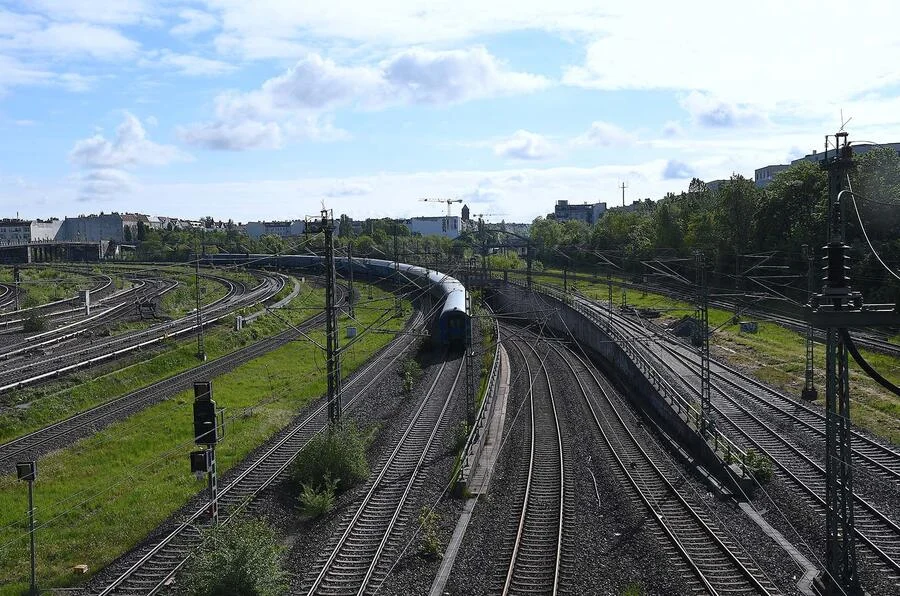
Simultaneously, the rail passenger boards the Nightjet at Gare de l’Est. The train’s departure is scheduled for approximately 19:12. While the driver is focused on the road, the rail passenger is settling into a cabin, utilizing the time for dinner or work. The train follows a route through Strasbourg and Karlsruhe, where it undergoes a complex shunting process in the middle of the night to join with carriages arriving from Brussels.
As the driver crosses the border into Germany near Saarbrücken, the nature of the race changes. The German Autobahn network offers sections without a permanent speed limit, allowing the Kia to travel at 130–150 km/h (80–93 mph). However, aerodynamic drag increases exponentially with speed; driving at 150 km/h can deplete an EV battery up to 30% faster than driving at 110 km/h. The driver must balance the desire for speed against the necessity of more frequent, time-consuming charging stops.
By 02:00, the driver is likely on their second major charge, perhaps near Frankfurt or Eisenach. Meanwhile, the train is moving steadily at a maximum speed of 200 km/h (124 mph) through the German heartland. The driver faces the "human factor"—fatigue—which does not affect the locomotive. To maintain safety and competitive parity, the driver must account for rest breaks that align with charging sessions.
Supporting Data: Efficiency, Speed, and Infrastructure
To understand the viability of the EV in this race, one must look at the technical data. The Kia EV6’s 77.4 kWh battery provides a usable capacity that, at highway speeds, translates to an efficiency of roughly 3.0 to 3.5 miles per kilowatt-hour (kWh).
| Metric | Kia EV6 (Long Range RWD) | ÖBB Nightjet (Sleeper) |
|---|---|---|
| Total Distance | ~1,050 km | ~1,050 km |
| Travel Time | 10.5 – 12 hours (est.) | 13 hours 14 mins |
| Energy Consumption | ~180-220 kWh total | ~35 Wh per passenger/km |
| Charging/Stops | 3 stops (approx. 1 hour total) | 0 (Continuous travel) |
| CO2 Emissions | ~15-20kg (EU grid average) | ~2-5kg (Renewable rail) |
The charging infrastructure in 2024 is significantly more robust than in previous years. The "Masterplan Ladeinfrastruktur II" in Germany has ensured that ultra-fast chargers (300kW+) are available every 15–30 kilometers along major motorways. For the Kia, which can pull up to 233kW of peak power, these stations are transformative, turning what used to be 45-minute "lunch breaks" into 20-minute "coffee breaks."
However, the train holds a distinct advantage in "productive time." While the driver must remain engaged for 100% of the transit time, the rail passenger has a 0% engagement requirement. In a professional context, this makes the train a 13-hour office or hotel room, whereas the car is a 12-hour workstation where the only task is navigation.
Official Responses and Market Context
Automotive manufacturers and rail operators have both weighed in on the "long-distance viability" debate. Kia Europe has frequently highlighted the EV6’s long-distance credentials, stating that the vehicle was designed to "eliminate range anxiety through charging speed rather than just battery size." By focusing on an 800V system, Kia aims to appeal to the "trans-European" driver who needs to cross borders efficiently.
Conversely, officials from ÖBB have emphasized the environmental and social benefits of the Nightjet. "The return of the sleeper train to Paris is a milestone for climate-friendly travel," said Andreas Matthä, CEO of ÖBB, during the route’s inauguration. "One night on a train is significantly more sustainable than a flight and more relaxing than a thousand-kilometer drive."
Environmental data supports the rail sector’s claims. According to the European Environment Agency, rail travel remains the most carbon-efficient mode of motorized transport, emitting a fraction of the CO2 per passenger-kilometer compared to even the most efficient electric cars, especially when considering the manufacturing footprint of large EV batteries.

Broader Implications for European Transit
The race between the Kia and the train is more than a simple test of speed; it is a reflection of the changing landscape of European mobility. Several factors are currently influencing this shift:
- The Decline of Short-Haul Aviation: France has already moved to ban domestic flights where a rail alternative of under 2.5 hours exists. While Paris to Berlin is too long for a mandatory ban, the "flight shame" (flygskam) movement is pushing travelers toward rail and road.
- Infrastructure Harmonization: The EU’s Alternative Fuels Infrastructure Regulation (AFIR) now mandates fast-charging stations every 60km along core highways. This reduces the "luck" factor in long-distance EV travel, making the 650-mile trip predictable.
- The Digitalization of Rail: New booking platforms and the "European Sleeper" startups are attempting to fix the historically fragmented nature of international rail ticketing, making it as easy to book a train as it is to plan a GPS route in a Kia.
Conclusion of the Race
As the Kia enters the Berlin city limits, passing the Brandenburg Gate and heading toward the central station, the clock tells the final story. If the driver manages traffic perfectly and the chargers work at full capacity, the EV can arrive in Berlin in approximately 11 to 12 hours—beating the train’s 13-hour and 14-minute schedule by a narrow margin.
However, the "win" is subjective. The driver arrives at Berlin Hauptbahnhof fatigued from a night of concentration and high-speed navigation. The rail passenger, conversely, steps off the Nightjet at 08:26 AM, having slept for seven hours and consumed breakfast while passing through the German countryside.
The Kia proves that the electric vehicle has officially conquered the "long-distance hurdle," capable of crossing Western Europe in a single night with minimal disruption. Yet, the train proves that in the modern era, speed is not the only metric of success. For the 650-mile trek from Paris to Berlin, the EV wins on raw time, but the sleeper train wins on the quality of that time. As infrastructure for both modes continues to improve, the real winner is the traveler, who now has two viable, low-carbon alternatives to the airport terminal.