


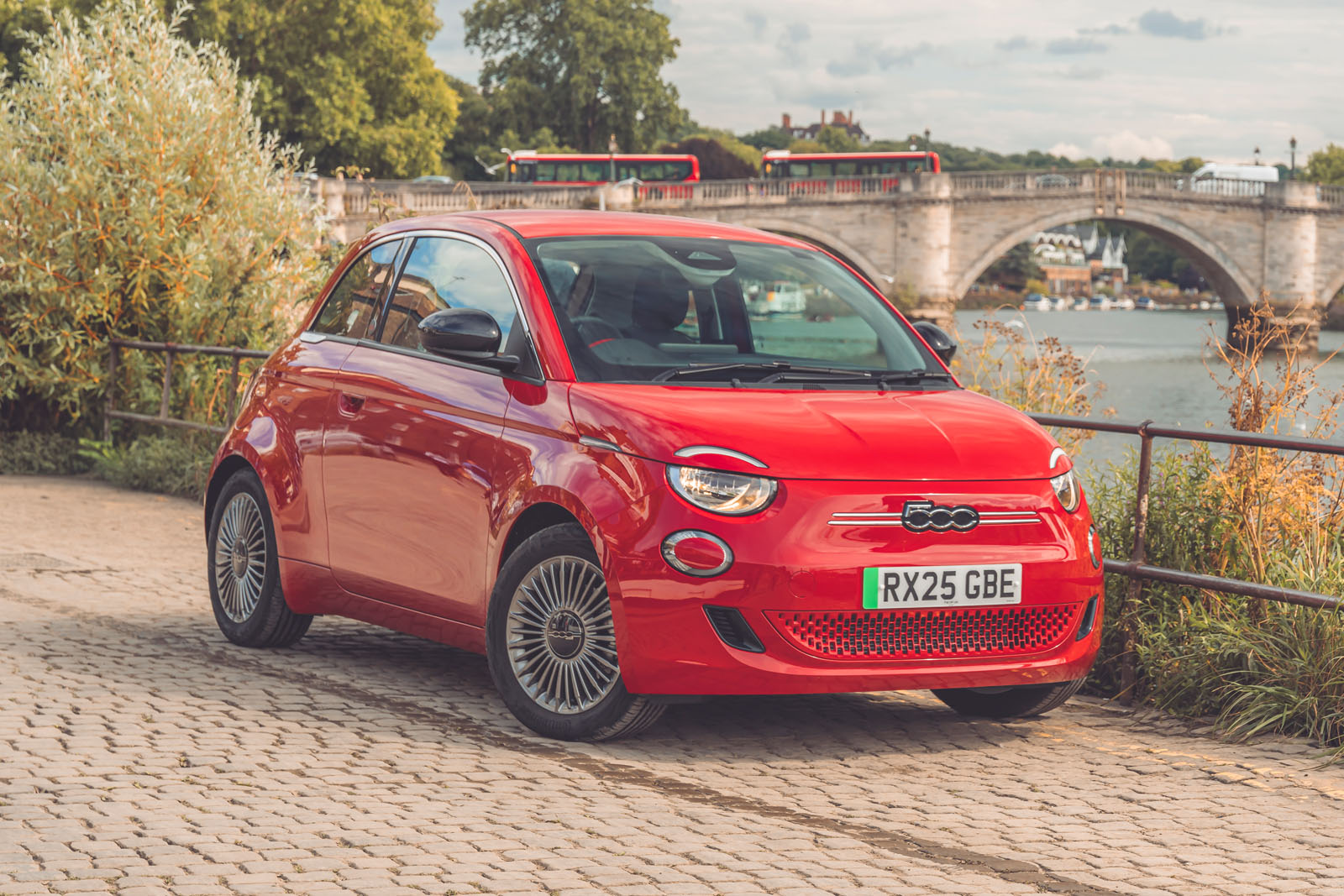
The Fiat 500e has officially entered the ranks of the United Kingdom’s most affordable vehicles following its approval for the highest tier of the government’s Electric Car Grant (ECG). This strategic pricing shift, facilitated by a substantial £3,750 discount, repositions the Italian electric city car as a formidable competitor in an increasingly price-sensitive automotive market. With a new starting price of just £17,245, the 500e now remarkably undercuts its own stablemate, the forthcoming 500 Hybrid, by approximately £1,750. This development marks a pivotal moment for Fiat as it attempts to revitalize its sales figures and navigate the stringent regulatory landscape of the UK’s transition to zero-emission motoring.
The Mechanics of the Electric Car Grant
The Electric Car Grant (ECG) is a sophisticated incentive program designed by the UK government to accelerate the adoption of electric vehicles (EVs) while ensuring that the vehicles supported meet high standards of environmental and consumer protection. Unlike previous flat-rate subsidies, the current ECG framework is tiered, providing either £1,500 or £3,750 off the purchase price of a new EV.
Qualification for the top-tier £3,750 grant is not a simple matter of being electric; it requires manufacturers to demonstrate rigorous adherence to several sustainability and consumer-facing criteria. These include a comprehensive assessment of the emissions generated during the production of both the battery and the vehicle itself. Furthermore, the vehicle must meet specific warranty requirements, ensuring that consumers are protected against premature battery degradation or mechanical failure. The Fiat 500e’s qualification for this top band suggests a high level of transparency and efficiency in Fiat’s manufacturing processes, particularly regarding the lifecycle carbon footprint of the model.
A New Hierarchy of Affordability
The price reduction places the Fiat 500e in an elite group of budget-friendly vehicles available in the British market. For years, the sub-£20,000 category was dominated exclusively by internal combustion engine (ICE) vehicles. The 500e’s new price point of £17,245 disrupts this trend. In the current UK market, only a handful of cars remain cheaper than the electric Fiat.
Leading the low-cost segment is the Dacia Spring, which starts at £11,995, followed by the Leapmotor T03 at £12,995. The ICE-powered Dacia Sandero (£14,765) and the Kia Picanto (£17,095) also remain more affordable. However, the Fiat 500e now sits as the fifth cheapest car in the country and the third cheapest electric vehicle. Perhaps most significant is the price inversion within Fiat’s own lineup; by making the electric version cheaper than the hybrid variant, Fiat is providing a powerful financial incentive for traditional petrol buyers to make the switch to electric power.
Strategic Necessity Amidst Declining Sales
The significant price cut comes at a critical juncture for Fiat. Despite the 500e’s critical acclaim and iconic design, the model has struggled to gain significant traction in the UK market. Industry data indicates that fewer than 1,000 units of the 500e were registered in the UK over the past calendar year. This stagnation is part of a broader downward trend for the brand; Fiat’s total sales for the first half of 2026 (projected based on current trajectory) were down by 39% compared to the same period in the previous year, totaling just 3,748 units.
The inability to move electric units is not just a commercial failure but a looming regulatory crisis. Under the UK’s Zero-Emission Vehicle (ZEV) mandate, car manufacturers are required to ensure that a specific and increasing percentage of their total sales are comprised of zero-emission vehicles. For the current year, the mandate stipulates that approximately 22% of a manufacturer’s sales must be electric, a figure set to rise annually toward 100% by 2035.
The ZEV Mandate and Financial Penalties
The ZEV mandate serves as both a carrot and a stick for the automotive industry. Manufacturers that fail to meet their annual targets face draconian penalties of £12,000 for every non-compliant combustion-engined vehicle sold over their allowed quota. While the system allows for some flexibility—firms can trade "credits" with other manufacturers who exceed their targets or use "allowances" gained from selling ultra-low emission ICE vehicles—the long-term financial pressure is immense.
For Fiat, which has seen the majority of its UK sales this year come from mild-hybrid models, the 500e’s success is essential. Ramping up the volume of 500e sales creates a buffer, giving the brand the "carbon room" to continue selling its popular but higher-emission models, such as the 600 crossover. Furthermore, a successful 500e campaign paves the way for the introduction of new models, such as the Grande Panda, which is slated to arrive with a pure-petrol, manual-gearbox option—a configuration that would be difficult to justify under the mandate without a high volume of offsetting EV sales.
Evolution of the 500e: Range and Technology
The current Fiat 500e is offered in two primary configurations: the "Urban Range" and the "Standard Range." The Urban Range model, which utilizes a smaller 24kWh battery, provides a range of approximately 118 miles (WLTP), making it an ideal candidate for city dwellers and short commutes. The Standard Range model, equipped with a larger 42kWh battery, offers a more robust 199 miles of range. Following the application of the ECG, the Standard Range model now starts at £20,245, making it one of the most affordable long-range small EVs on the market.
However, Fiat is not resting on its laurels. The 500e is scheduled for a significant mid-cycle update next year. This refresh is expected to introduce a revised battery pack featuring greater energy density. This technological advancement will allow for increased capacity without increasing the physical size or weight of the battery, thereby extending the range of both the Urban and Standard models. This update is seen as a direct response to a new wave of European competition, most notably the upcoming Renault Twingo EV, which promises high efficiency and competitive pricing.
The Competitive Landscape and Market Implications
The UK’s small EV segment is becoming a primary battleground for automotive manufacturers. For years, the market was bifurcated between premium EVs like the Tesla Model 3 and budget ICE cars. The arrival of the Dacia Spring and the Leapmotor T03 (the latter being a product of a partnership between Stellantis and the Chinese manufacturer Leapmotor) has proved that there is a massive appetite for affordable electric mobility.
Fiat’s decision to leverage the ECG to drop the 500e’s price suggests a shift in strategy from being a "boutique" electric choice to a volume-driven competitor. By pricing the 500e so close to the Kia Picanto and the Dacia Sandero, Fiat is targeting the traditional B-segment buyer who may have previously been priced out of the EV market.
Industry analysts suggest that this move could trigger a "price war" among small EV manufacturers. If Fiat can successfully move 500e units at the £17,000 mark, other manufacturers like Vauxhall (with the Corsa Electric) and Mini may feel pressure to adjust their pricing or seek similar grant qualifications to remain competitive.
Chronology of the Fiat 500’s Electric Transition
To understand the importance of this price cut, one must look at the timeline of the 500’s evolution:
- 2020: Fiat unveils the all-new, electric-only 500e, built on a dedicated EV platform, distinct from the older ICE 500.
- 2021-2022: The 500e receives numerous awards for design and urban efficiency, but high entry prices (often exceeding £24,000) limit its mass-market appeal.
- 2023: The UK government refines the Electric Car Grant, focusing on manufacturing sustainability and "value for money" criteria.
- Early 2024: Fiat experiences a sharp decline in UK registrations as consumers opt for cheaper ICE alternatives or newer, budget-focused EVs from Dacia and MG.
- Current: Fiat 500e qualifies for the £3,750 ECG tier, leading to the landmark £17,245 starting price.
- 2025 (Projected): Launch of the updated 500e with high-density battery packs and the arrival of the 500 Hybrid to sit alongside the electric model.
Conclusion: A Critical Lifeline for the Italian Icon
The Fiat 500e’s new status as one of the UK’s most affordable cars is more than just a promotional discount; it is a calculated survival strategy. In an era where the ZEV mandate dictates the viability of entire brands, Fiat has recognized that its future in the UK depends on making electric mobility accessible to the average consumer.
While the Dacia Spring remains the absolute price leader, the Fiat 500e offers a blend of Italian style, established dealer networks, and higher interior quality that may entice buyers who find the ultra-budget options too spartan. If the price cut succeeds in driving the 500e’s sales back above the 1,000-unit-per-year mark and beyond, it will provide Fiat with the regulatory breathing room and financial stability needed to transition its entire fleet into the electric age. For the British consumer, the result is clear: the barrier to entry for a stylish, European-engineered electric car has never been lower.