



Hyatt Hotels Corporation has reported a robust financial performance for the third quarter of 2026, characterized by a significant upward revision of its full-year guidance and a surge in demand within the luxury travel sector. The Chicago-based hospitality giant announced that its Revenue Per Available Room (RevPAR) in the United States climbed by 8.2% during the quarter, a metric bolstered significantly by high-profile international events and the continued resilience of high-net-worth travelers. Among the primary catalysts for this growth was the FIFA World Cup, which executives noted contributed approximately 50 basis points to the total RevPAR lift, illustrating the profound impact of "event-based" tourism on the company’s bottom line.
The company’s strategic pivot toward the affluent consumer has proven to be a cornerstone of its current success. As broader economic indicators show signs of volatility, the "premium traveler" segment has remained remarkably insulated, continuing to prioritize high-end experiences and luxury accommodations. This trend has allowed Hyatt to outperform previous projections and set a more aggressive pace for the remainder of the fiscal year.
Financial Highlights and Upward Forecast Revisions
The third-quarter earnings report revealed a company in a strong state of expansion. Adjusted Earnings Before Interest, Taxes, Depreciation, and Amortization (EBITDA) rose by 19% to reach $295 million. This figure is particularly notable as it accounts for the hotel assets the company divested over the past year as part of its ongoing transition to an "asset-light" business model. By selling off physical real estate and focusing on management and franchising fees, Hyatt has managed to increase its margins while reducing capital-intensive liabilities.
Perhaps the most significant takeaway for investors was the upward adjustment of the full-year RevPAR forecast. Hyatt now anticipates RevPAR growth to fall between 5% and 5.5% for the 2026 fiscal year. This is a marked increase from the 3.5% to 4.5% range provided during the July guidance update. The new projection places Hyatt well above the Wall Street consensus; as of late October, the average analyst forecast had sat at approximately 4.7%.
This optimism is rooted in a strong booking pace for the fourth quarter and early 2027. The company’s ability to capture market share in the luxury and lifestyle segments has allowed it to maintain high Average Daily Rates (ADR) even as occupancy levels in the broader industry begin to stabilize.
The Luxury Leisure "Juggernaut"
During a Thursday morning earnings call with investors and analysts, Hyatt CEO Mark Hoplamazian emphasized that the company’s focus on the top tier of the travel market is paying dividends. "Luxury leisure has just remained the juggernaut of growth for us," Hoplamazian stated. He noted that while other segments of the economy might be experiencing a "normalization" of demand, the appetite for high-end, experiential travel shows no signs of waning.
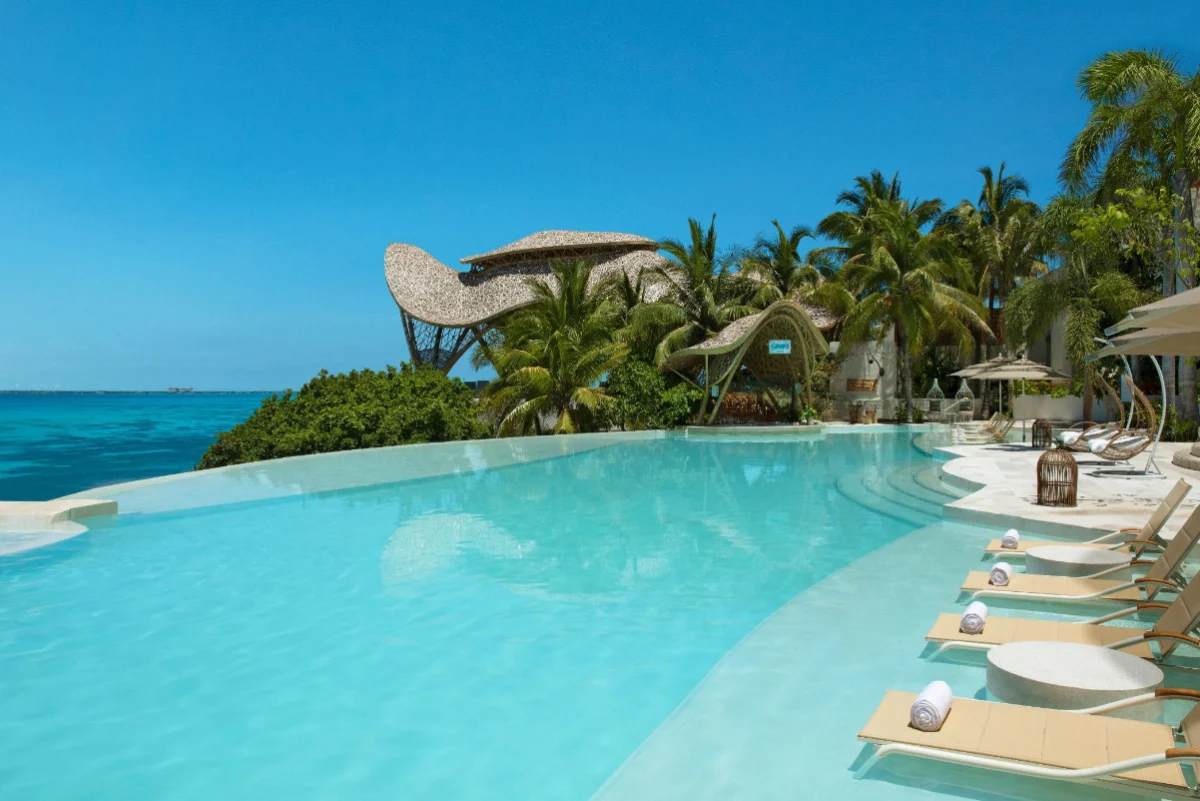
This growth is exemplified by the performance of Hyatt’s Inclusive Collection, which includes high-end brands like Secrets and the ultra-luxury Impression Isla Mujeres by Secrets. These properties have become central to Hyatt’s identity following the acquisition of Apple Leisure Group several years ago. The integration of these all-inclusive luxury resorts into the World of Hyatt loyalty program has created a powerful ecosystem where frequent business travelers can redeem points for high-value leisure stays, further cementing brand loyalty.
The data supports this narrative: luxury brands within the Hyatt portfolio saw higher percentage growth in RevPAR compared to mid-scale or standard upscale offerings. The company’s "Impression" brand, in particular, has set new benchmarks for ADR in the Caribbean and Mexico, catering to a demographic that views travel as a non-discretionary lifestyle component rather than a luxury that can be cut during economic shifts.
Impact of the FIFA World Cup and Global Events
The third quarter of 2026 was uniquely influenced by the FIFA World Cup, which brought an influx of international visitors to key North American markets. Hyatt’s strategic presence in major host cities allowed it to capitalize on the surge in room demand and the associated premium pricing. The 50-basis-point lift attributed specifically to the tournament reflects not just occupied rooms, but the increased spending on food, beverage, and ancillary services at Hyatt’s flagship properties.
Chronologically, the impact of the World Cup was felt most heavily in June and July, but the "halo effect" of the event extended into the third quarter as international travelers extended their stays or visited multiple regions. This phenomenon of "mega-event" travel is becoming a permanent fixture in Hyatt’s growth strategy. The company has increasingly aligned its development pipeline with cities that host major sporting events, international summits, and large-scale cultural festivals.
Beyond the World Cup, Hyatt benefited from a recovery in group travel and corporate meetings. While leisure travel remains the primary driver, the "bleisure" trend—where business travelers add weekend leisure days to their trips—has contributed to a more consistent occupancy rate throughout the week, rather than just on weekends.
Strategic Evolution: The Asset-Light Model
The 19% increase in adjusted EBITDA is a direct result of Hyatt’s long-term transformation into an asset-light organization. For several years, the company has been systematically selling its owned hotel real estate to third-party investors while retaining long-term management or franchise agreements.
This strategy serves two purposes:
- Capital Recycling: The proceeds from hotel sales are used to fund the acquisition of new brands (such as the recent additions of Dream Hotel Group and Mr & Mrs Smith) and to return value to shareholders through buybacks.
- Earnings Stability: Management and franchise fees are generally more stable and have higher margins than the operational income derived from owning a hotel, which is subject to high labor and maintenance costs.
In the third quarter, Hyatt continued this trend, finalizing several key transactions that shifted properties from the "owned and leased" column to the "managed and franchised" column. This shift has allowed the company to grow its net room count at an industry-leading pace without the balance sheet risks associated with property ownership.
Regional Performance and Global Expansion
While the U.S. market showed an 8.2% RevPAR increase, Hyatt’s international portfolio also demonstrated significant strength.
- Europe and the Middle East: Demand remained high as the summer travel season extended into September. High-end properties in Paris, London, and Dubai reported near-record ADRs.
- Asia Pacific: The region continued its post-pandemic recovery trajectory. Specifically, Hyatt’s presence in Greater China saw a resurgence as domestic travel stabilized and international business travel returned to pre-2020 levels.
- Latin America: The Inclusive Collection continues to be the primary engine of growth here, with high demand for all-inclusive luxury in Mexico and Costa Rica.
Hyatt’s development pipeline currently stands at record levels, with approximately 129,000 rooms in development. This represents nearly 40% of the company’s existing room base, suggesting that Hyatt is poised for sustained growth well into the next decade. Notably, about half of the pipeline is concentrated in the luxury and lifestyle categories, ensuring that the company remains aligned with the most profitable segments of the market.
Official Responses and Analyst Perspectives
CFO Joan Bottarini highlighted the company’s financial discipline during the earnings call, noting that Hyatt’s strong cash flow has enabled it to maintain a flexible balance sheet. "Our performance this quarter reflects the strength of our brands and the effectiveness of our asset-light transition," Bottarini said. "The upward revision of our guidance is a testament to the visibility we have into our booking data and the confidence we have in the premium traveler segment."
Market analysts have reacted positively to the report. While some had expressed concerns about a potential "travel cliff" as post-pandemic revenge travel cooled, Hyatt’s numbers suggest that for the luxury sector, the "cliff" does not exist. Instead, analysts point to a "structural shift" in consumer spending where experiences are prioritized over material goods.
However, some caution remains regarding labor costs and inflation. While Hyatt has successfully pushed ADR higher to offset rising expenses, industry observers are watching to see if there is an eventual ceiling to what even affluent travelers are willing to pay. For now, Hyatt’s data suggests that the ceiling has yet to be reached.
Broader Implications for the Hospitality Industry
Hyatt’s Q3 2026 results serve as a bellwether for the broader hospitality industry, particularly the high-end segment. The company’s success indicates that the "K-shaped" recovery—where the wealthy continue to spend while middle-income consumers pull back—is still the dominant economic narrative in travel.
The significant impact of the FIFA World Cup also underscores the growing importance of "passion travel." Consumers are increasingly willing to travel long distances and pay premium prices to be present at major global events. For hotel chains, this means that geographic diversification and a presence in "event-hub" cities are more critical than ever.
As Hyatt moves into the final quarter of 2026, the company is leaning heavily into its loyalty program, World of Hyatt, which has seen its membership grow to over 48 million people. By leveraging data from these members, Hyatt aims to provide more personalized experiences, further insulating itself from the commoditization that often plagues the mid-scale hotel market.
With a revised forecast that outpaces industry averages and a pipeline focused on the most resilient demographic in the world, Hyatt is positioning itself not just as a hotel provider, but as a dominant manager of luxury experiences on a global scale. The third quarter of 2026 may be remembered as the moment when Hyatt’s strategic bet on the "premium traveler" fully matured, setting a new standard for financial performance in the modern hospitality era.