


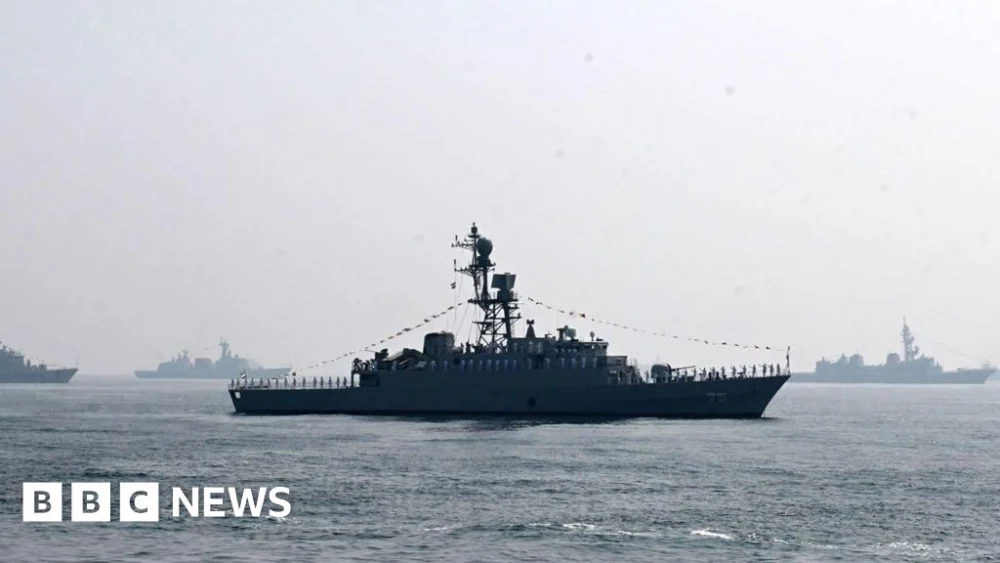
In a dramatic escalation of geopolitical tensions, India extended permission for an Iranian warship, the Iris Dena, to dock at its ports just three days before it was reportedly torpedoed and sunk by a United States submarine in international waters off the coast of Sri Lanka. This revelation, confirmed by India’s Foreign Minister S. Jaishankar, underscores the perilous complexities of a rapidly widening conflict between the US and Israel on one side, and Iran on the other, now extending far beyond the traditional battlegrounds of the Middle East and directly challenging India’s regional authority and diplomatic balancing act. The sinking, which resulted in the loss of at least 87 Iranian sailors, marks a critical juncture in global maritime security and international relations.
Chronology of Events: A Rapidly Unfolding Crisis in the Indian Ocean
The sequence of events leading to the tragic sinking of the Iris Dena reveals a tight timeline of diplomatic overtures, military exercises, and sudden, decisive strikes. The Iranian naval presence in the Indian Ocean had initially been part of a routine, albeit strategically significant, engagement.
From February 15 to February 25, 2026, the Iris Dena, alongside two other Iranian warships, the Iris Bushehr and the Iris Lavan, participated in a multinational military exercise hosted by India in the coastal city of Visakhapatnam. This exercise, known as the International Fleet Review, is a biennial event aimed at fostering maritime cooperation and showcasing naval prowess among participating nations. Iran’s involvement highlighted its ongoing, if sometimes strained, diplomatic ties with India and its ambition to project naval power beyond its immediate territorial waters. Upon the conclusion of the exercise on February 25, the three Iranian vessels departed Indian waters, presumably commencing their return voyage or continuing patrols in international waters.
The critical turning point occurred on February 28, 2026. On this day, the United States and Israel reportedly initiated a coordinated military offensive against Iran, a move President Donald Trump later stated included the objective of "destroying Iran’s navy." Simultaneously, as the geopolitical landscape shifted dramatically, Iran’s government, recognizing the increased threat to its naval assets, formally requested permission from India for its three warships – Iris Dena, Iris Bushehr, and Iris Lavan – to dock at Indian ports. This request, made amidst the burgeoning conflict, suggests an immediate need for sanctuary and a potential safe harbor from perceived threats.
India, adhering to principles of maritime assistance and its long-standing non-aligned foreign policy, granted this permission on March 1, 2026. This swift approval reflected India’s diplomatic autonomy and its historical ties with Iran, which, despite US pressure, remain important for energy security and regional stability. However, the subsequent movements of the three Iranian ships between March 1 and March 4 remain shrouded in uncertainty. While permission was granted for all three, only one, the Iris Lavan, successfully made it to an Indian port.
On March 4, 2026, the situation culminated in tragedy. The Iris Dena, a Moudge-class frigate, was operating approximately 20 nautical miles (roughly 37 kilometers or 23 miles) west of Galle, off Sri Lanka’s southern coast. These waters fall within Sri Lanka’s designated search-and-rescue zone but are considered international waters. It was here that the Iris Dena was struck by a torpedo fired from a US submarine, leading to its rapid sinking and the deaths of at least 87 of its 130-strong crew. On the very same day, the Iris Lavan successfully docked in Kochi, India, with its crew subsequently transferred to Indian naval facilities, a move Foreign Minister Jaishankar publicly defended as "the right thing to do." The fate and whereabouts of the third ship, the Iris Bushehr, remain unclear.
India’s Diplomatic Balancing Act and Regional Authority
Foreign Minister S. Jaishankar’s parliamentary statement on Monday, March 8, 2026, was a direct acknowledgment of India’s decision to offer sanctuary. "The Iranian side had requested permission on 28 February for three ships in the region to dock at our ports. This was accorded on 1 March," Jaishankar stated. He further elaborated on the docking of the Iris Lavan, confirming, "Iris Lavan actually docked on 4 March in Kochi. The crew is currently in Indian naval facilities. We believe that this was the right thing to do." This response highlights India’s commitment to humanitarian principles and its independent foreign policy, even when caught between major global powers.
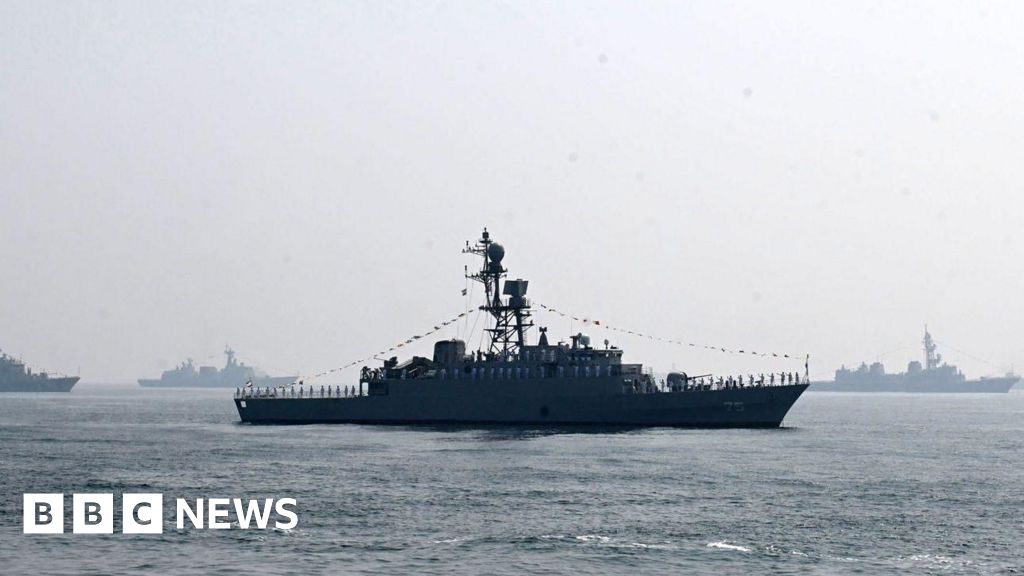
India’s decision is rooted in a complex web of strategic interests. As a rising global power, India maintains diverse relationships, including a robust strategic partnership with the United States and Israel, while also nurturing historical and economic ties with Iran. Iran is a critical source of energy for India and holds significance in India’s Chabahar Port project, which offers a vital trade route to Afghanistan and Central Asia, bypassing Pakistan. Offering refuge to Iranian naval vessels, even amidst US-Iran hostilities, can be seen as an assertion of India’s non-aligned stance and its refusal to be drawn unilaterally into external conflicts.
However, the incident also raises profound questions about India’s authority and influence in its own maritime backyard. The sinking of an Iranian warship, to which India had granted sanctuary, in international waters adjacent to its exclusive economic zone, presents a significant challenge. It underscores the potential for external conflicts to spill over into the Indian Ocean Region, a vital artery for global trade and a key area of India’s strategic interest. Critics might argue that while India acted on humanitarian grounds, the US strike demonstrates a disregard for the implicit diplomatic cover India had provided, potentially diminishing India’s standing as a regional security guarantor.
The Broader Conflict: US-Israel vs. Iran
The sinking of the Iris Dena cannot be viewed in isolation; it is a direct consequence of a rapidly escalating "war on Iran" declared by the United States and Israel. This conflict has deep roots, stemming from the US withdrawal from the Joint Comprehensive Plan of Action (JCPOA) in 2018, followed by crippling sanctions and a series of tit-for-tat actions in the Middle East. For years, the region has witnessed a "shadow war" involving cyberattacks, drone strikes, missile attacks on oil facilities, and alleged sabotage of shipping, often attributed to both sides.
President Donald Trump’s explicit statement about "destroying Iran’s navy" signifies a dramatic shift from covert operations to open military objectives. This declaration signals a comprehensive assault aimed at debilitating Iran’s military capabilities, particularly its naval assets, which are crucial for projecting power in the Persian Gulf and beyond. The targeting of the Iris Dena in the Indian Ocean represents a significant geographical expansion of this conflict, indicating that the US and Israel are willing to engage Iranian assets wherever they are deemed a threat, regardless of their distance from Iran’s shores. This widening scope has profound implications for international maritime security, as major shipping lanes traverse the very waters where such engagements are now taking place.
The Submarine Attack: Tactics, Technology, and Precedents
The attack on the Iris Dena highlights the formidable capabilities of modern submarine warfare. US Defence Secretary Pete Hegseth, in a statement touting American military prowess, claimed the sinking was "the first sinking of an enemy ship by a torpedo since World War Two." While it is indeed the first time since 1945 that an American submarine has accomplished such a feat, it is important to note that other nations have utilized torpedoes to sink vessels since then, including the UK during the Falklands War and Pakistan in conflicts with India. Nevertheless, the incident underscores the US Navy’s advanced undersea warfare capabilities and its capacity for global power projection.
US submarines, with a fleet of 65-70 vessels, routinely operate across the world’s oceans, with approximately a quarter of them at sea at any given time. Their ability to operate stealthily, gather intelligence, and launch precision strikes makes them a critical component of naval strategy. The decision to target the Iris Dena in international waters suggests a sophisticated intelligence operation, tracking the vessel’s movements and identifying it as a legitimate target within the parameters of the declared "war on Iran." This level of surveillance and strike capability raises concerns among many nations about the omnipresence of military powers and the potential for similar actions against their assets in the future.
International Law and Maritime Zones: A Contentious Arena
The attack on the Iris Dena in international waters, specifically within Sri Lanka’s designated search-and-rescue zone but outside any nation’s territorial seas, immediately thrusts issues of international law and sovereignty into the spotlight. International waters, or the high seas, are areas beyond national jurisdiction, where all states have freedom of navigation and overflight, as codified by the United Nations Convention on the Law of the Sea (UNCLOS). While warships typically enjoy sovereign immunity, the legality of attacking a warship in international waters without a formal declaration of war or direct provocation remains a highly contentious issue.
Iran’s Foreign Minister Abbas Araghchi condemned the US action as "an atrocity at sea, 2,000 miles away from Iran’s shores" and emphasized that the warship was "struck in international waters without warning." This perspective highlights the view that the US acted outside the bounds of established international norms, potentially creating a dangerous precedent for unilateral military action against naval vessels. Such an act could be interpreted as a violation of the principle of innocent passage or a disproportionate use of force, inviting potential legal challenges or international condemnation.
Sri Lanka, whose search-and-rescue zone encompasses the site of the sinking, also finds itself in a delicate position. While the attack occurred in international waters, its proximity to Sri Lankan territory inevitably draws Colombo into the periphery of this geopolitical flashpoint. The incident could prompt calls for greater adherence to maritime conventions and a reassessment of security protocols in busy international shipping lanes.
Reactions and Unanswered Questions
The sinking of the Iris Dena has undoubtedly provoked a strong reaction from Tehran. While specific details of Iran’s retaliatory measures or official investigations are yet to fully emerge, its condemnation suggests a commitment to holding the US accountable. The broader "war on Iran" has already seen around 20 Iranian navy vessels destroyed by US and Israeli forces, indicating a sustained and aggressive campaign.
From the US perspective, the attack is likely framed as a necessary measure to achieve the stated objective of degrading Iran’s naval capabilities and deterring its alleged destabilizing activities. However, the lack of immediate detailed statements from the US Department of Defense regarding the specifics of the engagement, beyond Secretary Hegseth’s boast, leaves many questions unanswered. For instance, what intelligence justified the strike on the Iris Dena? Was there any attempt to warn the vessel? And how does the US reconcile this action with India’s prior granting of sanctuary?
The fate of the Iris Bushehr, the third Iranian ship for which India granted docking permission, also remains an open question. Its current location and status are unknown, adding another layer of mystery to the incident. Furthermore, the discrepancy in the ships’ ability to reach Indian ports – with Iris Lavan successfully docking while Iris Dena was sunk – suggests either strategic maneuvering, communication failures, or a targeted interception by US forces specifically aimed at the Iris Dena.
Geopolitical Implications and Future Outlook
The sinking of the Iris Dena carries significant geopolitical implications for the Indian Ocean Region and beyond. For India, it presents a complex challenge to its diplomatic autonomy and its ability to project influence in its strategic backyard. While New Delhi’s decision to offer sanctuary was principled, the subsequent US action could be perceived as a subtle yet potent message about the limits of that autonomy when it intersects with major power rivalries. This incident may compel India to reassess its maritime security strategies and its role in regional conflict management.
The event also significantly raises the stakes in the ongoing US-Israel "war on Iran." By expanding the conflict’s geographical scope to the Indian Ocean, the US has demonstrated its willingness to engage Iran globally, increasing the risk of miscalculation and broader escalation. This could lead to a more militarized Indian Ocean, with increased naval presence and surveillance from various global powers, potentially impacting freedom of navigation and regional stability.
Ultimately, the sinking of the Iris Dena serves as a stark reminder of the volatile nature of international relations and the perilous consequences of escalating conflicts. It underscores the fragility of peace in a multipolar world and highlights the complex dilemmas faced by nations like India, striving to maintain their sovereignty and strategic independence amidst the machinations of global power politics. The international community will be closely watching for further reactions, potential investigations, and the long-term ramifications of this unprecedented event in the Indian Ocean.