


The enigmatic narrative of Peter Warren’s directorial debut, "Kill Me," recently premiered at the prestigious SXSW Film Festival, offering audiences a darkly comedic and profoundly unsettling exploration of mental health, perception, and the human psyche. Starring Charlie Day in a performance that oscillates between frantic desperation and poignant vulnerability, the film challenges conventional understandings of self-inflicted harm by framing a protagonist’s desperate act not as an attempt to end his life, but as a potential murder he narrowly escaped. This unconventional premise, revealed in the film’s opening moments, immediately sets "Kill Me" apart, sparking curiosity and prompting a deeper examination of the characters’ internal landscapes and the societal constructs surrounding mental illness.
A Premise Rooted in Perceptual Crisis
The film’s central conceit is established with a startling immediacy. Jimmy, portrayed by Charlie Day, is discovered in his bathtub, having inflicted severe wounds upon himself. In his final moments of consciousness, he makes a frantic 911 call to report an attempted homicide. The irony is palpable: the very authorities he summons to his aid are presented with a situation that, to them, appears undeniably self-inflicted. Jimmy’s insistence on a narrative of external aggression, his desperate plea to invoke the Fifth Amendment, and his demand for legal counsel betray a profound disconnect from the objective reality of his situation. This linguistic and perceptual chasm is the engine that drives "Kill Me," forcing both the characters within the film and the audience to question the nature of truth, memory, and the subjective experience of profound psychological distress. The police’s bewilderment, their inability to grasp Jimmy’s terminology of "attempted self-murder" – a phrase they correctly identify as a misnomer for suicide – underscores the film’s core thematic exploration: the often-impenetrable barrier between an individual’s internal experience and the external, objective world.
The Unfolding Narrative: A Descent into Doubt and Delusion
"Kill Me" meticulously constructs a scenario where the evidence overwhelmingly points to suicide. The film opens with Jimmy’s desperate 911 call, a scene rendered with stark visual detail, enhanced by Ashley Cook’s evocative production design. The dingy bathroom setting, reminiscent of the grim aesthetic of the "Saw" franchise, amplifies the sense of claustrophobia and impending doom. As the narrative progresses, familial interactions with characters like his sister Alice (Aya Cash), his mother (Jessica Harper), and his stepfather (Michael Flynn) reveal a history of significant mental health struggles, including a similar incident four years prior. The police, conducting their initial investigation, find no signs of forced entry or any other individual present in Jimmy’s apartment, which locks from the inside. This mounting body of evidence, seemingly irrefutable, serves to further isolate Jimmy and deepen the audience’s engagement with his peculiar perspective.
However, Jimmy’s insistence on his innocence is unwavering. He claims no recollection of inflicting the wounds, offering a void where memory should be. This lack of recall is compounded by his inability to articulate a motive for self-harm. The film skillfully juxtaposes Jimmy’s internal narrative with the external pressures and observations of those around him. His family points to his recent despondency, and even his therapist, Dr. Singer (Giancarlo Esposito), confronts him with the reality of his non-adherence to prescribed medication. Jimmy’s attempts to rationalize why others might wish him dead, citing his ex-girlfriend Sarah (Sam Rothermel) for a litany of perceived failures, highlight his persistent struggle to externalize his pain, a defense mechanism against the terrifying possibility that the perpetrator is himself.
Tonal Dexterity: Navigating Dark Humor and Profound Drama
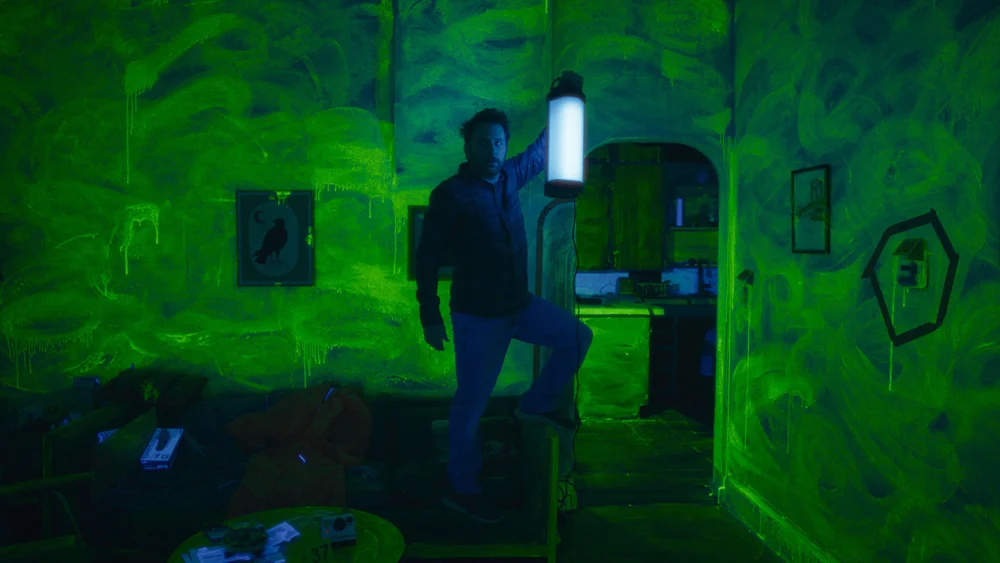
Peter Warren, in his dual role as director and screenwriter, masterfully navigates a complex tonal landscape. "Kill Me" oscillates between moments of sharp, morbid humor and deeply affecting dramatic introspection. Charlie Day’s inherent comedic timing is effectively employed in portraying Jimmy’s wide-eyed panic and increasingly frantic reactions. The script delivers a series of memorable and witty lines, such as Jimmy’s initial concern about his blood staining the bathtub during his 911 call, met with a deadpan, "Yeah, I think it might," from the dispatcher, Margot (Allison Williams). Jimmy’s assertion that his cluttered apartment is not a sign of squalor but a repository of "evidence" further illustrates his warped but compelling logic.
Beyond the comedic elements, the film allows Day to delve into the more somber and serious dimensions of Jimmy’s character. His oscillation between a resolute conviction of being targeted and a paralyzing fear of his own self is a testament to Day’s range. The burgeoning relationship between Jimmy and Margot, the dispatcher, offers a surprising and unexpectedly sweet element to the narrative. Margot, herself presented as a "wan, numb soul," finds a reason to connect with Jimmy, creating a fragile bond that offers a glimmer of hope amidst the prevailing darkness. Their connection, however, is underscored by an unsettling awareness that they are clinging to each other like shipwreck survivors, a poignant metaphor for their shared vulnerability and precarious existence.
The Ambiguity of Truth: A Detective Story of the Mind
"Kill Me" excels in maintaining a persistent ambiguity regarding Jimmy’s true state. The film masterfully keeps the viewer guessing, posing the question of whether Jimmy is genuinely on the verge of uncovering a hidden truth or if he is indeed trapped in a "Sherlock Holmes fantasy where you just sail on an ocean of delusion," as his sister Alice posits. The narrative carefully introduces subtle clues that could potentially support Jimmy’s theories, further complicating the audience’s interpretation. While the film demonstrates a profound understanding of Jimmy’s pain on a visceral level, it is not without its moments of perceived cruelty, mirroring, in a sense, the harsh self-judgment that Jimmy inflicts upon himself.
The film confronts Jimmy repeatedly with perspectives that suggest he might be better off dead, presented through characters who have experienced profound loss due to suicide. The son of a suicide victim bluntly states, "The most selfless act [my dad] ever did was killing himself so my mom and I could move on." Another character speaks of their daughter finally finding "peace," a concept that eludes Jimmy. While the deep concern and affection of Jimmy’s loved ones are evident, the film suggests that this concern is sometimes expressed through a stark, almost brutal honesty about the perceived benefits of his absence. These moments, while harsh, could be interpreted as reflections of the real-world perceptions and societal pressures that individuals struggling with severe depression often face.
The Unresolved Echoes: A Commentary on Incomplete Healing
Despite its strengths in performance and thematic exploration, "Kill Me" ultimately leaves a sense of incompleteness. The film’s deliberate avoidance of a neat, sentimental resolution, while fitting for its prickly nature, results in an ending that feels somewhat unresolved. The narrative skillfully immerses the viewer in Jimmy’s internal world, highlighting the profound isolation and existential dread that accompany severe mental illness. However, without a more robust emotional catharsis or a clearer sense of closure for Jimmy and the characters surrounding him, the film can feel akin to an "incomplete hit job," leaving the audience with a lingering sense of unease and unfulfilled potential.
The supporting cast delivers strong performances that anchor the film’s emotional weight. Allison Williams as Margot provides a grounding presence, her quiet empathy offering a counterpoint to Jimmy’s frenetic energy. Giancarlo Esposito, in his role as Dr. Singer, brings gravitas and a subtle nuance to the therapist character, hinting at the complex dynamics of professional care within the context of severe mental illness. Aya Cash as Alice effectively portrays the strain and love of a sibling dealing with a family member’s chronic struggles, while Jessica Harper as the mother offers a poignant depiction of maternal concern and perhaps, a weary acceptance. The ensemble cast contributes significantly to the film’s overall impact, ensuring that even as the narrative grapples with difficult themes, the human element remains central.
Broader Implications: Societal Perceptions of Mental Health
The premiere of "Kill Me" at SXSW, a festival known for showcasing innovative and thought-provoking cinema, places it within a contemporary cultural conversation about mental health. The film’s unique premise, by reframing a suicide attempt as a potential murder, forces a re-examination of how society perceives and categorizes mental illness. It challenges the stigma often associated with depression and suicidal ideation, suggesting that these are not simply personal failings but complex psychological battles that can be as devastating and incomprehensible as any external threat.
The film’s exploration of memory, perception, and the subjective nature of reality has broader implications for understanding trauma and psychological distress. By presenting Jimmy’s distorted reality as a central narrative device, "Kill Me" encourages empathy and a deeper understanding of the internal struggles faced by individuals with mental health conditions. The film’s commercial potential, bolstered by the presence of well-known actors like Charlie Day, could introduce these complex themes to a wider audience, sparking important dialogues and potentially fostering greater awareness and compassion. The reception of "Kill Me" at SXSW suggests a growing appetite for films that tackle challenging subject matter with artistic integrity and emotional depth, further solidifying its place as a significant entry in the landscape of contemporary independent cinema. The film’s success in generating discussion around these sensitive topics will be a key indicator of its lasting impact.