
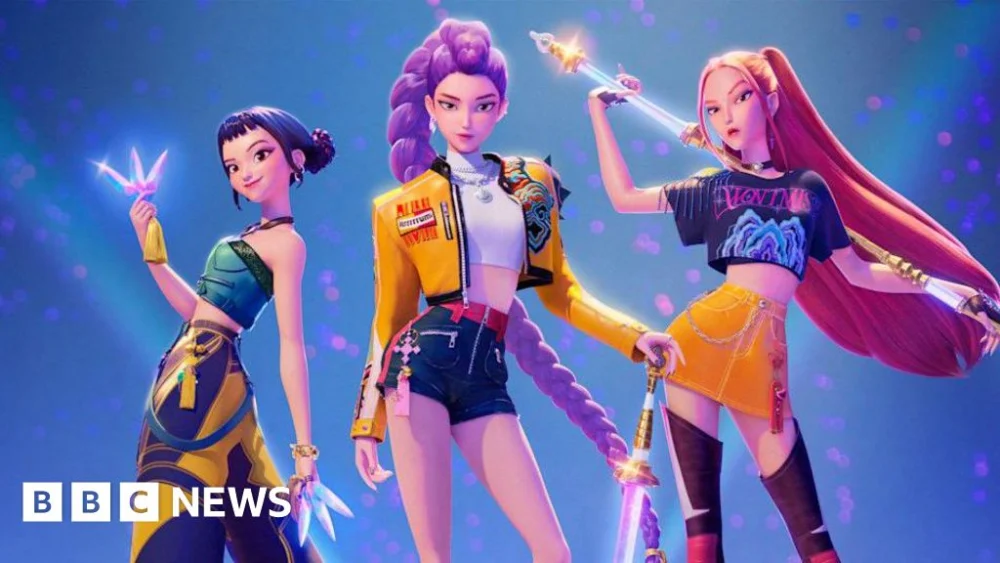
Netflix has officially announced a highly anticipated sequel to its critically acclaimed animated feature, KPop Demon Hunters, a move that solidifies the groundbreaking film’s status as a global phenomenon. The announcement comes on the heels of the original film’s unprecedented success, including a historic Grammy win for its breakout song "Golden" and a new multi-year exclusive deal with Netflix for co-directors Maggie Kang and Chris Appelhans. While a release date for the follow-up project remains undisclosed, the confirmation signals Netflix’s deep commitment to the franchise and its visionary creators, promising further exploration of the vibrant universe that has captivated audiences worldwide.
The Anticipated Return of KPop Demon Hunters
The confirmation of a sequel to KPop Demon Hunters marks a significant milestone for both the animation industry and the global expansion of Korean cultural content. Co-directors Maggie Kang and Chris Appelhans, who helmed the original, have now formalized their creative partnership with Netflix through an exclusive multi-year agreement. This deal underscores Netflix’s strategy of investing in proven talent and successful intellectual properties, particularly those with strong international appeal. The original film introduced audiences to Rumi, Mira, and Zoey, members of the fictional K-pop group Huntr/x, who navigate the dual challenges of global stardom and their secret lives as demon hunters. This unique premise, blending the dynamic world of K-pop with supernatural action, resonated deeply with viewers and critics alike.
Maggie Kang, a Korean-American filmmaker, expressed immense pride and excitement following the announcement. In a statement shared by Netflix on social media, Kang remarked, "I feel immense pride as a Korean filmmaker that the audience wants more from this Korean story and our Korean characters. There’s so much more to this world we have built and I’m excited to show you. This is only the beginning." Her sentiments highlight the cultural significance of the film’s success, demonstrating the global appetite for diverse narratives and authentic representation. The original project was a labor of love, taking seven years from its initial pitch to its eventual release, a testament to the meticulous craftsmanship and dedication involved in its production. The development process for the sequel is expected to be equally thorough, ensuring a narrative that lives up to the high standards set by its predecessor.
A Trailblazing Success: Awards and Records
The journey of KPop Demon Hunters from an ambitious concept to a global sensation has been nothing short of extraordinary, culminating in a series of critical accolades and unprecedented commercial success. At the forefront of its achievements is the song "Golden," which secured a Grammy Award for Best Song Written for Visual Media. This triumph was particularly momentous as it marked the first time a K-pop song had ever won at the prestigious music awards, shattering historical barriers and cementing K-pop’s influence in the Western music landscape beyond traditional genre categories. The song’s infectious melody and powerful lyrics, co-written by singer Ejae (who also voices Rumi’s singing parts), propelled it to the number one spot on the Billboard Hot 100, further illustrating its immense popularity.
Beyond its musical triumph, the film itself garnered significant critical acclaim, establishing itself as an awards powerhouse. It clinched both Best Animated Motion Picture and Best Original Song at the Golden Globe Awards, signaling its prowess early in the awards season. Its nomination for Best Animated Feature at the Academy Awards, placing it alongside formidable contenders such as Disney’s Zootopia 2 and Elio, underscored its recognition within the highest echelons of cinematic achievement. These nominations and wins not only brought prestige to the film but also highlighted the growing global appreciation for non-Hollywood animated productions.
The commercial performance of KPop Demon Hunters on Netflix further solidified its status as a blockbuster. In January, Netflix reported that the animation had shattered platform records, accumulating over 480 million views within half a year of its release. This remarkable viewership figure is a clear indicator of the film’s broad appeal and its ability to capture a massive global audience. The sustained engagement with the film and its soundtrack demonstrated its capacity to transcend cultural and linguistic barriers, becoming a rare K-pop-related production to achieve such widespread mainstream success in Western markets, particularly in the United States. Its ability to resonate with diverse demographics, from dedicated K-pop fans to animation enthusiasts and general audiences, speaks volumes about its universal themes and compelling execution.

The Creative Voices Behind the Phenomenon
The success of KPop Demon Hunters is inextricably linked to the talent and vision of its creative team, particularly the musical architects behind its chart-topping soundtrack. Singer Ejae, who lent her voice to Rumi’s singing and co-wrote "Golden" and other tracks, shared her aspirations for the sequel’s musical direction in a recent interview. "It depends on what they create and hopefully, you know, we can show more sides of Korea," Ejae stated, expressing her desire to infuse the sequel with a broader spectrum of Korean musical styles. "There’s so many different kinds of music in Korea, so that’s what I’m hoping for personally." Her hope to showcase the rich diversity of Korean music beyond the typical K-pop sound suggests an exciting evolution for the franchise’s musical identity. Ejae also reflected on the overwhelming reception of the animation and its music, describing the experience as "unreal" and "crazy," admitting she was still trying to "digest everything."
Zhun, the South Korean music producer instrumental in crafting "Golden," echoed Ejae’s enthusiasm for the sequel. Speaking through a translator, Zhun conveyed his ambition to build upon the momentum of the first film. "I want to continue the high energy that we brought to the first film," he articulated, emphasizing his commitment to maintaining the vibrant and dynamic musical landscape that defined the original. He further expressed his desire to enhance the synergy between the auditory and visual elements, stating his hope to "build on combining the music with the ‘visual elements in the film [that] gave us so much energy’." This collaborative approach, where music and animation are developed in tandem, is crucial to the film’s immersive quality.
The iterative relationship between story and song development was also highlighted by Sonnenblick, another key figure in the film’s music production. He noted, "There’s going to be a whole development process before we get deep into writing the songs. The music will follow from the story and that’s if it makes sense for us all to be doing it again." This sequential process ensures that the music serves the narrative, enhancing emotional impact and plot progression, rather than existing merely as standalone tracks. The commitment from these key musical talents suggests that the sequel’s soundtrack will be as thoughtfully crafted and impactful as its predecessor, potentially setting new benchmarks for animated musical productions.
Netflix’s Global Animation Strategy and K-pop’s Ascendance
The triumph of KPop Demon Hunters is not an isolated event but rather a significant indicator of several converging trends in the global entertainment landscape. Netflix’s decision to greenlight a sequel and secure an exclusive deal with its directors aligns perfectly with the streaming giant’s broader strategy of investing heavily in diverse, internationally-flavored content. Recognizing the global demand for stories that reflect varied cultures and perspectives, Netflix has increasingly turned to regions like South Korea, which has proven to be a powerhouse of creative talent and innovative storytelling. The success of K-dramas, K-films, and now K-animation on the platform underscores the effectiveness of this strategy.
The film’s impact on the mainstream Western market is particularly noteworthy. While primarily an American production in English, KPop Demon Hunters masterfully integrates Asian iconography, traditional food, and snippets of the Korean language, authentically showcasing its South Korean roots. This deliberate cultural fusion allowed the film to transcend niche audiences, appealing to those unfamiliar with K-pop while simultaneously delighting existing fans. It served as a powerful cultural bridge, introducing elements of Korean culture to a broader global audience through the accessible medium of animation.
The rise of K-pop itself has been a defining cultural phenomenon of the 21st century. What began as a regional music genre has evolved into a global movement, with groups like BTS and BLACKPINK achieving unprecedented international fame. This surge in popularity has extended beyond music, influencing fashion, beauty, and now, cinematic storytelling. KPop Demon Hunters capitalizes on this wave, using the established appeal of K-pop to tell a compelling story that is both culturally specific and universally resonant. The film’s success demonstrates that animation can serve as an incredibly effective vehicle for cultural exchange, allowing K-pop’s vibrant energy and aesthetic to reach new audiences and expand its global footprint even further.
Crafting the Sequel: A Deep Dive into Production
The journey to bring the KPop Demon Hunters sequel to life is expected to be as meticulous and challenging as its predecessor. The original film’s seven-year production cycle, from concept to completion, offers a glimpse into the complexities involved in creating a high-quality animated feature. This extensive timeline typically encompasses various stages: initial story development and scriptwriting, character design and world-building, voice acting and music composition, animation production (including modeling, rigging, texturing, animation, and rendering), and finally, editing, sound design, and post-production. Each stage demands immense creative and technical expertise, often involving hundreds of artists and technicians across multiple continents.
For the sequel, Maggie Kang’s vision of expanding the world and characters suggests a rich narrative evolution. The development process will likely begin with intensive storyboarding and scriptwriting, where the creative team will outline the new challenges, character arcs, and thematic explorations. Given the first film’s blend of action, music, and coming-of-age themes, the sequel is expected to deepen these elements, perhaps exploring new aspects of the demon-hunting world or delving further into the personal struggles of Rumi, Mira, and Zoey as they grapple with fame and their extraordinary responsibilities. The "more sides of Korea" that Ejae hopes to see incorporated could translate into visual elements, new cultural references, and diverse musical styles that enrich the film’s authenticity and appeal.
The collaboration between the directors, writers, animators, and music producers will be paramount. As Sonnenblick noted, the music will follow the story, implying an integrated creative process where the narrative dictates the emotional beats and stylistic requirements for the soundtrack. This iterative approach ensures that the sequel’s songs are not merely catchy tunes but integral components of the storytelling, enhancing character development and plot progression. The commitment from Netflix, through the exclusive multi-year deal with Kang and Appelhans, provides the stability and resources necessary for such an ambitious undertaking, allowing the filmmakers the creative freedom and time required to craft a worthy successor.
Broader Implications for Global Entertainment
The monumental success of KPop Demon Hunters and the subsequent announcement of its sequel carry significant implications for the broader entertainment industry. Firstly, it further validates the global appeal of non-traditional Hollywood animation. The film’s critical and commercial achievements demonstrate that audiences are eager for diverse animated narratives that break away from established Western animation tropes. This could encourage more studios and streaming platforms to invest in international animation projects, fostering a more globalized and diverse animation landscape.
Secondly, the film serves as a powerful case study for the successful integration of popular music genres into cinematic storytelling. By leveraging the immense popularity of K-pop, the film created a compelling and unique narrative that resonated with a vast audience. This blending of music and visuals, where the soundtrack is as much a character as the protagonists, offers a blueprint for future cross-media productions. It highlights the potential for music-driven narratives to achieve both critical acclaim and commercial success, particularly when tapping into globally trending cultural phenomena.
Finally, KPop Demon Hunters reinforces South Korea’s burgeoning status as a global creative hub. Following the worldwide success of K-dramas like Squid Game and films like Parasite, this animated feature further solidifies Korea’s ability to produce high-quality, universally appealing content across various media. The film’s success is likely to spur further investment in Korean animation studios and creative talent, opening doors for more Korean-led projects to reach international audiences through major platforms like Netflix. The franchise’s continued development represents not just another film project, but a significant cultural and industrial milestone, paving the way for a more interconnected and diverse global entertainment ecosystem. As Maggie Kang aptly put it, "This is only the beginning," suggesting a bright and expansive future for the world of KPop Demon Hunters and beyond.