The recent declaration of a mistrial in the high-profile case of Lindsay Clancy, the Massachusetts mother accused of murdering her three young children, has left a nation deeply divided, intensifying a passionate debate that transcends the courtroom walls. After nearly seven weeks of gripping testimony and 40 hours of arduous deliberation, the jury in Plymouth failed to reach a unanimous decision on Friday, mirroring the stark ideological chasm that has emerged across American households, social media platforms, and public discourse. The 36-year-old nurse’s trial brought into sharp focus the complex interplay between severe postpartum mental illness, maternal responsibility, and the unforgiving strictures of the criminal justice system.
The core of the legal battle revolved around whether Clancy, who admitted to the killings, was criminally responsible for her actions. Her defense team posited that she had been suffering from a severe episode of postpartum psychosis, a rare but devastating mental health condition that profoundly impairs judgment and can induce delusions and hallucinations, thereby rendering her incapable of forming criminal intent. Conversely, the prosecution contended that Clancy’s actions were deliberate and calculated, asserting that she understood the gravity of her deeds. This fundamental disagreement not only defined the legal proceedings but also fueled a nationwide conversation about empathy, accountability, and the societal understanding of mental health crises in new mothers.
The Tragic Events and Initial Charges
The tragic events unfolded on January 24, 2023, in Duxbury, Massachusetts. According to investigators, Lindsay Clancy strangled her three children – five-year-old Cora, three-year-old Dawson, and eight-month-old Callan – before attempting to take her own life by jumping from a second-story window of her home, an act that left her paralyzed. Her husband, Patrick Clancy, discovered the horrific scene upon returning home. Lindsay Clancy was subsequently charged with three counts of murder and two counts of strangulation. The incident sent shockwaves through the quiet suburban community and quickly garnered national attention, drawing a spotlight onto the often-unseen struggles of postpartum mental health.
A Deeply Personal and Public Trial

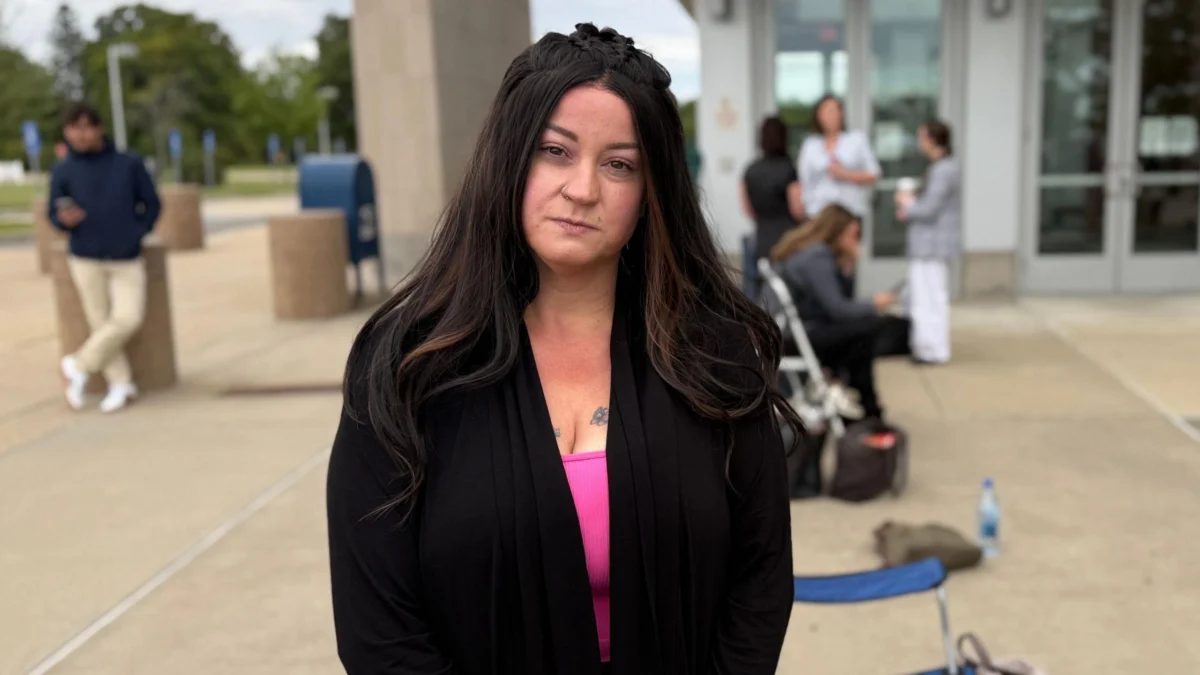
The trial itself became a magnet for public engagement, with many following the proceedings closely, both in person and remotely. Jodi Fournier, for instance, committed 15 days to attending the courthouse, feeling a profound personal duty to show support for Clancy. She viewed it as an imperative to stand for a woman she believed was wronged by an inadequate healthcare system, emphasizing the global relevance of postpartum struggles. Similarly, Katelyn Kazmirci traveled from North Carolina, convinced her mother to make a detour to Plymouth courthouse, drawn by the case she had meticulously followed on TikTok. Outside the courthouse, dozens of women donned pink attire, rallying in a visible show of solidarity for Clancy, reflecting a burgeoning movement advocating for greater understanding of maternal mental health.
However, this wave of sympathy was met with equally fervent condemnation. Across the country, opinions diverged sharply, illustrating the profound polarization ignited by the case. Maryanne Drysdale, a 65-year-old trial attendee, experienced this division within her own family. While she and her 28-year-old daughter advocated for Clancy to receive mental health treatment rather than incarceration, her three adult sons, fathers to children of similar ages to the Clancy victims, vehemently disagreed. "It’s black and white for them, [Clancy] killed the kids and that’s that," Drysdale lamented, expressing her bewilderment at such differing perspectives within her own kin.
The Legal Battle: Postpartum Psychosis vs. Intent
The defense’s central argument hinged on postpartum psychosis, a severe psychiatric emergency that can occur shortly after childbirth. Characterized by rapid onset, extreme mood swings, confusion, hallucinations, and delusions, it affects approximately 1 to 2 out of every 1,000 births. It is distinct from the more common postpartum depression (PPD) and can lead to impaired judgment, sometimes resulting in actions that are entirely out of character for the individual. The defense contended that Clancy was in the throes of such a severe episode, arguing that her mental state precluded her from forming the criminal intent necessary for murder.
To substantiate this, the court heard testimony from over ten expert witnesses on Clancy’s mental and postpartum health. These experts delved into her medical history, her reported symptoms, and the clinical definitions of postpartum mental illnesses. However, some testimonies introduced complexities that seemed to challenge the defense’s premise regarding criminal liability. Jennifer Tufts, who had treated Clancy during more than a dozen sessions over five months, testified that she had not observed signs consistent with psychosis. Further, psychiatrist Avram Mack testified that the American Psychiatric Association did not recognize postpartum psychosis as a standalone diagnosis. This latter point, while technically true in the context of the DSM-5 (which categorizes it under a specifier for other disorders like bipolar disorder with peripartum onset, rather than a primary diagnosis), was interpreted by many as undermining the defense’s claim of a distinct, exculpatory condition.
Clancy’s History of Seeking Help

Crucially, Clancy’s medical history revealed a pattern of escalating struggles following the birth of her youngest child. She had repeatedly sought professional help, visiting a hospital emergency room, consulting various medical professionals, and even contacting a suicide hotline. These efforts were presented by many observers as compelling evidence that Clancy had been proactive in seeking treatment and had, in their view, been failed by a healthcare system ill-equipped to address the severity of her condition. This narrative garnered significant sympathy, painting Clancy as a victim of circumstances beyond her control and a system that could not adequately protect her or her children.
Melissa Merrill, who had received treatment at the same hospital as Clancy after the birth of her son, empathized deeply with Clancy’s plight. "I see myself in her, as a mum who had suicidal ideation," Merrill told the BBC outside the Plymouth courthouse. Throughout the emotional weeks of the trial, Clancy, who attended court in a wheelchair, frequently displayed visible distress, crying, clutching her attorney’s hand, and uttering agonized sounds as harrowing details of the case were recounted. Merrill, witnessing Clancy’s evident suffering, felt compelled to rush to Clancy’s defense attorney after one trial day, handing him a pink envelope containing a message of support and hope for his client, whom she perceived as a "sad, defeated woman."
The Counter-Narrative: Accountability and "Toxic Empathy"
Yet, this widespread empathy was not universal. Other parents, such as Nicole Russell, a mother of four from Texas, vehemently pushed back against what she termed "toxic empathy." Russell, who followed the trial remotely, pointed out the prosecution’s detailed presentation of the extensive medical care and support Clancy had reportedly received – from doctors, her husband, a nanny, and family members. Russell argued that this level of support was "way more help" than most mothers receive, and insisted that Clancy was "not a martyr or a symbol for tired mums." She passionately articulated her stance: "Lindsay Clancy cannot be the poster child of what difficult motherhood looks like, because millions of mothers give birth to children and endure all kinds of hardship, and they do not hurt their children."
This perspective underscored a fundamental belief in individual accountability, irrespective of mental health challenges. For many, the horrific nature of the crime overshadowed any mitigating circumstances, asserting that no amount of suffering could justify the taking of innocent lives.
Social Media Frenzy and Gendered Discourse

The Clancy trial became a pervasive topic across social media platforms, with countless users engaging in discussions, debates, and unfortunately, the propagation of myriad conspiracy theories. The public discourse often devolved into unfounded accusations, particularly targeting Clancy’s former husband, Patrick Clancy. Despite his wife never denying killing their children and being the sole adult present at the time, Patrick Clancy became the subject of intense vitriol online, with some users baselessly accusing him of complicity or cover-up. This unwarranted public scrutiny, including tabloid photos of him with his new wife, prompted his lawyers to issue a statement to CNN in August, unequivocally asserting the "indisputable" facts of the case. They stated, "Patrick Clancy has suffered an unspeakable and unimaginable loss… Unfortunately, the tragedy Patrick has experienced has been compounded by patently false, defamatory and injurious public statements."
Beyond the conspiracy theories, the case also ignited a significant gender-based discussion. Opinions frequently cleaved along gender lines, highlighting differing societal expectations and perceptions of maternal versus paternal roles and responsibilities. Vincenzo Vazquez, a father of three from Illinois who followed the trial, expressed his belief that gender played a significant role in the public’s treatment of Clancy. He doubted that a father on trial for similar charges would receive the same outpouring of public sympathy. "Whatever someone is dealing with, I don’t think there’s ever an appropriate time or an excuse or a justification to, you know, kill children of your own, or kill any children," he stated. Vazquez found it "very sad and a little disgusted to see how many people are rallying behind her," advocating instead that "people should be out there rallying for justice for the children. They’re three beautiful kids that had a future in front of them." This sentiment resonated with many who felt the focus had shifted too much from the victims to the perpetrator.
Implications of the Mistrial and the Road Ahead
The declaration of a mistrial, often referred to as a "hung jury," means that the jury could not unanimously agree on a verdict after extensive deliberation. In Massachusetts, a unanimous decision is required for a criminal conviction. This outcome leaves the legal status of the case, and Lindsay Clancy’s future, in an uncertain limbo.
The legal process now moves to a hearing scheduled for the end of the month. At this hearing, prosecutors will face a critical decision: whether to pursue a second trial, attempt to negotiate a plea deal with the defense, or potentially even dismiss the charges, though the latter is highly improbable given the gravity of the accusations. A retrial would mean reliving the harrowing testimony and intense public scrutiny, potentially yielding a similar outcome if the fundamental divisions persist. A plea deal could offer a resolution without the unpredictability of another trial, but it would require both sides to compromise on their firmly held positions.
Regardless of the legal path forward, the Lindsay Clancy trial has indelibly marked the public consciousness. It has forced a uncomfortable yet necessary conversation about the extreme ends of postpartum mental health, the limitations and failures of the healthcare system, and the complex ethical and legal questions surrounding criminal responsibility when severe mental illness is a factor. The case has underscored the urgent need for greater awareness, early intervention, and comprehensive support systems for new mothers experiencing mental health crises.

For now, the debates will undoubtedly continue – in homes, online, and in the legal sphere – as a society grapples with the profound tragedy and the challenging questions it has raised about justice, compassion, and accountability.
Warning: This story contains distressing details and discussion of attempted suicide. If you are suffering distress or despair and need support, you could speak to a health professional, or an organisation that offers support. Details of help available in many countries can be found at Befrienders Worldwide. A list of UK organisations that can help is available here.