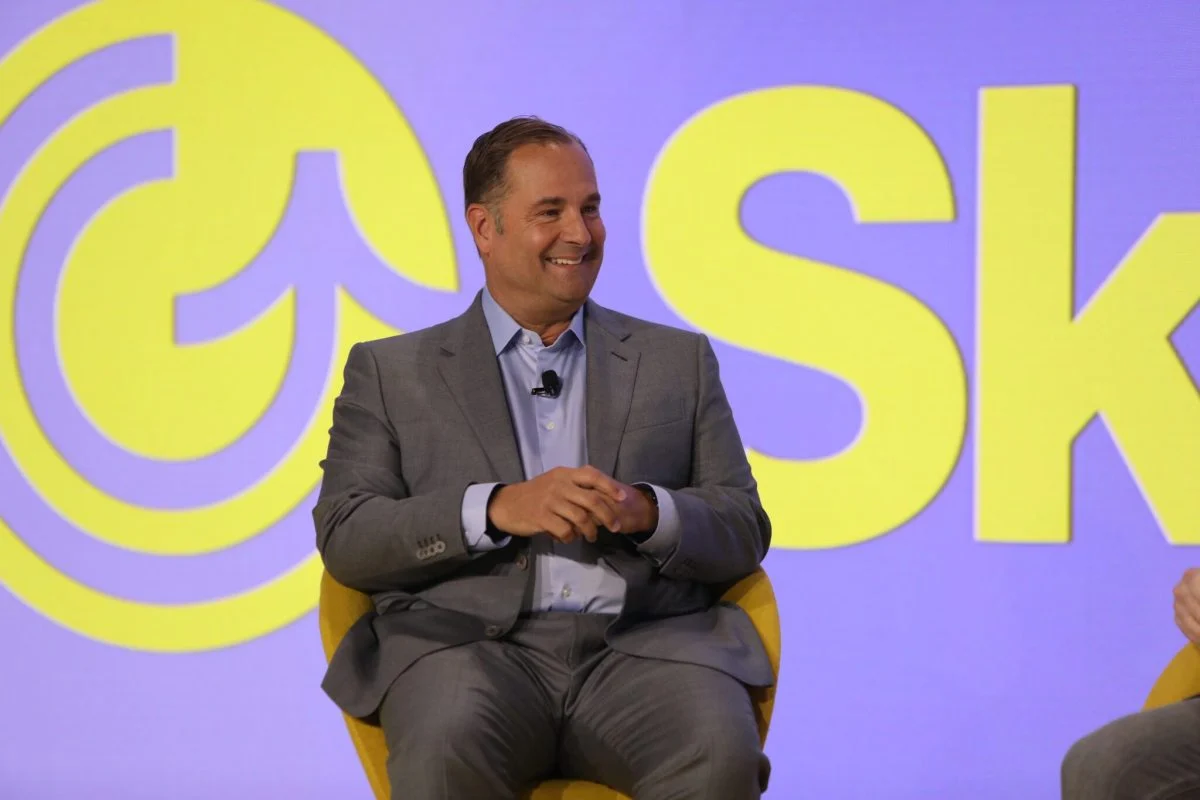
Speaking at a recent Bank of America investor conference, Marriott International Chief Executive Officer Anthony Capuano outlined a strategic shift in the hospitality sector, identifying the evolution of the distribution landscape as the most significant consequence of artificial intelligence adoption. Capuano emphasized that the way travelers discover, evaluate, and ultimately book hotel stays is undergoing a fundamental transition, driven by the emergence of AI-powered search and recommendation engines. As the leader of the world’s largest hotel company by room count, Capuano’s insights signal a broader industry movement toward optimizing digital assets for a post-keyword search era.
The core of Marriott’s current technological strategy involves a proactive approach to data integration with major AI developers. Capuano revealed that the company is actively feeding comprehensive content from its vast global portfolio—which includes over 30 brands and nearly 9,000 properties—into platforms managed by Google and OpenAI. The objective is to ensure that Marriott’s hotels appear in an "authentic but prominent way" as these AI tools become the primary interface for consumer travel planning. This move represents a shift from traditional Search Engine Optimization (SEO) toward what industry analysts are beginning to term Generative Engine Optimization (GEO).
The Strategic Shift in Global Distribution Systems
For decades, the hotel industry has relied on a complex web of distribution channels, including Global Distribution Systems (GDS), Online Travel Agencies (OTAs) like Expedia and Booking.com, and direct-to-consumer websites. The rise of generative AI introduces a new layer to this ecosystem. Instead of a traveler typing "hotels in London" into a search bar and browsing a list of links, they are increasingly asking AI assistants to "find a boutique hotel in London with a gym and a rooftop bar that is suitable for a business trip."
Capuano noted that "the biggest impact you’ll see on our industry is the distribution landscape." This statement underscores the potential for AI to disintermediate or reshape the relationship between hotel brands and the platforms that connect them to guests. By ensuring its data is deeply integrated into the Large Language Models (LLMs) that power these AI assistants, Marriott aims to maintain a direct line of visibility to the consumer, bypassing the traditional friction of multi-step search queries.
Quantitative Evidence of Marriott’s AI Visibility
The effectiveness of Marriott’s early-mover strategy has been validated by third-party research. During the conference, Capuano referenced recent findings from Skift and Lighthouse (formerly Transparent and OTA Insight), which specialize in travel data analytics. These reports indicated that the Marriott portfolio currently enjoys a higher level of visibility and availability within AI search tools compared to its primary industry peers, such as Hilton Worldwide, Hyatt Hotels Corporation, and InterContinental Hotels Group (IHG).
According to the Lighthouse data cited, Marriott’s properties are frequently cited in AI-generated itineraries and recommendations with higher accuracy and frequency. This is largely attributed to the company’s "content feeding" strategy, which ensures that the AI has access to structured, high-quality data regarding room types, amenities, location specifics, and real-time availability. In a digital environment where "hallucinations" (AI-generated inaccuracies) are a risk, the authenticity of the data provided by the brand becomes a competitive advantage.
Chronology of Marriott’s Digital Evolution
The current focus on AI is the latest chapter in a multi-year digital transformation at Marriott. To understand the context of Capuano’s remarks, it is necessary to view the company’s technological trajectory over the past decade:
- 2016–2018: The Starwood Integration. Following the acquisition of Starwood Hotels & Resorts, Marriott focused on merging massive legacy databases. This provided the scale of data necessary to train and inform modern AI models.
- 2019–2021: Personalization and the Bonvoy App. The company prioritized its loyalty program, Marriott Bonvoy, using data analytics to offer personalized room preferences and mobile-first experiences, such as mobile keys and chat-based concierge services.
- 2022: The Generative AI Pivot. With the public launch of ChatGPT and subsequent advancements in Google’s search algorithms, Marriott began shifting resources toward understanding how LLMs interpret travel data.
- 2023–2024: Active Integration. Marriott moved from observation to active participation, collaborating with tech giants to ensure their "digital twin" (the data representation of their hotels) was accurate and optimized for generative search.
Industry Reactions and the Competitive Landscape
While Marriott has been vocal about its successes, the rest of the industry is also mobilizing. The reaction among hospitality stakeholders has been a mix of urgency and cautious investment.
Online Travel Agencies (OTAs): Platforms like Expedia and Booking.com have launched their own AI trip planners. For Marriott, appearing prominently in these OTA-hosted AI tools is just as vital as appearing in Google Gemini or ChatGPT. The competition is no longer just for the top spot on a search results page, but for being the "recommended" choice in a conversational AI interface.
Competitor Responses: Hilton has focused heavily on "frictionless" stay technology, while Hyatt has leaned into AI for revenue management and back-of-house efficiency. Capuano’s remarks suggest that while operational AI is important, the "battle for the customer" starts at the discovery phase, which is where Marriott is currently concentrating its AI efforts.
Tech Analysts: Analysts at firms like Bank of America have noted that Marriott’s scale gives it a significant advantage. Feeding data into AI requires sophisticated API infrastructures and a massive volume of standardized content—resources that smaller boutique chains or fragmented independent hotels may struggle to provide at the same level of detail.
The Role of Structured Data in AI Discovery
The process Capuano described as "feeding" content involves more than just sending text descriptions to Google. It requires the use of structured data schemas that AI models can easily parse. This includes:
- Geospatial Data: Precise mapping and proximity to local landmarks or transport hubs.
- Amenity Verification: Detailed lists of services that are updated in real-time.
- Visual Content Metadata: High-resolution images tagged with descriptive metadata that AI can "understand" and describe to users.
- Real-Time Pricing and Inventory: Ensuring that the AI does not recommend a hotel that is sold out or show an outdated rate, which would diminish user trust.
By mastering these technical requirements, Marriott is positioning its 1.59 million rooms to be easily "discovered" by the algorithms that will define the next decade of travel commerce.
Broader Implications for the Hospitality Guest Journey
The implications of AI-driven distribution extend beyond the initial booking. Capuano’s vision suggests a future where the guest journey is integrated through a single AI-driven thread. If a traveler books a Marriott hotel via an AI assistant, that same assistant could potentially handle pre-arrival requests, suggest local dining options affiliated with the Marriott Bonvoy program, and facilitate a seamless check-out.
However, this shift also presents risks. One primary concern is the potential for "brand dilution." If an AI assistant recommends a hotel based solely on utility or price without highlighting the brand’s unique value proposition, the emotional connection to the brand could be weakened. This explains Capuano’s emphasis on appearing in an "authentic" way. Marriott wants the AI to not just list a room, but to convey the specific "Vibe" or "Experience" associated with brands like The Ritz-Carlton, W Hotels, or Courtyard.
Furthermore, there is the financial implication of distribution costs. Direct bookings are the most profitable for hotel owners because they avoid the 15% to 25% commissions typically charged by OTAs. If AI platforms become the new gatekeepers, the industry will have to negotiate new commercial models. Marriott’s proactive engagement with Google and OpenAI may be an attempt to secure a favorable position in this new ecosystem before the rules are fully written.
Conclusion and Future Outlook
Anthony Capuano’s remarks at the Bank of America conference highlight a pivotal moment for the hospitality industry. As artificial intelligence transitions from a novelty to a core component of the global commerce infrastructure, Marriott International is attempting to secure its dominance by redefining its distribution strategy.
By prioritizing visibility in AI-powered search tools and leveraging its massive scale to provide high-quality data to tech platforms, Marriott is seeking to ensure that its portfolio remains the first choice for the next generation of travelers. The findings from Skift and Lighthouse suggest that this strategy is already yielding results, placing Marriott ahead of its peers in the race for digital relevance.
As the distribution landscape continues to evolve, the success of hotel companies will increasingly depend on their ability to speak the "language" of AI. For Marriott, the goal is clear: to be wherever the traveler is, whether that is a traditional travel agency, a mobile app, or a conversational AI interface that is just beginning to understand the complexities of global travel. The move toward AI-driven distribution is not merely a technical upgrade; it is a strategic repositioning of the world’s largest hotelier for a future where the search bar is replaced by a digital assistant.