Two unvaccinated individuals have tragically succumbed to measles in Pennsylvania, state health officials confirmed, underscoring a critical public health crisis as the United States grapples with its highest incidence of the highly contagious virus in 35 years. These fatalities, which occurred in Pennsylvania, contribute to a concerning national trend that threatens the country’s long-held status of measles elimination. The commonwealth itself has reported 393 measles cases this year, reflecting a worrying surge that mirrors a broader decline in vaccination coverage across various communities.
The deaths were reported in Lancaster County, a region where current measles vaccination rates among kindergarten-aged students stand at a mere 85%. This figure falls significantly short of the 95% threshold universally recognized by public health experts as essential for achieving robust herd immunity. Herd immunity acts as a crucial protective barrier, limiting the virus’s spread and safeguarding the most vulnerable populations, including infants too young to be vaccinated, pregnant women, and individuals with compromised immune systems who cannot receive the vaccine. The specific identities of the deceased, including whether they were children, were not disclosed by officials, who cited privacy concerns. However, medical experts consistently note that young children and infants face a disproportionately higher risk of severe complications and mortality from measles.
A Resurgent Threat: National Measles Crisis Deepens
The Pennsylvania fatalities are not isolated incidents but rather grim markers within a escalating national public health challenge. The United States has recorded an alarming 2,777 confirmed cases of measles in 2026, a staggering figure accumulated within just the first seven months of the year. This trajectory significantly surpasses the 2,289 cases reported throughout the entirety of the previous year, highlighting an accelerating spread. This current outbreak marks the most severe resurgence of measles in the U.S. since 1991, decades after the disease was largely considered a relic of the past due to widespread vaccination efforts.
The implications of this surge are profound. In 2000, the U.S. proudly declared measles eliminated, a monumental achievement attributed to robust vaccination programs and public health infrastructure. This status signifies that endemic transmission of the virus has been interrupted within the country. However, the current trajectory places this hard-won status in jeopardy. A panel of international public health experts is scheduled to review the U.S.’s elimination status in November, with growing concerns that the nation could follow Canada, which lost its elimination status last year amidst similar outbreaks driven by declining vaccination rates. Losing this status would not merely be a symbolic setback; it would necessitate a fundamental re-evaluation of public health strategies, potentially leading to increased endemic transmission, significant economic burdens on healthcare systems, and a heightened risk for international travelers.
The current crisis echoes previous outbreaks that have tested the nation’s public health resilience. Last year, Texas experienced a devastating measles outbreak that infected over 1,000 people, predominantly children, and resulted in the deaths of two unvaccinated children. These incidents serve as stark reminders of the virus’s lethality, particularly in communities with insufficient immunization coverage. Measles, caused by the rubeola virus, is among the most contagious infectious diseases known, capable of remaining viable in the air or on surfaces for up to two hours after an infected person coughs or sneezes. Symptoms typically include high fever, cough, runny nose, red watery eyes, and a characteristic rash, but severe complications can include pneumonia, encephalitis (brain swelling), and permanent neurological damage, particularly in infants and immunocompromised individuals.
The Erosion of Immunity: Vaccine Hesitancy and its Consequences
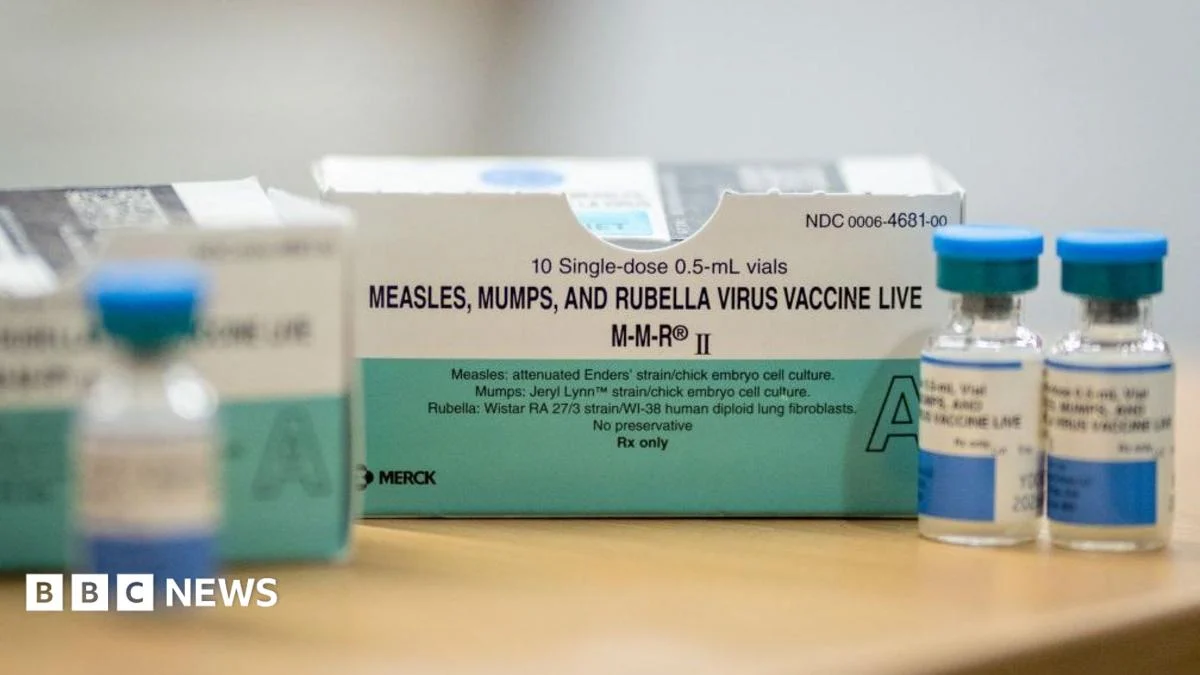
At the heart of the current measles resurgence lies a disturbing trend of increased vaccine hesitancy across the United States in recent years. This hesitancy, fueled by a complex interplay of misinformation, distrust in scientific institutions, and politically charged rhetoric, has directly translated into lower immunization rates in various communities. The decline in vaccine uptake for the measles, mumps, and rubella (MMR) vaccine is particularly critical. The U.S. Centers for Disease Control and Prevention (CDC) recommends two doses of the MMR vaccine for children: the first between 12 and 15 months of age, and the second between ages four and six. This two-dose regimen is remarkably effective, providing approximately 97% protection against measles.
The concept of herd immunity is pivotal in understanding the danger posed by falling vaccination rates. When a sufficiently high percentage of a population is vaccinated (typically 95% for measles), it creates a protective shield, making it difficult for the virus to spread from person to person. This collective immunity indirectly protects those who cannot be vaccinated, such as infants, individuals undergoing chemotherapy, or those with specific medical contraindications. When vaccination rates dip below this critical threshold, as seen in Lancaster County, pockets of vulnerability emerge, allowing highly contagious diseases like measles to re-establish a foothold and spread rapidly. The consequences are dire, as evidenced by the recent fatalities in Pennsylvania and Texas.
Political Crosscurrents: Federal Policy and Public Health Messaging
The escalating measles crisis is unfolding against a backdrop of significant political contention regarding vaccine policy at the federal level, further complicating public health efforts. Earlier this month, President Donald Trump signed an executive order that has drawn widespread condemnation from public health experts. The order calls for fewer childhood vaccinations and, controversially, recommends splitting the combined MMR vaccine into three separate shots for measles, mumps, and rubella.
Public health professionals and medical organizations have voiced grave concerns that this executive order will sow confusion among the public about an already safe and highly effective vaccine. They argue that separating the MMR vaccine into three distinct injections would not only be logistically burdensome and costly for healthcare systems and families but could also lead to lower completion rates for the full vaccination series, thereby decreasing overall protection. The scientific consensus firmly supports the efficacy and safety of the combined MMR vaccine, a cornerstone of childhood immunization schedules for decades.
This federal directive follows a year of concerted efforts by Health Secretary Robert F. Kennedy Jr., a known vaccine skeptic, to reshape U.S. vaccine policies, including the established childhood vaccination schedule. Kennedy has been criticized for sharing mixed messages on the MMR vaccine, at times endorsing its use while at other times disseminating unproven claims about its safety, contributing to the very vaccine hesitancy that public health officials are desperately trying to counter. Many of his proposed changes to vaccine policy were, however, blocked by a federal judge earlier this year, signaling a judicial pushback against initiatives perceived as undermining established public health science.
The tension between federal policy and scientific consensus came to a head in a direct exchange between Pennsylvania Governor Josh Shapiro and Secretary Kennedy. Speaking at a Tuesday news conference, Governor Shapiro revealed that he had spoken with Secretary Kennedy by phone that morning. Shapiro stated he was "very blunt" with Kennedy regarding the administration’s stance on vaccinations, conveying the profound impact of their messaging. "I made very clear that his actions and the rhetoric that’s coming from this administration are having a negative impact on communities across America … that there’s real life consequences to spreading misinformation," Shapiro asserted, directly linking federal rhetoric to tangible public health outcomes, including illness and death. During the call, Kennedy reportedly offered to send staff from the U.S. Centers for Disease Control and Prevention (CDC) to assist Pennsylvania, an offer that, while practical, underscores the stark ideological divide on vaccine policy.
Official Responses and Forward Path
In response to the deepening crisis, Governor Shapiro has unequivocally emphasized the severity of the situation. "This is a serious and a growing problem across our country and in our commonwealth," he stated, adding a forceful declaration: "This illness and death from measles is completely preventable." He reiterated that the mumps, measles, and rubella (MMR) vaccine remains the most effective and safest tool available to protect against illness and death from these diseases. This messaging aligns with the unified voice of public health authorities at state and local levels, who are working tirelessly to educate the public, facilitate access to vaccination, and conduct contact tracing to contain the spread of the virus.
Public health agencies, including the Pennsylvania Department of Health and local health departments in affected counties like Lancaster, are intensifying efforts to promote vaccination and combat misinformation. These efforts include community outreach programs, establishing accessible vaccination clinics, and disseminating factual information through trusted medical professionals and public health campaigns. The goal is to rebuild trust in vaccines and restore high immunization rates necessary for community-wide protection.
The ongoing measles crisis serves as a critical juncture for U.S. public health. The potential loss of measles elimination status, the tragic and preventable deaths, and the political polarization surrounding vaccine science underscore the urgent need for a unified, evidence-based approach to public health policy. Without a concerted effort to counter misinformation, promote vaccination, and reinforce the scientific consensus on vaccine safety and efficacy, the nation risks not only further outbreaks but also a permanent erosion of its collective immunity against preventable diseases. The path forward demands collaboration across all levels of government, unwavering commitment to scientific principles, and a renewed societal understanding of the profound value of public health interventions like vaccination.