

The Mexican federal government has announced a massive financial commitment of $115 million to address the escalating crisis of sargassum seaweed along its Caribbean coastline, a move intended to safeguard the nation’s vital tourism industry and fragile marine ecosystems. This unprecedented allocation comes as the region faces what scientists and local officials describe as the most severe influx of the brown macroalgae since the phenomenon first began affecting the area more than a decade ago. The funding will support a multi-agency strategy involving the Mexican Navy, local municipalities, and private sector partners to intercept the seaweed at sea and manage the massive volumes already accumulating on the white-sand beaches of Quintana Roo. While the tourism sector has largely welcomed the infusion of capital, industry leaders are simultaneously calling for more robust, long-term environmental planning to address the root causes of the bloom, rather than relying on reactive annual cleanup efforts.
The Scale of the Sargassum Crisis in 2024
Sargassum, a genus of large brown seaweed (a type of algae) that floats in island-like masses, has historically been a natural and beneficial part of the Atlantic Ocean’s ecology. However, since 2011, the "Great Atlantic Sargassum Belt"—a massive bloom stretching from the coast of West Africa to the Gulf of Mexico—has grown to catastrophic proportions. In recent months, satellite imagery and oceanographic monitoring have indicated that 2024 is shaping up to be a record-breaking year for seaweed density.
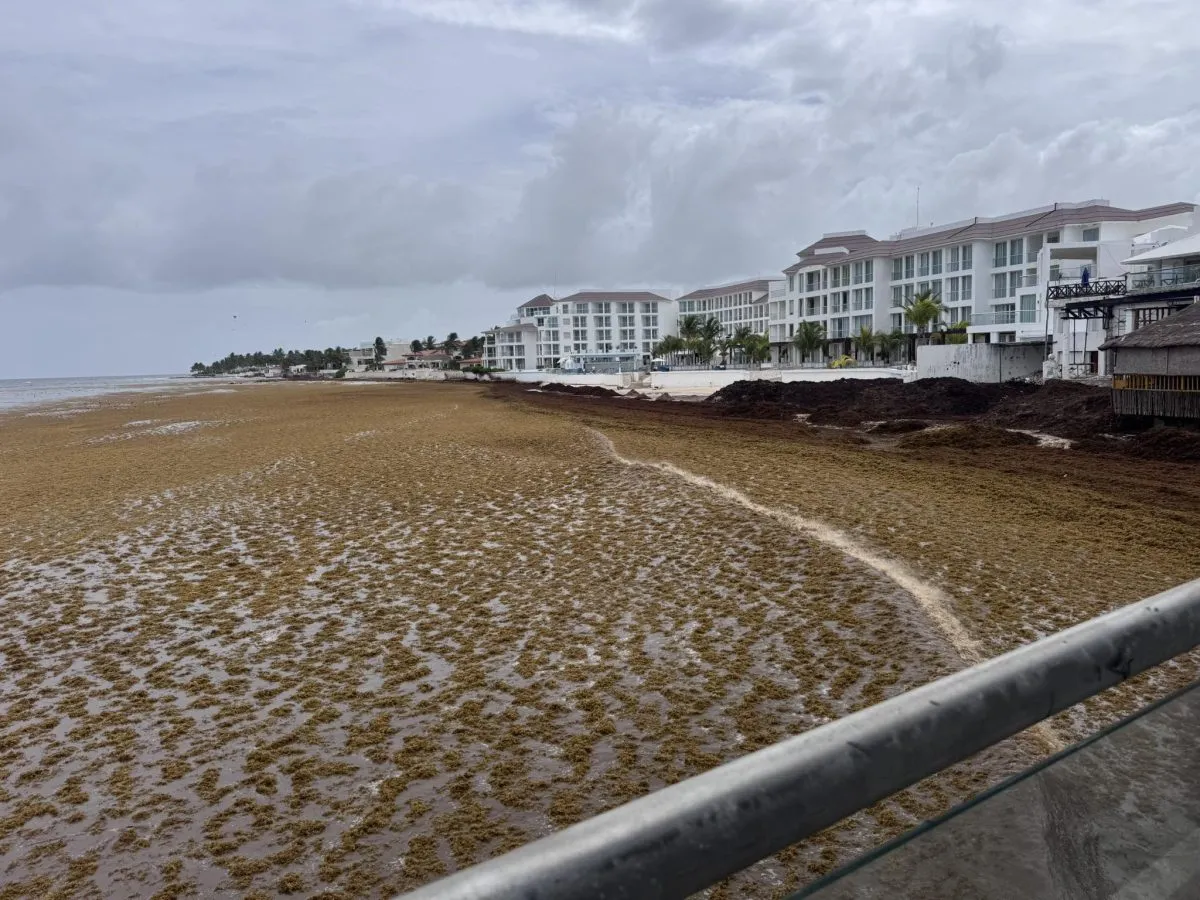
The influx has transformed the pristine turquoise waters of world-renowned destinations such as Cancún, Playa del Carmen, Tulum, and Cozumel into murky brown zones. For Mexico, the stakes are exceptionally high. The state of Quintana Roo accounts for a significant portion of the country’s tourism revenue, an industry that contributes approximately 8.5% to the national Gross Domestic Product (GDP). As the sargassum washes ashore in thousands of tons, it creates a physical barrier for swimmers and emits a pungent, "rotten-egg" odor caused by the release of hydrogen sulfide gas during decomposition.
A Chronology of an Environmental Phenomenon
The current crisis is the result of a decade-long shift in Atlantic oceanography. Before 2011, sargassum was primarily confined to the Sargasso Sea in the North Atlantic. The following timeline illustrates the evolution of the current emergency:
- 2011: The first major, unexpected influx of sargassum is recorded along the Caribbean coast of Mexico and various Caribbean island nations.
- 2015: A significant spike in seaweed volume leads to the first major economic alarms within the Mexican hospitality sector, as hotel occupancy rates begin to fluctuate based on beach conditions.
- 2018: Previously considered the "worst year on record," 2018 saw massive mats of algae that required the mobilization of the Mexican Navy (SEMAR) to assist in offshore collection.
- 2019–2022: Despite a brief lull during the early phases of the COVID-19 pandemic, the sargassum belt continued to grow. Mexico established a permanent monitoring task force, yet the volume of algae frequently overwhelmed local resources.
- 2023–2024: Warming ocean temperatures and increased nutrient runoff have accelerated growth. By early 2024, the volume of sargassum in the Caribbean Sea reached levels significantly higher than the previous five-year average for the same period.
The Dual Threat: Ecological and Economic Consequences
The impact of sargassum is twofold, striking at both the environmental integrity of the region and the economic stability of the local population.
Environmental Degradation
In the open ocean, sargassum serves as a floating habitat, providing food and shelter for sea turtles, crabs, and numerous fish species. However, when it arrives in coastal shallows in excessive quantities, it becomes a pollutant. As it decomposes, it consumes oxygen, creating "dead zones" that suffocate seagrass meadows and shallow-water coral reefs. These ecosystems are vital for coastal protection and biodiversity. Furthermore, the decomposition process releases heavy metals—including arsenic and cadmium—which can leach into the groundwater and affect the delicate cenote systems of the Yucatán Peninsula.
Economic Strain on Tourism
The tourism industry is the lifeblood of the Mexican Caribbean. Large hotel chains have reported spending upwards of $200,000 per month on private cleaning crews, heavy machinery, and transport to haul seaweed to inland disposal sites. To maintain occupancy levels, many resorts have been forced to offer significant discounts or "sargassum guarantees," allowing guests to move to different properties or reschedule their trips if the beaches are deemed unusable. The $115 million government investment is seen as a necessary relief to prevent a long-term decline in the region’s brand as a premier luxury destination.
Scientific Drivers of the Algae Bloom
Research conducted by the National Autonomous University of Mexico (UNAM) and international oceanographic institutions points to several key drivers behind the proliferation of sargassum.
- Ocean Warming: Rising sea surface temperatures, a direct consequence of global climate change, provide the ideal thermal environment for rapid algal reproduction.
- Nutrient Pollution: Increased agricultural runoff from the Amazon and Mississippi River basins has pumped nitrogen and phosphorus into the Atlantic. These nutrients act as fertilizer for the sargassum, fueling explosive growth.
- Sahara Dust: Seasonal dust clouds from the Sahara Desert carry iron and other minerals across the Atlantic, further nourishing the seaweed belt.
- Changing Currents: Alterations in Atlantic circulation patterns have helped transport the algae into the Caribbean Sea, where it becomes trapped in a cycle of growth and coastal deposition.
Strategic Allocation of the $115 Million Fund
The Mexican government’s $115 million plan is a comprehensive strategy designed to tackle the problem before it reaches the sand. The Secretaría de Marina (SEMAR) will lead the operational efforts, which include several key components:
- Offshore Interception: The procurement and deployment of specialized "sargacero" vessels. These boats are equipped with conveyor belts and nets designed to scoop the algae from the water’s surface in deep water, preventing it from reaching the shore.
- Containment Barriers: The installation of miles of sophisticated floating barriers. Unlike early versions that often broke during storms, the new barriers are designed to withstand Caribbean currents and divert sargassum toward collection points.
- Satellite Monitoring and Early Warning: Investment in real-time satellite tracking and drone surveillance to provide hotel operators and municipal cleaners with 48-to-72-hour notice of incoming mats.
- Disposal and Processing: Developing infrastructure for the proper disposal of collected seaweed. This includes the construction of specialized landfills and the exploration of industrial uses for the algae, such as the production of biofuel, bricks, or fertilizers.
Official Responses and Industry Reactions
The announcement has garnered a range of responses from government officials and private stakeholders. Bernardo Cueto Riestra, the Secretary of Tourism for Quintana Roo, emphasized that the funding is a testament to the government’s commitment to the region’s economic health. "This is not just an environmental issue; it is a matter of national economic security," Cueto Riestra stated during a recent press briefing.
However, the Quintana Roo Hotel Association has expressed cautious optimism. While they applaud the immediate financial support, they have called for a "Sargassum Trust" that would ensure consistent funding year-over-year, regardless of political cycles. "We need a permanent solution, not just a seasonal reaction," said a spokesperson for the association. "The $115 million is a vital start, but the volume of sargassum is increasing every year. We must look at international cooperation to address the nutrient pollution in the Atlantic that feeds these blooms."
Environmental advocacy groups have also weighed in, urging the government to ensure that the removal process does not inadvertently damage the beaches. The use of heavy machinery on the sand can lead to beach erosion and destroy sea turtle nesting sites. They advocate for manual removal in sensitive areas and stricter regulations on how the collected seaweed is processed to prevent heavy metal contamination of the soil.
Analysis of Long-term Implications
The sargassum crisis represents a "new normal" for the Caribbean. The $115 million investment by Mexico is one of the largest single-country financial commitments to the problem, but it highlights a broader regional challenge. As climate change continues to warm the oceans, the Great Atlantic Sargassum Belt is unlikely to disappear.
Mexico’s proactive stance may serve as a blueprint for other Caribbean nations—such as Barbados, the Dominican Republic, and Jamaica—which are also grappling with the seaweed’s impact but lack the fiscal resources of the Mexican state. However, the success of this investment will be measured not just by the cleanliness of the beaches in the short term, but by the ability of the government to foster an "algae economy." If Mexico can successfully convert the millions of tons of sargassum into a viable commercial product, it could turn an environmental disaster into a sustainable industry.
In the immediate future, the focus remains on the current season. With the $115 million now being deployed, the Mexican Navy and local authorities are in a race against time to protect the peak summer travel season. For the millions of tourists who flock to the Riviera Maya, the success of this operation will determine whether their holiday includes the iconic clear waters of the Caribbean or the sight and smell of an ocean in distress.