


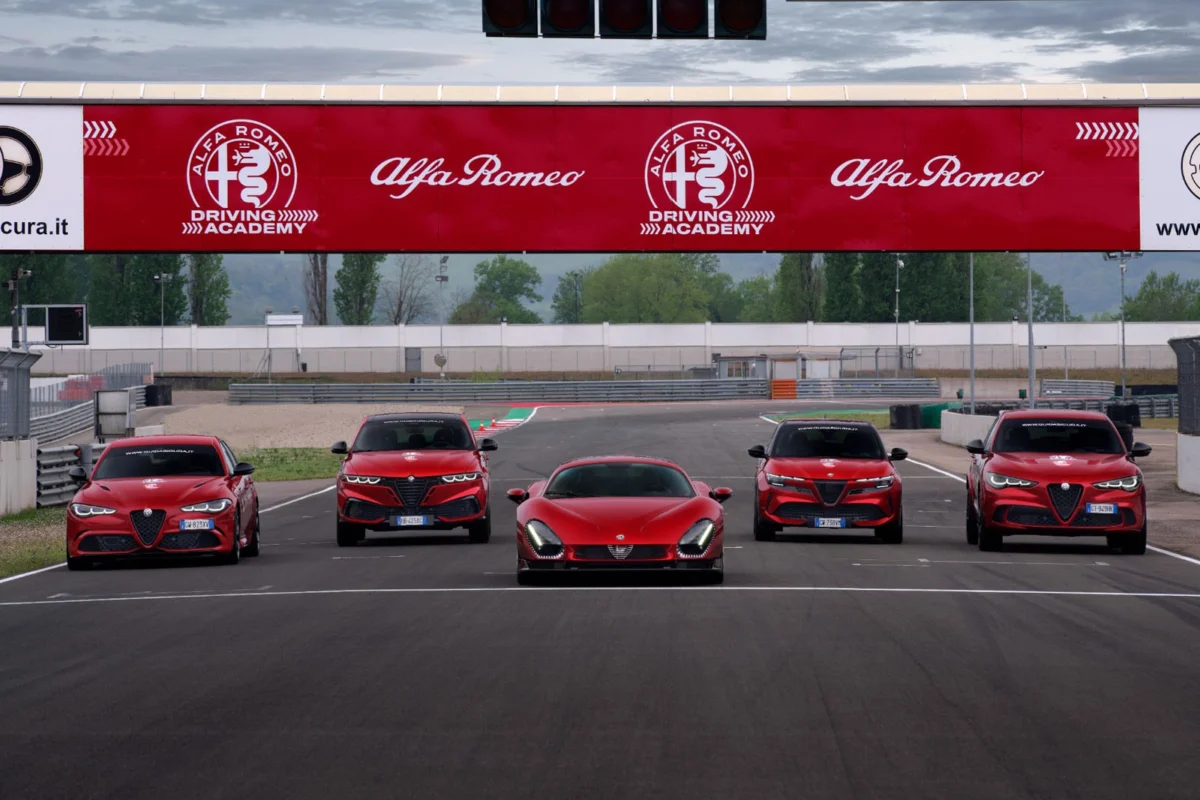
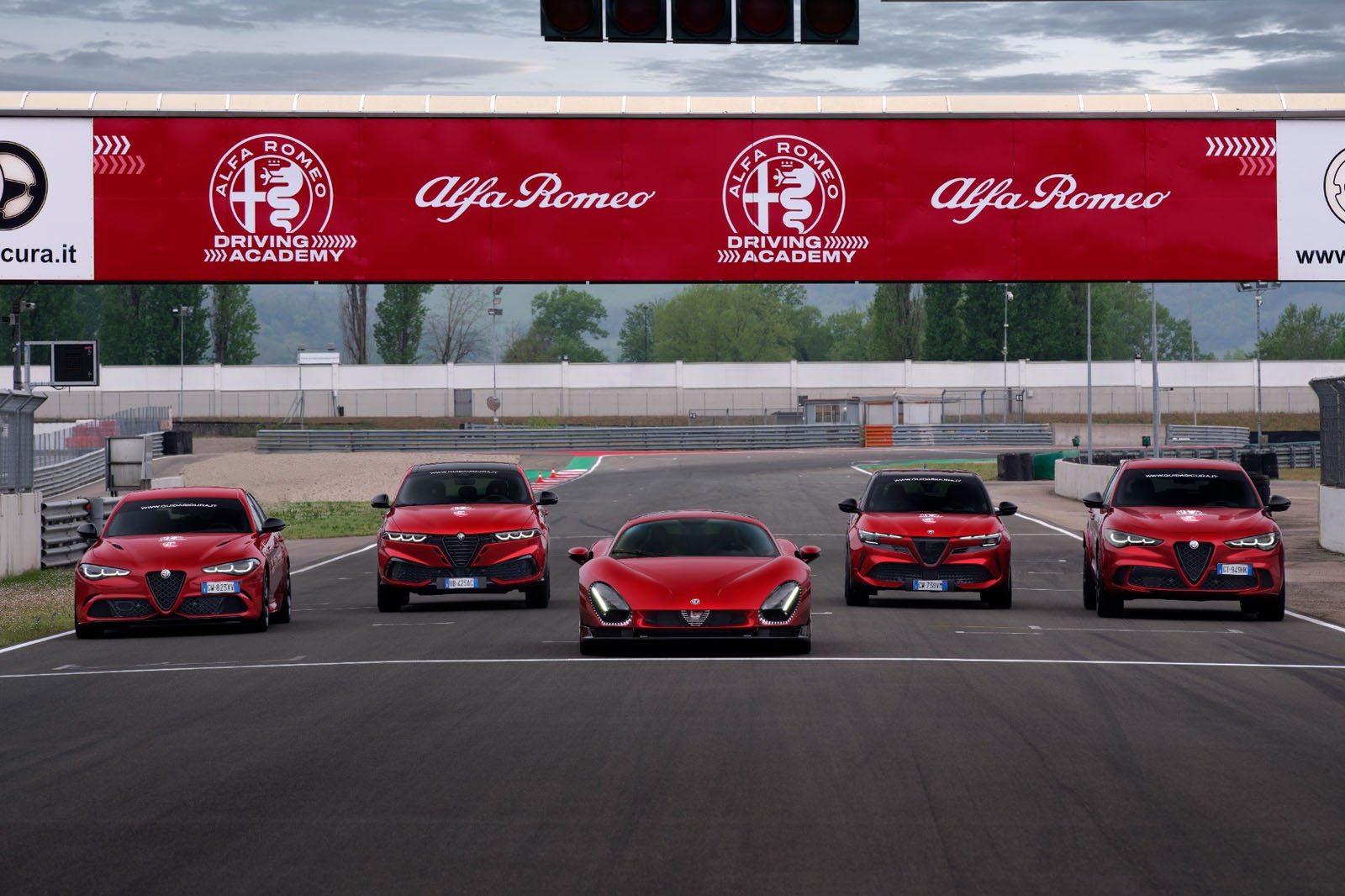
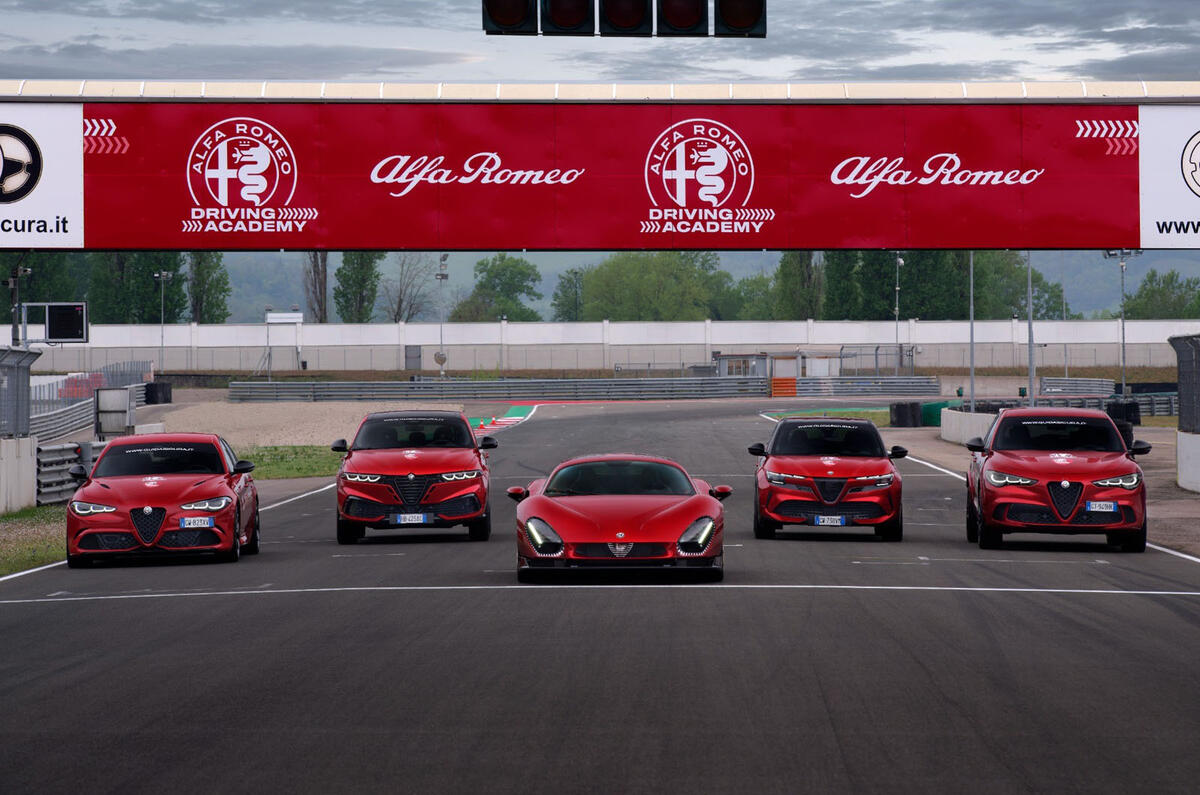
The automotive industry has long been defined by rigid segmentation, where manufacturers typically occupy specific price brackets and prestige tiers. However, the recent product strategy of Alfa Romeo has challenged these traditional boundaries, creating a unique market position that spans from the accessible, entry-level Junior crossover to the ultra-exclusive, multi-million-pound 33 Stradale hypercar. This massive pricing delta—roughly 4,500% from the bottom of the range to the top—raises significant questions about brand elasticity and whether any other manufacturer possesses the heritage and market permission to operate at both extremes of the financial spectrum.
The Bifurcation of the Alfa Romeo Portfolio
At the entry point of the current Alfa Romeo lineup sits the Junior, a B-segment crossover originally unveiled as the Milano before a naming dispute with the Italian government led to its rebranding. Starting at approximately £30,000, the Junior is designed to capture volume in the competitive European compact market. It shares the Stellantis e-CMP2 platform with siblings like the Peugeot 2008 and the Jeep Avenger, utilizing hybrid and fully electric powertrains to appeal to a younger, more mainstream demographic.
In stark contrast, the 33 Stradale represents the absolute pinnacle of automotive exclusivity. Reimagining the legendary 1967 racer of the same name, the new 33 Stradale is limited to just 33 units, all of which were sold to hand-picked enthusiasts before the car was even publicly revealed. While Alfa Romeo has officially declined to confirm the final invoice price for these bespoke machines, industry estimates and insider reports place the figure between £1.4 million and £2 million, depending on the level of personalization requested through the brand’s "Bottega" program.
This spread is almost unprecedented in the modern era. While many brands produce "halo" cars, the distance between Alfa Romeo’s "bread and butter" models and its "crown jewel" is uniquely vast, testing the limits of what a single badge can represent to different consumer groups.
Historical Context: From Grand Prix Winners to Mass Market Struggles
To understand how Alfa Romeo can command such a range, one must look at its century-long history. Founded in 1910 as A.L.F.A. (Anonima Lombarda Fabbrica Automobili), the company quickly became a titan of early motorsport. It won the inaugural World Championship for Grand Prix cars in 1925 and the first two Formula One World Championships in 1950 and 1951 with Nino Farina and Juan Manuel Fangio.
This racing pedigree provides the "permission" for the 33 Stradale. The original 1967 33 Stradale is widely considered one of the most beautiful and technologically advanced cars of its era, featuring a 2.0-liter V8 derived from the Tipo 33 race car. By tapping into this specific lineage, the modern 33 Stradale is not seen as an opportunistic cash-grab, but as a legitimate continuation of a storied history.
Conversely, the brand’s history of producing more attainable cars, such as the Alfasud in the 1970s and the 156 in the 1990s, allows it to exist in the £30,000 space without appearing to "devalue" itself. Unlike Ferrari or Lamborghini, which have strictly maintained a high-floor entry price to preserve exclusivity, Alfa Romeo has historically been a "people’s performance brand," making Italian flair accessible to the middle class.
Comparative Analysis: Which Other Brands Can Stretch?
When examining the global automotive landscape, few brands can match Alfa Romeo’s current price spread. Industry analysts often point to a few potential candidates, though each comes with caveats:
1. Ford
Ford is perhaps the most notable example of a mass-market brand reaching into the stratosphere. At one end, Ford sold the Fiesta and Puma for under £25,000; at the other, the most recent Ford GT retailed for approximately £450,000 to £500,000. However, even the Ford GT’s price tag falls short of the £1.4 million mark commanded by the 33 Stradale, and Ford lacks the "luxury" connotation that Alfa Romeo maintains even in its cheaper models.
2. Mercedes-Benz
Mercedes-Benz offers a wide range, starting with the A-Class at around £30,000 and reaching up to the AMG One hypercar, which costs roughly £2.2 million. While the spread is technically larger than Alfa Romeo’s, Mercedes-Benz operates on a much larger volume scale. The brand is perceived as a "premium-to-luxury" ladder, whereas Alfa Romeo is often viewed as a "boutique" brand that occasionally builds a masterpiece.
3. Porsche
Porsche is often cited as the gold standard for brand elasticity. However, Porsche has consciously moved its entry point upward. The cheapest Porsche, the Macan or the 718 Cayman, now starts well above £50,000. While they produce hypercars like the 918 Spyder (and the upcoming Mission X), they no longer compete in the £30,000 "everyman" bracket where the Alfa Romeo Junior resides.
4. Toyota
Toyota produces the GR Super Sport, a hypercar based on its Le Mans-winning technology, which could theoretically cost millions. However, as a brand, Toyota is fundamentally associated with reliability and mass-market value. A £1 million Toyota is an engineering statement, whereas a £1 million Alfa Romeo is an emotional and artistic investment.
The Stellantis Strategy: Value Over Volume
The current positioning of Alfa Romeo is a deliberate result of the strategy implemented by Jean-Philippe Imparato, who took over as CEO following the formation of Stellantis in 2021. Under the previous ownership of Fiat Chrysler Automobiles (FCA), Alfa Romeo struggled with inconsistent product cycles and quality concerns.
Imparato’s "From 0 to 0" plan—referring to the brand’s transition from zero electrified vehicles to a zero-emission lineup by 2027—focuses on high margins rather than raw sales numbers. By launching the Junior, Alfa Romeo ensures a steady stream of revenue and meets fleet emission targets. By launching the 33 Stradale, the brand reinforces its "premium" status, allowing it to charge more for its mid-range models like the Giulia sedan and Stelvio SUV.
According to Stellantis financial reports from 2023, Alfa Romeo returned to profitability by focusing on "price positioning and quality." The brand’s ability to sell out the 33 Stradale production run instantly served as a "proof of concept" for investors, demonstrating that the Alfa Romeo name still carries significant weight in the ultra-luxury segment.
The Role of the "Bottega" and Bespoke Manufacturing
A key factor in Alfa Romeo’s ability to command a £1.4 million price tag is the revival of the "Bottega." Inspired by the Renaissance-era workshops and the great Italian coachbuilders of the mid-20th century, the Bottega is a dedicated team that works directly with customers to customize their vehicles.
For the 33 Stradale, this meant that no two cars are identical. Customers were involved in the design process at the Sala del Consiglio of the Museum in Arese, where the original 33 Stradale was approved in 1967. This level of service is typically reserved for brands like Pagani or Rolls-Royce. The fact that a brand also selling a £30,000 crossover can provide a legitimate "haute couture" experience is a testament to the brand’s unique cultural capital.
Implications for the Future of the Brand
The massive price spread of Alfa Romeo is not without risk. Brand dilution is a constant threat when a manufacturer attempts to be "all things to all people." If the Junior is perceived as a mere "rebadged" Stellantis product without sufficient "Alfa DNA," it could tarnish the prestige required to sell future hypercars.
However, industry experts suggest that the 33 Stradale acts as a protective "halo." It reminds the public of what Alfa Romeo is capable of, casting a glow of desirability over the more mundane models. As the brand transitions to an all-electric lineup, this heritage will be crucial. The next generation of Alfa Romeos will likely be judged not on their engines—long the heart of an Alfa—but on their design, handling, and "soul."
The success of the 33 Stradale has reportedly paved the way for more "Fuoriserie" (custom-built) limited editions. Rumors within the industry suggest that Alfa Romeo is already considering a successor to the 33 Stradale, potentially based on the 1960s-70s Montreal or the GTV, which would continue to sit at the top of the price pyramid.
Conclusion
Is Alfa Romeo the only brand that can sell cars for £30,000 and £1.4 million? While Mercedes-Benz technically occupies a similar range, Alfa Romeo is unique in its "boutique" execution. It is the only brand that can pivot from a mass-market B-SUV to a hand-crafted, mid-engine hypercar while maintaining a coherent narrative of Italian style and racing heritage.
The £30,000 Junior provides the financial stability and volume necessary for the brand’s survival in a regulated, electrified world. The £1.4 million 33 Stradale provides the emotional and aspirational anchor that prevents Alfa Romeo from becoming just another badge in a corporate portfolio. For now, Alfa Romeo remains the industry’s most elastic brand, successfully bridging the gap between the driveway of the average commuter and the climate-controlled garage of the billionaire collector.