


Washington, D.C. — The U.S. Federal Reserve, under the nascent leadership of Chairman Kevin Warsh, officially embarked on a new chapter in its communication strategy following the Federal Open Market Committee (FOMC) meeting on June 17, 2026. This pivotal gathering, Warsh’s inaugural as the central bank’s chief, concluded with a statement that dramatically diverged from the verbose pronouncements characteristic of previous administrations, signaling a fundamental recalibration of how the Fed interacts with markets and the public. The brevity of the statement, a stark reduction in word count, immediately captured the attention of economists, investors, and policymakers alike, marking a definitive departure from the transparency-focused era that preceded it.
A Concise Departure: The June 2026 FOMC Statement
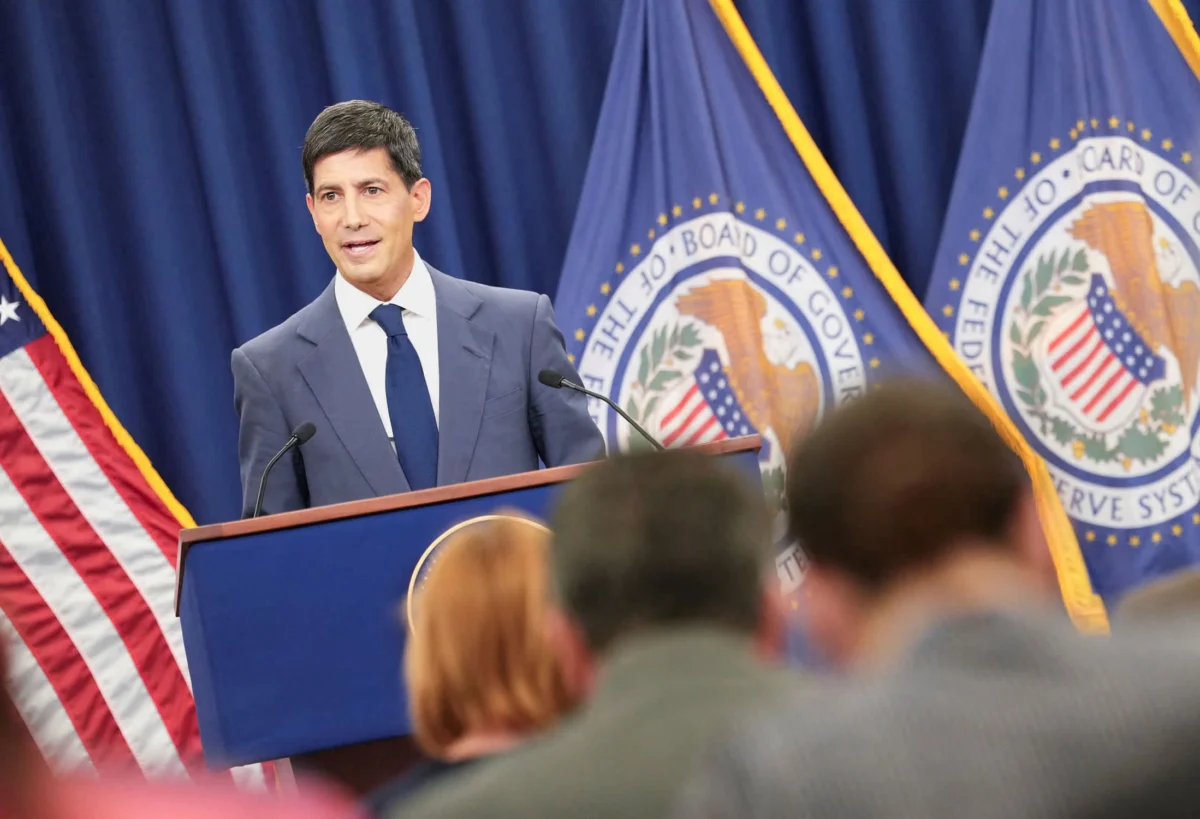
The highly anticipated FOMC statement released on Wednesday, June 17, 2026, was a testament to Warsh’s stated commitment to streamlining the central bank’s messaging. Clocking in at approximately 130 words, the document was less than half the length of statements issued in recent meetings, which frequently exceeded 300 words. This drastic reduction was not merely an exercise in conciseness but a deliberate strategic choice, as Warsh himself acknowledged during his first press conference as chair, held at the U.S. Federal Reserve headquarters.
The statement’s core message confirmed the Committee’s decision to maintain the federal funds rate at its current level, a move widely anticipated by market participants. A CNBC survey conducted ahead of the meeting had indicated that Warsh’s Fed was not expected to make any changes to rates for a considerable period, aligning with an economy described within the statement as "expanding at a solid pace." However, the significant story was not the policy decision itself, but the manner in which it was communicated.
Warsh’s Vision: Redefining Fed Communication
Chairman Warsh has long been an outspoken critic of the Federal Reserve’s communication practices, particularly the extensive use of forward guidance, which he argued could lead to policy errors and undue entanglement of the central bank in market expectations. His appointment as Fed Chair had been met with speculation about a potential "regime change" at the institution, extending beyond monetary policy to its operational and communicative frameworks. This first FOMC statement served as the tangible manifestation of that promised shift.
During his press conference, Warsh directly addressed the statement’s brevity. "It’s a bit shorter, a bit simpler and it dispenses with some older language," Warsh stated, emphasizing a return to fundamentals. "That statement just gives you the facts, as best we can judge it." This philosophy suggests a move towards a more data-dependent, less interpretive approach, aiming to prevent markets from over-analyzing every nuanced phrase or subtle shift in tone within official communications. The objective, it appears, is to empower the Fed with greater flexibility by refraining from pre-committing to future policy paths based on current projections.
The End of Forward Guidance: A Strategic Pivot
One of the most significant omissions from the June 2026 statement was any form of forward guidance, a staple of Fed communication under previous chairs, including Jerome Powell, Janet Yellen, and Ben Bernanke. Forward guidance, typically involving explicit or implicit signals about the future path of monetary policy, was deemed by Warsh as "not well suited for the current policy conjuncture."
This represents a profound strategic pivot. Under past regimes, forward guidance was employed as a tool to influence longer-term interest rates and manage market expectations, particularly during periods of economic distress or low inflation. By signaling future intentions, the Fed aimed to provide clarity and predictability, thereby enhancing the effectiveness of its monetary policy. For instance, phrases like "the Committee anticipates that the federal funds rate will remain at its current low level for a considerable time" or "the Committee judges that the risks to the outlook for economic activity and the labor market are nearly balanced" were common. Such detailed prognostications were conspicuously absent from Warsh’s inaugural statement.
Warsh’s argument against forward guidance likely stems from the belief that it can constrain the central bank’s agility, forcing it to adhere to previously articulated paths even when economic conditions evolve unexpectedly. It can also create an environment where markets become overly reliant on Fed signals, potentially leading to speculative behavior or mispricing of risk. By withdrawing such guidance, Warsh aims to foster an environment where market participants focus more intently on incoming economic data and the Fed’s immediate policy actions, rather than attempting to divine its long-term intentions from carefully worded paragraphs.
Beyond the Text: What Was Removed and Why
Beyond the overarching absence of forward guidance, a detailed comparison of the June 2026 statement with its predecessor from April revealed several other notable removals. For instance, the statement no longer included information on how individual committee members voted. Under former Chairman Jerome Powell, these releases typically concluded with a breakdown of votes, often detailing dissenting opinions. The June statement, however, merely indicated a unanimous vote on the policy decision.
The removal of individual voting records could be interpreted as an effort to project a unified front and minimize public focus on internal disagreements. While transparency advocates might argue that such details offer valuable insights into the Committee’s internal dynamics, Warsh’s approach appears to prioritize consensus and institutional cohesion in public perception. By presenting a unanimous decision without individual tallies, the Fed aims to underscore the collective judgment of the FOMC, rather than highlighting potential fractures.
Furthermore, the latest statement provided significantly less "color" on how the Fed views current inflation trends and its projected trajectory. Previous statements often delved into granular details about inflation expectations, the factors influencing price stability, and the Committee’s assessment of risks to its 2% target. While the June statement reiterated the Fed’s unwavering commitment to stable prices, it did so without the elaborate qualitative analysis that had become customary. This streamlined approach aligns with Warsh’s preference for "just the facts," leaving the interpretation of complex economic phenomena more to independent analysis rather than prescriptive Fed commentary.
Warsh’s First Press Conference: Clarifying the New Approach
The press conference following the FOMC meeting offered Chairman Warsh the opportunity to elaborate on the rationale behind these significant changes. His demeanor was composed, and his explanations were direct, reinforcing the message of a clear and deliberate shift. He underscored that the intention was not to reduce transparency but to enhance clarity by stripping away potentially misleading or over-interpreted language.
Warsh’s emphasis on simplicity and facts resonated with his pre-chairmanship critiques of the Fed’s prior communication methods. He had often argued that overly complex or extensive statements could inadvertently create confusion, foster market dependency, and dilute the impact of core policy messages. By making the statement "shorter, simpler," Warsh is attempting to ensure that the public and markets focus on the essential policy decision and the Fed’s dual mandate commitments – maximum employment and price stability – without getting bogged down in what he perceives as unnecessary or potentially counterproductive verbiage.
Expert Perspectives: Initial Market and Analyst Reactions
The immediate reactions from market analysts and economists were swift and largely in agreement that a new era had indeed begun. David Wessel, a senior fellow at Brookings and a seasoned Fed observer, commented on CNBC’s "Power Lunch" that Warsh was "trying to do with this statement is not use the statement to give forward guidance, and I think he did a pretty good job with that." Wessel’s observation highlights the successful execution of Warsh’s stated objective to reduce the statement’s role as a vehicle for future policy signals.
Ian Lyngen, Head of U.S. Rates Strategy at BMO, echoed this sentiment, stating, "Warsh’s first FOMC statement left the clear impression that there is a new chair in town." Lyngen further elaborated that "The statement was significantly shortened – eliminating the forward guidance," and offered "only a cursory characterization of the economy as ‘expanding at a solid pace.’" This indicates that financial professionals immediately recognized the profound implications for their analytical frameworks, which had previously relied heavily on parsing every word of Fed communications.
Major investment banks quickly began advising clients on the need to adapt their Fed-watching strategies. Analysts at firms like Goldman Sachs suggested that market participants would now need to place greater emphasis on Warsh’s public speeches, congressional testimonies, and the underlying economic data itself, rather than dissecting the FOMC statement for hidden clues. JPMorgan economists noted that while the initial shift might introduce a degree of short-term uncertainty as markets adjust, it could ultimately lead to a more agile and less constrained Federal Reserve.
Historical Context: The Evolution of Fed Transparency
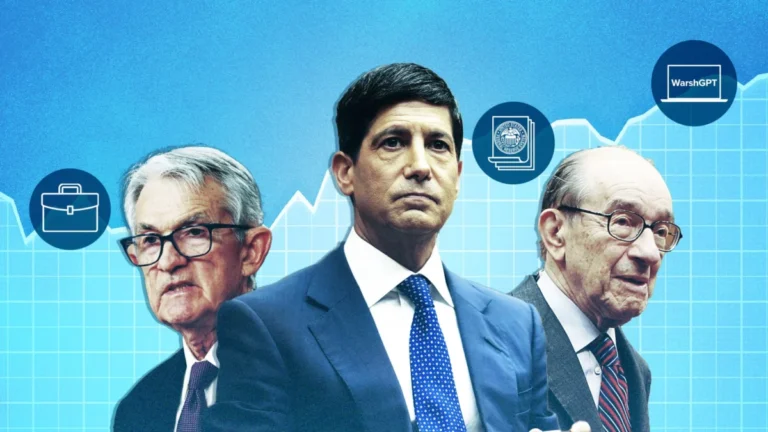
To fully appreciate the significance of Warsh’s changes, it is crucial to consider the historical evolution of Federal Reserve communication. For decades, particularly during the tenure of Chairman Alan Greenspan, the Fed was renowned for its deliberate opacity. Greenspan’s enigmatic pronouncements were often described as "Fedspeak," a language designed to be understood by only a select few, leaving markets to speculate. The rationale was that ambiguity provided the central bank with maximum flexibility and prevented market overreactions.
However, the era following Greenspan saw a gradual, yet significant, shift towards greater transparency. Under Ben Bernanke, in the wake of the 2008 financial crisis, the Fed dramatically increased its communication efforts. This included regular press conferences, the release of economic projections (the "dot plot"), and explicit forward guidance on interest rates and asset purchases. The goal was to demystify monetary policy, provide greater certainty in uncertain times, and enhance the effectiveness of unconventional tools by clearly communicating the Fed’s intentions. Janet Yellen and Jerome Powell largely continued this trajectory, refining and expanding the framework of transparency.
Warsh’s current reforms, while not a return to Greenspan-era opacity, represent a significant move away from the hyper-transparency of the Bernanke-Powell years. It is a nuanced attempt to strike a new balance, one that prioritizes clarity and factual reporting over extensive future guidance and detailed interpretations, thereby aiming to restore a degree of operational independence that some argue was eroded by excessive communication.
Broader Implications for Markets and Policy
The implications of Warsh’s communication overhaul are far-reaching. For financial markets, the immediate consequence will be a necessary re-evaluation of how Fed policy is anticipated and interpreted. Traders and investors, long accustomed to scrutinizing every syllable of FOMC statements, will now have fewer "tea leaves" to read. This could lead to an initial period of heightened volatility as markets adjust to the new information environment, potentially placing greater weight on high-frequency economic data releases and comments from other Fed officials.
For the Fed itself, the new approach promises increased flexibility. By avoiding explicit forward guidance, the Committee is less constrained by past commitments and can react more dynamically to evolving economic conditions. This could prove particularly advantageous in an environment characterized by unpredictable geopolitical events or rapid technological shifts. However, this flexibility also carries the risk of increased market uncertainty if the new communication style is not consistently understood or if policy shifts appear abrupt without prior signaling.
Furthermore, Warsh’s "regime change" likely extends beyond mere communication. His prior criticisms also touched upon the Fed’s regulatory framework and its entanglement with Wall Street. Future FOMC meetings and speeches are expected to reveal further details of his broader agenda, potentially including reforms to bank supervision, market plumbing, and the central bank’s overall role in the economy.
The Road Ahead: Navigating the New Fed Landscape
The coming months will be crucial in assessing the efficacy and impact of Chairman Warsh’s new communication strategy. The market’s adaptation, the clarity of future policy shifts, and the public’s understanding of the Fed’s objectives will all be under intense scrutiny. Key tests will include how the Fed navigates unexpected economic shocks, manages inflationary pressures, or responds to shifts in the labor market using this more succinct framework.
Warsh’s approach demands a higher degree of independent analysis from market participants and a renewed focus on fundamental economic indicators. It also places a greater onus on the Chairman’s own public appearances to provide context and nuance that may no longer be embedded in the formal statements. His ability to articulate the Fed’s stance clearly and concisely in various forums will be paramount to the success of this new era.
Conclusion: A New Chapter in Monetary Policy
The June 17, 2026, FOMC meeting, while not yielding a dramatic policy shift, undeniably marked a watershed moment for the U.S. Federal Reserve. Under Chairman Kevin Warsh, the central bank has embarked on a deliberate and significant overhaul of its communication strategy, moving towards a more concise, factual, and less prescriptive approach. By eschewing extensive forward guidance and detailed qualitative analysis, Warsh aims to restore the Fed’s operational flexibility and encourage a more data-driven interpretation of monetary policy by the markets. This "regime change" promises a new landscape for economists, investors, and the public, demanding a fresh perspective on how the world’s most influential central bank signals its intentions and navigates the complexities of the global economy. The era of reading between the lines of lengthy Fed statements appears to be drawing to a close, replaced by a mandate for clarity, simplicity, and directness.