


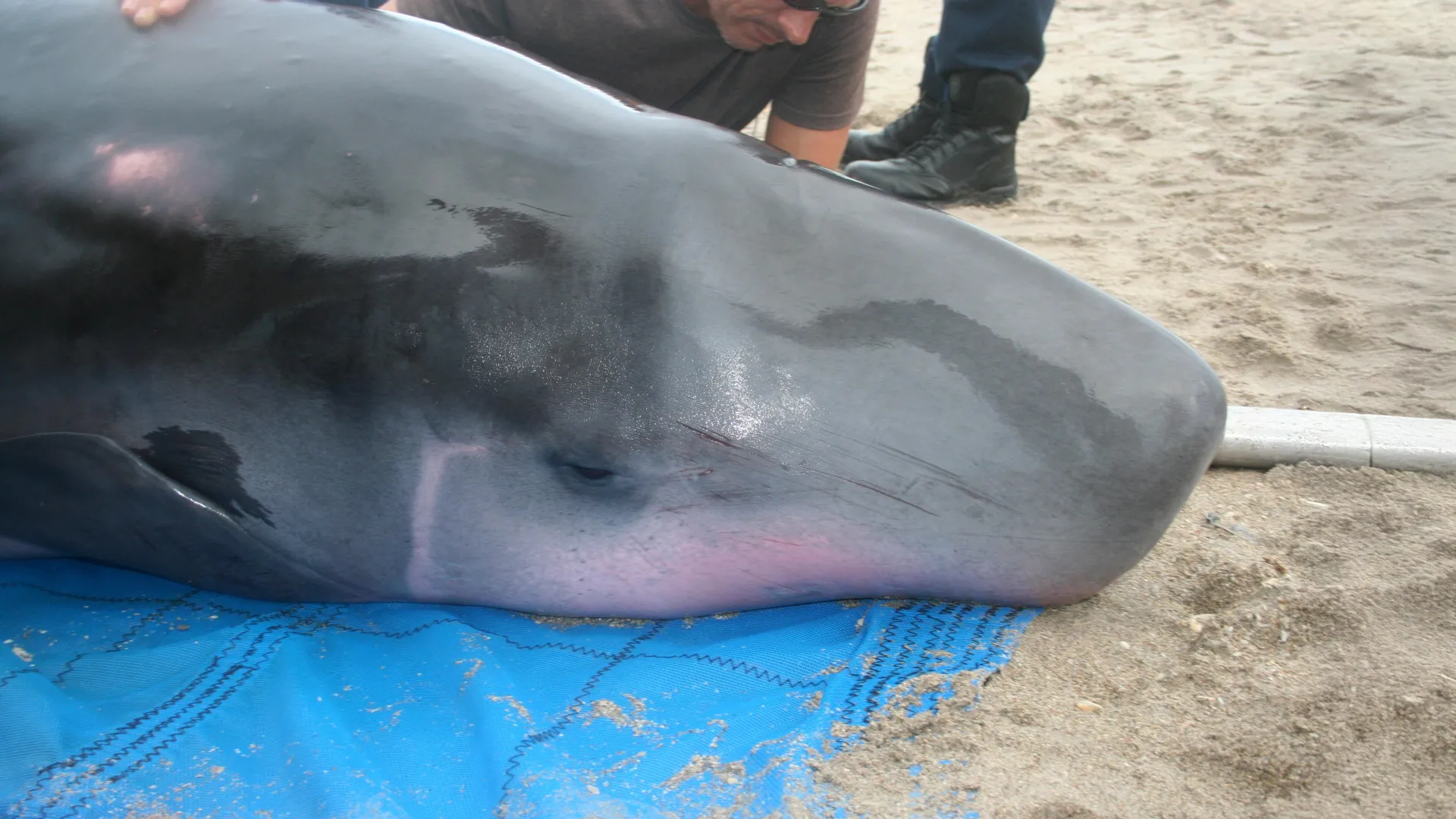
Pygmy sperm whales (Kogia breviceps) are among the most enigmatic inhabitants of our oceans, their lives largely shrouded in mystery. These deep-diving, elusive cetaceans spend their existence far from shore, navigating the vast pelagic realm in small, secretive pods. Their quiet nature, preference for deep waters, and infrequent surface appearances have historically limited direct scientific observation, leaving researchers with a scant understanding of their biology and health. Consequently, much of the knowledge we possess about these fascinating mammals has been gleaned from the unfortunate circumstances of strandings, where deceased or distressed individuals wash ashore. Along the southeastern coast of the United States, in particular, these strandings are a relatively common occurrence, providing scientists with rare opportunities to examine these rarely seen creatures.
Unveiling Hidden Health Challenges Through Post-Mortem Examinations
The examination of stranded pygmy sperm whales has become a critical, albeit somber, avenue for scientific discovery. These examinations have consistently revealed a range of recurring health issues, with stomach ulcers emerging as a particularly prevalent problem. These ulcers have, in some instances, been linked to the presence of Helicobacter, a diverse group of bacteria known to colonize the gastrointestinal tracts of numerous animal species, including humans.
In a significant advancement for marine mammal health research, scientists at Florida Atlantic University’s Harbor Branch Oceanographic Institute, in collaboration with other institutions, embarked on an extensive review of stranding records and preserved tissue samples spanning over two decades. This meticulous analysis, conducted from 1999 through 2020, led to a groundbreaking discovery: the identification of three distinct Helicobacter genotypes that had never before been documented in scientific literature.
The findings of this comprehensive study, recently published in the esteemed Journal of Wildlife Diseases, represent the first confirmed discovery of these novel bacterial genotypes specifically within pygmy sperm whales. The researchers have aptly named these newly identified strains Kogia Helicobacter 1, Kogia Helicobacter 2, and Kogia Helicobacter 3. Beyond illuminating the health landscape of this elusive whale species, these discoveries prompt broader and more profound questions regarding the prevalence and impact of bacterial infections on marine wildlife and the overall health of ocean ecosystems.
Dr. Annie Page, a senior author on the study, an associate research professor, and the clinical veterinarian at FAU Harbor Branch, commented on the significance of the findings. "Helicobacter bacteria have long been associated with gastrointestinal disorders in humans and other animals, including chronic gastritis, ulcers, and even gastric cancer," she stated. "To find novel strains of these bacteria in a deep-diving whale species is intriguing and underscores how much we still have to learn about the microbial inhabitants of marine mammals."
A Chronicle of Discovery: From Stranding Events to Genetic Identification
The journey to this discovery began with a systematic response to pygmy sperm whale strandings along the southeastern U.S. coast. Between 1999 and 2020, FAU Harbor Branch documented and responded to 59 such stranding events. In a testament to the dedication of the research team and the importance of these incidents, post-mortem examinations were successfully completed on a substantial 80% of these stranded animals.
During these detailed examinations, a team of pathologists and veterinarians observed the presence of spiral-shaped, or "spirilliform," bacteria within the stomach tissues of four individual whales. This initial observation triggered a more in-depth investigation. The researchers meticulously re-examined the preserved tissue samples using a battery of advanced techniques, including histopathology (the microscopic study of diseased tissue), molecular testing, and DNA sequencing.
This rigorous analytical process confirmed that the observed bacteria represented previously unknown Helicobacter genotypes. Wendy Marks, the corresponding author of the study and a research coordinator at FAU Harbor Branch’s marine wildlife veterinary medicine and research lab, elaborated on the genetic relationships of these new strains. "Two of the genotypes, Kogia Helicobacter 1 and 2, are genetically similar to known Helicobacter species previously found in other cetaceans – such as dolphins and porpoises – and in humans," Marks explained. "However, Kogia Helicobacter 3 belongs to a more divergent lineage, which emphasizes the possibility that there are far more undiscovered bacteria in the ocean than we realize." The researchers also noted that both Kogia Helicobacter 1 and Kogia Helicobacter 3 were found concurrently in the forestomach tissue of one of the examined whales, suggesting potential co-infections.
Documenting Disease: The Link Between Novel Bacteria and Gastrointestinal Pathology
Crucially, the presence of these novel Helicobacter genotypes was not an isolated finding. Each of the four whales that tested positive for the bacteria also exhibited clear and unmistakable signs of gastrointestinal disease during their post-mortem examinations.
"All four whales that tested positive for Helicobacter had visible gastric pathology," Dr. Page confirmed. "We observed signs of gastritis, gastric ulcers, fibrosis, and nematode infestations. In one case, there was also colitis, which suggests that the infection may not be limited to the stomach. While Helicobacter wasn’t listed as the direct cause of death in any of the whales, these lesions raise significant questions about its role in gastrointestinal disease."
While the researchers were careful not to definitively attribute the whales’ deaths solely to the Helicobacter infections, the consistent presence of inflammation, ulcers, tissue scarring, and other digestive abnormalities strongly suggests that these bacteria could be contributing factors to chronic illness and debilitation in these animals. The history of Helicobacter research in marine mammals dates back to 2000, when related bacteria were first reported. Since then, similar bacterial strains have been identified in various cetacean species across the globe. In some documented cases, these infections have been correlated with symptoms such as low energy levels, loss of appetite, regurgitation, stomach ulcers, and inflammation – a constellation of symptoms remarkably similar to those observed in infected humans.
Implications for Vulnerable Marine Populations and Ecosystem Health
The discovery of these novel Helicobacter genotypes in pygmy sperm whales carries significant implications for the health of these often-vulnerable marine mammals and potentially for broader marine ecosystems. "Whales, like humans, appear to be susceptible to certain microbial infections that we’re only beginning to understand," Wendy Marks emphasized. "If chronic Helicobacter infections are causing health issues in these animals, it could have implications not only for individual whale health but for entire populations – especially for species that are already vulnerable."
The elusive nature of pygmy sperm whales, their deep-water habits, and their infrequent surface appearances pose considerable challenges for researchers attempting to study them in their natural habitat. Consequently, a critical knowledge gap remains regarding the prevalence of these newly identified bacteria within the broader pygmy sperm whale population and the long-term effects these infections may have on the animals. Further research, including extensive testing and population-level studies, will be essential to determine whether these infections are indeed contributing factors to illness, stranding events, or broader population health declines.
This pioneering research was a collaborative effort involving a consortium of esteemed institutions, including Florida Atlantic University’s Harbor Branch Oceanographic Institute, the University of Florida’s College of Veterinary Medicine, Colorado State University, and Marine Mammal Pathology Services. The multidisciplinary approach brought together expertise in marine biology, veterinary pathology, and molecular genetics, highlighting the complex nature of such investigations.
The Enduring Value of Long-Term Stranding Response Programs
The success of this research underscores the profound and often underestimated value of sustained marine mammal stranding response programs. "This research underscores the value of long-term marine mammal stranding response programs," reiterated Dr. Annie Page. "Without the ability to study these stranded animals over decades, we never would have discovered these bacteria. Every whale tells a story, and sometimes that story leads us into entirely new scientific territory." These programs, often operating with limited resources, provide an indispensable lifeline for understanding the health and threats faced by marine wildlife.
The study’s co-authors represent the collective expertise that contributed to this significant discovery. They include Jessy Castellanos-Gell, Ph.D.; Steven Tillis, Ph.D.; James F.X. Wellehan, D.V.M., Ph.D., DACZM; and April Childress, all from the College of Veterinary Medicine at the University of Florida; Nicole Pegg from FAU Harbor Branch; David Rotstein, D.V.M., of Marine Mammal Pathology Services; Sushan Han, D.V.M., Ph.D., from the Diagnostic Medicine Center at Colorado State University; and Steve Burton, director of stranding and population assessment at FAU Harbor Branch.
This vital research was made possible through funding from the Florida State Specialty License Plate Program, specifically through the "Protect Florida Whales" grant, which is administered by the Harbor Branch Oceanographic Institute Foundation. This grant exemplifies how public support and dedicated funding can directly contribute to critical scientific advancements in marine conservation and understanding. The ongoing commitment to studying stranded marine mammals, combined with advancements in molecular science, continues to unlock the secrets of these ocean giants and reveal the complex challenges they face in an ever-changing world.