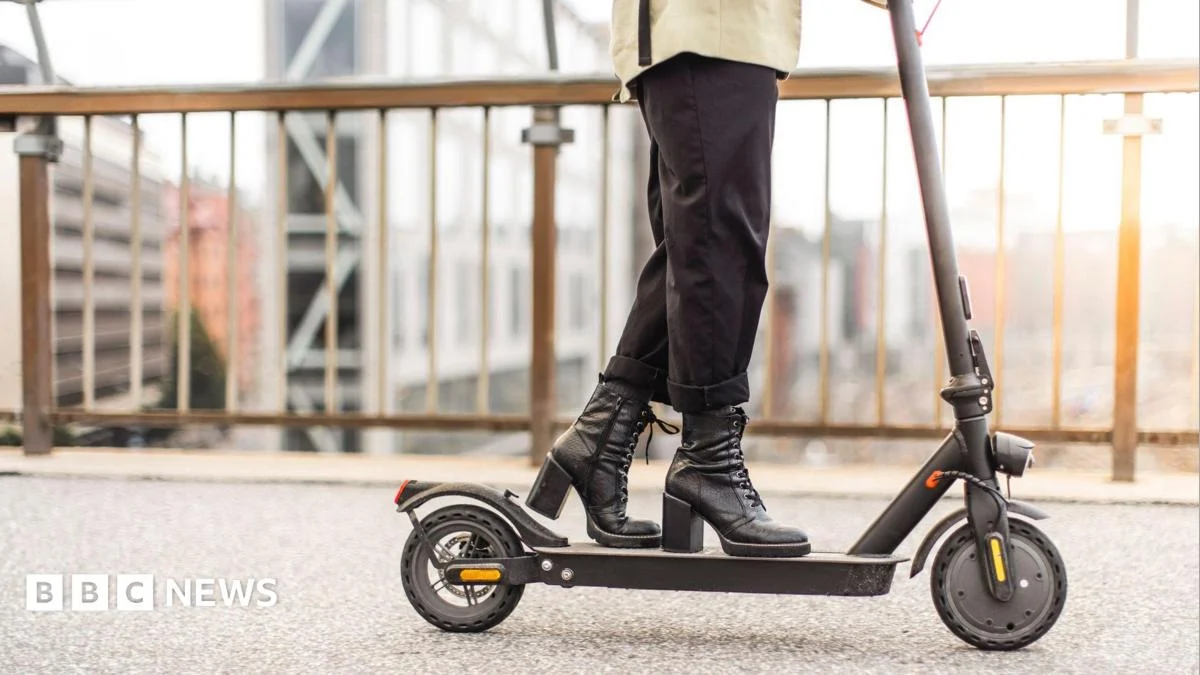
Electric scooter riders traversing the historic boulevards and bustling thoroughfares of Paris now face stringent penalties for non-compliance with newly enacted safety mandates, as municipal authorities and law enforcement intensify efforts to curtail a escalating crisis of accidents involving these personal mobility devices within the French capital. The enforcement push comes in the wake of sobering statistics revealing a significant surge in severe and fatal incidents, compelling a comprehensive reevaluation of e-scooter integration into urban traffic ecosystems.
The gravity of the situation was underscored by police figures released on Saturday, which cited data from France’s national road safety watchdog, detailing a stark increase in fatalities. A total of 79 individuals lost their lives in e-scooter accidents across France last year, a sharp and concerning escalation from the 45 reported fatalities in the preceding year. This dramatic rise, representing an increase of over 75% year-on-year, has ignited renewed calls for robust regulatory frameworks and heightened user responsibility. Beyond the tragic loss of life, official statistics indicate that approximately 1,100 people sustained injuries in e-scooter-related incidents in Paris alone during the past year, marking a substantial 33% increase compared to the previous period. These figures paint a stark picture of a burgeoning public safety challenge that city officials are determined to address head-on.
A New Era of Enforcement: Mandatory Safety Gear and Fines
In a direct response to what authorities have termed "the concerning rise in serious and fatal accidents" linked to electric personal mobility devices, a critical new legislative measure has been introduced: it is now unequivocally mandatory for all riders of e-scooters, electric unicycles, hoverboards, and similar motorised personal transportation devices to wear an approved helmet and a high-visibility vest when operating on public roads. This represents a significant shift from previous guidelines, placing the onus of personal protection firmly on the user.
Non-compliance with these updated regulations carries substantial financial penalties. Individuals found riding without an approved helmet are subject to a fine of €135, equivalent to approximately £129. Lesser, though still significant, fines of €35 (approximately £30) will be levied against those failing to wear a high-visibility vest or retro-reflectors, designed to enhance rider visibility, particularly in low-light conditions. These penalties are intended to serve as a strong deterrent, reinforcing the seriousness with which Parisian authorities view the new safety imperatives. The scope of these regulations extends beyond e-scooters to encompass a broader category of electric personal transportation devices, acknowledging the varied forms of micromobility that have proliferated across urban landscapes.
The Regulatory Journey: From Welcome Innovation to Public Concern
Paris, renowned for its forward-thinking urban planning and commitment to sustainable mobility, was among the pioneering major global cities to embrace e-scooters. Their introduction in the late 2010s was initially met with considerable enthusiasm, hailed as an innovative solution to traffic congestion and a convenient, eco-friendly alternative for short-distance travel. The city’s narrow, often congested streets, coupled with a dense urban fabric, seemed ripe for the adoption of such agile personal vehicles. For many commuters, e-scooters offered an unprecedented level of flexibility and speed, bypassing traditional traffic bottlenecks and extending the reach of public transport networks.
However, the initial honeymoon period soon gave way to a growing chorus of public complaints and safety concerns. The rapid proliferation of rental e-scooter fleets, often numbering in the tens of thousands, brought with it a host of challenges. Reckless riding behaviours, including weaving through pedestrian zones, ignoring traffic signals, and exceeding speed limits, became increasingly common. Pavements frequently became obstructed by carelessly discarded scooters, posing hazards to pedestrians, especially the elderly and those with disabilities. The novelty wore off as the darker side of unregulated micromobility began to manifest in rising accident rates and public exasperation.
Prior to the latest safety mandates, Paris had already implemented a series of regulations aimed at curbing the most egregious issues. Existing rules prohibited e-scooter riding for individuals under the age of 14, banned the dangerous practice of carrying passengers, and imposed a maximum speed limit of 25 km/h (approximately 16 mph). Designated parking zones were introduced to mitigate pavement clutter, and operators of rental fleets were pressured to implement geofencing technologies to enforce slow zones and no-go areas. Despite these measures, the underlying issues of rider behaviour and accident frequency persisted, necessitating more drastic intervention.
The 2023 Referendum: A Turning Point for Rental Fleets
The escalating concerns culminated in a landmark decision in 2023 when Paris held a city-wide referendum on the future of rental e-scooters. This democratic exercise reflected the depth of public sentiment regarding the devices. While only 8% of eligible voters participated in the ballot, the outcome was unequivocal: a staggering 90% voted in favour of banning for-hire e-scooters. This decisive mandate led to Paris becoming one of the first major global cities to completely outlaw rental e-scooter services, a move that sent ripples through the micromobility industry and urban planning circles worldwide.
The ban, implemented in September 2023, aimed to significantly reduce the perceived chaos and danger associated with the free-floating rental fleets. However, it specifically exempted privately owned e-scooters, which continued to be ridden across the city. The rationale was that private owners, having made a personal investment, would likely demonstrate greater responsibility and care compared to transient rental users. Despite the removal of rental fleets, the accident statistics continued their upward trajectory, clearly indicating that privately owned devices also contributed substantially to the public safety challenge. This realization directly informed the decision to introduce the new, more comprehensive safety equipment mandates.
The Broader European Context and Global Trends
Paris is not an isolated case in its struggle to balance the benefits of micromobility with public safety concerns. Across Europe and indeed globally, cities are grappling with similar challenges and exploring various regulatory approaches. France, notably, holds the distinction of having the highest rate of private e-scooter ownership in Europe, according to data from the European Union. As of 2023, an estimated 2.5 million people in France owned e-scooters, with hundreds of thousands more purchased since. A significant proportion of these are believed to be concentrated in the capital, although precise figures for Paris alone are not systematically collected. This high ownership rate contributes to the persistent presence of e-scooters on Parisian streets, even after the rental ban.
Several other French regions had already proactively made helmets and high-visibility vests mandatory for e-scooter riders, predating Paris’s recent mandate. These include departments such as Seine-et-Marne, Alpes-Maritimes, and Vaucluse, indicating a growing national consensus on the necessity of enhanced protective measures. The experience in these regions likely provided valuable insights for the Parisian authorities in shaping their own policy.
Beyond France, other European cities have also moved to restrict or ban rental e-scooters. Madrid, for instance, outlawed rental e-scooters in 2024, citing similar safety and public order issues. Brussels has announced its intention to follow suit, with a rental ban set to come into effect in June of the current year. These coordinated actions reflect a growing trend among European municipalities to exert greater control over micromobility services, often prioritizing pedestrian safety and urban amenity over unbridled expansion. Globally, cities like Singapore have implemented strict registration and licensing schemes, while others, such as New York, have focused on infrastructure improvements and public awareness campaigns. The spectrum of responses highlights the complex and evolving nature of urban mobility in the 21st century.
The Economic and Public Health Burden
The rising number of e-scooter accidents carries significant economic and public health implications that extend beyond the immediate victims and their families. Each injury incident places a strain on emergency services, hospital resources, and the broader healthcare system. Common injuries reported in e-scooter accidents range from minor abrasions and sprains to severe fractures, traumatic brain injuries, and spinal cord damage. Head injuries, in particular, are a major concern, often leading to long-term disability and requiring extensive rehabilitation, highlighting the critical importance of helmet use.
Medical professionals and public health officials have increasingly voiced their concerns. Dr. Isabelle Dubois, a trauma surgeon at a leading Parisian hospital, noted, "We are seeing a consistent influx of e-scooter related injuries, many of which could have been significantly mitigated or prevented with proper protective gear, especially helmets. The severity of head trauma, in particular, is alarming." The cost associated with treating these injuries, coupled with lost productivity due to recovery periods, represents a substantial economic burden on the state and society. Estimates from various studies suggest that the direct and indirect costs of road accidents, including those involving micromobility, run into billions of euros annually across major European economies.
Furthermore, the perceived danger of e-scooters can deter pedestrians from using pavements or crossing streets, contributing to a sense of disorder and reducing the overall quality of urban life. The fear of collisions with fast-moving, often silently approaching e-scooters can diminish the walkability of a city, contradicting the broader goals of promoting active and sustainable transportation.
Reactions from Stakeholders: A Divided Discourse
The introduction of these stringent new regulations has elicited a range of reactions from various stakeholders across Paris.
City Officials and Law Enforcement: The Mayor’s office has consistently reiterated its commitment to public safety and the restoration of order on Parisian streets. A spokesperson for the city stated, "Our priority remains the safety of all Parisians and visitors. These new regulations are a necessary step to ensure that personal mobility devices are used responsibly and without endangering others. We believe in the potential of sustainable transport, but not at the expense of public well-being." Police authorities have emphasized that the increased enforcement is a direct response to the accident data and a proactive measure to prevent further tragedies. They stress that the goal is not to penalize riders unnecessarily, but to instill a culture of safety.
Road Safety Advocates: Organisations dedicated to road safety have largely welcomed the new mandates, viewing them as a crucial step towards reducing serious injuries. "For too long, e-scooters have operated in a grey area, with insufficient protective measures," commented a representative from a prominent French road safety NGO. "Mandatory helmets and high-vis vests are fundamental requirements for any vehicle sharing public space, especially those capable of significant speeds. This is a victory for common sense and public health."
E-Scooter Users (Private Owners): While acknowledging the importance of safety, some private e-scooter owners have expressed mixed feelings. Many understand the rationale behind the regulations but lament the additional cost and inconvenience. "I bought my e-scooter for convenience and to avoid traffic," said Marc Dubois, a 32-year-old commuter. "Now I have to carry a helmet and a vest everywhere, which adds bulk. It’s an extra expense too. But if it truly makes the roads safer, I suppose it’s a trade-off." Others feel that private owners are being unfairly penalized for the reckless actions of a minority, particularly those who previously used rental devices.
Manufacturers and Retailers: E-scooter manufacturers and retailers operating in France are closely monitoring the impact of the new rules. While increased safety might be seen positively in the long term, the immediate effect could be a slight dampening of sales due to the additional requirements and costs for consumers. However, some industry players view it as an opportunity to integrate safety features more directly into their product offerings and to promote responsible riding through user education.
Enforcement Challenges and Future Prospects
The successful implementation of these new safety regulations will hinge significantly on effective enforcement. Policing a vast urban environment like Paris, with countless streets and a high volume of micromobility users, presents inherent challenges. Authorities will need to maintain a consistent and visible police presence, particularly in high-traffic areas and accident hotspots, to ensure compliance. Public awareness campaigns will also be critical to inform both residents and tourists about the new rules.
Looking ahead, the Parisian model could serve as a blueprint for other cities grappling with similar issues. The combination of a rental ban, strict ownership regulations, and mandatory safety gear represents a comprehensive approach to managing the public safety aspects of personal mobility devices. Further discussions may emerge regarding potential future regulations, such as mandatory registration for private e-scooters, specific insurance requirements, or even competency tests for riders.
The ongoing evolution of urban mobility demands a continuous re-evaluation of policies to strike a delicate balance between fostering innovation, promoting sustainable transport options, and safeguarding the well-being of all urban inhabitants. Paris’s latest measures underscore a clear commitment to prioritizing public safety, signalling a maturing phase in the integration of electric personal mobility devices into the complex tapestry of modern city life. The hope is that these stringent rules will reverse the alarming trend of accidents, making the romantic streets of the French capital safer for everyone, from pedestrians to scooter riders.