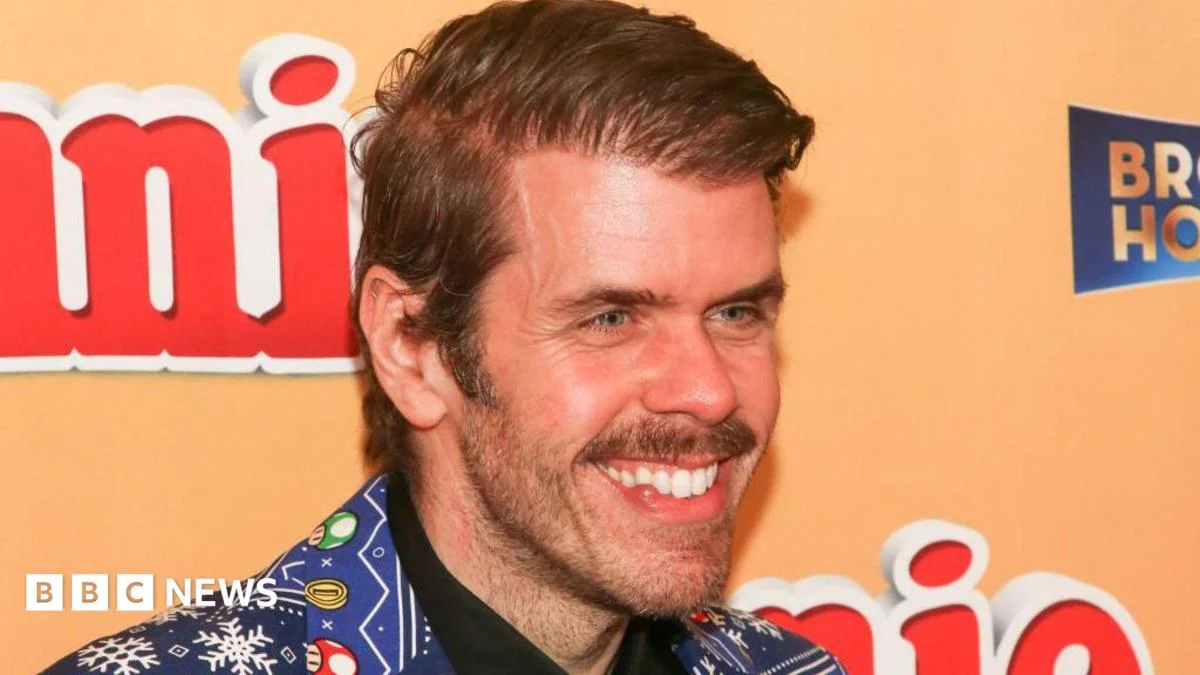
The prominent American blogger and media personality, Perez Hilton, whose real name is Mario Lavandeira, is currently in a "serious but stable" condition following his admission to a hospital in Miami. The hospitalization occurred after emergency services were dispatched to his residence on Tuesday, responding to grave concerns raised by members of the public who witnessed a live broadcast on the social media platform TikTok.
The Miami Sheriff’s Office confirmed their attendance at the scene, stating they responded to reports of a man "livestreaming acts of self-harm." While authorities did not officially identify the individual, the context of the incident aligns with information released by Hilton’s family and representatives. Officials noted that the man was alone in the house at the time emergency services arrived.
A statement subsequently released on the 48-year-old’s official website provided a critical update on his condition, revealing that he "experienced significant blood loss." The statement underscored the severity of the situation, indicating that his "treatment and recovery would be a long process," emphasizing the challenging road ahead for the father-of-three. The family’s message also conveyed a request for privacy during this difficult time.
Chronology of a Crisis: From Livestream to Hospitalization
The events unfolded rapidly on Tuesday, beginning with a TikTok livestream that quickly garnered the attention of concerned viewers. It was these viewers, recognizing the alarming nature of the content, who took the crucial step of alerting emergency services. This public intervention highlights the dual role of social media platforms, acting as both a medium for expression and, in critical moments, a conduit for immediate public response and intervention.
Upon receiving the distress calls, the Miami Sheriff’s Office promptly deployed units to Hilton’s Miami home. Their arrival marked the transition from an online incident to a real-world emergency response. Following an assessment of the situation, Hilton was transported to a local hospital, where medical professionals began to address his physical injuries and provide mental health support.
The official statement from Hilton’s website further clarified that he is being held in hospital under Florida’s Baker Act. This legal provision, formally known as the Florida Mental Health Act of 1971, allows for the involuntary examination of an individual if there is reason to believe they are a danger to themselves or others, or are suffering from severe mental illness and are unable to care for themselves. The Baker Act is designed to provide immediate intervention and facilitate access to mental health services for individuals experiencing a severe mental health crisis, ensuring they receive necessary care and evaluation in a structured environment. Its activation in this case underscores the assessment by medical professionals and authorities that Hilton was in a state requiring urgent mental health intervention.
Sources close to the family indicated that Hilton is expected to undergo surgery in the coming days, suggesting the physical injuries sustained were substantial and require surgical repair. The immediate focus remains on stabilizing his physical health while simultaneously addressing the underlying mental health crisis that led to the incident.
TikTok’s Response and the Challenges of Content Moderation
The incident has also brought renewed scrutiny to the practices and responsibilities of social media platforms in moderating live content, particularly concerning self-harm. A spokesperson for TikTok issued a statement detailing the company’s internal response to the alarming livestream.
According to TikTok, its automated moderation systems were effective in flagging the livestream within minutes of it commencing. This initial detection was then escalated to the company’s US moderation team for manual review, a standard protocol for sensitive content that requires human discernment. However, TikTok acknowledged that a "moderator error" led to a delay in the removal of the distressing content. The company did not elaborate on the specific nature of this error, but its admission points to the inherent complexities and human element within even the most sophisticated content moderation systems.
Despite the initial delay, TikTok confirmed that it subsequently alerted law enforcement to the situation, corroborating the public’s reports that led to emergency services being called to Hilton’s home. Furthermore, the platform acted swiftly to close "several subsequent streams within 90 seconds" and permanently banned the account associated with the incident. This swift action on subsequent streams and the account ban demonstrate TikTok’s protocols for dealing with repeat violations and severe breaches of its community guidelines.
The incident underscores the immense challenges faced by social media companies in monitoring billions of pieces of content daily, especially live streams. While artificial intelligence and automated systems are increasingly sophisticated, they often require human oversight, particularly for nuanced or rapidly evolving situations like a self-harm attempt. The sheer volume of content, coupled with the need for immediate, accurate decisions, places immense pressure on human moderators, who frequently operate under tight deadlines and are exposed to highly distressing material. This case serves as a stark reminder of the ongoing debate surrounding content moderation efficacy, the potential for human error, and the critical need for robust support systems for both users and moderators on these platforms.
Perez Hilton: A Retrospective on a Controversial Career
Mario Lavandeira, known by his provocative pseudonym Perez Hilton, rose to prominence in the mid-2000s as a pioneering figure in the celebrity gossip blogosphere. Launching perezhilton.com in 2005, a period when the internet was still in its relative infancy and social media was not yet dominant, Hilton quickly carved out a niche with his distinctive and often controversial commentary on Hollywood’s elite. The pseudonym itself was a direct, satirical nod to Paris Hilton, who was at the zenith of her fame as a socialite and reality television star, effectively leveraging the cultural zeitgeist to gain immediate recognition.
His blog quickly became a daily destination for millions, famously attracting up to 8 million unique hits a day at its peak. Hilton’s style was characterized by a blend of insider gossip, paparazzi photos, and his own highly opinionated, often vitriolic, commentary, frequently accompanied by crude, hand-drawn caricatures and "doodles" on celebrity images. This unfiltered and often harsh approach distinguished his blog from traditional entertainment news outlets, creating a new, more aggressive form of celebrity journalism.
However, this aggressive style was not without significant criticism. Hilton faced widespread backlash for what many perceived as "vicious commentary" and cyberbullying directed at numerous public figures, including pop superstars like Miley Cyrus and Lady Gaga. His posts often delved into personal lives with a biting tone, scrutinizing appearances, relationships, and perceived missteps. Critics argued that his content contributed to a culture of online harassment and body shaming, crossing the line from gossip to outright cruelty. This period in his career sparked broader conversations about the ethics of celebrity journalism, the power of online platforms to shape public perception, and the psychological impact of relentless scrutiny on those in the public eye.
In later years, as public sentiment and media ethics evolved, Hilton publicly acknowledged and expressed regret for aspects of his past behavior. He admitted to having been "mean or cruel," particularly concerning his earlier coverage. This shift reflected a growing awareness of the impact of his words and a personal evolution, moving towards a more reflective and less antagonistic public persona.
Beyond his blogging career, Hilton also ventured into traditional media and reality television, appearing on shows such as "Celebrity Rap Superstar" and "Celebrity Big Brother." These appearances offered him opportunities to engage with a broader audience and present a more nuanced image beyond the confines of his blog. His career arc encapsulates the rapid evolution of digital media, from the wild west of early blogging to a more structured, and often scrutinized, online environment.
Broader Implications: Mental Health, Public Figures, and Digital Ethics
This incident involving Perez Hilton casts a harsh spotlight on several critical societal issues: the pervasive challenge of mental health crises, particularly among public figures; the ethical responsibilities of social media platforms; and the complex interplay between public curiosity and individual privacy in the digital age.
Mental health statistics reveal a global crisis, with a significant percentage of populations experiencing mental health conditions at some point in their lives. According to the World Health Organization, depression is a leading cause of disability worldwide, and suicide is the fourth leading cause of death among 15-29 year olds. For public figures, the pressures are often exacerbated by constant scrutiny, public judgment, and the erosion of personal boundaries. The very platforms that allow them to connect with fans can also become arenas for intense criticism and harassment, creating a potent cocktail of stress that can profoundly impact mental well-being. Hilton’s public struggle serves as a stark reminder that mental health challenges do not discriminate based on fame or success.
The Baker Act, under which Hilton is being held, exemplifies a legal framework designed to intervene in such critical moments. In Florida, there were over 200,000 Baker Act examinations initiated in 2021-2022, highlighting the frequent need for such interventions to protect individuals from immediate harm and connect them with vital mental health services. This legal mechanism, while sometimes controversial in its application, underscores society’s recognition of the urgency required when an individual is in acute mental distress.
Furthermore, the incident reignites the ongoing debate about the responsibilities of social media platforms like TikTok. While they provide unprecedented avenues for communication and self-expression, they also grapple with the immense challenge of moderating harmful content, particularly in live formats. The "moderator error" acknowledged by TikTok highlights the inherent difficulties in perfectly regulating vast, real-time digital spaces. It raises questions about the training, resources, and psychological support provided to human moderators, who are on the front lines of encountering distressing content. It also prompts discussions about the balance between platform automation and human oversight, and the development of more effective, rapid-response protocols for self-harm and other critical content.
The public’s role in reporting the livestream was crucial in potentially saving a life, showcasing the positive potential of vigilant online communities. However, the nature of a self-harm incident being broadcast live also touches upon the voyeuristic aspects of digital culture and the fine line between concern and consumption of another’s distress.
As Perez Hilton embarks on what his family describes as a "long process" of treatment and recovery, his situation serves as a poignant case study at the intersection of celebrity, mental health, and the ever-evolving landscape of digital media. It underscores the importance of accessible mental health resources, robust content moderation policies, and a collective commitment to fostering safer, more supportive online environments for everyone.