
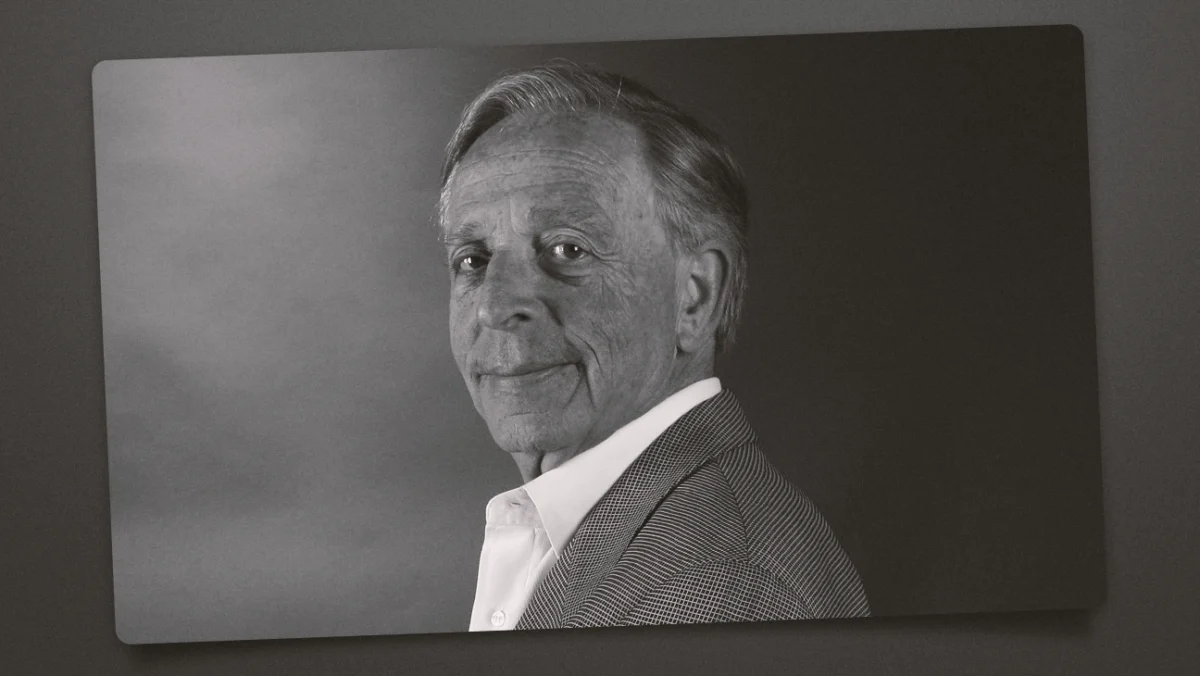
Peter Lassally, a towering figure in late-night television whose uncanny ability to connect with and nurture talk show hosts earned him the moniker "Host Whisperer," has died at the age of 93. Lassally’s profound impact on the genre was cemented by his instrumental roles in the careers of Johnny Carson, David Letterman, and Craig Ferguson, among others. He passed away peacefully on Sunday of natural causes at a memory care facility in Los Angeles, his son, Tom Lassally, confirmed to The Hollywood Reporter. Tom Lassally is a prominent partner, producer, and manager at 3 Arts Entertainment, underscoring the family’s deep roots in the entertainment industry.
Lassally’s journey to television icon began not in the glitz of Hollywood, but in the harrowing shadows of the Holocaust. Born Peter Eduard Lassally on October 14, 1932, in Hamburg, Germany, his early life was irrevocably shaped by the rise of Nazism. His family, Jewish, attempted to flee Germany in 1938, embarking on a path that led them to England and then to Amsterdam. It was in Amsterdam that young Peter attended the same grade school as Anne Frank, a chilling coincidence that would forever link his personal history to one of the most poignant narratives of the 20th century. The family’s flight was not far enough. Following the German invasion of the Netherlands, his father died, and his mother and older sister endured the unimaginable horror of confinement in concentration camps from 1943 to 1945. Lassally himself later recalled the deceptive facade of Theresienstadt, a concentration camp in Czechoslovakia, where Nazis attempted to create a veneer of normalcy for visiting Red Cross officials. This profound personal trauma undoubtedly forged in him a deep appreciation for resilience, truth, and the human spirit, qualities he would later seek and cultivate in the personalities he guided.
A Career Forged in Television’s Golden Age
Lassally’s entry into the world of broadcast television was gradual, marked by an early commitment to discovering and developing talent. Before making his indelible mark on late-night, he honed his production skills on programs hosted by Arthur Godfrey and Mike Wallace. His early work with Godfrey, both on CBS radio and television, saw him rise to become president of Godfrey’s production company, a testament to his burgeoning influence. In 1961, he moved to PM East, a syndicated talk show from Westinghouse hosted by Mike Wallace. It was during this period that Lassally showcased his foresight by regularly booking a then-unknown Barbra Streisand, who lived in an apartment above the studio and had yet to launch her singing career. This early success in identifying raw talent would become a hallmark of his career.
His pivotal move to The Tonight Show in 1969, then broadcasting from New York under the legendary Johnny Carson, marked the beginning of his legendary tenure in late-night. As a producer, he worked alongside the ebullient Fred De Cordova, forming a complementary partnership that underscored Carson’s reign. Lassally was the quiet, strategic force behind the scenes, meticulously crafting the show’s structure and ensuring its seamless execution. He remained with The Tonight Show until Carson’s final broadcast on May 22, 1992, a period spanning over two decades that cemented The Tonight Show as a cultural touchstone. His role was not merely administrative; he held the ultimate say on guest bookings, a responsibility he took with utmost seriousness. He possessed an innate ability to discern "likability" in potential guests, believing it was paramount to audience engagement, even over current popularity. This philosophy was evident in his championing of talents like Garry Shandling, whose potential he recognized on The Merv Griffin Show, and his pursuit of Steven Wright after seeing him perform stand-up in an unlikely setting – a Chinese restaurant.
Navigating the Transition of Late-Night Leadership
The seismic shift in late-night television following Johnny Carson’s retirement presented Lassally with one of his most significant career challenges and triumphs. Just one week after Carson’s farewell, Lassally transitioned to Late Night With David Letterman, serving as executive producer for the program’s final season on NBC. When Jay Leno was ultimately chosen to succeed Carson on The Tonight Show, Lassally played a crucial role in advising Letterman on his next move.
"I said to Dave, ‘If you’re going to follow Jay Leno at 12:30 when he gets The Tonight Show, you’re going to hate yourself, you’re going to be miserable,’" Lassally recalled in a 2009 interview for the Television Academy Foundation’s "The Interviews." He articulated a clear concern: Letterman, who had helmed the 12:30 slot for years, would find it demotivating to follow Leno. Lassally then offered a bold solution: "You’re going to think, ‘Why am I following Jay Leno when I for 12 years hosted the 12:30 show… and my reward should be The Tonight Show?’ If you agree, I’ll try to get you an 11:30 show – not knowing when I said that just how I was going to do that."
True to his word, Lassally leveraged his extensive network and strategic acumen. He connected Letterman with the influential CAA agent Michael Ovitz, setting in motion a process that would lead to lucrative offers from various networks. Ultimately, Letterman chose to move to CBS in 1993, headlining Late Show With David Letterman from the iconic Ed Sullivan Theater at 11:35 p.m. This monumental deal also included the creation of The Late Late Show at 12:35 a.m. Lassally, having facilitated this transition, returned to California to help establish the new program with its initial host, Tom Snyder.
The "Host Whisperer" at Work
Lassally’s reputation as the "Host Whisperer" was not merely a catchy nickname; it was a testament to his unique approach to managing and guiding talent. He believed in unfiltered honesty, a principle that fostered deep respect from the hosts he worked with. "I always had a good relationship with the hosts that I worked with because I would tell them the truth," he explained. "That has really worked well for me. That’s how I got the title the ‘Host Whisperer.’ I’m not good at pumping sunshine up their rears. If I didn’t like it, I can’t fake it, I can’t pretend it was good. I’m very lucky the hosts respected that." This commitment to candor, while potentially challenging in the short term, built enduring trust and allowed him to offer invaluable counsel during critical career junctures.
His involvement with The Late Late Show continued after Tom Snyder’s departure in March 1999. While he initially disapproved of Craig Kilborn as Snyder’s successor, having championed Jon Stewart for the role, he remained involved. When Kilborn exited in 2004 due to a salary dispute, Lassally seized the opportunity to bring in Craig Ferguson. Ferguson, a charming Scottish actor-comedian, proved to be an exceptional fit for the late-night slot, and Lassally oversaw his tenure with his characteristic blend of support and astute guidance. He retired in 2014 as executive producer of The Late Late Show upon Ferguson’s departure, concluding a remarkable career.
A Life Shaped by Adversity and Driven by Talent
Lassally’s early life experiences profoundly influenced his professional philosophy. His ability to connect with talent, often described as eccentric or unconventional, stemmed from a deep understanding of the human condition, forged in the crucible of persecution. He was known to tolerate the "craziness" of highly talented individuals, recognizing that true brilliance often comes with a unique personality. "I respect talent, I’m in awe of talent," he once stated. "If you are really talented, I will put up with your craziness. Because if you’re that talented, you’re not a normal person; there’s something wacky about you." This perspective allowed him to nurture groundbreaking comedic voices and foster environments where creativity could flourish.
His early career saw him working as an usher at Radio City Music Hall and as a page at NBC, where he crossed paths with future television personality Regis Philbin. He reviewed Broadway plays for WOR radio and produced shows, gaining experience in various facets of the entertainment industry. His work on the NBC radio program Nightline proved particularly formative, as it was there he discovered his passion for identifying and developing talent, hiring comedians like Mort Sahl and Shelley Berman, and the influential comedy duo Nichols & May.
Lassally’s career was punctuated by numerous accolades, including 13 Emmy nominations. He secured Emmy wins for his work on The Tonight Show in 1992 and Late Show With David Letterman in 1994, underscoring the consistent quality and impact of his productions.
Legacy and Survivors
Peter Lassally’s influence extends beyond the tangible achievements of the shows he produced. He fundamentally shaped the landscape of late-night television, not only by launching and sustaining iconic programs but by fostering an environment where hosts felt supported, understood, and empowered to be their authentic selves. His approach, characterized by honesty, strategic insight, and a genuine admiration for talent, set a standard for television production.
He is survived by his daughter, Andrea, and his grandchildren, Walker, Eloise, Annabel, and Owen. His wife of 60 years, Alice, predeceased him. His legacy is etched in the laughter and conversations that have defined American late-night television for decades, a testament to a man who, despite a life marked by profound adversity, dedicated himself to bringing joy and insight to millions. His ability to navigate the complex personalities of television’s biggest stars, combined with his quiet determination and unwavering integrity, solidified his place as one of the most important, albeit often unsung, architects of modern entertainment.