


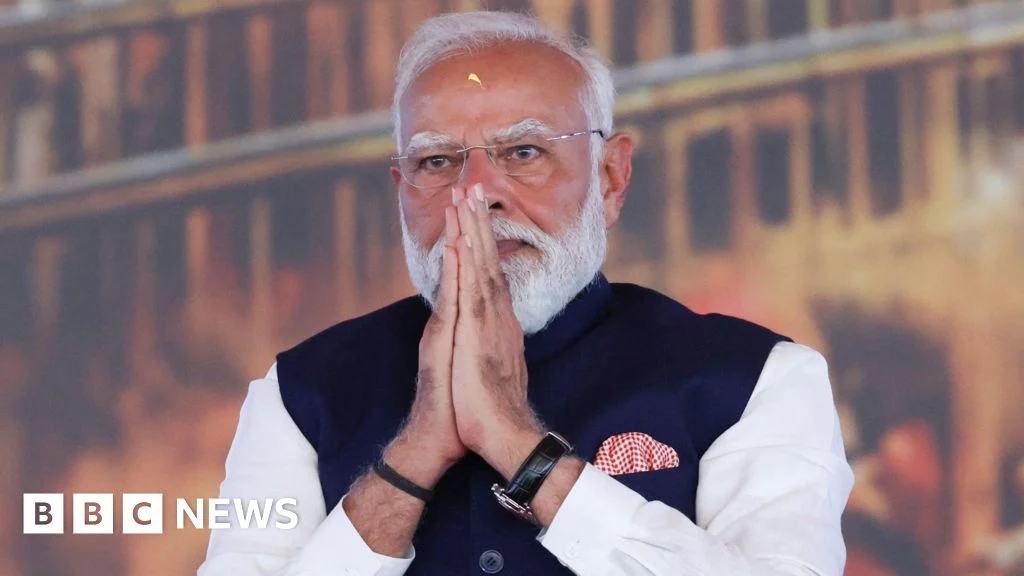
New Delhi, India – Prime Minister Narendra Modi has issued a fervent appeal to the nation, urging citizens to re-embrace practices reminiscent of the COVID-19 pandemic era – including widespread adoption of working from home, significant curtailment of foreign travel, and reduced purchases of gold – as India grapples with a severe global energy crisis exacerbated by the ongoing conflict in the Middle East. The Prime Minister’s address, delivered in Hyderabad on Sunday, May 10, 2026, underscored the critical need for national austerity to mitigate the economic fallout from escalating global energy prices and the persistent closure of the strategically vital Strait of Hormuz.
The extraordinary measures proposed by Prime Minister Modi are a direct response to the "US and Israel’s war on Iran," a conflict that has now entered its third month and led to unprecedented disruptions in global oil supplies. With the Strait of Hormuz, a crucial chokepoint in the Persian Gulf through which a significant portion of the world’s oil transits, remaining shut for over two-and-a-half months, international crude oil prices have surged to historic highs. This has placed immense pressure on India, which imports approximately 90% of its crude oil requirements, leading to a multi-billion dollar spike in its energy import bill and a significant drain on its foreign exchange reserves.
The Unfolding Crisis: A Timeline of Escalation
The genesis of the current economic predicament can be traced back to late February 2026, when escalating geopolitical tensions in the Middle East culminated in a direct military confrontation involving the United States, Israel, and Iran. While specific details of the initial engagements remain contested, the immediate and most devastating economic consequence was Iran’s strategic decision, or the operational necessity due to intense conflict, to render the Strait of Hormuz impassable for commercial shipping. This vital waterway, approximately 39 kilometres wide at its narrowest point, typically facilitates the passage of about 21 million barrels of oil per day, representing roughly one-fifth of global consumption and a third of all seaborne traded oil. Its closure effectively choked off a major artery of global energy supply, sending shockwaves through international markets.
Within days of the Strait’s closure, global crude oil benchmarks like Brent and WTI saw unprecedented spikes, with prices nearing or exceeding $150 per barrel, a level not seen in decades. For India, a net energy importer, this translated into an immediate and substantial increase in its import costs. The Indian Rupee, already under pressure from global economic uncertainties, began a precipitous decline, hitting successive record lows against the US dollar in recent weeks. On Monday, May 11, the benchmark Sensex index experienced a sharp fall of over 1,000 points in early trade, reflecting investor apprehension about prolonged economic disruption and the government’s desperate plea for public austerity. This market reaction underscored the severity of the crisis and the deep-seated fears of a protracted economic downturn.
Modi’s Call to Action: Austerity Measures for National Resilience
Prime Minister Modi’s appeal, delivered with a strong emphasis on national duty and collective responsibility, outlined a series of measures aimed at conserving precious foreign exchange and reducing India’s overall energy consumption. "Patriotism is not only about the willingness to sacrifice one’s life on the border. In these times, it is about living responsibly and fulfilling our duties to the nation in our daily lives," Modi asserted, framing the economic challenge as a test of national resolve. "In the current situation, we must place great emphasis on saving foreign exchange."
The proposed austerity measures include:
- Reviving Work From Home (WFH): Encouraging a return to remote working, a practice widely adopted during the COVID-19 lockdowns, aims to significantly reduce daily commute-related fuel consumption across urban centers. During the pandemic, WFH proved effective in cutting down vehicular emissions and easing traffic congestion, offering a dual benefit of energy saving and environmental improvement. Economists estimate that a 30-40% adoption rate of WFH in major metros could lead to a 5-7% reduction in urban fuel demand.
- Limiting Foreign Travel: International travel, particularly leisure travel, involves significant outflows of foreign currency. By urging citizens to limit non-essential foreign trips, the government hopes to curb this expenditure, thereby preserving valuable foreign exchange reserves. This measure also indirectly impacts the aviation sector, though the primary focus is on individual spending.
- Buying Less Gold: India is one of the world’s largest consumers of gold, much of which is imported. Gold imports, while culturally significant, represent a substantial drain on India’s foreign exchange. In the fiscal year 2024-2025, India imported over 700 tonnes of gold, valued at approximately $45 billion. Reducing these imports, even marginally, could yield significant forex savings. The government has previously used import duties to curb gold demand, but this direct appeal signifies the urgency of the situation.
- Promoting Public Transport and Carpooling: To directly address fuel consumption, Modi advocated for greater reliance on public transportation networks, such as the metro systems in major cities, and encouraged carpooling for those who must use private vehicles. This measure aims to optimize fuel usage per commuter, reducing the overall demand for petrol and diesel.
- Reducing Fertiliser Use by Half: This seemingly unrelated measure is crucial because the production of many chemical fertilisers, particularly urea, is highly energy-intensive, relying heavily on natural gas, much of which is imported. By urging farmers to reduce fertiliser application by 50%, the government seeks to decrease the import bill for natural gas and fertiliser products, which also contribute to the foreign exchange outflow. India imports over 30% of its fertiliser needs, and the cost of these imports has soared with global energy prices.
India’s Economic Lifeline Under Strain
India’s formidable dependence on imported crude oil is its most significant economic vulnerability in the face of the current crisis. As the world’s third-largest oil consumer, its economic growth trajectory is inextricably linked to stable and affordable energy supplies. The sharp increase in global crude prices has had a cascading effect on India’s macroeconomic indicators:
- Current Account Deficit (CAD): The widening gap between India’s foreign exchange earnings and expenditures, primarily driven by the higher oil import bill, puts immense pressure on the CAD. A deteriorating CAD signals a greater need for foreign capital to finance imports, making the economy more susceptible to external shocks.
- Foreign Exchange Reserves: While India maintains substantial forex reserves (estimated at around $600 billion prior to the crisis), a prolonged period of high oil prices can rapidly deplete these reserves as the central bank intervenes to defend the rupee and finance essential imports.
- Indian Rupee’s Depreciation: The rupee’s freefall against the dollar makes all imports, not just oil, more expensive. This fuels imported inflation, directly impacting consumer goods, raw materials for industries, and capital goods, thereby increasing the cost of doing business and living in India.
- Inflationary Pressures: The rising cost of fuel permeates every sector of the economy. Transportation costs for goods increase, leading to higher prices for everything from food to manufactured products. This "cost-push" inflation severely erodes household purchasing power and can trigger demands for wage increases, potentially leading to a wage-price spiral.
- Government’s Fiscal Dilemma: The government faces a tightrope walk. State-run fuel retailers are under immense pressure to absorb some of the crude price hikes to prevent an immediate and drastic increase in petrol and diesel prices at the pump, which would directly impact consumers and spark widespread protests. However, these losses for oil marketing companies (OMCs) ultimately burden the exchequer, either through direct subsidies or through reduced tax revenues if OMCs’ profitability suffers. Analysts predict that a price revision of petroleum products, perhaps a significant one, might be unavoidable if the crisis persists.
Ripple Effects Across Industries and Livelihoods
The economic strain is not confined to government balance sheets; its tendrils are reaching deep into India’s diverse industrial landscape and threatening millions of livelihoods.
- Manufacturing Sector: Industries heavily reliant on energy for production, such as glass, plastics, ceramics (tiles), and steel, are among the hardest hit. These sectors face a dual challenge: soaring operational costs due to expensive fuel and raw materials (often petroleum-derived), and a potential drop in consumer demand due to inflationary pressures. Reports indicate that hundreds of thousands of jobs are at risk in these industries, with many factories contemplating production cuts or temporary closures.
- Agriculture and Food Security: The call to reduce fertiliser use, while necessary for foreign exchange conservation, raises significant concerns about India’s agricultural output. Dwindling fertiliser supplies and their increased cost could lead to lower yields, particularly for staple crops, thereby exacerbating food inflation and potentially jeopardizing food security for a nation of 1.4 billion. Farmers, already vulnerable to climate shocks and market fluctuations, face additional burdens.
- Logistics and Supply Chains: The backbone of any economy, the logistics sector, is directly impacted by fuel prices. Higher diesel costs translate into increased freight charges, pushing up the prices of all goods transported across the country. This creates bottlenecks in supply chains, leading to delays and further inflationary pressures.
- Consumer Spending and Economic Growth: The combined effect of inflation, job insecurity, and the government’s call for austerity is likely to dampen consumer sentiment and spending. Reduced demand can further slow economic growth, creating a vicious cycle of economic contraction.
Political Repercussions and Public Discourse
Prime Minister Modi’s appeal, while framed as a national imperative, has not been met without criticism from opposition parties. Congress party leader Rahul Gandhi, in a post on X (formerly Twitter), sharply criticised the government’s approach, stating that Modi’s suggestions were not "sermons" but "proofs of failure." Gandhi accused the government of shifting "responsibility onto the people" and escaping accountability for its own planning and economic management. This political sparring highlights the sensitivity of economic hardship, particularly when it necessitates public sacrifice.
Public sentiment is likely to be mixed. While many Indians understand the severity of the crisis and the need for collective action, there will undoubtedly be frustration over the sudden imposition of austerity measures, especially given the memory of the hardships faced during the COVID-19 lockdowns. The government’s communication strategy will be crucial in ensuring public cooperation and managing expectations during these challenging times.
A Global Chokepoint: The Strait of Hormuz and International Fallout
The International Energy Agency (IEA) has described the closure of the Strait of Hormuz as the "largest supply disruption in history," a stark assessment that underscores the global ramifications of the Middle East conflict. The strategic importance of this waterway cannot be overstated; it is not just an oil chokepoint but also a conduit for liquefied natural gas (LNG) and other critical goods. Its closure has not only sent oil prices spiralling but has also disrupted global shipping routes, increased insurance premiums for remaining routes, and severely impacted economies far beyond the Middle East.
- China: As the world’s largest crude oil importer, China has been significantly affected. Beijing reportedly ordered its oil refineries to halt fuel exports temporarily to ensure domestic supply, yet petrol prices still climbed within the country. Some Chinese airlines were forced to cut flights due to exorbitant jet fuel costs, impacting both travel and logistics.
- Australia: Several Australian states have implemented emergency measures, including making public transport free or slashing fares by half, to encourage citizens to avoid driving and conserve fuel. This reflects a proactive governmental response to reduce immediate fuel demand.
- Philippines: The Philippines declared a national emergency in March, introducing subsidies for transport drivers, reducing ferry services, and implementing a four-day work week for civil servants to cut down on energy consumption and ease the burden on commuters.
- Sri Lanka: Already reeling from its own severe economic crisis, Sri Lanka was particularly vulnerable. The island nation introduced stringent fuel rationing, alongside a temporary four-day work week, shutting down schools, colleges, and other government institutions on Wednesdays to conserve energy.
These examples illustrate a global pattern of governments scrambling to mitigate the economic fallout, highlighting the interconnectedness of the global energy market and the devastating impact of geopolitical instability in critical regions.
The Road Ahead: Navigating Uncertainty and Building Resilience
As India navigates this unprecedented crisis, the government is expected to issue more detailed directives to curb energy use in the coming weeks. The potential for a significant price revision of petroleum products remains a looming possibility, which would test both public resilience and the government’s political capital.
In the long term, this crisis underscores the urgent need for India to accelerate its transition to renewable energy sources and diversify its energy supply chains to reduce its heavy reliance on imported fossil fuels. Investments in solar, wind, and nuclear power, coupled with advancements in energy storage technologies, will be critical for building future energy security. Diplomatic efforts to de-escalate the Middle East conflict and ensure the reopening of the Strait of Hormuz will also be paramount for global economic stability.
The ongoing war in Iran and its devastating impact on global energy markets present India with one of its most formidable economic challenges in recent history. Prime Minister Modi’s call for collective austerity is a stark reminder of the sacrifices required when geopolitical storms threaten national prosperity, demanding a concerted effort from every citizen to weather the crisis and forge a path towards greater resilience.