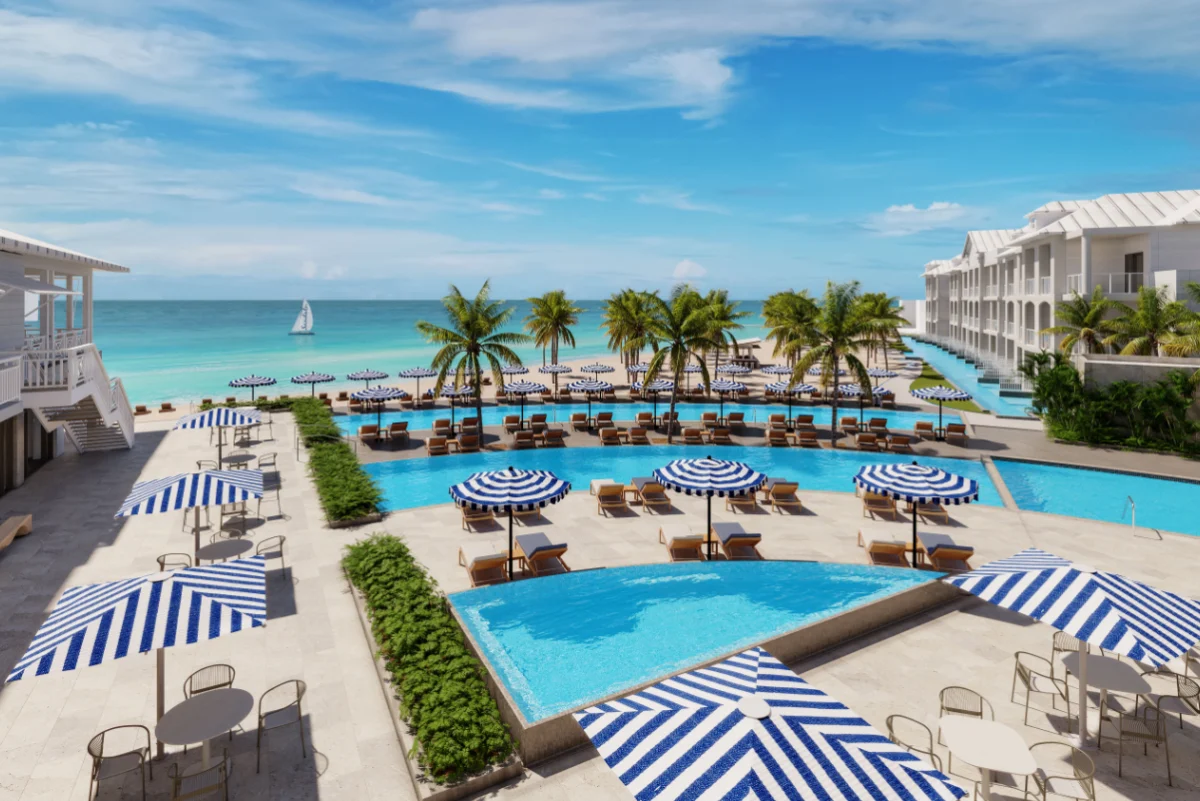
In a move that signals a transformative shift in the global travel and hospitality landscape, Royal Caribbean Group has officially entered into a definitive agreement to purchase a 50% stake in Sandals Resorts International, the parent company of the iconic Sandals and Beaches Resorts brands. The transaction, valued at approximately $3 billion in cash, places an enterprise value of $6 billion on the Caribbean’s most recognizable luxury all-inclusive brand. This strategic partnership represents Royal Caribbean’s most significant foray into land-based hospitality to date, effectively bridging the gap between maritime leisure and terrestrial luxury accommodations.
The announcement, confirmed by both companies following a series of market reports, marks the culmination of months of negotiations. According to a filing with the U.S. Securities and Exchange Commission (SEC), Royal Caribbean Group will acquire half of the family-owned enterprise, which has remained under the leadership of the Stewart family since its inception in 1981. The deal is expected to close in the first half of 2027, pending customary regulatory approvals and closing conditions across multiple Caribbean jurisdictions.
A Strategic Convergence of Sea and Land
The acquisition is viewed by industry analysts as a logical evolution for Royal Caribbean Group, which operates Royal Caribbean International, Celebrity Cruises, and Silversea Cruises. For years, the cruise giant has been expanding its "vacation ecosystem," most notably through the development of private island destinations like "Perfect Day at CocoCay" in the Bahamas. By acquiring a stake in Sandals, Royal Caribbean is moving beyond the controlled environment of a private port and into the established, high-margin world of luxury all-inclusive resorts.
Sandals Resorts International currently operates a robust portfolio of adults-only Sandals Resorts and family-oriented Beaches Resorts. The portfolio spans several sovereign nations, including Jamaica, Antigua, Saint Lucia, the Bahamas, Grenada, Barbados, Curaçao, and the Turks and Caicos Islands. This geographic footprint provides Royal Caribbean with immediate, large-scale access to the most desirable real estate in the Caribbean basin.
The synergy between the two entities is expected to center on the "total vacation wallet." By controlling both the cruise experience and the land-based stay, Royal Caribbean can offer integrated "cruise and stay" packages that were previously difficult to coordinate with third-party vendors. This allows the company to capture revenue at every stage of the traveler’s journey, from the initial flight and pre-cruise hotel stay to the voyage itself and a post-cruise resort extension.
Financial Terms and Market Context
The $3 billion cash injection for a 50% stake suggests a high level of confidence in the Sandals brand equity and its future growth potential. Sandals has long maintained a dominant position in the Caribbean, often cited as the pioneer of the "Luxury Included" concept. The $6 billion valuation reflects not only the physical assets—which include prime beachfront acreage and thousands of high-end rooms—but also the intellectual property and the extensive loyalty program, the Sandals Select Rewards.
This deal occurs amidst a broader trend of consolidation and expansion within the all-inclusive sector. In recent years, major hotel conglomerates have aggressively pursued the all-inclusive market, which was once considered a niche segment. Hyatt Hotels Corporation’s $2.7 billion acquisition of Apple Leisure Group in 2021 and Marriott International’s launch of its "All-Inclusive by Marriott Bonvoy" platform have heightened competition. Royal Caribbean’s entry into this space with a 50% stake in the segment’s most recognized brand is a direct response to these shifting market dynamics.
The Legacy of Sandals Resorts and the Stewart Family
Sandals Resorts International was founded by the late Gordon "Butch" Stewart, a visionary Jamaican entrepreneur who started with a single dilapidated hotel in Montego Bay. Over four decades, Stewart transformed the company into a regional powerhouse and a global symbol of Caribbean hospitality. Following his passing in 2021, his son, Adam Stewart, took the helm as Executive Chairman.
Under Adam Stewart’s leadership, the company embarked on a "Sandals 2.0" strategy, focusing on modernization, technological integration, and the introduction of over-the-water bungalows and sky-pool suites. The partnership with Royal Caribbean is expected to accelerate these capital improvement projects. Reports indicate that the Stewart family will retain the remaining 50% stake and continue to lead the operational management of the resorts, ensuring that the brand’s distinct Caribbean identity remains intact.
Chronology of the Deal and Future Timeline
The timeline for this landmark agreement traces back to early discussions in 2025, as Royal Caribbean sought ways to diversify its revenue streams following the cruise industry’s robust post-pandemic recovery.
- Mid-2025: Initial exploratory talks began regarding a strategic marketing partnership.
- Late 2025: Discussions shifted toward an equity stake as both parties identified significant operational synergies.
- Early 2026: Due diligence commenced, focusing on the extensive real estate holdings of Sandals across eight Caribbean nations.
- June 2026: Unofficial reports of the deal began to circulate within the financial and travel sectors.
- June 17, 2026: Royal Caribbean Group and Sandals Resorts International issued joint statements confirming the 50% acquisition.
- Early 2027 (Projected): The deal is slated for final closure, following the completion of regulatory reviews in the United States and the Caribbean.
Operational Implications and Loyalty Integration
One of the most anticipated outcomes of this deal is the integration of loyalty programs. Royal Caribbean’s Crown & Anchor Society and Celebrity Cruises’ Captain’s Club boast millions of active members. Integrating these programs with the Sandals Select Rewards program could create one of the most powerful loyalty engines in the travel industry.
Furthermore, the partnership is expected to yield significant efficiencies in supply chain management and marketing. Royal Caribbean’s massive global distribution system and relationship with travel advisors will likely drive increased occupancy rates for Sandals and Beaches properties. Conversely, Sandals’ strong brand presence in the land-based market provides Royal Caribbean with a new channel to introduce traditional "landlubbers" to the world of cruising.
Impact on Caribbean Economies
The Caribbean region stands to be a major beneficiary of this partnership. Sandals is one of the largest private employers in the region, and its success is intrinsically linked to the economic health of nations like Jamaica and Saint Lucia. The infusion of $3 billion in capital is expected to spur further development, infrastructure improvements, and job creation.
Government officials in Jamaica and the Bahamas have expressed cautious optimism, noting that the involvement of a major U.S.-based corporation like Royal Caribbean could lead to increased airlift and higher standards of tourism infrastructure. However, analysts also point out that the concentration of power in the hands of two industry giants will require careful monitoring by local tourism boards to ensure fair competition and the continued support of local businesses.
Analysis: The Future of Integrated Travel
The Royal Caribbean-Sandals deal is more than a simple acquisition; it is a blueprint for the future of the travel industry. The traditional silos of "cruise," "hotel," and "tour operator" are rapidly dissolving. Consumers are increasingly looking for seamless, end-to-end vacation experiences, and the companies that can provide that entire spectrum are positioned to win.
For Royal Caribbean, the move mitigates some of the risks inherent in the cruise industry, such as fluctuating fuel costs and maritime regulations, by diversifying into the more stable land-based resort market. For Sandals, the partnership provides the financial muscle and global reach of a Fortune 500 company while maintaining the family-led spirit that has defined the brand for forty years.
As the 2027 closing date approaches, the industry will be watching closely to see how these two giants integrate their operations. The success of this venture could trigger further cross-sector acquisitions, as cruise lines and hotel chains seek to consolidate their hold on the global traveler. For now, the message is clear: the boundaries between sea and land have never been thinner, and the Caribbean remains the ultimate prize in the global battle for the vacationer’s heart and wallet.