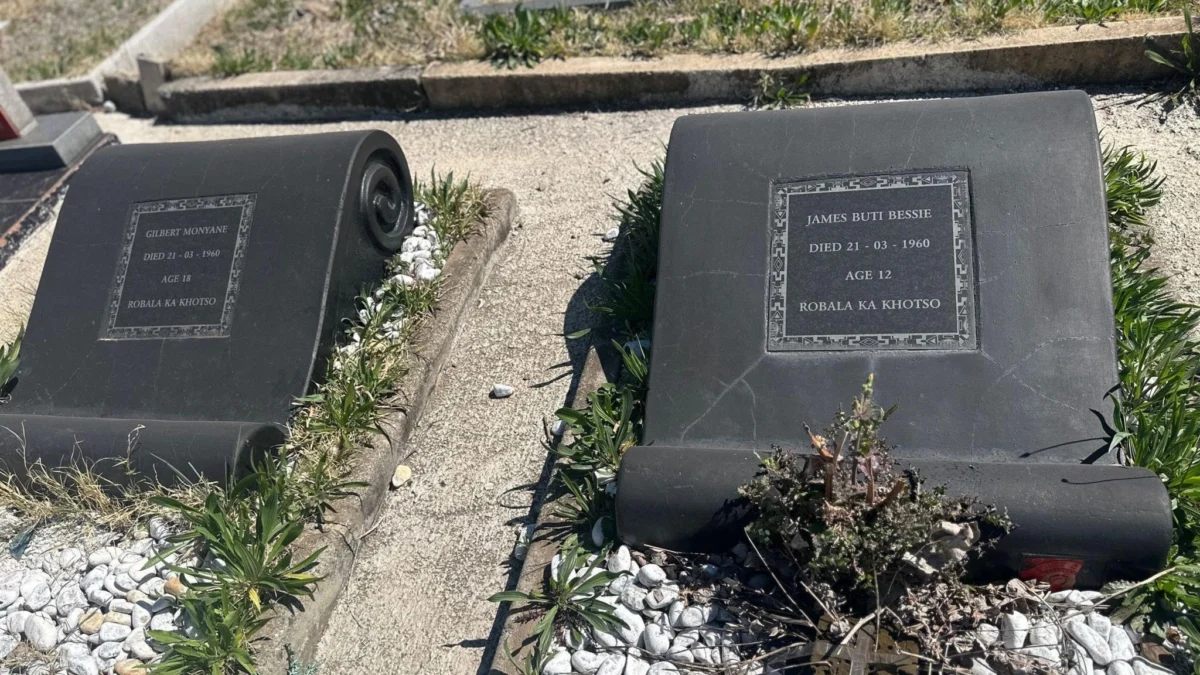
Abraham Mofokeng, an 86-year-old survivor of the infamous Sharpeville massacre, continues to bear the physical and psychological scars of the brutal suppression of a peaceful protest in South Africa 66 years ago. A bullet remains lodged in his spine, and a gunshot wound to his leg has left him with a gentle limp, enduring reminders of a day when police infamously opened fire on thousands of anti-apartheid demonstrators. This harrowing memory is now at the forefront of a new legal battle, announced on Thursday, which seeks to overturn a contentious indemnity law that has shielded the perpetrators of the massacre from prosecution for decades.
The Enduring Wounds of Sharpeville: A Quest for Justice
Mofokeng was just 20 years old on 21 March 1960 when he joined the demonstration against the white-minority government’s repressive pass laws. "We weren’t seen as people," he recounts, reflecting on the dehumanising system of apartheid. "All you were good for was working. You couldn’t question them, you were supposed to just do as you’re told." The massacre at Sharpeville, which claimed the lives of at least 69 protesters and injured over 200, exposed the extreme violence of the racist apartheid regime to the world. Yet, remarkably, none of the police officers or government officials responsible were ever held accountable, thanks to the Indemnity Act passed just a year after the killings.
The legal challenge, spearheaded by South African non-governmental organisation Lawyers for Human Rights (LHR) and UK-based law firm Leigh Day, aims to declare this 1961 law unconstitutional under South Africa’s post-apartheid constitution, which came into effect in 1994. This groundbreaking move represents a renewed and determined effort by survivors and the families of victims to finally achieve justice and secure reparations, hoping to close a painful chapter that has lingered for far too long.

A Day of Bloodshed: March 21, 1960
The Sharpeville massacre unfolded during a nationwide campaign organised by the Pan Africanist Congress (PAC) to protest against the apartheid government’s hated pass laws. These laws, a cornerstone of racial segregation, mandated that black South Africans carry a "dompas" (Afrikaans for "dumb pass") at all times. This document severely restricted their freedom of movement, dictating where they could live, work, and travel. Failure to produce a passbook on demand could lead to immediate arrest, fines, or imprisonment, effectively controlling and subjugating the black population.
On the morning of 21 March 1960, thousands of black South Africans, responding to the PAC’s call, gathered peacefully outside the Sharpeville police station, located south of Johannesburg. Their intention was to present themselves for arrest without their passbooks, thereby overwhelming the prison system and highlighting the injustice of the laws. Abraham Mofokeng vividly recalls the mood of the day: "The life we were living under apartheid was a life of oppression. We could not move around freely. We ended up planning to march to the police station against these passbooks that were being used to oppress us."
The crowd, estimated to be between 5,000 and 7,000 strong, was unarmed and largely peaceful, singing freedom songs. However, the police presence was formidable, with officers armed with rifles, submachine guns, and even machetes, as Mofokeng remembers. Accounts from the day describe a tense standoff that escalated rapidly. Around 13:15, without clear provocation, police opened fire on the crowd. The barrage of bullets lasted for several minutes, transforming the peaceful protest into a scene of unimaginable horror. "There was a commotion, then all hell broke loose when the police started shooting," Mofokeng recounts.
Another survivor, 90-year-old Larazus Magotsi, recalls the terror: "We heard gunshots and ran and hid inside a store, peeping to see what was happening outside. People were lying on the ground. When we looked out again, we saw that some were trying to get up, but the police were just shooting at them." He adds a chilling detail: "Others were using machetes to strike the heads of people who were still moving." The sheer brutality of the attack is underscored by estimates that over 1,300 bullets were fired into the fleeing crowd. Archive photographs from the immediate aftermath show bodies strewn across the ground, a stark testament to the indiscriminate violence. Initial reports cited 69 fatalities, including women and children, with a 12-year-old among those buried in the local cemetery. Recent research by South African scholars suggests the death toll could be as high as 91. More than 200 people were injured, many severely.

The Apartheid Context: Roots of Repression
The Sharpeville massacre did not occur in a vacuum but was a direct consequence of the apartheid system, formally institutionalised in 1948 by the National Party government. Apartheid, meaning "apartness" in Afrikaans, was a system of institutionalised racial segregation and discrimination against non-white inhabitants of South Africa. Its legislation permeated every aspect of life, classifying people by race and enforcing strict separation in residential areas, education, healthcare, and political rights.
Key apartheid laws included the Population Registration Act (1950), which categorised every South African by race; the Group Areas Act (1950), which assigned different racial groups to different residential and business areas, leading to forced removals; and the Pass Laws, which were designed to control the movement and labour of black Africans. The pass laws were particularly resented as they symbolised the denial of freedom and dignity, reducing black individuals to mere labour units. The PAC, formed in 1959 by dissidents from the African National Congress (ANC) who advocated for a more assertive, black nationalist approach, specifically targeted these pass laws for their campaign of civil disobedience. Their strategy was to stage mass protests against the passes, intending to fill the jails and render the system unworkable.
The Aftermath: Domestic and International Repercussions
The immediate aftermath of the Sharpeville massacre saw the apartheid government respond with further repression rather than reflection. On 30 March 1960, the government declared a state of emergency, leading to the arrest of thousands of anti-apartheid activists, including leaders from both the ANC and PAC. A week later, on 8 April 1960, both the ANC and PAC were banned under the Unlawful Organizations Act, driving the liberation movements underground and prompting a shift towards armed struggle for some, most notably the ANC’s formation of uMkhonto we Sizwe (Spear of the Nation) in 1961.

Internationally, the massacre sparked widespread outrage and condemnation, serving as a critical turning point in the global anti-apartheid movement. The United Nations Security Council, in Resolution 134, explicitly condemned the South African government’s policies and actions, marking the beginning of decades of international isolation for the regime. Countries worldwide imposed sanctions, initiated boycotts, and eventually disinvested from South Africa, putting immense pressure on the white-minority government. The Organisation of African Unity (OAU), established in 1963, also made the liberation of southern Africa, including dismantling apartheid, a central tenet of its mission. The Sharpeville massacre vividly demonstrated the brutal reality of apartheid, galvanising international solidarity and paving the way for eventual global action against the regime.
A Legacy of Impunity: The 1961 Indemnity Act
Despite the overwhelming evidence of state violence and international condemnation, the South African government moved swiftly to protect those responsible. In 1961, it enacted the Indemnity Act, a piece of legislation that effectively granted immunity to police officers and government officials from any criminal charges or civil claims related to actions taken to suppress unrest, including the Sharpeville massacre. This law ensured that no one was ever prosecuted for the killings, leaving survivors and victims’ families without any legal recourse.
Even after South Africa’s transition to democracy in 1994 and the adoption of one of the world’s most progressive constitutions, this apartheid-era law, a relic of an unjust past, has remained on the statute books. Its persistence has been a source of profound grievance for the Sharpeville community, representing a continued denial of accountability and justice.
The Quest for Justice: Past and Present Efforts

Following the establishment of democratic rule, President Nelson Mandela’s government initiated the Truth and Reconciliation Commission (TRC) in 1995. Chaired by Archbishop Desmond Tutu, the TRC aimed to investigate human rights violations committed during the apartheid era, fostering healing and reconciliation through truth-telling. Perpetrators could apply for amnesty in exchange for full disclosure of their actions, while victims were given a platform to share their experiences.
While the TRC was largely praised for its pioneering approach to transitional justice, a significant criticism was its perceived failure to deliver justice for all, particularly in cases where perpetrators did not seek amnesty or where criminal prosecutions did not follow. Crucially, no police officers applied for amnesty specifically for the Sharpeville shootings, meaning the massacre remained an open wound without the closure of legal accountability or even a full official confession from those directly involved. The TRC process, therefore, while vital for historical acknowledgement, did not provide the legal redress that many Sharpeville survivors sought.
The current legal challenge seeks to rectify this historical injustice. Lawyers for Human Rights, alongside Leigh Day, has filed a case at the High Court, arguing that the 1961 Indemnity Act is fundamentally unconstitutional under the new democratic order. Charne Tracey, one of the lawyers on the case, underscores the broader implications: "Apart from the individual damages, what the community’s looking for is basically reparations to enable their healing. They feel as though Sharpeville is a forgotten community." Part of their application includes certifying a class action, which, if approved, would allow dozens of victims and relatives to collectively sue the state. This could potentially pave the way for criminal charges against any surviving alleged perpetrators, offering a form of accountability previously denied.
Sharpeville Today: A Community’s Enduring Scars
Visiting Sharpeville today reveals a community still grappling with the legacies of apartheid and the unaddressed trauma of the massacre. The township, located south of Johannesburg, bears little resemblance to a site of profound historical significance that symbolises the struggle for human rights. Instead, it is slowly deteriorating. Once-tarred roads are reverting to dirt, many houses remain the small, brown-faced brick homes built under apartheid, and heaps of rubbish litter the dry, barren earth. This physical decay mirrors the emotional and socio-economic scars that persist.

The local memorial park, the Human Rights Precinct, features 69 white pillars, each representing a life lost, standing as a solemn reminder of the atrocity. Yet, the physical memorial, while important, cannot fully address the deep-seated pain and economic disadvantage that continues to plague the community. Survivors like Mofokeng and Magotsi live with daily reminders of their past, not only in their physical injuries but also in the continued struggle for recognition and redress.
Legal Arguments and Constitutional Implications
The legal team’s argument hinges on the fundamental principles of South Africa’s democratic constitution, which champions human rights, equality, and the rule of law. The 1961 Indemnity Act, a product of an illegitimate and oppressive regime, is seen as directly contravening these constitutional values. Constitutional law expert Professor Frans Viljoen supports the attempts to repeal the old law, stating that it is important to "clean up" the legislation and "close a chapter on the past."
Professor Viljoen explains that while the principle of continuity of statehood means that laws in force in 1994 remained valid until repealed or changed by parliament, this does not preclude challenging their constitutionality. "So if there were laws in our statute book in 1994, the constitution explicitly says they remain in force until parliament repeals them, abolishes them or changes them," he notes. Declaring the Indemnity Act unconstitutional would be a powerful symbolic and practical step, providing a legal basis for holding the current state accountable for historical wrongs committed by its predecessor, and helping to "cleanse us of that past." The class action component is particularly significant, as it would enable collective action, giving a stronger voice and legal standing to the numerous individuals affected.
The Path Forward: Healing and Reparations

The South African government, while not opposing survivors and families pursuing legal remedies, has stated that it has supported apartheid victims over the years and would continue to do so. The justice department reported that 560 TRC-recognised victims of apartheid-era violence had received individual grants amounting to approximately $31 million (£23 million). However, it acknowledged that not all Sharpeville survivors and relatives had been identified, encouraging them to come forward.
For many in Sharpeville, financial compensation, while important, is only one aspect of true restitution. The deeper need is for recognition, accountability, and collective healing. The wounds are not just individual; they are communal. Charne Tracey emphasises this, stating that "Nothing has been done that assists with their healing and improvement of their quality of life, or remedy the long-term effects of what they’ve suffered." The potential for a class action involving up to 70 people could represent a significant step towards this holistic healing.
Abraham Mofokeng articulates the profound hope that this legal battle carries: "Apartheid is dead and buried. A win would bring complete healing, not just for us, but for future generations as well." He adds, "Considering how people died, many have not completely healed." The Sharpeville massacre remains a stark reminder of the brutality of apartheid and the ongoing struggle for justice. Six decades later, the determination of its survivors to see accountability served underscores the enduring power of memory and the fundamental human right to justice, even against the backdrop of history’s deepest wounds. This new legal challenge is not merely about overturning an old law; it is about seeking final closure, affirming the dignity of the victims, and ensuring that the lessons of Sharpeville resonate for generations to come.