


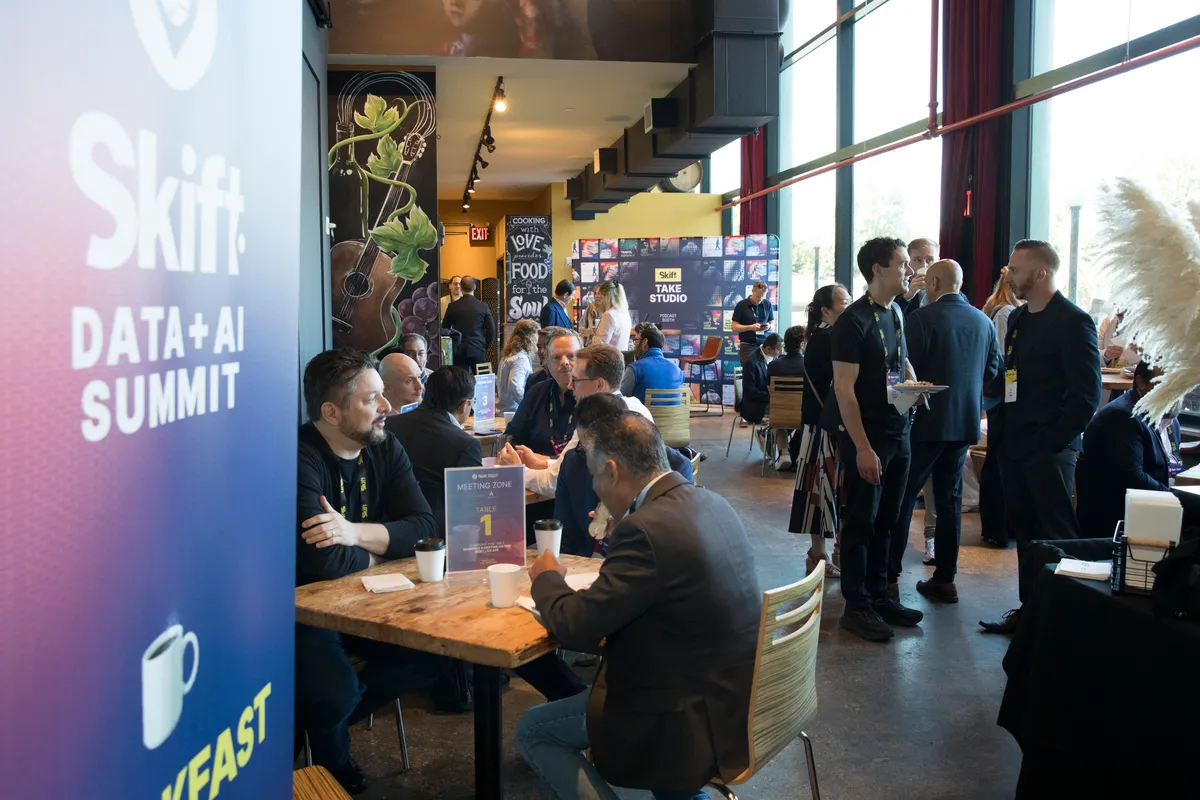
The global travel industry is approaching a critical juncture where the theoretical potential of artificial intelligence must transition into measurable commercial success, a shift that will be the central focus of the inaugural Skift Data + AI Summit Europe. Scheduled for October 6, 2026, in London, this high-level gathering will convene 250 senior travel executives to navigate the increasingly complex intersection of technological innovation, European regulatory frameworks, and bottom-line profitability. As the first European expansion of Skift’s flagship AI event series, the summit arrives at a moment when the industry’s "honeymoon phase" with generative AI has ended, replaced by the rigorous demands of profit and loss (P&L) statements and the strict oversight of the European Union’s legislative bodies.
The decision to bring the summit to London reflects a growing realization that Europe represents the most challenging—and therefore the most significant—testing ground for AI in travel. While North American markets have seen rapid deployment of AI-driven chatbots and search tools, European operators must contend with a fragmented landscape defined by dozens of languages, varying consumer privacy expectations, and a regulatory environment that is arguably the most stringent in the world. The summit aims to bridge the gap between those who claim to use AI and those who can demonstrate its tangible outcomes in this difficult environment.
The Regulatory Countdown: The EU AI Act and Its Implications
A primary driver for the timing of the Skift Data + AI Summit Europe is the legislative calendar of the European Union. In August 2026, just weeks before the summit is set to begin, the EU’s landmark AI Act will become fully enforceable. This regulation introduces a tiered risk-based approach to AI oversight, but its transparency requirements will have an immediate impact on any travel company operating within the bloc. Under these rules, companies must clearly disclose when customers are interacting with an AI system and must provide explicit labeling for synthetic content, such as AI-generated marketing imagery or personalized travel itineraries.
For global travel brands, the EU AI Act represents a significant departure from the relatively "light-touch" approach seen in the United States. Travel companies must now ensure that their AI deployments do not just work efficiently but also comply with strict mandates regarding data bias, algorithmic transparency, and human oversight. The summit will provide a forum for legal and technical leads to discuss how to maintain a seamless user experience while adhering to these mandatory disclosures, which some fear could introduce friction into the digital booking process.
Furthermore, the geographical choice of London serves a strategic purpose. While the UK is no longer a member of the EU, it remains a critical hub for European travel operations. The UK government has signaled a desire to maintain a more flexible, "pro-innovation" regulatory stance compared to the EU. This divergence creates a unique laboratory in London where executives can weigh the costs and benefits of two competing regulatory philosophies.
From Pilot Projects to Profitable Proof: The 2024-2026 Transition
The travel industry’s relationship with AI has evolved rapidly over the last four years. In 2023 and 2024, the focus was largely on experimentation—deploying Large Language Models (LLMs) to handle customer service queries or to assist in travel planning. However, by 2026, the industry’s patience for experimental costs without clear returns has worn thin. The London summit is designed as a "working day" to address the "harder work" of proving that AI can drive profitability.
Market data suggests that while 75% of travel executives believe AI will fundamentally transform their business, less than 20% have seen a significant impact on their margins as of early 2025. The summit will delve into the specific areas where AI is moving the needle, such as:
- Dynamic Pricing and Revenue Management: Moving beyond simple historical data to incorporate real-time sentiment analysis and geopolitical shifts.
- Operational Efficiency: Using AI to optimize flight paths for fuel efficiency or to predict maintenance needs in hospitality, thereby reducing overhead.
- Hyper-Personalization: Transitioning from generic "recommended for you" lists to sophisticated predictive modeling that anticipates a traveler’s needs before they are explicitly stated.
The agenda will feature original Skift Research, providing a data-driven baseline of where the industry stands. This research is expected to highlight the "productivity paradox" in travel—where companies spend heavily on tech talent and compute power but struggle to integrate these tools into legacy systems that still underpin much of the world’s airline and hotel infrastructure.
A Chronology of AI Integration in the Travel Sector
To understand the significance of the 2026 summit, it is necessary to look at the timeline of AI’s ascent within the industry.
- November 2022: The launch of ChatGPT triggers a wave of interest in generative AI across the travel tech landscape.
- Early 2023: Major Online Travel Agencies (OTAs) like Expedia and Kayak launch some of the first AI plugins, allowing users to plan trips via conversational interfaces.
- 2024: The "Year of Integration." Companies begin moving away from third-party plugins toward proprietary models trained on their own first-party data. Concerns over data privacy and "hallucinations" in travel bookings become a top priority.
- 2025: A period of consolidation and refinement. Travel companies begin auditing their "AI spend," shifting budgets from general-purpose tools to specialized applications that address specific pain points like irregular operations (IROPS) in aviation.
- August 2026: The EU AI Act takes full effect, forcing a massive compliance overhaul for any AI system touching European consumers.
- October 2026: The Skift Data + AI Summit Europe convenes to assess the first real-world results of these compliant, profit-focused deployments.
Stakeholder Perspectives and Market Fragmentation
The summit’s structure recognizes that the challenges of AI are not uniform across the sector. For airlines, the focus is often on the massive amounts of telemetry data and the logistical nightmare of crew and fleet scheduling. For hotels, the priority is often the "high-touch" guest experience and how AI can augment, rather than replace, human hospitality.
Industry analysts suggest that the fragmented nature of the European market provides a "moat" for local players who can better navigate local languages and cultural nuances. A spokesperson for a leading European airline, speaking on the condition of anonymity ahead of the summit’s formal agenda release, noted: "In the US, you can train a model on a massive, homogenous dataset. In Europe, if your AI doesn’t understand the nuance between a business traveler in Milan and a holidaymaker in Munich, you’ve lost the sale. The technical debt of localization is our biggest hurdle."
The summit will also address the role of Online Travel Agencies (OTAs) and Travel Management Companies (TMCs). These entities sit on the most valuable asset in the AI era: consumer behavior data. However, they face the greatest pressure from regulators regarding data portability and competition. The event will explore how these intermediaries are using AI to defend their position against tech giants like Google and Apple, who are increasingly integrating travel search directly into their operating systems.
Logistics and Participation: A Focus on Operators
Skift has intentionally capped attendance at 250 to ensure the event remains a high-level working session rather than a broad trade show. The ticket structure reflects a clear preference for "operators"—the data scientists, product engineers, and analysts who are building these systems from the inside.
Operator tickets are priced starting at £345, scaling up to £545 as the event nears. In contrast, "vendor" tickets—reserved for those selling AI services into the travel industry—are priced significantly higher at £1,500 and are limited to just 30 places. This ratio is designed to prevent the summit from becoming a sales floor, ensuring instead that the dialogue remains focused on the practical hurdles of implementation and the realities of the European market.
The Broader Impact: Setting the Terms for the Future
The outcomes of the Skift Data + AI Summit Europe are expected to resonate far beyond the 250 people in the room. As European travel companies are forced to innovate under the world’s strictest regulations, they are effectively setting the global standard. If a travel brand can create a profitable, AI-driven, and fully compliant operation in London, Paris, or Berlin, it can likely succeed anywhere.
As the industry moves toward 2027, the "pilot to proof" transition will define the winners and losers of the next decade of travel technology. The companies that successfully navigate the hurdles of data strategy, commercial return, and regulatory trust will set the terms that the rest of the industry must follow. The October summit in London serves as the first major milestone in this new, more disciplined era of travel technology. By focusing on the "contact with reality"—the regulator, the P&L, and the multi-lingual customer—Skift is positioning the event as the definitive forum for the next phase of the AI revolution in travel.