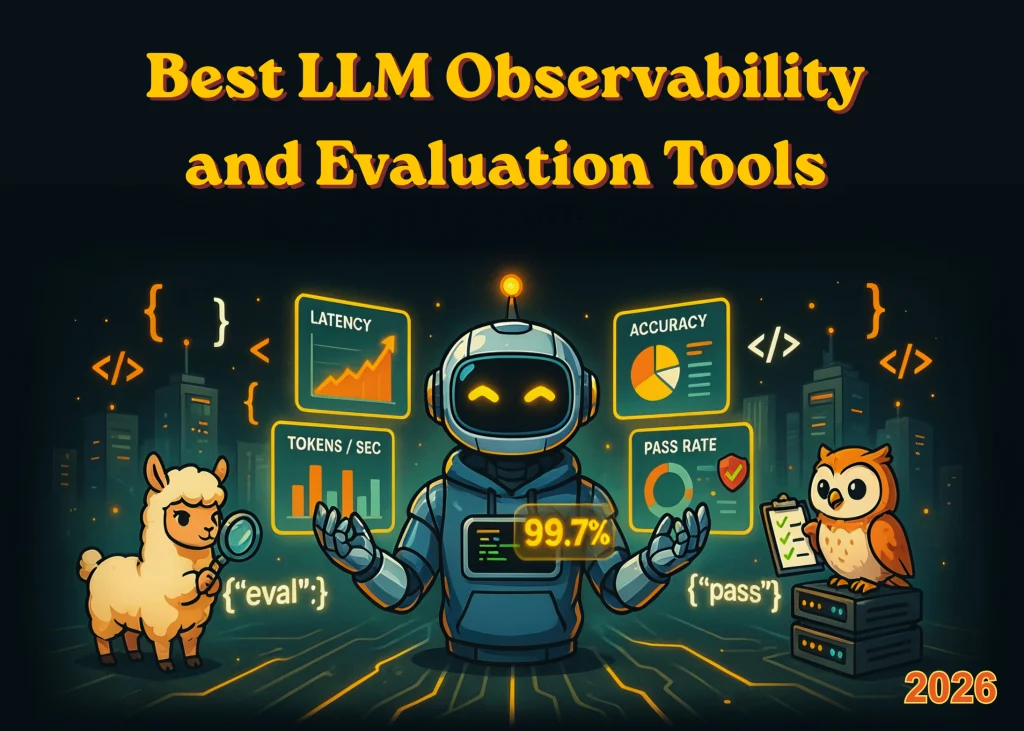
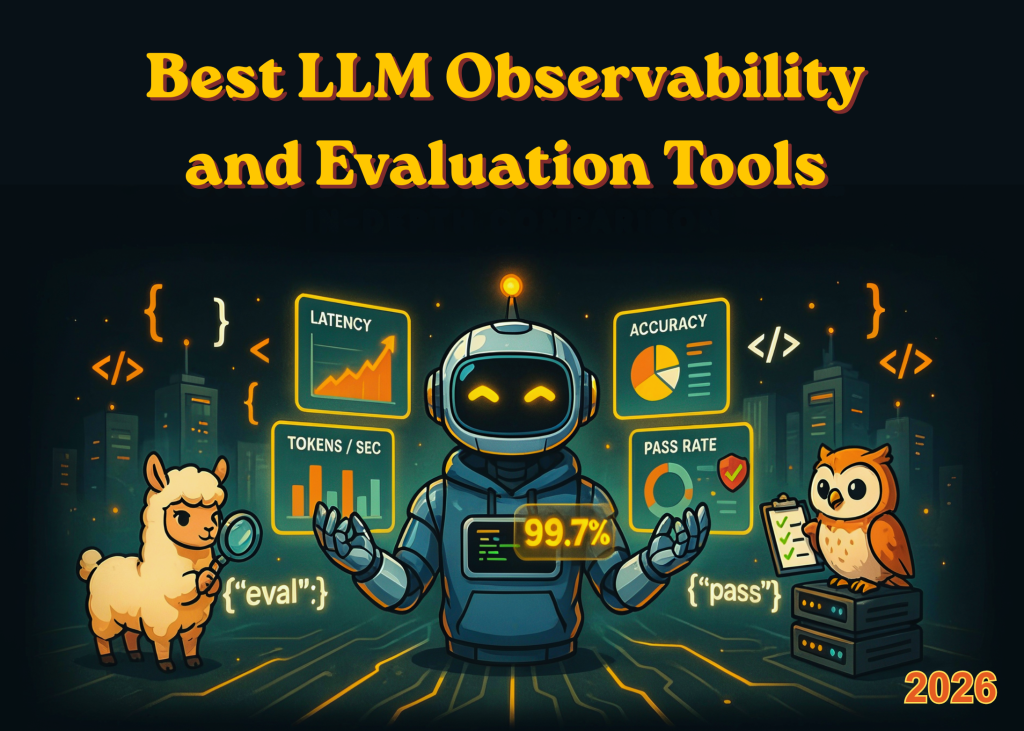
The landscape of software engineering has undergone a fundamental transformation as Large Language Model (LLM) applications move from experimental prototypes to mission-critical production assets. Unlike traditional deterministic software, where a specific input consistently yields a predictable output, LLM-based systems introduce a layer of semantic unpredictability. A single prompt can generate varied results across different sessions; a retrieval-augmented generation (RAG) pipeline can fetch irrelevant documentation despite a successful HTTP 200 status; and autonomous agents can enter recursive loops, consuming thousands of tokens only to provide a confidently incorrect conclusion. In 2026, the industry has recognized that standard Application Performance Monitoring (APM) is no longer sufficient to manage these complexities. This realization has birthed a specialized sector: LLM observability and evaluation platforms.
These platforms have transitioned from niche tools to core infrastructure, providing the necessary visibility into every "span" of an AI pipeline. They track prompts, completions, retrievals, tool executions, token consumption, and associated costs, while simultaneously employing automated evaluators to score the quality of outputs. As organizations scale their AI deployments, the demand for these tools has surged, driven by the need for reliability, cost-efficiency, and safety in an increasingly automated digital economy.
The Technical Imperative: Why Traditional Monitoring Fails
The shift toward specialized LLM observability is rooted in the unique failure modes of generative AI. Traditional APM tools are designed to monitor system health through metrics like CPU usage, memory allocation, and request latency. While these metrics remain relevant, they fail to capture "semantic behavior." In an AI context, a system might be "healthy" from an infrastructure perspective while being "broken" from a functional perspective.
For instance, an agent-based system might successfully call a dozen external tools and return a response within acceptable latency limits. However, if the reasoning trace reveals that the agent misunderstood the user’s intent or hallucinated a fact during the third tool call, the system has failed. LLM observability platforms bridge this gap by recording the full reasoning chain, allowing engineers to pinpoint exactly where a hallucination occurred or where a retrieval step failed to provide the necessary context.
Market Dynamics and Growth Projections
The economic scale of this shift is reflected in recent market data. According to reports from The Business Research Company, the global LLM observability platform market is valued at approximately $2.69 billion in 2026, a significant increase from $1.97 billion in 2025. This sector is projected to reach $9.26 billion by 2030, representing a robust compound annual growth rate (CAGR) of 36.2%.
Analytical firms like Gartner have further underscored the importance of this category, predicting that by 2028, investments in LLM observability will account for 50% of all Generative AI (GenAI) deployment costs, up from just 15% in early 2026. This surge is attributed to the rising complexity of AI agents. A 2026 survey by LangChain, which polled over 1,300 industry professionals, found that 57% of respondents are now running autonomous agents in production environments. Crucially, nearly 89% of these professionals have implemented some form of observability. However, a gap remains in evaluation: while observability (the recording of data) is widespread, only 52.4% of teams conduct offline evaluations, and a mere 37.3% perform online, real-time evaluations. Quality remains the primary hurdle, with 32% of respondents citing it as the top barrier to full-scale production.
The Drive Toward Standardization: OpenTelemetry and GenAI
A defining characteristic of the 2026 observability market is the move toward vendor-neutral standards. The OpenTelemetry (OTel) GenAI semantic conventions have emerged as the industry standard, defining specific gen_ai.* span attributes for model calls, token usage, and tool executions. This standardization effort, maintained by the Cloud Native Computing Foundation (CNCF), ensures that telemetry data is portable across different platforms.
Major cloud providers, including AWS, Azure, and Google Cloud, along with established monitoring giants like Datadog, have adopted these conventions. The standardization has also extended to coding agents and SDKs. GitHub Copilot’s agent telemetry now exposes OTel-compliant span trees, and Anthropic’s Claude Code provides opt-in OpenTelemetry tracing. For enterprises, OTel compatibility has shifted from a "nice-to-have" feature to a mandatory requirement, preventing vendor lock-in and allowing teams to swap observability backends without re-instrumenting their entire codebase.
Categorizing the Major Players
The 2026 market for LLM observability is structured into four distinct camps: AI-native open-source platforms, commercial AI-native suites, ML-platform extensions, and traditional APM/Gateway integrations. Each category serves different organizational needs, from data-residency-sensitive startups to large-scale enterprises with existing monitoring stacks.
1. Langfuse: The Open-Source Standard
Langfuse has established itself as a leader in the open-source space. Known for its MIT-licensed core, it provides a framework-agnostic platform that excels in tracing and evaluation. In March 2026, Langfuse shipped an observations-centric data model that significantly improved dashboard performance. The release of Langfuse v4 later in the year reportedly delivered speeds up to 165 times faster than previous iterations.
- Best for: Teams requiring full-featured, self-hostable infrastructure with strict control over data residency.
2. LangSmith: Integrated Agent Engineering
As the commercial arm of the LangChain ecosystem, LangSmith is designed for teams building complex agents with LangGraph. It provides a deep, integrated experience where tracing requires almost no configuration. Its "Polly" AI assistant helps engineers summarize massive traces, while its engine can cluster production failures to identify root causes automatically.
- Best for: Organizations heavily invested in the LangChain framework that require a unified environment for observability, evals, and deployment.
3. Braintrust: The Evaluation-First Approach
Braintrust prioritizes the evaluation workflow above all else. With a purpose-built database called Brainstore, it can query millions of complex traces efficiently. Its unique "Loop" AI agent helps teams generate scorers and build datasets automatically, ensuring that every code change is validated against production-grade benchmarks before deployment.
- Best for: Product-focused teams that view continuous evaluation and CI/CD integration as the core of their development lifecycle.
4. Arize AX and Phoenix: Deep ML Rigor
Arize AI caters to the more traditional machine learning engineering crowd, offering Arize AX for enterprises and the source-available Phoenix for developers. Their platforms are noted for deep evaluation primitives, including RAG-specific quality plots and drift detection. In 2026, Arize expanded its capabilities to include audio evaluation for the growing voice-AI market.
- Best for: Regulated industries and accuracy-critical workloads that require rigorous drift detection and support for multi-modal applications.
5. MLflow: Data Ownership and Open Standards
An Apache 2.0-licensed project backed by Databricks, MLflow has evolved to include native agent tracing. It emphasizes data ownership, allowing users to export traces in OTel GenAI formats. It also includes advanced prompt optimization algorithms like GEPA and MIPRO, which use evaluation results to refine prompts automatically.
- Best for: Teams already utilizing the Databricks ecosystem or those who prioritize complete ownership of their trace data.
6. Weights & Biases Weave: Lineage and Research
W&B Weave brings the power of experiment tracking to production LLM traces. Its primary advantage is lineage; it allows developers to compare production agent behavior directly against the model versions and training datasets managed within the broader W&B platform.
- Best for: ML research teams transitioning from model training to production deployment who want a single pane of glass for the entire lifecycle.
7. Helicone: The Gateway Solution
Helicone operates as an AI gateway, providing observability through a simple proxy integration. By routing traffic through Helicone, teams gain instant visibility into costs and latencies without instrumenting individual services. It also offers response caching to reduce API overhead.
- Best for: Rapidly growing startups that need immediate cost visibility and basic monitoring with minimal setup.
8. Datadog LLM Observability: The Enterprise APM Extension
For large enterprises already standardized on Datadog, the LLM Observability module provides a way to correlate AI behavior with broader infrastructure health. It integrates token usage and security signals (such as prompt-injection attempts) directly into the existing Datadog dashboard, alongside logs and system metrics.
- Best for: Large-scale organizations that prioritize cross-stack correlation and incident management within a single, unified platform.
Chronology of Key Milestones in 2026
The year 2026 has been marked by several pivotal moments in the observability sector:
- February 2026: Braintrust secures $80 million in Series B funding, signaling strong investor confidence in the "evaluation-as-a-service" model.
- March 2026: Langfuse releases its observations-centric data model, setting a new benchmark for dashboard performance in open-source tools.
- May 2026: Arize AI announces a $70 million Series C, specifically targeting the problem of "making agents work in the real world" through enhanced evaluation.
- August 2026: The OpenTelemetry GenAI registry enters active development, solidifying the industry’s commitment to standardized telemetry.
Broader Impact and Industry Implications
The maturation of LLM observability signifies a broader shift in the AI industry from "hype" to "utility." As the Business Research Company and Gartner data suggest, the focus has moved from merely building models to ensuring those models perform reliably and cost-effectively in production.
The implications are twofold. First, the barrier to entry for complex AI agents is lowering, as observability tools provide the safety net needed to deploy autonomous systems. Second, the rise of automated evaluators—LLMs scoring other LLMs—is creating a new paradigm for quality assurance. While this raises questions about "judge bias," it is currently the only scalable way to monitor the billions of semantic interactions occurring daily.
In conclusion, the 2026 landscape of LLM observability is defined by a move toward standardization, a surge in market value, and a diversification of tools. Whether through open-source leaders like Langfuse, integrated suites like LangSmith, or enterprise extensions like Datadog, the ability to trace, evaluate, and monitor AI in real-time has become the cornerstone of the modern technology stack. For any organization serious about AI, observability is no longer an optional add-on; it is the fundamental infrastructure upon which the future of autonomous software is being built.