


The landscape of the automotive secondary market has undergone a radical transformation over the past decade, shifting from traditional print classifieds and dedicated auction sites to integrated social media platforms. Among these, Facebook Marketplace has emerged as a dominant force, particularly within the United Kingdom and Europe, fundamentally altering how enthusiasts and casual buyers navigate the procurement of used vehicles. This platform, initially launched in 2016 as a peer-to-peer exchange for household items, has evolved into a high-volume hub for automotive transactions, ranging from low-cost "bangers" to historically significant racing machinery. For industry professionals, including automotive journalists and photographers who frequently travel internationally, the platform serves as a real-time window into regional car cultures and local economic conditions.
The Shift from Traditional Auctions to Social Commerce
For years, eBay Motors and dedicated classified sites like AutoTrader held a virtual monopoly on the digital used car market. However, the introduction of Facebook Marketplace introduced a zero-fee model that appealed to private sellers looking to offload vehicles quickly without the overhead of listing fees or commission percentages. This transition has been particularly noticeable in the "budget" sector—vehicles priced under £2,000. In this segment, the platform has largely replaced traditional forums and regional newspapers.
The appeal of social commerce in the automotive sector lies in its accessibility and the integration of user profiles. Unlike anonymous listings on legacy sites, Marketplace allows potential buyers to view the public profiles of sellers, providing a layer of informal vetting. While not a substitute for professional inspections, this social transparency offers a cursory glance into the seller’s history and legitimacy, which has become a critical component of the "digital forensics" required in modern peer-to-peer car buying.
The Economics of the Low-Value Vehicle Market
In the context of the UK automotive market, the "banger" economy—defined by the sale of aging but functional vehicles—relies heavily on the Ministry of Transport (MOT) certification. For vehicles such as the Renault Clio or the Vauxhall Tigra, the remaining duration of an MOT certificate often dictates the majority of the vehicle’s market value. A vehicle priced at £500 with seven months of MOT is viewed as a high-utility asset, providing affordable mobility with a known expiration date.
Data from the Society of Motor Manufacturers and Traders (SMMT) indicates that while the new car market fluctuates based on supply chain issues and interest rates, the used car market remains robust, often exceeding seven million transactions annually in the UK alone. A significant portion of these private sales now occurs via social media platforms. The "bang for your buck" ratio found on these platforms is high, though it carries inherent risks. Technical failures, such as "big end" bearing failure or significant chassis corrosion, are common hazards that buyers must navigate using a combination of mechanical knowledge and digital research tools.
Digital Due Diligence: The Art and Science of Procurement
The process of purchasing a vehicle through social media has evolved into a specialized skill set. Professional buyers and enthusiasts now utilize a multi-step verification process to mitigate the risks associated with private sales:
- Seller Profiling: Analyzing the age and activity level of a Facebook account to identify "throwaway" profiles often used by unscrupulous dealers or scammers.
- MOT History Integration: Cross-referencing license plates with the Driver and Vehicle Standards Agency (DVSA) database. This allows buyers to track a vehicle’s history of failures, advisories, and mileage consistency.
- Regional Market Analysis: Utilizing the platform’s geolocation features to compare prices across different territories, often discovering that specific models carry lower premiums in rural areas compared to urban centers.
This investigative approach was instrumental in the acquisition of notable models like the Mazda MX-5 and Toyota MR2, both of which have transitioned from affordable used cars to "modern classics." The procurement of such vehicles now requires a forensic level of scrutiny to ensure that structural integrity—specifically regarding rust in sills and wheel arches—has not been compromised.
From Commuters to Collectibles: A Diverse Inventory
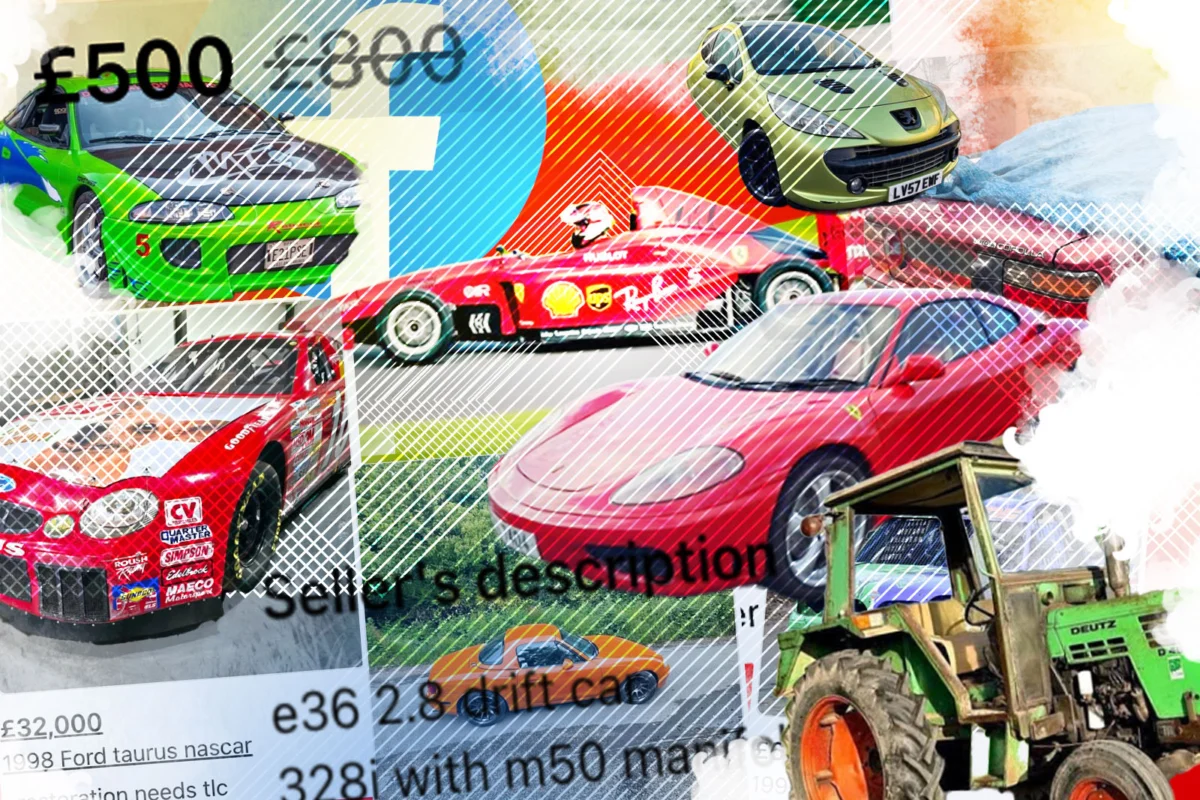
The diversity of inventory on Facebook Marketplace is one of its most striking features, often housing items that would be considered too niche for traditional showrooms. The platform’s algorithm presents a surreal cross-section of automotive history, where everyday hatchbacks sit alongside specialized racing equipment and industrial machinery.
Recent listings have highlighted the breadth of this digital catalog. For instance, an Irmscher-tuned Opel Nova represents the "max power" tuning era of the late 1990s, while the appearance of a rolling shell from a mid-2000s NASCAR Chevrolet demonstrates the platform’s reach into professional motorsport circles. Perhaps most significant was the recent listing of Roger Clark’s ex-works Ford Fiesta Mk1 rally car. Driven by the legendary British rally driver during the 1979 season, the vehicle carried an asking price of £80,000, illustrating that high-value, historically significant assets are now being traded in the same digital space as household furniture.
Furthermore, the platform serves as a repository for the unusual and the "ugly." This includes heavily customized vehicles, such as a Peugeot 406 Coupé featuring extensive superhero-themed airbrushing or a Vauxhall Tigra wrapped in animal-print patterns. These listings highlight a subset of car culture where the cost of modifications often exceeds the market value of the base vehicle, creating a unique challenge for sellers seeking a specific type of enthusiast buyer.
International Perspectives and Niche Markets
The global nature of Facebook allows users to observe the automotive trends of different nations instantly. In Eastern Europe, for example, the inventory differs significantly from the UK, with a higher prevalence of Soviet-era machinery. Listings for the Kirovets T150K, a heavy-duty tractor manufactured in the Soviet Union, offer a glimpse into the agricultural and industrial history of the region. Similarly, the presence of Citroën Ami 8s in varying states of decay reflects the enduring legacy of French automotive design and the challenges of preserving air-cooled classics in humid climates.
Risks, Challenges, and Regulatory Implications
Despite its utility, Facebook Marketplace is frequently described by users as a "wretched hive," a reference to the lack of formal regulation and the prevalence of "time-wasters" and fraudulent listings. Unlike established dealerships, private sales on the platform offer little to no consumer protection under the Sale of Goods Act, provided the seller has not misrepresented the vehicle.
The rise of social media car sales has also caught the attention of tax authorities and regulatory bodies. In the UK, HM Revenue and Customs (HMRC) has increased its scrutiny of "curbstoning"—the practice of professional dealers posing as private individuals to avoid taxes and consumer protection laws. The ease of listing on Marketplace has inadvertently facilitated this practice, leading to calls for stricter verification processes for high-frequency sellers.
Chronology of Digital Automotive Sales Evolution
- Pre-2000s: Local newspapers and printed magazines like Auto Trader and Exchange and Mart dominate the market.
- 1995-2005: The rise of eBay and specialized online forums. The "Buy It Now" and auction formats introduce price transparency.
- 2006-2015: Dedicated mobile apps for classifieds emerge. AutoTrader moves to a digital-first model, eventually ceasing print publication in 2013.
- 2016: Facebook Marketplace launches, initially focusing on local community trading.
- 2018-Present: Marketplace becomes a primary destination for the "banger" market and enthusiast project cars, leveraging algorithm-driven feeds to connect sellers with specific niches.
The Future of Peer-to-Peer Automotive Transactions
The trajectory of the used car market suggests that social media integration will only deepen. As younger, "digital-native" generations become the primary consumers in the secondary market, the expectation for instant communication and social verification will grow. However, the platform must address the "ugly" side of its ecosystem—the scams and the lack of standardized vehicle history reporting—to maintain its position against emerging competitors who offer more secure, blockchain-verified transaction methods.
For the motoring enthusiast and the professional alike, Facebook Marketplace remains a double-edged sword. It is a place where a rally-spec Rover 213 can be found alongside a rust-eaten Citroën, and where a bargain of the century might be just one click away from a mechanical catastrophe. As long as the "art and science" of the digital search continues to yield results, the platform will remain the primary refuge for those seeking the unconventional, the affordable, and the historically significant in the world of motoring.
The platform’s impact on car culture is undeniable. It has democratized the sale of rare parts and project cars, ensuring that vehicles which might have once been scrapped are instead found by enthusiasts capable of restoring them. While it may lack the polish of a high-end auction house, its raw, unfiltered nature provides a more accurate reflection of the global automotive landscape than any showroom ever could. In the end, the success of a Marketplace transaction relies on the diligence of the buyer, the honesty of the seller, and a healthy dose of mechanical intuition.