
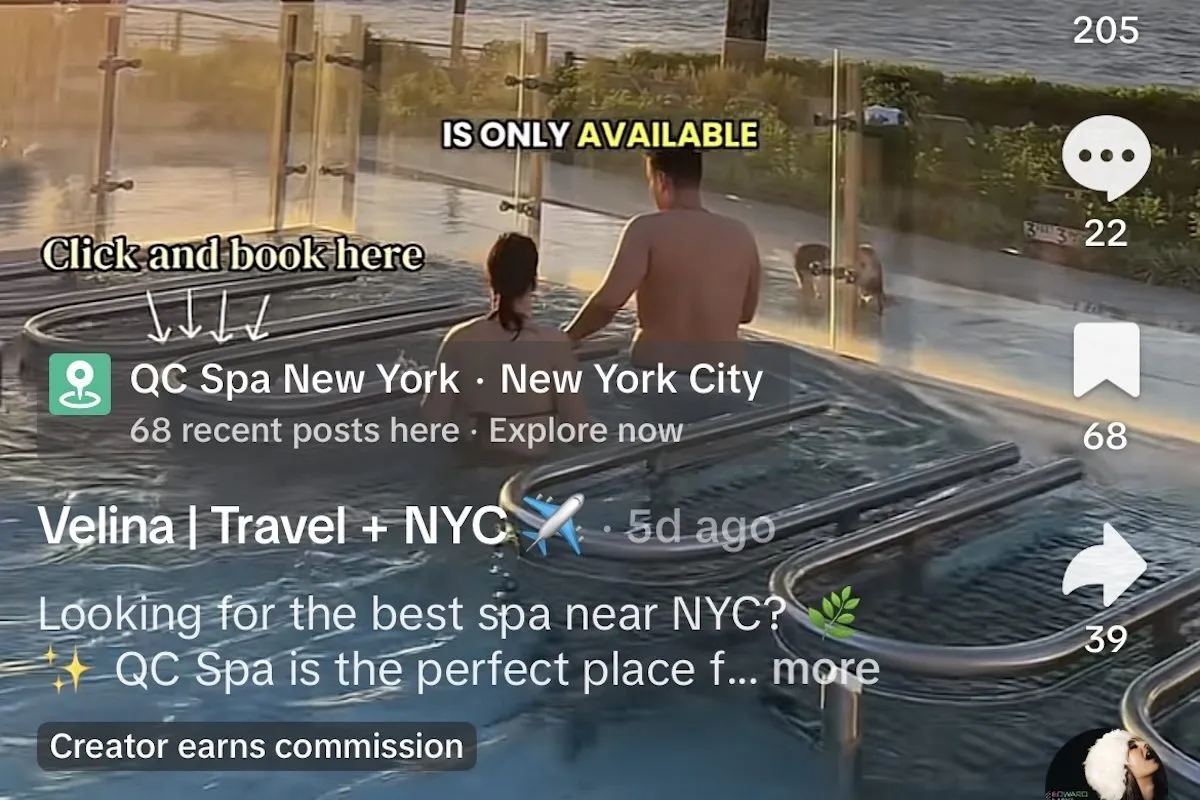
In an era where digital influence is often measured by million-strong follower counts and global celebrity status, a significant shift is occurring within the travel and tourism marketing landscape. The emergence of the "micro-creator"—individuals with relatively small but highly engaged audiences—is challenging traditional advertising models and proving that niche authenticity can drive more direct revenue than broad-spectrum fame. Velina Bloom, a New York City-based content creator with just over 6,000 followers, has become a primary example of this phenomenon, demonstrating how a specialized audience can translate into substantial booking figures for hotels, attractions, and tour operators.
While Bloom’s follower count might place her in the lower tiers of social media influence by traditional metrics, her conversion rates tell a different story. In the high-stakes world of travel affiliate marketing, where platforms like TikTok and Instagram serve as the new front doors for travel discovery, Bloom’s content has outperformed creators with exponentially larger reaches. Her success is not merely a product of viral luck but is rooted in the strategic integration of social commerce tools and a growing consumer preference for relatable, high-utility travel advice.
The Micro-Creator Advantage: High Conversion in Niche Markets
The traditional influencer model often prioritizes brand awareness, where companies pay for exposure to a massive audience in the hopes of maintaining "top-of-mind" status. However, the travel industry is increasingly pivoting toward performance-based marketing. In this model, creators like Bloom are rewarded not for their total number of followers, but for the actual transactions they facilitate.
Bloom’s recent performance data highlights the efficacy of this approach. A video she produced in May, featuring a helicopter tour over Manhattan, garnered more than 800,000 views—over 130 times her actual follower count. Similarly, a March video showcasing the immersive art attraction Meow Wolf in Texas achieved comparable viral success. These videos are not merely aspirational; they are transactional. By utilizing affiliate links and promotional codes—such as a 10% discount for tickets purchased through TikTok—Bloom provides a frictionless path to purchase.
The financial implications are significant. Bloom reported that a single post regarding a Midtown Manhattan hotel drove approximately $30,000 in sales for the property within a 60-day window. Under a standard 5% commission structure, a micro-creator can generate a substantial secondary income from a single piece of content, while the property benefits from a high-return investment that only costs them a fraction of the total booking value.
The Infrastructure of Social Travel: From Discovery to Booking
The success of micro-creators is inextricably linked to the technological evolution of Online Travel Agencies (OTAs) and social media platforms. Companies like Viator and GetYourGuide have aggressively expanded their affiliate programs, allowing creators to generate unique tracking links that can be embedded directly into social media bios or video captions.
This "one-tap" booking ecosystem eliminates the traditional hurdles of travel planning. Historically, a traveler might see a destination in a magazine or on a television show, then search for it on Google, compare prices on multiple websites, and eventually book. Today, that entire funnel—from inspiration to transaction—can happen within seconds on a mobile device.
TikTok, in particular, has leaned into this trend. The platform’s algorithm is designed to surface content based on user interest rather than follower networks. This allows a creator with 6,000 followers to reach nearly a million people if the content is deemed relevant to a specific "travel-hungry" demographic. When combined with native booking integrations, TikTok transforms from a video-sharing app into a powerful e-commerce engine for the global tourism sector.
A Chronology of the Influencer Evolution
To understand the current dominance of the micro-creator, one must look at the timeline of digital travel marketing:
- The Era of the Travel Blogger (2004–2012): Early digital influence was centered on long-form written content and SEO. Travel bloggers focused on detailed itineraries and photography, monetizing through display ads and early-stage sponsored posts.
- The Instagram "Aspirational" Peak (2013–2019): The rise of Instagram shifted the focus to highly curated, often unrealistic imagery. This era saw the birth of the "Macro-Influencer," where million-plus follower counts were the gold standard. Travel became about the "aesthetic," and brands paid high flat fees for a single post.
- The Authenticity Pivot (2020–2022): During the global pandemic, travel content shifted toward domestic "hidden gems" and practical advice. Consumers began to tire of overly polished imagery, seeking instead the opinions of "real people" who provided honest reviews.
- The Social Commerce Integration (2023–Present): The current era is defined by the "Creator-to-Consumer" (C2C) pipeline. Platforms have integrated shopping and booking features directly into the interface, and the industry has moved toward a performance-commission model.
Supporting Data: The Economic Impact of the Creator Economy
The shift toward micro-influencers is backed by broader industry data. According to marketing research firms, micro-influencers (defined as those with 1,000 to 100,000 followers) often boast engagement rates up to 60% higher than their macro counterparts. In the travel sector specifically, a survey by Morning Consult revealed that nearly 45% of Gen Z and Millennial travelers have booked a trip or activity based on a social media recommendation.
Furthermore, the "State of Influencer Marketing 2024" report suggests that the global influencer marketing market is expected to reach $24 billion by the end of the year. A growing portion of this spend is being diverted from traditional celebrity endorsements to "niche experts" who command higher levels of trust. For OTAs like Viator, these creators serve as a decentralized sales force. Instead of the company spending millions on broad Google Search ads, they distribute smaller payments across thousands of creators who bring in verified bookings.
Industry Perspectives and Market Analysis
Industry analysts suggest that the rise of creators like Velina Bloom represents a democratization of travel marketing. "The barrier to entry for travel marketing has been lowered," says an industry analyst specializing in travel technology. "You no longer need a production crew or a massive marketing budget. You need a smartphone, a unique perspective, and an understanding of the affiliate ecosystem."
From the perspective of hotels and attractions, the micro-creator model offers a lower-risk alternative to traditional advertising. When a hotel partners with a micro-creator on a commission basis, they are essentially only paying for results. This "pay-per-stay" or "pay-per-ticket" model ensures that marketing budgets are used efficiently, a critical factor in an industry still recovering from the economic fluctuations of the early 2020s.
However, the trend also presents challenges. The sheer volume of affiliate content can lead to "recommendation fatigue" among users. There is also the issue of transparency; while Bloom is open about her commissions, the line between an objective review and a paid promotion can sometimes blur, leading to regulatory scrutiny from bodies like the Federal Trade Commission (FTC) in the United States.
Broader Implications for the Future of Travel
The success of the micro-creator model signals a broader transformation in how travel products are packaged and sold. We are moving toward a future where "social proof" is the primary currency of the travel industry.
1. Personalization at Scale:
As algorithms become more sophisticated, travelers will increasingly see content tailored to their specific interests—whether that is "solo female travel in NYC" or "family-friendly attractions in Texas." Micro-creators are the primary providers of this hyper-personalized content, filling gaps that large-scale brand campaigns cannot reach.
2. The Decline of Traditional Search:
For younger demographics, TikTok and Instagram are replacing Google as the primary search engines for travel. A "search" for a hotel is now more likely to involve watching a 15-second video of the room and amenities rather than reading a 500-word text review on a traditional travel site.
3. The Professionalization of the Side Gig:
Bloom, who maintains her social media presence as a "side gig" and maintains a degree of privacy by using her social handle, represents a new class of professional. These individuals are not necessarily seeking fame; they are seeking a sustainable business model based on expertise and audience trust.
4. Pressure on Traditional OTAs:
While Viator and GetYourGuide are currently benefiting from this trend, the rise of direct social commerce may eventually lead social platforms to build their own internal booking engines, potentially cutting out the middleman OTAs altogether.
Conclusion
The story of Velina Bloom is more than a narrative about a single successful creator; it is a case study in the changing mechanics of the global tourism economy. By leveraging the power of micro-influence and the efficiency of affiliate marketing, Bloom has demonstrated that in the modern digital landscape, the size of one’s audience is often less important than the depth of one’s impact. As travel brands continue to seek more efficient ways to reach consumers, the micro-creator is poised to remain a central figure in the industry’s ongoing digital evolution. For the traveler, this means a future of more diverse, authentic, and easily accessible travel inspiration—one tap at a time.