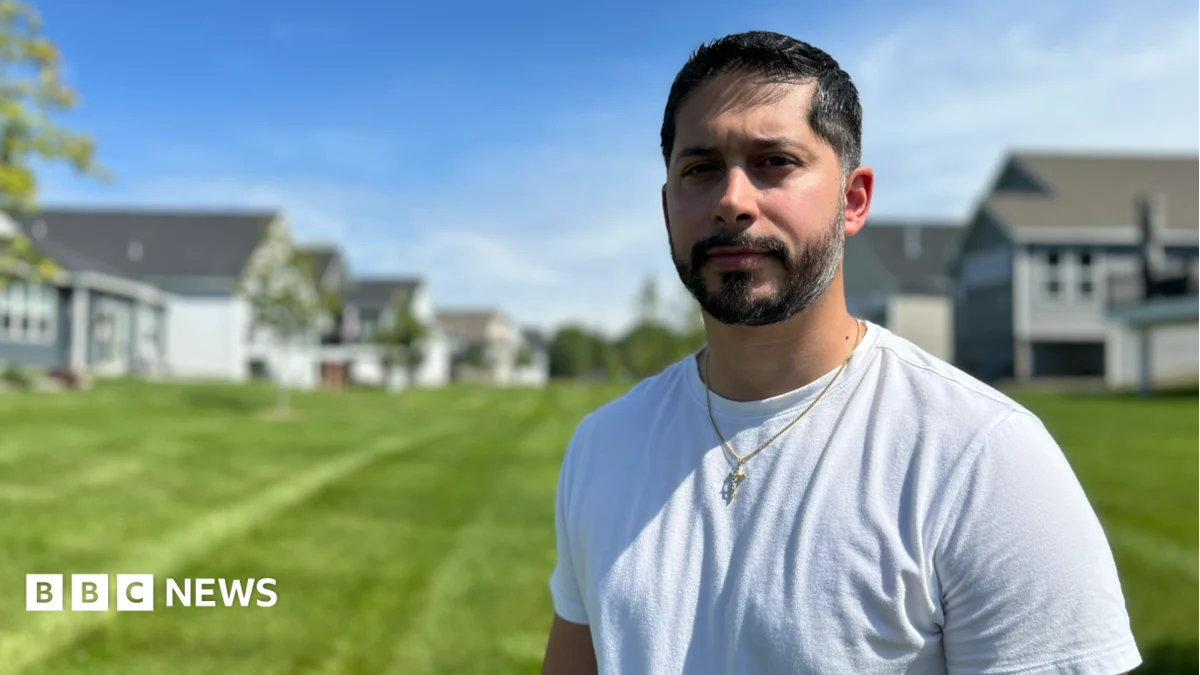
In September 2025, Gerald Bourguet, a devoted professional men’s basketball writer, appeared to have orchestrated the perfect symphony of life. He and his wife had recently purchased a home complete with a swimming pool, their family had expanded with the joyous arrival of a baby boy, and his career was flourishing, allowing him to dedicate himself full-time to his passion. This idyllic existence, however, was abruptly shattered following a series of online posts he published mere hours after the fatal shooting of conservative activist Charlie Kirk on September 10, 2025, during a speaking engagement at Utah Valley University. Bourguet’s critical remarks, which described Kirk as an "evil man" who had devoted his life to "hateful causes" and chastised his supporters for their perceived silence on school shootings, ignited a firestorm that would irrevocably alter his life and career trajectory, serving as a stark illustration of the volatile intersection between free speech, public opinion, and professional accountability in an increasingly polarized society.
The Catalyst: Charlie Kirk’s Assassination and a Nation Divided
Charlie Kirk, the charismatic founder of the Christian youth organization Turning Point USA, was a profoundly divisive figure in American politics. To his conservative adherents, he was a visionary leader with a unique ability to articulate and popularize right-wing ideas among young people, cultivating a robust movement that energized a new generation of political activists. His conferences, rallies, and media appearances were hallmarks of conservative youth engagement. Conversely, for his detractors, Kirk’s outspoken commentary on a broad spectrum of sensitive issues—including race relations, immigration policy, gun control legislation, and gender identity—was not only provocative but deeply offensive, often accused of fostering an environment of intolerance and division. His assassination sent shockwaves across the political spectrum, immediately intensifying an already fraught national discourse.
The circumstances of Kirk’s death—shot while addressing students on a university campus—added a layer of tragic urgency to the unfolding events. In the immediate hours and days that followed, the nation grappled with profound grief, anger, and a desperate search for meaning, amplified by the pervasive reach of social media. While many mourned his loss and condemned the violence, others, like Bourguet, seized the moment to articulate their long-held criticisms of Kirk’s public persona and political agenda. Bourguet, reflecting on his decision, told the BBC, "I had seen the way that people were talking about this person – kind of eulogizing him and lionizing him and it bothered me based on a lot of the things that he had said." This sentiment, shared by others, highlighted the deep ideological chasm that defined Kirk’s public life and continued to resonate even in his death.
The Immediate Aftermath: Viral Outcry and Calls for Retribution
Bourguet’s posts, containing phrases such as describing Kirk as an "evil man" and suggesting his life’s work was dedicated to "hateful causes," quickly went viral. Screenshots circulated rapidly across social media platforms, drawing immediate and intense backlash. Within a short period, Bourguet found himself terminated from his position at PHNX Sports. The consequences extended far beyond professional loss; his home address was exposed online, and he began receiving a torrent of threatening text messages. Fearing for the safety of their four-month-old infant, the family made the harrowing decision to flee their home state. Months later, they returned only to sell their house, permanently relocating to an undisclosed location in an attempt to rebuild their lives in anonymity. PHNX Sports, Bourguet’s former employer, did not respond to the BBC’s request for comment regarding the incident.
Bourguet’s experience was not isolated. In the highly charged atmosphere following Kirk’s death, hundreds of individuals across the country faced similar repercussions, either being fired or disciplined for comments made online. Social media became a battleground, with users rushing to either laud or denounce the controversial activist. Critics of the online posts, particularly those published so soon after Kirk’s death, decried them as tasteless and disrespectful. More strident voices called for swift and decisive action, arguing that such comments were not merely callous or mocking but could potentially incite further acts of violence.
Influential figures on the political right were quick to mobilize. Laura Loomer, a prominent right-wing commentator boasting nearly two million followers on X (formerly Twitter), issued a stark warning to Kirk’s critics: "prepare to have your whole future professional aspirations ruined." The pressure for punishment also resonated at the highest echelons of US government. Vice-President JD Vance, speaking days after the assassination, urged citizens to actively condemn Kirk’s detractors. "When you see someone celebrating Charlie’s murder, call them out," Vance declared, adding, "And hell, call their employer." White House spokesperson Davis Ingle reinforced this stance, telling the BBC, "Anyone who engages in or endorses political violence or assassination culture must be condemned in the harshest terms possible."
However, this conservative push for accountability immediately drew accusations of hypocrisy from critics on the left. Many pointed out that conservative leaders had frequently decried "cancel culture"—the phenomenon where individuals expressing controversial opinions face severe professional and social consequences. They argued that there was a crucial distinction between offering criticism of Kirk’s public actions and celebrating his death. Jordan Pace, a Republican member of the South Carolina House of Representatives, offered a nuanced perspective to the BBC, stating, "Cancel culture can be good, it’s bad when it’s applied in the wrong ways." He continued, "If you are someone who celebrates political assassinations and the murder of an innocent man with two young children in a way that many people did, then yeah, that’s an appropriate way for society to function, to shame those people." Pace himself had actively championed disciplinary actions against university employees in his state, even calling for defunding institutions that failed to act, a stance that earned him a re-share from then-US President Donald Trump.
Widespread Repercussions: A National Trend of Disciplinary Actions
In the wake of this intense public and political pressure, employers—both in the private and public sectors—responded with remarkable swiftness. While precise, reliable figures on the total number of individuals fired or disciplined remain elusive, a Reuters tally conducted in November 2025 (approximately two months after Kirk’s death) identified over 600 such instances. This figure is likely an undercount, as many cases, particularly those involving less prominent individuals or smaller organizations, may not have garnered national or even local press attention.
The specific actions that led to these disciplinary measures varied widely, highlighting the broad interpretation of what constituted inappropriate commentary or behavior. In Tennessee, anthropology professor Tamar Shirinian faced suspension and subsequent termination from the University of Tennessee after posting a Facebook comment stating that "the world is better off" without Kirk. A Delta Air Lines flight attendant was fired for a "good riddance" post in response to the killing. An employee at an Office Depot supply store lost their job for refusing to serve a customer who sought to print flyers for a Kirk vigil. Delta Air Lines declined to comment on the matter, and Office Depot did not respond to requests for comment.
Even individuals who did not make direct comments about Kirk or his death found themselves targeted. Darren Michael, a theatre professor at Austin Peay State University in Tennessee, was fired after merely posting a screenshot of a 2023 news article. The article detailed Kirk’s controversial stance on gun control, quoting him as saying that protecting citizens’ rights to own guns was a worthy pursuit, even if it led to some gun-related deaths annually. Similarly, Brittney Brown, a biologist with Florida’s Fish and Wildlife Conservation Commission, was terminated after reposting a meme that satirized Kirk’s position on gun violence in the context of his own shooting. Brown, recounting her experience to the BBC, expressed profound shock: "I was absolutely gutted… It was like the entire world just completely flipped on its head in a moment."
These numerous cases collectively painted a picture of a nation grappling with the boundaries of free expression in the digital age, particularly when confronted with a high-profile, politically charged assassination. The rapid and severe consequences underscored the power of online mobs and the pressure employers faced to distance themselves from perceived controversial opinions, even if those opinions were not directly related to the deceased or were shared in a non-celebratory manner.
The Legal Battleground: Free Speech, At-Will Employment, and Settlements
In the year since Kirk’s assassination, the wave of firings and disciplinary actions has translated into a significant number of legal challenges. Dozens of lawsuits have been filed across the country by affected individuals, arguing that their terminations violated their rights to free speech. These legal battles have, in some instances, led to substantial financial settlements.
Brittney Brown, the Florida biologist, reached a settlement agreement of $485,000 (£355,000), a sum approximately 12 times her annual salary. Darren Michael, the Tennessee theatre professor, was not only reinstated by Austin Peay State University but also received a $500,000 settlement in January 2026 to resolve his legal claims. The university, like many other institutions facing similar lawsuits, did not respond to requests for comment.
The largest settlement reviewed by the BBC involved anthropologist Tamar Shirinian, who received $1.9 million from the University of Tennessee to resolve her lawsuit stemming from her "world is better off" comment. As part of the agreement, Shirinian was not reinstated and committed not to reapply for future positions at the university. In another notable case, an arbitrator ordered The Washington Post to rehire, with full back pay, opinion journalist Karen Attiah, who had been fired for online posts including a statement that she would not engage in "performative mourning for a white man that espoused violence." Several other lawsuits related to Kirk’s death remain pending, indicating a continued legal reckoning.
A critical distinction in these legal outcomes often lies in the employment status of the individuals involved. Most of the successful legal actions have been pursued by employees of government institutions or unionized workers, who generally benefit from stronger free-speech protections under the First Amendment (for public employees) or collective bargaining agreements. In contrast, the majority of private sector employees in the United States operate under "at-will" contracts, which allow employers to terminate employment for almost any reason, or no reason at all, provided it is not discriminatory or in violation of specific public policy exceptions. This distinction significantly limits the legal recourse available to private sector employees like Gerald Bourguet.
Even for those who have secured significant legal victories, the experience has been far from a complete triumph. "All I wanted was my job back," biologist Brittney Brown lamented. She questioned the public cost, adding, "How much taxpayer money did they waste on this when I barely made $40,000 a year? So no, it does not feel like justice." Tamar Shirinian, despite her substantial settlement, also initially sought reinstatement. She ultimately accepted the financial offer, recognizing the potentially lengthy and arduous nature of a protracted legal battle. "I took a settlement because this allows me to move on with my life," she explained to the BBC. While she expressed a small regret about not having her "day in court," she acknowledged that "the number of the settlement actually speaks to that anyway." The University of Tennessee and Florida’s Fish and Wildlife Conservation Commission, like many other implicated entities, did not provide comments to the BBC.
Lingering Impact and Unresolved Questions
A year after the tumultuous events, the profound personal and professional costs continue to weigh heavily on those affected. Gerald Bourguet, as an at-will employee of a private company, faces slim prospects of prevailing in a lawsuit challenging his dismissal. He revealed that he has struggled immensely to find new employment. Despite relocating to a state with a professional basketball team, he believes the public ordeal has rendered him unemployable within the relatively small and interconnected world of sports journalism. In an attempt to forge a new path, he has launched his own podcast, though he harbors doubts about its ability to generate sufficient income to cover his family’s expenses. "I have accepted that that life is over and that I need to start a new one," Bourguet stated, even considering the drastic step of leaving the country.
Despite the immense upheaval, a consistent theme among those who spoke to the BBC, after months of reflection, was a lack of regret regarding their core sentiments. "I have a right to say what I want to say," Brittney Brown asserted, directing her sentiment toward her former employer: "They are the ones who should have the regrets, not me." Tamar Shirinian, while having apologized to the university for her "emotional outburst" and expressing regret for the tone of her comment, maintained, "I don’t regret the sentiment, however." She clarified, "the sentiment was that I am not sad. And I refuse to be made to feel like I have to be sad that someone who was so hateful was killed."
Bourguet echoed this sentiment, wrestling with the dichotomy of his convictions and their repercussions. "I don’t regret that line of thinking because I think it’s important to push back on things that are steeped in hatred," he affirmed, referring to Kirk’s political message. His reflection encapsulated the complex emotions of the entire ordeal: "I don’t regret what I said. I don’t regret the way that I said it. I do regret the ripple effects that came from it and the way that they impacted me, my career, my family, and my son."
The events surrounding Charlie Kirk’s assassination and the subsequent crackdown on critical online commentary have illuminated the precarious balance between individual free speech rights and the societal pressures for conformity, particularly in moments of national tragedy and intense political polarization. The cases of Gerald Bourguet, Tamar Shirinian, Brittney Brown, and countless others serve as a potent reminder of the chilling effect such public outcries can have on open discourse, forcing individuals to weigh the profound personal and professional costs against the deeply held conviction to speak their minds. The lasting implications of these events continue to shape the ongoing debate about cancel culture, employer responsibilities, and the evolving landscape of public expression in the digital age.