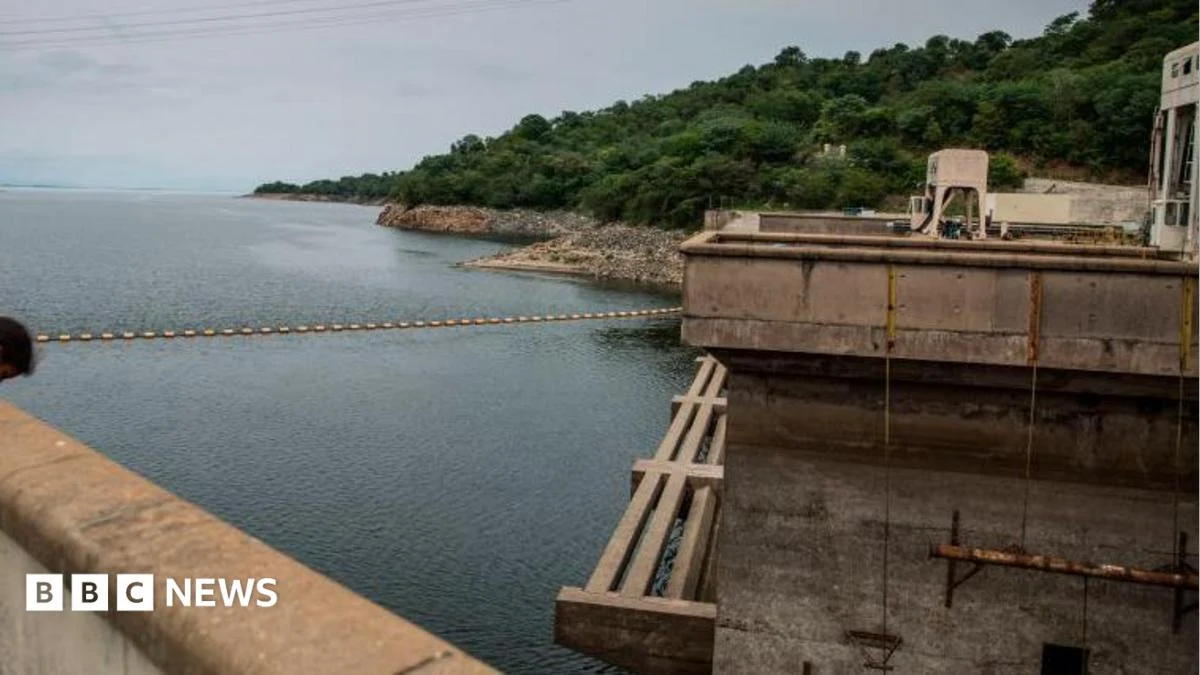
A profound tragedy has unfolded on Lake Kariba, Zimbabwe, where a passenger vessel carrying an estimated 95 to 114 or more individuals has capsized, leading to fears of multiple fatalities. Rescue operations are currently underway, grappling with the vast and often challenging waters of one of Africa’s largest man-made lakes. The incident, which occurred on Tuesday, has cast a somber shadow over the communities reliant on the lake for transport and sustenance, raising urgent questions about maritime safety standards and oversight in the region.
The Catastrophe Unfolds: A Chronology of Events
The ill-fated journey began on Tuesday morning, with the vessel departing from an unspecified point on Lake Kariba’s Zimbabwean side, reportedly bound for Kariba town, a journey typically spanning approximately five hours. Eyewitness accounts, including one relayed to AFP, suggest that the boat set sail amidst deteriorating weather conditions, a critical detail that may prove central to understanding the disaster. While specific details regarding the exact time of departure and the vessel’s origin point remain under investigation, local Member of Parliament, Mutsa Murombedzi, posted a video on X (formerly Twitter) that she identified as the boat at the commencement of its voyage, underscoring the routine nature of such crossings for local residents.
As the day progressed, the weather on Lake Kariba reportedly worsened. Witnesses have speculated that the vessel may have been struck by a powerful wave, a common occurrence during adverse conditions on the vast reservoir, leading to its sudden capsizing and overturning. The exact sequence of events leading to the sinking, including whether there was any distress call or a gradual taking on of water, has yet to be fully established by authorities.
Initial reports of the disaster began to filter through later on Tuesday, prompting the immediate launch of rescue operations. Local communities, often the first responders in such remote incidents, likely mobilized quickly, followed by formal search and rescue teams dispatched by Zimbabwean authorities. However, the sheer size and depth of Lake Kariba, coupled with the potential for rapidly changing weather, present significant challenges for recovery efforts, particularly as darkness fell on Tuesday and continued into Wednesday. Police and the Civil Protection Unit (CPU) have confirmed their involvement in the ongoing operations, with resources being deployed to scour the area where the vessel is believed to have sunk. The immediate focus remains on locating survivors and recovering those lost, though the scale of the disaster suggests a prolonged and arduous effort.
Conflicting Passenger Counts and the Search for Truth
One of the most pressing and concerning aspects of this tragedy is the significant discrepancy in the reported number of individuals onboard the vessel. Initially, police stated that 90 passengers and five crew members, totaling 95 people, were on the capsized boat. However, this figure was quickly challenged by information from Zimbabwe’s Civil Protection Unit, which indicated that registered ticket sales for the voyage showed a higher count of 114 adults. Furthermore, the CPU highlighted the grim possibility that an unknown number of children, typically below ticketing age, might also have been on board, potentially pushing the total count even higher.
This disparity immediately raises serious questions about manifest accuracy, ticketing protocols, and overall regulatory oversight for passenger transport on Lake Kariba. Member of Parliament Mutsa Murombedzi echoed these concerns in her social media post, stating, "We have very hard questions that require honest answers. The officials must release the correct number of people who were onboard." Such discrepancies are often indicative of lax enforcement of capacity regulations, a common issue in many developing regions where economic pressures can sometimes override safety considerations. The true number of victims and survivors can only be accurately determined once all recovery efforts are complete and a thorough investigation into the vessel’s passenger manifest is conducted. This crucial information will be vital not only for providing closure to affected families but also for understanding the full scope of the disaster and implementing necessary preventive measures.
Lake Kariba: A Vital but Treacherous Artery
Lake Kariba, straddling the border between Zimbabwe and Zambia, is a colossal body of water, renowned as one of the world’s largest man-made reservoirs. Formed between 1958 and 1963 with the construction of the Kariba Dam, it stretches approximately 220 kilometers (137 miles) in length and reaches up to 40 kilometers (25 miles) in width, covering an expansive surface area of around 5,580 square kilometers (2,150 sq mi). Its immense volume, estimated at 185 cubic kilometers (44 cu mi), supports not only critical hydroelectric power generation for both Zimbabwe and Zambia but also a diverse ecosystem that underpins significant fishing industries and a burgeoning tourism sector.
However, the lake’s grandeur belies its inherent dangers. Kariba is known for its sudden and often severe weather changes. Calm waters can rapidly transform into treacherous conditions with strong winds whipping up large waves, posing a significant threat to even large vessels. The depth of the lake, reaching up to 97 meters (318 feet) in places, further complicates rescue and recovery operations. For local communities, particularly those in remote areas along its shores, the lake serves as an indispensable transport route, connecting towns and villages that would otherwise be isolated by challenging terrestrial terrain. Ferries and smaller boats are a primary means of movement for people, goods, and livestock, making maritime safety a paramount concern for the thousands who rely on these services daily. The economic reliance on lake transport, coupled with the often-informal nature of some operations, can sometimes lead to compromises in safety standards, including overloading and inadequate maintenance, which are factors frequently implicated in similar maritime disasters across the continent.
Maritime Safety: A Regional Challenge
The sinking on Lake Kariba tragically highlights persistent challenges related to maritime safety in many inland waterways across Africa. Overloading, as suggested by initial reports and the discrepancy in passenger numbers, is a common and dangerous practice. Vessels, often designed for specific capacities, are pushed beyond their limits to maximize profits, particularly on routes with high demand and limited alternative transport options. This significantly compromises stability, especially in adverse weather conditions.
Beyond overloading, other contributing factors to such tragedies often include inadequate vessel maintenance, lack of proper safety equipment (such as life jackets and communication devices), insufficient crew training, and weak enforcement of existing maritime regulations. While Zimbabwe, like many nations, likely has established maritime safety authorities and regulations, the practical implementation and consistent oversight, particularly in vast and remote areas like Lake Kariba, can be challenging. Regular inspections, stringent licensing for vessels and crew, and effective monitoring of weather conditions are crucial but often under-resourced aspects of maritime governance. The absence of comprehensive and real-time manifests, as implied by the conflicting passenger counts, further exacerbates the problem, making it incredibly difficult for emergency services to ascertain the number of people to search for.
Official Response and Ongoing Operations
Zimbabwean authorities, led by the police and the Civil Protection Unit (CPU), have mobilized resources for the search and rescue operation. While specific details on the number of deployed personnel and equipment are yet to be fully released, it is understood that various units, including marine police, local divers, and community volunteers, are participating in the arduous task. The CPU, responsible for coordinating disaster response, would typically oversee the logistics of the operation, including providing necessary equipment, coordinating with local health services, and supporting affected families.
In the immediate aftermath, the focus has been on locating any survivors who may have managed to stay afloat or reach nearby land, as well as recovering bodies. The challenging conditions on the lake, including strong currents, significant depth, and the vast area to cover, make this a protracted and difficult process. Official statements from the police have indicated that more details, including the number of people confirmed deceased and those rescued, will be "released in due course" once verified information becomes available. This measured approach reflects the gravity of the situation and the need for accurate reporting amidst a fluid and emotionally charged environment. The government is expected to issue a more comprehensive statement as the situation evolves, likely including condolences to the bereaved families and assurances of a thorough investigation.
The Human Toll and Community Impact
The human toll of this disaster is immeasurable. Each individual on board represents a family, a community, and a life cut short. The remote communities along Lake Kariba are tightly knit, and such a widespread loss of life will undoubtedly send ripples of grief and despair throughout the region. Many of those traveling would have been traders, fishermen, students, or families visiting relatives, their journeys a routine part of daily life. The reliance on this specific boat service, as highlighted by MP Mutsa Murombedzi, underscores the integral role it played in the socio-economic fabric of these areas.
Beyond the immediate grief, there will be a lasting impact on these communities. Loss of income earners, disruption of trade routes, and the psychological trauma experienced by survivors and rescue workers will be profound. The calls for accountability and transparent investigations from local leaders like Ms. Murombedzi reflect a deep-seated desire for answers and a demand for improved safety measures to prevent future tragedies. This incident will undoubtedly reignite debates about the adequacy of infrastructure and transport options for remote populations, who often have no alternative but to use potentially unsafe means of travel.
Broader Implications and Future Safeguards
The sinking on Lake Kariba carries significant broader implications for maritime transport safety in Zimbabwe and potentially across the broader Southern African region. The stark discrepancy in reported passenger numbers points to critical regulatory gaps and enforcement failures that demand immediate attention. A comprehensive, independent investigation will be crucial, not only to determine the immediate cause of the capsizing—be it overloading, structural failure, poor maintenance, or extreme weather—but also to identify systemic weaknesses.
Such an investigation should scrutinize the licensing and inspection regimes for passenger vessels operating on Lake Kariba, the training and certification of crew, the efficacy of weather forecasting and warning systems for lake travel, and the protocols for passenger registration and manifest management. There will likely be calls for stricter enforcement of capacity limits, mandatory provision of life jackets for all passengers regardless of age, and regular, unannounced safety audits of all commercial vessels. Investment in modern, well-maintained vessels and improved port infrastructure could also be considered to enhance safety and reliability. Furthermore, public awareness campaigns on maritime safety, emphasizing the dangers of overloading and the importance of adhering to safety instructions, could play a vital role in fostering a culture of safety among both operators and passengers. This tragic event must serve as a catalyst for a thorough re-evaluation and strengthening of maritime safety frameworks to prevent similar devastations in the future, ensuring that Lake Kariba, a source of life and livelihood, does not become a graveyard for its people.