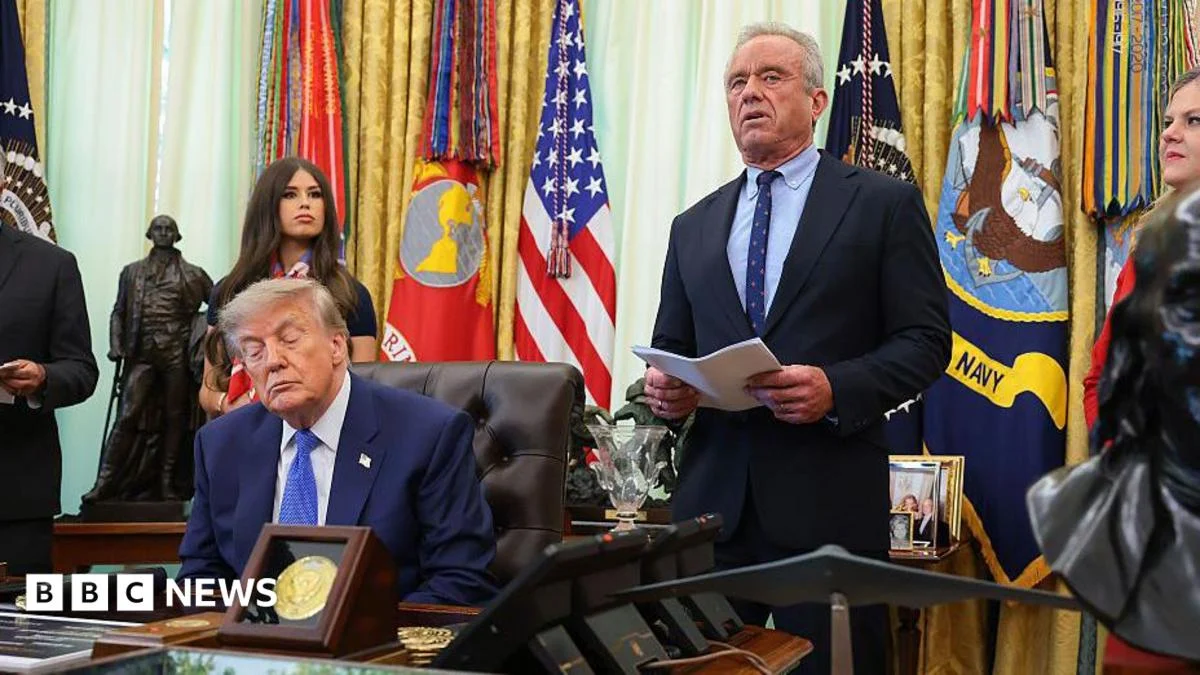
The executive order, issued on Monday, outlines a revised approach to childhood immunisation, with President Trump asserting that "Decades ago, children received only a small fraction of the vaccines required today. In those times, people were much healthier and of course the high rates of autism now observed did not exist." This statement directly echoes a long-held, yet scientifically discredited, belief propagated by the President that links the MMR vaccine to autism, a connection that has been thoroughly disproven by numerous extensive studies worldwide. The order specifically recommends a reduction in the childhood vaccine schedule to 11 core immunisations, focusing on what the administration deems "the most serious and dangerous diseases." The proposed immunisations include those for measles, mumps, rubella, diphtheria, tetanus, pertussis, polio, Haemophilus influenzae type B, pneumococcal disease, human papillomavirus, and varicella (chickenpox).
Historical Context and the Evolution of Vaccine Schedules
To understand the gravity of the President’s order, it is crucial to review the historical trajectory of vaccine development and public health policy. Childhood immunisation programs represent one of the greatest public health achievements of the 20th century. Diseases that once ravaged populations, causing widespread death, disability, and societal disruption—such as smallpox, polio, diphtheria, and measles—have been either eradicated or brought under unprecedented control through widespread vaccination.
The first successful vaccine, developed by Edward Jenner against smallpox in 1796, laid the groundwork for modern immunology. Over the next two centuries, scientific advancements led to vaccines against a growing list of pathogens. The mid-20th century saw the introduction of polio vaccines by Jonas Salk and Albert Sabin, virtually eliminating a disease that had terrified generations of parents. The MMR vaccine, a combined shot for measles, mumps, and rubella, was introduced in the early 1970s, consolidating three separate injections into one, making vaccination more efficient and increasing uptake.
The current recommended childhood vaccine schedule, endorsed by the Centers for Disease Control and Prevention (CDC) and the American Academy of Pediatrics (AAP), is not arbitrary. It is meticulously designed based on decades of scientific research, epidemiological data, and clinical trials. The timing of each vaccine is strategically chosen to align with a child’s developing immune system and the periods when they are most vulnerable to specific diseases. For instance, the first dose of the MMR vaccine is typically administered between 12 and 15 months of age, when maternal antibodies that might interfere with vaccine efficacy have waned, and before a child is likely to be exposed to these highly contagious diseases in daycare or social settings. The second dose, usually given between ages four and six, ensures maximum protection and boosts immunity.
The number of recommended vaccines has indeed grown over time as new vaccines have been developed to combat additional serious childhood diseases, such as Haemophilus influenzae type B (Hib), pneumococcal disease, and human papillomavirus (HPV). Each addition has been rigorously tested for safety and efficacy before being incorporated into the standard schedule, with the overarching goal of protecting children from preventable illness and death.
The Debunked Link Between MMR Vaccine and Autism
Central to President Trump’s rationale for his order is the assertion that high rates of autism did not exist "decades ago" when fewer vaccines were administered. This claim revives a deeply damaging and thoroughly debunked myth that has plagued public health efforts for over two decades. The controversy originated with a 1998 paper published in The Lancet by British gastroenterologist Andrew Wakefield, which claimed a link between the MMR vaccine and autism.
Wakefield’s study, based on a small sample size and deeply flawed methodology, was later found to be fraudulent. Investigations revealed that Wakefield had manipulated data, failed to disclose conflicts of interest, and acted unethically. The paper was fully retracted by The Lancet in 2010, and Wakefield was stripped of his medical license.
Despite the comprehensive discrediting of Wakefield’s work, the fear and misinformation he sowed have persisted, fueled by anti-vaccine advocates and online conspiracy theories. Numerous large-scale, high-quality scientific studies conducted across multiple countries have overwhelmingly concluded that there is no causal link between the MMR vaccine and autism. A landmark 2019 study from Denmark, for example, examined data from 657,461 children born between 1999 and 2010, finding no evidence that the MMR vaccine increases the risk of autism, even among children considered more susceptible to the condition. Similar findings have been consistently replicated by research from the CDC, the Institute of Medicine, and countless independent scientific bodies globally.
The President’s Rationale and Proposed Changes
In the Oval Office, President Trump elaborated on his order, stating, "We’re reducing them. It’s not only that you’re doing fewer vaccines, or jabs, as they say, but you’re doing them in a series of visits to the doctor." He suggested that the combined MMR vaccine could be "quite lethal" if given at once, likening it to "pouring a bottle of soda into a child’s body." This analogy, experts argue, fundamentally misunderstands immunology and vaccine mechanisms. Vaccines introduce a weakened or inactivated form of a pathogen, or parts of it, to stimulate an immune response, a process far removed from overwhelming the body with a "lethal" dose.
The proposal to split the MMR vaccine into individual shots, a concept often championed by vaccine skeptics, also lacks scientific backing. The CDC explicitly states that "there is no published scientific evidence that shows any benefit in separating the combination MMR vaccine into three individual shots." On the contrary, medical professionals highlight several significant disadvantages to this approach:
- Increased Risk of Disease: Spreading out vaccinations means children remain unprotected for longer periods, increasing their vulnerability to contracting measles, mumps, or rubella in the interim. These diseases, while often perceived as mild, can lead to severe complications, including pneumonia, encephalitis, deafness, and even death.
- Logistical Challenges and Missed Appointments: Requiring multiple doctor visits for individual shots increases the likelihood of missed appointments, leading to incomplete vaccination series and leaving children susceptible. This places an additional burden on parents, healthcare providers, and the healthcare system.
- No Demonstrated Safety Benefit: Studies have shown that the combined MMR vaccine is safe and effective. Separating the doses does not confer any additional safety benefits and may, in fact, increase overall exposure to preservatives or other vaccine components across multiple injections.
Official Reactions and Scientific Condemnation
The President’s executive order triggered an immediate and robust backlash from the scientific and medical communities.
Dr. Andrew Racine, President of the American Academy of Pediatrics (AAP), issued a scathing condemnation, calling the order "disheartening" and "dangerous." He highlighted the critical timing of the order, noting that it comes as measles cases have reached a 35-year high in the United States and are also rising globally. "Instead of ensuring every family can access life-saving vaccines for measles, influenza, RSV and more, federal leaders are once again spreading misleading claims," Dr. Racine stated. He emphasized that the order was not based on "gold-standard science" and that "Delaying or skipping shots is risky, especially as measles continues to spread and children go back to school." The AAP’s stance, reiterated on its website, is clear: there is no medical reason to delay or skip recommended immunisations, as the current schedule is designed to provide optimal protection when children are most vulnerable.
Senator Bill Cassidy (R-LA), a physician and Chair of the Senate Health Committee, also publicly admonished the executive order, labelling it "wrong." In a social media post, Senator Cassidy wrote, "The President does not have the expertise to make these changes. Vaccines are overwhelmingly safe. Vaccines are effective. Vaccines DO NOT cause autism." He urged parents to "listen to their child’s pediatrician about vaccines rather than listening to an inaccurate executive order." Cassidy’s statement is particularly significant, demonstrating bipartisan concern over the order’s potential impact on public health.
Robert F. Kennedy Jr., President Trump’s Secretary of Health and Human Services (HHS), offered a nuanced defence of the proposed changes, stating they were intended to "give parents choice, not prohibit access to childhood vaccines." Kennedy Jr. is a known proponent of vaccine skepticism and has previously made unsubstantiated claims about vaccine safety, an appointment that was met with alarm by public health experts. While framing the order as an expansion of parental choice, critics argue that it fundamentally undermines scientifically proven public health guidelines and promotes misinformation that could lead to dangerous health outcomes.
Legal Limitations and Broader Implications
A critical aspect of President Trump’s order is its limited legal authority. The federal government does not have the power to implement new vaccine recommendations as mandates for school attendance or other state-level requirements. Such decisions are primarily set at the state level. While the order signals a shift in federal executive branch messaging and recommendations, it does not immediately alter state laws governing mandatory vaccinations for school entry.
However, the order’s impact extends beyond direct legal enforceability. Public health experts fear that the President’s endorsement of vaccine skepticism and the propagation of discredited claims will have several profound implications:
- Erosion of Public Trust: An executive order that contradicts established scientific consensus risks eroding public trust in medical institutions, public health authorities, and the scientific process itself. This can lead to increased vaccine hesitancy among parents, even if the order itself doesn’t change state laws.
- Resurgence of Preventable Diseases: If parents, swayed by the executive order’s messaging, choose to delay or skip recommended vaccinations, it could lead to a significant decline in vaccination rates. This, in turn, threatens "herd immunity," the protection afforded to vulnerable individuals (infants too young to be vaccinated, immunocompromised individuals) when a high percentage of the population is immune to a disease. A drop in herd immunity paves the way for the re-emergence and spread of diseases like measles, mumps, rubella, and polio.
- Global Health Repercussions: The United States, as a global leader, often influences public health policies and perceptions worldwide. An anti-vaccine stance from the US presidency could embolden anti-vaccine movements internationally, hindering global efforts to control and eradicate diseases. The World Health Organization (WHO) has repeatedly warned about the global rise in measles cases, partly attributed to declining vaccination rates in various regions.
- Strain on Healthcare Systems: Outbreaks of vaccine-preventable diseases place immense strain on healthcare systems, requiring isolation protocols, intensive care for severe cases, and significant public health resources for contact tracing and containment. This diverts resources from other critical health initiatives.
The Measles Crisis: A Warning Sign
The context of a global and domestic measles resurgence underscores the immediate danger of promoting vaccine hesitancy. Measles, one of the most contagious diseases known, can lead to severe complications, including pneumonia, encephalitis, and subacute sclerosing panencephalitis (SSPE), a rare but fatal degenerative neurological disease that can develop years after infection. Prior to the widespread use of the measles vaccine, approximately 2.6 million people died from measles each year. The vaccine has dramatically reduced this figure.
However, in recent years, declining vaccination rates in certain communities have led to outbreaks. The CDC reported that 2019 saw the highest number of measles cases in the U.S. in 35 years, with over 1,200 cases across 31 states. These outbreaks were predominantly linked to unvaccinated individuals. The pattern is replicated globally, with the WHO reporting significant increases in measles cases and deaths in various countries. Public health experts warn that any policy or statement that encourages reduced vaccination is directly at odds with efforts to control this dangerous trend.
Conclusion
President Trump’s executive order advocating for fewer childhood vaccines and the separation of the MMR shot represents a stark departure from established public health policy and scientific consensus. While the order’s direct legal impact on state-level vaccine mandates is limited, its symbolic weight and potential to fuel vaccine hesitancy pose a significant threat to public health. The overwhelming scientific evidence demonstrates the safety and efficacy of the current vaccine schedule and debunks any link between vaccines and autism.
As medical professionals, public health experts, and bipartisan political figures vociferously warn, undermining confidence in vaccines risks the resurgence of preventable diseases, threatening herd immunity and the health of the most vulnerable populations. In an era where global health challenges demand unity and reliance on scientific evidence, the executive order injects further division and misinformation into a critical public health discourse. The long-term implications will hinge on the ability of scientific institutions and responsible leadership to reinforce accurate, evidence-based public health messaging against a backdrop of executive influence.