


At least 20 schoolchildren and one adult have been killed after a bus carrying pupils on an educational study trip crashed in eastern Uganda, local officials confirmed, marking one of the country’s deadliest road accidents involving children in recent years. The devastating incident, which occurred on Thursday evening, also left dozens of others, including school staff, seriously injured, casting a pall of grief over the nation and reigniting urgent concerns about road safety standards, particularly for school transport.
The crash took place in the Kapchorwa area, specifically at Chekwatit village within the Kawowo area, a locality known for its challenging terrain. Preliminary investigations by local authorities point to a mechanical fault in the bus, which subsequently led to the driver losing control on the treacherous Chekwatit Hill. This particular stretch of road has unfortunately gained notoriety as a black spot, having been the site of several serious crashes in the past, underscoring systemic issues related to road infrastructure and vehicle maintenance in the region.
Details of the Catastrophe
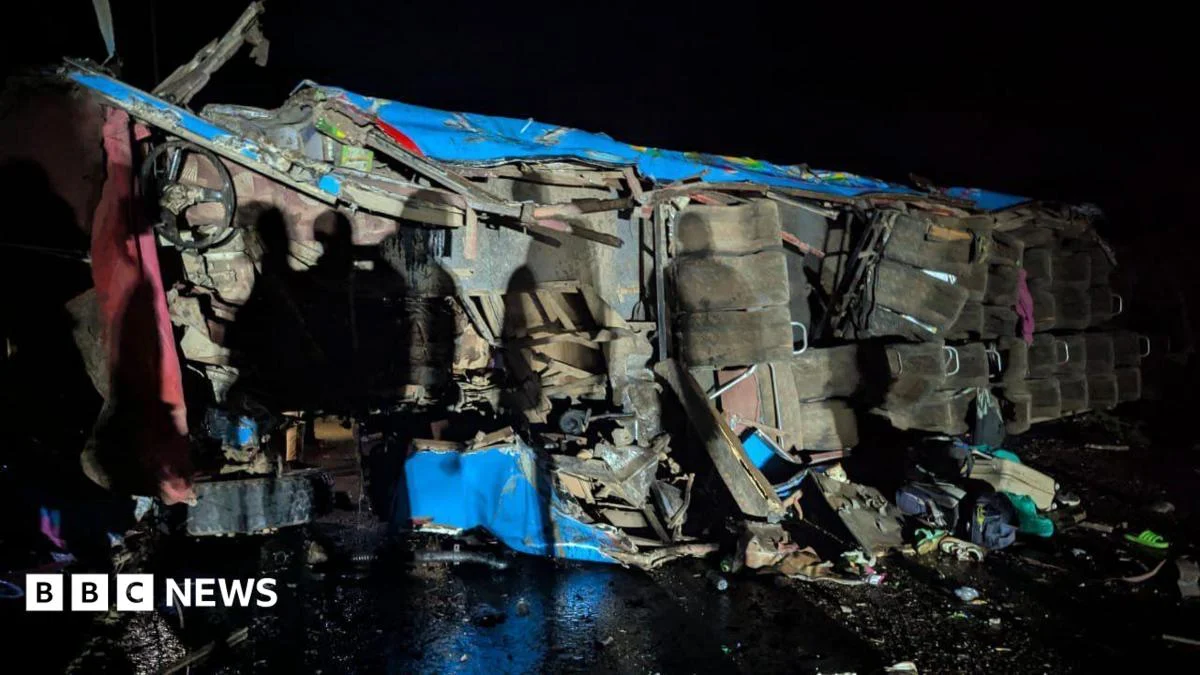
The ill-fated bus, operated by King David Junior School based in Ndejje, was returning from a study tour when the accident occurred at approximately 20:00 local time (17:00 GMT). Eyewitness accounts, corroborated by police statements, suggest a harrowing sequence of events: "The driver reportedly lost control of the vehicle, which veered off the road, struck a large stone along the roadside, and overturned," police officials stated in an initial briefing. The impact was severe, leaving the bus badly damaged, as depicted in distressing videos shared by local residents who were among the first to arrive at the scene to offer assistance to the injured children.
The pupils had reportedly visited the picturesque Sipi Falls, a popular tourist destination in eastern Uganda, as part of their educational excursion. What began as an enriching and memorable day for the young learners tragically culminated in unimaginable loss. Among the deceased was Mr. Tadeo Ssekade, the founder and director of King David Junior School, whose presence on the trip underscored the institution’s commitment to its students, now transformed into a shared tragedy. Minister of Local Government, Balaam Ateenyi Barugahara, conveyed the grim news from the scene, posting on X: "Sadly, 20 children and 1 adult, who happens to be the founder and director, Mr Tadeo Ssekade, have gone to be with the Lord." The minister’s statement highlighted the profound impact of the incident on the school community and the nation at large.
A Chronology of Joy and Despair
The journey for the pupils of King David Junior School began with anticipation and excitement. On Thursday morning, the bus, likely filled with the chatter and laughter of young minds eager to explore, departed from Ndejje, heading towards the scenic Sipi Falls. These educational excursions are a common feature of the Ugandan school curriculum, designed to provide students with practical learning experiences and exposure to their country’s natural beauty and cultural heritage. The day at Sipi Falls would have been a vibrant tapestry of discovery, with the children witnessing the majestic waterfalls, learning about the local ecosystem, and perhaps engaging in recreational activities.
As dusk began to settle, the bus commenced its return journey, a long drive back to Ndejje. The atmosphere on board would have shifted from daytime excitement to the quiet contentment of tired but happy children, perhaps recounting the day’s adventures or drifting off to sleep. However, this tranquility was shattered as the bus navigated the winding and challenging roads of the Kapchorwa area. Around 8:00 PM local time, as the bus descended Chekwatit Hill, a section notorious for its steep gradients and sharp turns, disaster struck. The mechanical fault, yet to be fully detailed by investigators, compromised the vehicle’s control, leading to the driver’s desperate struggle to maintain command. The bus veered off the road, collided with a substantial roadside stone, and then violently overturned.
The immediate aftermath was chaotic and horrific. The sound of the crash reverberated through the quiet evening, drawing local villagers to the scene. These brave residents, without hesitation, rushed to the mangled wreckage, initiating frantic rescue efforts. They worked tirelessly to extricate injured children and staff from the overturned bus, providing immediate comfort and first aid where possible. Emergency services, including police and medical teams, were quickly alerted and dispatched to the remote location. The recovery operation continued through the night, with the focus on saving lives and recovering the deceased. The injured were transported to nearby health facilities, including Kapchorwa Hospital, for urgent medical attention, while the bodies of the deceased were taken to the mortuary for post-mortem examinations and identification. The scene was one of immense sorrow and desperate struggle, as families were notified and began the agonizing wait for news of their loved ones.
Uganda’s Persistent Road Safety Crisis
This tragic incident is not an isolated event but rather a stark reminder of Uganda’s ongoing and severe road safety crisis. The East African nation consistently records thousands of road deaths every year, placing it among countries with some of the highest fatality rates globally. According to the Uganda Police Force’s annual traffic and road safety reports, factors such as speeding, reckless driving, poorly maintained vehicles, and dangerous road infrastructure are identified as the leading causes of these preventable deaths.
In 2022, for instance, Uganda recorded over 20,000 road accidents, resulting in more than 4,500 fatalities. While 2023 figures are still being compiled, preliminary data suggested a continued upward trend in road crashes and associated deaths and injuries. A significant portion of these accidents involves commercial passenger vehicles, including buses, which often operate under intense pressure to meet schedules, sometimes at the expense of safety protocols. The geography of eastern Uganda, characterized by mountainous terrain, narrow roads, and winding passes, adds another layer of complexity, demanding vehicles that are in peak mechanical condition and drivers with exceptional skill and adherence to safety limits. Chekwatit Hill, with its steep inclines and sharp bends, exemplifies such hazardous stretches that require constant vigilance and robust road engineering solutions.
The latest crash comes amid renewed concern over the safety of school transport. In recent weeks, several other serious bus accidents involving educational institutions have been reported across the country, albeit none with the same tragic scale of fatalities. These incidents have collectively fueled public outcry and calls for more stringent regulations and enforcement mechanisms to safeguard children during their commutes and excursions. Parents, educators, and civil society organizations have frequently highlighted the precarious state of many school buses, often old, overloaded, and lacking essential safety features.
Official Responses and Calls for Action
The immediate aftermath of the Kapchorwa crash saw a rapid response from various government entities and officials. The Uganda Police Force launched a full-scale investigation into the incident. Assistant Superintendent of Police (ASP) Michael Odongo, spokesperson for the Sebei region police, confirmed that the preliminary focus is on the mechanical integrity of the bus and the actions of the driver. "Our traffic investigations unit is meticulously examining the vehicle’s wreckage to ascertain the precise nature of the mechanical fault. We are also interviewing survivors and eyewitnesses to reconstruct the events leading up to the crash," ASP Odongo stated, adding that a comprehensive report would be compiled to inform future preventative measures. He also indicated that vehicle inspection records for the bus would be scrutinized, along with the driver’s licensing and disciplinary history.
The Minister of Local Government, Balaam Ateenyi Barugahara, not only announced the casualties but also conveyed the government’s profound sorrow. "This is a heartbreaking day for our nation. Our deepest condolences go out to the bereaved families and the entire King David Junior School community," Minister Barugahara said, emphasizing that the government would ensure a thorough investigation and support for the victims.
From the Ministry of Education and Sports, a representative, speaking anonymously due to the ongoing investigation, expressed profound shock and grief. "The safety of our children is paramount. We will be reviewing all existing guidelines for school transport and educational excursions to identify any gaps and implement stricter enforcement measures. This tragedy serves as a stark reminder of the urgent need for collective action," the official noted, hinting at potential policy revisions regarding mandatory vehicle checks for school buses and driver training specific to transporting minors.
The Ministry of Works and Transport is also expected to weigh in on the matter, likely emphasizing the need for robust vehicle inspection frameworks and improved road infrastructure. Civil society organizations advocating for road safety, such as the Coalition of Road Safety Advocates Uganda (CRSAU), swiftly condemned the lax enforcement of existing traffic laws. "How many more lives must be lost before decisive action is taken?" questioned Sarah Namulindwa, Executive Director of CRSAU. "We call upon the government to not only investigate this specific incident but to launch a nationwide audit of all school transport vehicles and implement a zero-tolerance policy for non-compliant operators."
Broader Impact and Implications
The Kapchorwa bus crash carries profound implications for various sectors within Uganda, extending far beyond the immediate grief.
Policy and Regulatory Reform: The most immediate and significant implication will likely be renewed pressure on the government to strengthen road safety policies. This could involve:
- Mandatory Bi-Annual Vehicle Inspections: Implementing and rigorously enforcing checks for all commercial vehicles, especially those transporting children, beyond the current, often lax, annual requirements.
- Stricter Driver Licensing and Training: Reviewing the process for obtaining commercial driving licenses, introducing specialized training for drivers of school buses, and implementing regular refresher courses focusing on defensive driving and vehicle maintenance awareness.
- Enhanced Road Infrastructure: Allocating more resources to improve hazardous road sections like Chekwatit Hill, including better signage, guardrails, and potentially alternative routes for heavy vehicles.
- School Transport Guidelines: Developing and enforcing comprehensive guidelines for schools regarding the procurement, maintenance, and operation of transport vehicles, as well as risk assessment protocols for educational excursions.
Community and Psychological Impact: The tragedy will undoubtedly leave deep psychological scars on the families of the deceased and injured, the surviving children, school staff, and the wider community. Grief counseling and psychological support will be critical for those affected. The incident also erodes public trust in educational institutions’ ability to ensure the safety of their students during off-campus activities, potentially leading to a decrease in participation in beneficial study trips.
Economic Ramifications: Road accidents impose a substantial economic burden on Uganda, estimated to cost the country millions of dollars annually in healthcare expenses, loss of productivity, and damage to property. This particular incident will add to those costs through emergency response, medical care for the injured, and compensation for victims’ families.
Tourism Sector Concerns: While the immediate victims were students, the fact that they were returning from a popular tourist site like Sipi Falls could raise minor concerns for the local tourism sector, particularly regarding perceptions of safety on access roads. Authorities will likely emphasize efforts to ensure visitor safety to mitigate any potential negative impact.
Role of Civil Society: The incident will galvanize civil society organizations and advocacy groups to intensify their campaigns for better road safety. Their persistent advocacy will be crucial in holding government agencies accountable and pushing for long-term, sustainable solutions rather than merely reactive measures.
In conclusion, the tragic loss of 20 schoolchildren and their school director in Kapchorwa is a devastating reminder of Uganda’s persistent struggle with road safety. While the nation mourns, the incident serves as a critical inflection point, demanding comprehensive and immediate action from all stakeholders – government, schools, transport operators, and communities – to prevent such preventable tragedies from recurring and to ensure that the promise of education does not come at the cost of young lives. The eyes of the nation are now on its leaders to demonstrate a tangible commitment to safeguarding its most precious resource: its children.