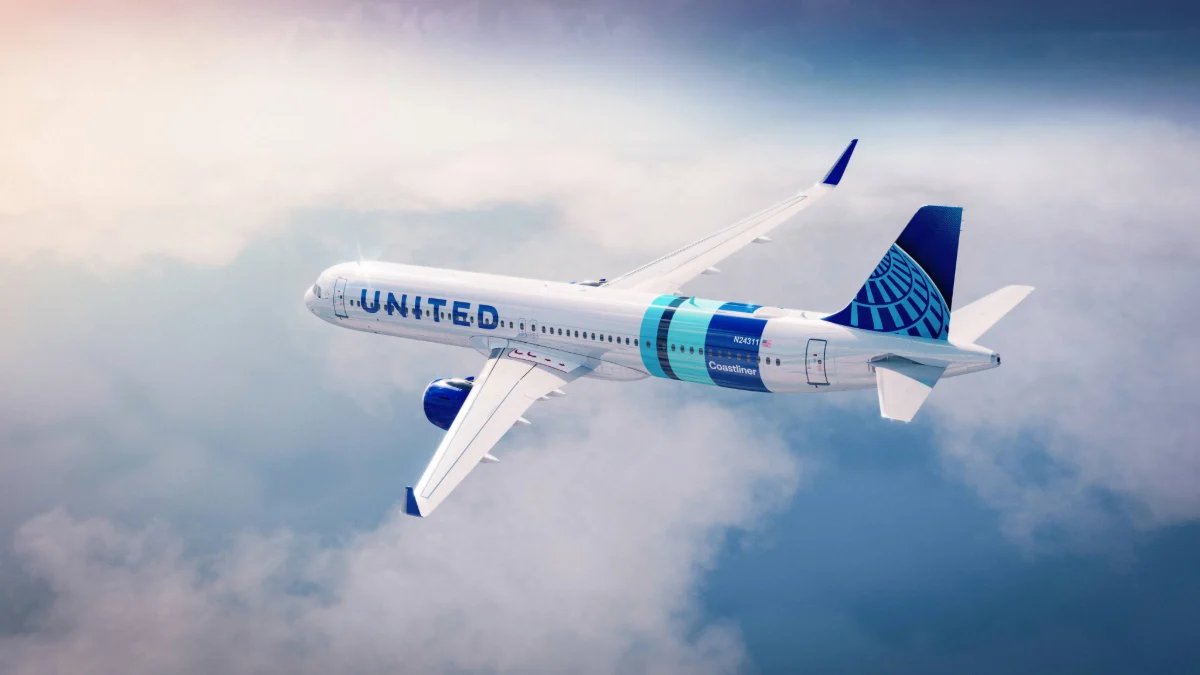
United Airlines remains steadfast in its financial outlook despite a recent surge in global jet fuel prices, with Chief Financial Officer Michael Leskinen asserting that the carrier is on track to recover 100% of these increased operational costs by the conclusion of the fiscal year. Speaking at the Morgan Stanley Laguna investor conference on Wednesday, Leskinen addressed the challenges posed by volatile energy markets while emphasizing the airline’s ability to leverage strong consumer demand for premium travel experiences. The executive’s comments come at a critical juncture for the aviation industry, which is grappling with the dual pressures of fluctuating oil prices and a shifting macroeconomic environment that has tested the resilience of post-pandemic travel trends.
According to Leskinen, the rapid escalation in fuel prices presents a short-term mathematical hurdle for revenue management teams, particularly as a significant portion of the airline’s inventory for the upcoming quarter has already been sold at previous price points. He noted that approximately 35% of United’s tickets for the fourth quarter are already booked, creating a natural "pricing lag" that prevents the airline from immediately offsetting higher fuel expenditures for those specific passengers. However, Leskinen maintained that the underlying demand remains robust enough to allow the carrier to adjust fares for the remaining 65% of its fourth-quarter capacity, thereby achieving a full recovery of the cost spike over the long term. This strategy relies heavily on the airline’s ongoing transition toward a more premium-focused business model, which includes substantial investments in fleet modernization and onboard amenities such as high-speed Starlink satellite internet.
The Economics of Jet Fuel Volatility and Pricing Lags
Jet fuel represents one of the most significant and volatile line items on an airline’s balance sheet, typically accounting for 20% to 30% of total operating expenses. When crude oil prices rise, the impact on airline margins is almost immediate, yet the mechanism for passing those costs to consumers is hindered by the advanced booking nature of the industry. Leskinen’s admission of a "pricing lag" highlights a fundamental reality of airline economics: once a ticket is sold, the revenue is locked in, but the cost of the fuel required to fly that passenger remains subject to market fluctuations until the date of travel, unless the airline has engaged in extensive fuel hedging.
United Airlines, like many of its domestic peers, has moved away from aggressive fuel hedging in recent years, choosing instead to rely on "natural hedges" such as fuel-efficient aircraft and dynamic pricing models. This approach requires the airline to be agile in its revenue management. To recover 100% of a fuel spike when 35% of the inventory is already fixed, the carrier must increase the fares on the remaining 65% of seats by a margin that covers the deficit of the first third. Analysts at the Morgan Stanley conference noted that this requires a high degree of "pricing power," which is the ability to raise prices without significantly depressing demand. Leskinen’s confidence suggests that United sees no signs of the "travel fatigue" or "consumer belt-tightening" that some economists have predicted in light of broader inflationary pressures.
Chronology of Recent Energy Market Shifts
The current pressure on United’s bottom line is the result of a multi-month trend in the energy sector. In mid-2023, jet fuel prices began to climb as OPEC+ production cuts and refinery outages squeezed global supplies. By the time of the Morgan Stanley Laguna conference, the "crack spread"—the difference between the price of crude oil and the refined products produced from it, such as jet fuel—had widened significantly.
- Early Q3 2023: Global crude prices began a steady ascent following announced production cuts from Saudi Arabia and Russia.
- Mid Q3 2023: Refinery maintenance schedules in the United States and Europe led to a tightening of jet fuel inventories, causing jet fuel prices to decouple from crude and rise at a faster rate.
- September 2023: United and other major carriers, including Delta and American, began issuing investor updates warning of higher-than-expected fuel costs, with some adjusting their earnings per share (EPS) guidance downward for the short term.
- The Investor Conference (Wednesday): Michael Leskinen clarified United’s position, acknowledging the rapid spike but reaffirming the year-end recovery goal.
This timeline illustrates why the "lag" Leskinen mentioned is so pivotal. The tickets booked in July and August for November travel did not account for the September surge in refining margins. United is now tasked with navigating this transition as it moves into the high-demand holiday travel season.
Supporting Data: Fleet Efficiency and Revenue Trends
United Airlines’ ability to absorb fuel shocks is intrinsically linked to its "United Next" strategy, a massive fleet renewal program. Newer aircraft, such as the Boeing 737 MAX and the Airbus A321neo, offer between 15% and 20% better fuel efficiency per seat than the older narrowbody aircraft they replace. By increasing the proportion of these planes in its fleet, United reduces its "fuel burn" per available seat mile (ASM), which provides a buffer against rising commodity prices.
Data from recent quarterly filings indicates that United has been successfully shifting its capacity toward premium cabins. Revenue from premium seats—including United Polaris, United Premium Plus, and domestic First Class—has consistently outpaced the growth of basic economy revenue. This is a critical component of the fuel recovery plan. Premium passengers are generally less price-sensitive than budget travelers, allowing the airline to implement the necessary fare increases to cover fuel costs without losing its most profitable customer base.
Furthermore, United’s recent announcement regarding a partnership with SpaceX to provide Starlink Wi-Fi across its entire fleet is viewed as a strategic move to solidify this premium positioning. By offering high-speed, low-latency internet for free, United aims to differentiate itself from competitors and justify a higher base fare. This technological edge is expected to attract more corporate travelers, who represent a vital segment for recovering high operating costs.
Official Responses and Industry Reactions
While Michael Leskinen provided the most direct commentary on the fuel recovery strategy, the broader industry has signaled similar concerns. During the same period, Delta Air Lines and American Airlines also adjusted their fuel price projections. However, United’s stance is notably more optimistic regarding the "100% recovery" target.
Industry analysts have reacted with cautious optimism. "The ability to pass through fuel costs is the litmus test for the health of the airline industry," said one senior transportation analyst following the conference. "United is betting that the scarcity of premium transcontinental and international capacity will give them the leverage they need. If the economy remains strong, they will hit that 100% mark. If we see a dip in corporate spending, that 65% of unbooked inventory becomes much harder to price aggressively."
Internally, United has signaled to its staff and investors that operational reliability and customer experience are the primary tools for maintaining this pricing power. The airline has invested heavily in its hubs, particularly in Newark and Denver, to ensure that it can command the "hub premium" that allows for higher ticket prices compared to point-to-point low-cost carriers.
Broader Impact and Market Implications
The implications of United’s strategy extend beyond its own balance sheet. If United successfully recovers 100% of fuel costs through fare increases, it sets a precedent for the rest of the "Big Three" U.S. carriers. This could lead to a broader environment of elevated airfares across the board, potentially contributing to sticky inflation in the services sector of the economy.
Moreover, the focus on premium amenities like Starlink suggests a permanent shift in the competitive landscape. As United pushes for higher fares to cover costs, it is simultaneously raising the barrier to entry for quality of service. This creates a "K-shaped" recovery in the travel sector, where premium carriers continue to thrive by catering to affluent travelers, while ultra-low-cost carriers (ULCCs) struggle with the same fuel costs but lack the pricing power to pass them on to their budget-conscious demographic.
The environmental impact of fuel consumption also remains a background factor. While United focuses on the financial recovery of fuel costs, the airline is also under pressure to meet its "Net Zero by 2050" commitment. Higher fuel prices, while a short-term financial burden, arguably accelerate the economic rationale for investing in Sustainable Aviation Fuel (SAF) and more efficient engine technologies, as the "green premium" for alternative fuels shrinks when conventional jet fuel prices rise.
Conclusion and Forward Outlook
As United Airlines moves into the final quarter of the year, the focus will remain on the 65% of tickets yet to be sold. The airline’s management believes that the combination of a superior product, a more efficient fleet, and a robust demand environment will allow them to navigate the current energy market volatility unscathed. Leskinen’s remarks at the Morgan Stanley Laguna conference serve as a signal to the market that United is no longer a commodity-driven business, but a premium service provider with the brand equity to defend its margins.
Investors will be closely watching the airline’s next earnings report for confirmation that the "pricing lag" has been overcome. If United meets its goal of 100% fuel cost recovery, it will validate the "United Next" philosophy and provide a roadmap for how legacy carriers can maintain profitability in an era of unpredictable global energy costs. For the traveling public, the message is clear: while fuel prices may rise, the demand for high-quality, connected, and premium travel experiences shows no signs of waning, even at a higher price point.