

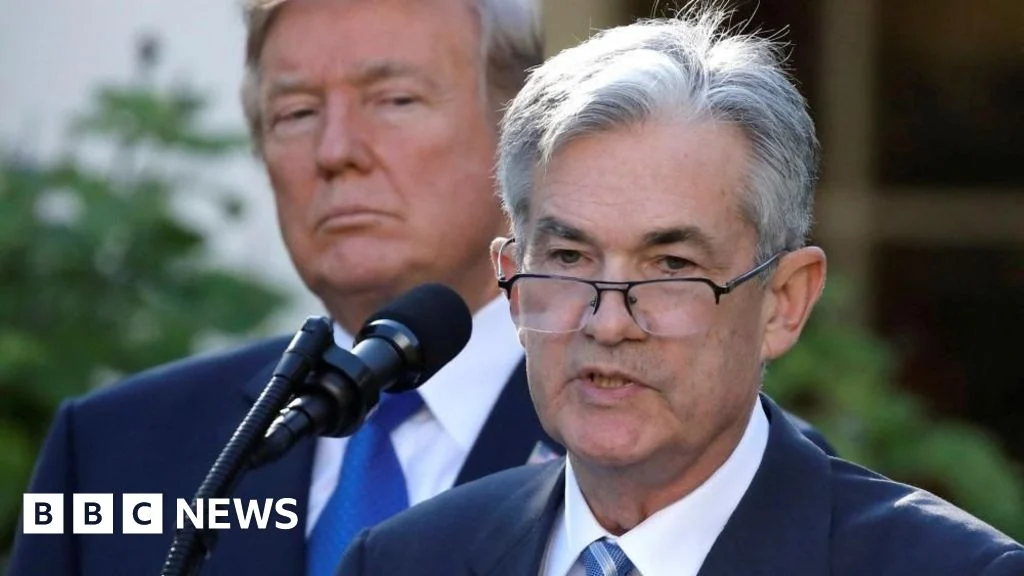
The United States Department of Justice (DOJ) has announced it is discontinuing its criminal investigation into Federal Reserve Chairman Jerome Powell concerning alleged cost overruns on central bank building renovations. This pivotal decision, revealed just 17 minutes ago, shifts the focus from a federal criminal inquiry to an internal investigation to be led by the Federal Reserve’s own Office of the Inspector General. The move comes at a critical juncture, with Powell’s term as Fed Chair nearing its conclusion and President Donald Trump’s nominee for his replacement, Kevin Warsh, awaiting Senate confirmation, underscoring the deep political undercurrents of the situation.
US Attorney Jeanine Pirro, who had overseen the DOJ probe, confirmed the decision via a post on X (formerly Twitter), stating that while the criminal investigation was being dropped, she would "not hesitate to restart a criminal investigation should the facts warrant doing so." This caveat leaves open the possibility of renewed federal scrutiny, depending on the findings of the internal review. The White House, which had publicly championed the investigation, quickly endorsed the shift, with spokesman Kush Desai issuing a statement asserting, "American taxpayers deserve answers about the Federal Reserve’s fiscal mismanagement, and the Office of the Inspector General’s more powerful authorities best position it to get to the bottom of the matter." Desai further expressed confidence that "the Senate will swiftly confirm Kevin Warsh as the next Federal Reserve Chairman to finally restore competence and confidence in Fed decision-making." The Federal Reserve, maintaining its characteristic institutional reserve, declined to comment on the development.
The Genesis of the Dispute: Trump vs. Powell
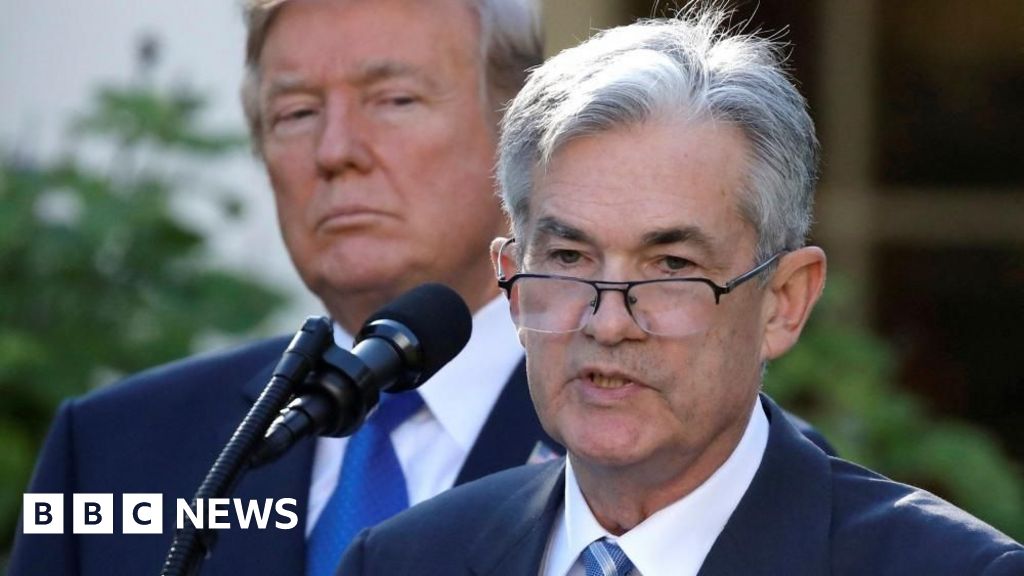
The now-halted Justice Department investigation was the latest, and arguably most contentious, chapter in a long-standing and often acrimonious feud between President Donald Trump and Jerome Powell. Their relationship, which began with Trump nominating Powell to lead the central bank in 2017, quickly soured as Powell’s Federal Reserve embarked on a series of interest rate hikes aimed at normalizing monetary policy after years of post-financial crisis stimulus. During his first term, President Trump repeatedly and publicly criticized Powell, breaking with decades of presidential tradition of respecting the Fed’s operational independence. Trump famously called Powell a "knucklehead" and accused him of "doing a lousy job" for raising rates, which the President believed were stifling economic growth.
The tension escalated significantly following Trump’s return to office last year. The President immediately renewed his calls for the Fed to lower interest rates, advocating for a policy that aligns with his long-held belief that low borrowing costs stimulate economic activity, a perspective rooted in his background as a property developer. His demands, however, were largely ignored by the Fed, which continued to base its monetary policy decisions on economic data concerning inflation, employment, and overall economic stability. It was amidst this renewed pressure that the idea of firing Powell began to circulate within the administration, a move that many legal scholars and economists warned could be illegal and severely undermine the Fed’s critical independence.
Chronology of Conflict and Investigation
The timeline of events leading to today’s announcement reveals a calculated escalation of pressure on the Federal Reserve chairman:
- November 2017: President Donald Trump nominates Jerome Powell, then a Fed governor, to be the next Federal Reserve Chairman, succeeding Janet Yellen.
- 2018-2019: The Federal Reserve, under Powell’s leadership, implements several interest rate hikes, citing a strong economy and the need to prevent inflation. President Trump begins his public and often vitriolic attacks on Powell, accusing the Fed of hindering his economic agenda.
- Early 2020: The COVID-19 pandemic prompts the Fed to slash interest rates and implement unprecedented quantitative easing measures to support the economy. Trump’s criticism of Powell temporarily subsides amid the crisis.
- January 20, 2025: Donald Trump returns to the White House for his second term, swiftly renewing his public calls for the Federal Reserve to lower interest rates.
- July 2025: A widely publicized "awkward exchange" between Trump and Powell occurs, highlighting the ongoing strain in their relationship. This event, captured on video, serves as a public marker of their deep disagreement over monetary policy.
- Late 2025: Amid continued calls for rate cuts from the White House, whispers of a Justice Department investigation into Powell begin to circulate.
- January 2026: In an extraordinary and unprecedented move, Chairman Powell releases a public video statement disclosing that the Justice Department had served the Federal Reserve with subpoenas and threatened a criminal indictment. The focus of the probe was his testimony to a Senate committee regarding alleged building cost overruns. Powell explicitly linked the investigation to President Trump’s anger over the Fed’s refusal to cut interest rates, warning that the independence of the US central bank was under threat. President Trump publicly claimed he did not "know anything" about the investigation.
- April 24, 2026 (Today): The US Justice Department announces it is dropping its criminal investigation into Chairman Powell, transferring the inquiry to the Federal Reserve’s Office of the Inspector General. This decision is made public just weeks before Powell’s term is set to expire.
The Federal Reserve’s Independence: A Cornerstone Under Pressure
At the heart of the Trump-Powell saga lies the fundamental principle of Federal Reserve independence. Established by Congress in 1913, the Fed is designed to operate independently of political pressure, ensuring that monetary policy decisions are based on economic data and stability objectives, rather than short-term political expediency. This independence is crucial for maintaining public confidence in the currency, controlling inflation, and fostering stable economic growth. Historically, presidents have largely respected this separation, understanding that politicizing the central bank could lead to unpredictable economic outcomes and erode the institution’s credibility both domestically and internationally.
Powell’s January disclosure was a robust and direct pushback against what he perceived as an attempt to undermine this independence. His statement, "This is about whether the Fed will be able to continue to set interest rates based on evidence and economic conditions, or whether instead monetary policy will be directed by political pressure or intimidation," resonated deeply with economists and policymakers who view Fed independence as sacrosanct. While presidents have always desired low interest rates, Trump’s direct and public attacks, coupled with the DOJ investigation, were seen by many as a dangerous departure from established norms, setting a potentially damaging precedent for future administrations.
The Renovation Controversy: What Were the Allegations?
The alleged "building cost overruns" that formed the basis of the DOJ’s investigation relate to extensive renovation projects at two key Federal Reserve buildings in Washington D.C.: the Eccles Building (the main headquarters) and the 1951 Constitution Avenue building. These buildings, constructed in the 1930s, were undergoing their first major "overhaul and modernization" since their original construction. The scope of work was substantial, reportedly including critical infrastructure upgrades, removal of hazardous materials such as asbestos and lead contamination, and modernizing systems to meet contemporary safety and technological standards.
While specific figures for the "overruns" were not publicly detailed by the White House or the Justice Department, the project itself was known to be a multi-year, multi-million-dollar undertaking, typical for such historic and complex government facilities. President Trump’s administration, however, consistently argued that the costs were excessive and indicative of "fiscal mismanagement" within the central bank. The allegations, while framed as a matter of taxpayer accountability, were widely perceived as a convenient political tool to exert pressure on Powell, particularly given the timing and the President’s ongoing frustrations with the Fed’s interest rate policy. The internal investigation by the Fed’s Office of the Inspector General will now delve into the specifics of these renovation costs, potentially shedding more light on the financial details and management practices involved.
The Senate Confirmation Battle and Kevin Warsh
The decision to drop the criminal probe is inextricably linked to the ongoing political maneuvering surrounding the confirmation of Kevin Warsh as Powell’s successor. Powell’s term officially expires on May 15, 2026, and he has stated his intention to remain in post until his replacement is confirmed. The Senate confirmation process for a Federal Reserve Chair is a significant undertaking, requiring extensive hearings and a majority vote.
Kevin Warsh, President Trump’s nominee, is a former Federal Reserve Governor (2006-2011) and a respected figure in financial circles. He is known for his more hawkish stance on monetary policy and has previously criticized the Fed’s expansive balance sheet, views that align more closely with conservative economic thought and potentially with President Trump’s desire for a less accommodative monetary policy. However, Warsh’s confirmation has faced hurdles. A key Republican Senator, Thom Tillis, had publicly withheld his support for Warsh, making it conditional on the Trump administration dropping its investigation into Powell. Tillis’s stance was a powerful leverage point, as Republican unity is often crucial for presidential nominees to clear the Senate. The dropping of the DOJ probe effectively removes this specific political impediment, potentially paving the way for Warsh’s confirmation. The White House’s statement expressing confidence in swift confirmation reflects this strategic victory.
Official Responses and Future Outlook
The official responses to today’s development highlight the mixed signals and political calculations at play. US Attorney Jeanine Pirro’s statement on X, while announcing the end of the criminal probe, notably left the door open for future action, indicating that the Justice Department’s interest in the matter could be rekindled if the internal investigation unearths new evidence warranting criminal scrutiny. This caveat serves to maintain a degree of pressure, even as the immediate threat of indictment against Powell has receded.
The White House’s immediate embrace of the internal investigation by the Fed’s OIG, coupled with its confidence in Warsh’s swift confirmation, underscores the administration’s strategic objectives. By shifting the investigation internally, the White House can claim that accountability is still being pursued, albeit through a different mechanism, while simultaneously removing a major obstacle to its preferred nominee. The Fed’s "declined to comment" stance is typical for the institution, particularly during politically charged situations, allowing it to maintain an appearance of neutrality.
Broader Implications for US Economic Governance
The saga surrounding Jerome Powell and the Justice Department probe carries significant broader implications for US economic governance and the integrity of its independent institutions.
- Reinforcement of Fed Independence (with caveats): While the initiation of a criminal probe against a sitting Fed chair was an unprecedented challenge to the institution’s independence, its ultimate withdrawal, particularly under political pressure from a key senator, could be seen as a partial victory for the principle. Powell’s willingness to publicly defend the Fed’s autonomy, even in the face of a potential indictment, sends a strong signal. However, the fact that such a probe was launched at all, and only dropped when it became politically expedient for a nominee, highlights the fragility of this independence when confronted by determined executive pressure.
- Precedent for Future Administrations: This episode sets a troubling precedent. Future presidents might be emboldened to use the investigative powers of the Justice Department as a tool to pressure independent agencies or officials who resist their policy preferences. This could lead to a chilling effect, where officials might hesitate to make unpopular but necessary decisions for fear of political retribution.
- Impact on Market Confidence: The stability and predictability of US monetary policy are crucial for global financial markets. Political interference or perceived threats to the Fed’s independence can introduce uncertainty, potentially leading to market volatility and a loss of investor confidence in the long term. While markets might react positively to the removal of uncertainty around Powell’s legal status, the underlying tensions remain.
- The Role of the Inspector General: The shift to an OIG investigation places increased scrutiny on the internal oversight mechanisms of independent agencies. The effectiveness and thoroughness of the Fed’s Inspector General’s probe will be closely watched, as it now carries the burden of providing answers to allegations that were once deemed serious enough for a criminal inquiry.
- Political Dynamics in Washington: The resolution of this probe also reflects the complex interplay of power in Washington. Senator Tillis’s successful use of leverage demonstrates the continued importance of individual legislators in shaping policy outcomes, even against a determined White House. It also highlights the transactional nature of politics, where investigations can become bargaining chips in broader confirmation battles.
As Jerome Powell prepares to conclude his tumultuous term, this episode will undoubtedly be a defining aspect of his legacy as a Fed chair who, despite being nominated by a president, stood firm in defense of the central bank’s independence against intense political pressure. The incoming Chairman Kevin Warsh will inherit a Federal Reserve that has just navigated one of its most challenging political periods, underscoring the delicate balance required to manage both economic policy and the institution’s vital autonomy. The coming weeks will determine whether the path is now clear for Warsh’s confirmation and what the long-term implications will be for the future of the Federal Reserve and its relationship with the White House.