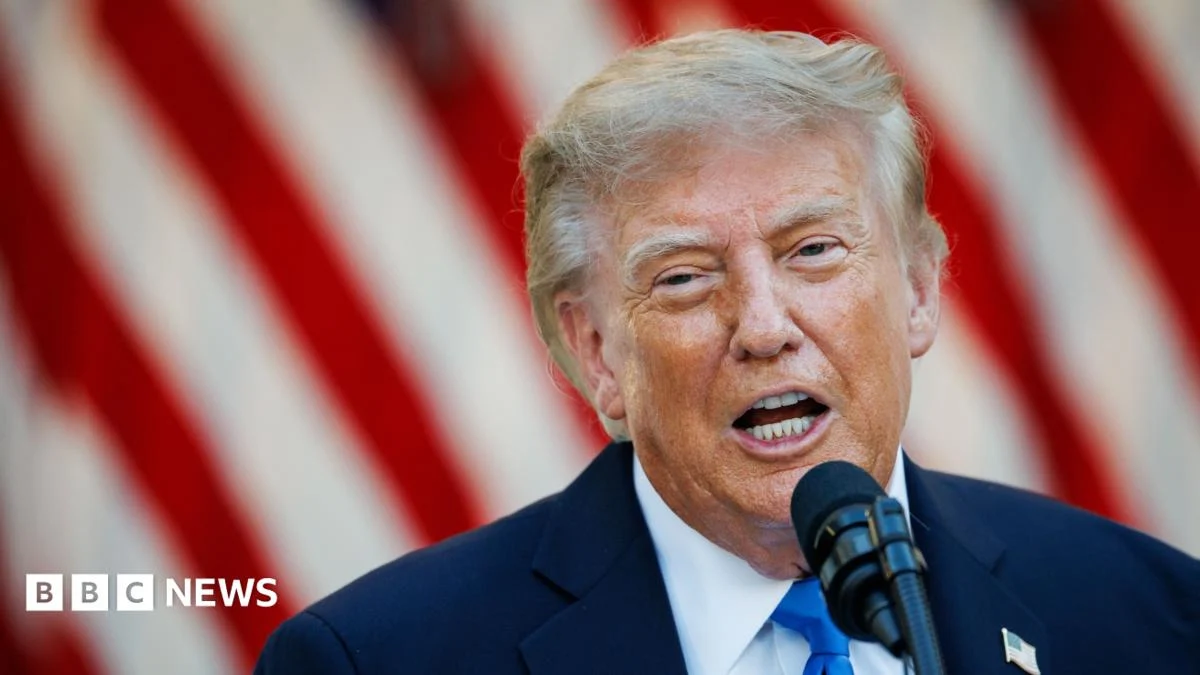
President Donald Trump asserted on Wednesday that the protracted conflict with Iran, now in its seventh month, is unlikely to conclude before the upcoming November 3 midterm elections, a timeframe he explicitly linked to a potential decline in global oil prices. Speaking to reporters en route to Texas for the Republican Party’s inaugural midterm election convention, and subsequently reiterating his position at the event, Trump posited that Tehran’s capacity to sustain hostilities would wane significantly after the electoral contest, leading to an immediate cessation of what he termed the "war" and a subsequent market correction for crude oil.
"I think the war’s going to end immediately after the election because they can’t hold out any longer," Trump declared, referring to the Iranian leadership. He further elaborated on his economic forecast, stating, "Right after the election, oil prices are going to be tumbling downward. I think it’s going to take a little bit longer than the midterm." This perspective suggests a deliberate strategic patience, with the administration seemingly willing to absorb short-term economic discomfort in pursuit of long-term geopolitical objectives, primarily preventing Tehran from developing nuclear weapons capabilities.
Trump’s Political Calculus and Accusations
The President framed the ongoing tensions with Iran within a clear political context, accusing Tehran of actively attempting to influence the American electoral process. "Iran is desperate to try and affect the election, so that we can get a nice weak group of people in there," he stated, an unambiguous reference to the Democratic Party. He continued, "and leave them alone and let them have their nuclear weapon." Trump offered no corroborating evidence to support this claim, a point quickly noted by observers and fact-checkers. Tehran has consistently and vehemently denied any ambitions to develop nuclear weapons, asserting its nuclear program is solely for peaceful purposes, particularly energy generation and medical applications.
At the Texas convention, a crucial event designed to energize the Republican base ahead of November, Trump echoed these sentiments. He told the assembled party faithful that the price of oil would tumble "as soon as we win the war with Iran." His rhetoric underscores a belief that Iran is exploiting the current global energy landscape and the perceived domestic political vulnerabilities in the United States. This narrative attempts to rally support for his administration’s tough stance, even as it acknowledges growing public fatigue with the conflict’s economic fallout. Indeed, Trump himself referenced the public’s direct concerns: "Guys come up to me and say, ‘I wish you didn’t do the war in Iran. Now gasoline is up.’"
Economic Ramifications and Consumer Burden
The economic repercussions of the intensified conflict have become a central point of contention in American domestic politics. The global price of crude oil, which hit $100 a barrel on Wednesday for the first time since July, has translated directly into higher costs at the pump for American consumers. Earlier this week, the price of US diesel reached an all-time high of $5.75 per gallon, a significant increase from $3.90 just six months prior. These escalating fuel costs are not isolated; they have a cascading effect across the economy, driving up transportation expenses for goods and services, from groceries to manufactured products.
According to a recent report by the Bureau of Labor Statistics, the Consumer Price Index (CPI) has seen a year-over-year increase of 8.2% as of September, with energy costs contributing significantly to this inflation. Average household spending on gasoline has reportedly increased by approximately $120 per month since the conflict began, placing substantial strain on family budgets already grappling with rising food and housing costs. This sustained economic pressure has demonstrably eroded consumer confidence, with the University of Michigan’s Consumer Sentiment Index falling to its lowest point in a decade in October. The Federal Reserve, grappling with persistent inflation, has already signaled potential further interest rate hikes, which could further dampen economic growth and increase borrowing costs for businesses and individuals.
The Midterm Election Backdrop and Political Stakes
Trump’s remarks come at a critical juncture for his Republican Party, which faces significant headwinds heading into the November 3 midterm elections. Historically, the party of a sitting president tends to lose seats in Congress during midterm cycles. Current polling data indicates that Republicans are indeed in danger of losing their narrow control of both the House of Representatives and the Senate. A recent aggregate of national polls by FiveThirtyEight shows the Democratic Party with a 4-point lead on the generic congressional ballot, while Trump’s personal approval ratings have dipped to 38% in a recent Gallup survey, a 7-point decline since the onset of the conflict.
The war with Iran, initially predicted by Trump to last only a matter of weeks, has dragged on, exacerbating economic anxieties and contributing directly to this decline in public approval. Pressure from within his own Republican Party, including devout supporters, to swiftly resolve the conflict reflects the growing concern over its political cost. While many Republicans support a firm stance against Iran, the tangible economic pain felt by their constituents risks alienating swing voters and depressing turnout among segments of the base. The Texas convention was therefore a crucial effort to galvanize support, with Trump attempting to frame the economic challenges as a temporary, necessary evil to achieve a vital national security objective.
A Chronology of Escalation: The Seventh Month of Conflict
The current surge in hostilities marks a renewed intensification of tensions following the formal expiration of a 60-day ceasefire between the US and Iran in late September. This ceasefire, which had offered a brief respite from direct military engagements, ultimately failed to yield a diplomatic breakthrough.
- September 28: The 60-day ceasefire, brokered through indirect channels, officially expires without a new agreement. Both sides reiterate their commitment to "self-defense."
- October 2: Iran-linked Houthi rebels in Yemen launch a coordinated wave of drone and missile attacks targeting key oil facilities in Saudi Arabia, including the Abqaiq processing plant and the Khurais oil field. The attacks spark significant fires and briefly disrupt regional oil production, causing an immediate spike in global crude prices. Saudi officials condemn the attacks as an act of "economic terrorism" and attribute direct responsibility to Iran.
- October 10: The United States military confirms it launched targeted strikes against five oil tanker ships in the Persian Gulf. These vessels, identified by US intelligence, were allegedly involved in illicit oil transfers funding Iranian-backed proxy groups in the region. The Pentagon stated the strikes were a "proportionate response" to recent provocations.
- October 11: In swift retaliation, Iranian state media reports that its Revolutionary Guard Corps (IRGC) launched missile attacks on two US Navy destroyers, the USS Fitzgerald and the USS Ross, operating in the Strait of Hormuz. Simultaneously, eight oil tankers, including vessels flagged by Liberia and the Marshall Islands, were targeted in the strategic waterway. Iranian state media claimed "heavy damage" to the vessels, though the US Navy has yet to confirm the extent of the damage or casualties. Shipping analytics firms reported disruptions to maritime traffic through the Strait, a critical chokepoint for global oil shipments.
- October 16: Global oil prices surge past $100 a barrel for the first time in three months, largely due to the heightened risk premium associated with shipping through the Strait of Hormuz and concerns over potential supply disruptions.
Background: The Broader US-Iran Context
The current conflict is deeply rooted in a long history of animosity and mistrust between Washington and Tehran, significantly exacerbated by the Trump administration’s foreign policy. In 2018, President Trump unilaterally withdrew the United States from the Joint Comprehensive Plan of Action (JCPOA), the landmark 2015 nuclear agreement that had seen Iran limit its nuclear program in exchange for sanctions relief. Following this withdrawal, the US implemented a "maximum pressure" campaign, re-imposing and intensifying sanctions designed to cripple Iran’s economy and force it to renegotiate a new, more comprehensive deal addressing its ballistic missile program and regional proxy activities.
Iran, for its part, has consistently viewed these actions as economic warfare and a violation of international law. It has gradually rolled back its commitments under the JCPOA in response to US sanctions, while maintaining its denials of nuclear weapon aspirations. The "war" Trump refers to is not a declared conventional conflict but rather a complex, multi-faceted struggle involving economic sanctions, cyber warfare, proxy conflicts across the Middle East (Yemen, Iraq, Syria, Lebanon), and periodic direct military confrontations, particularly concerning maritime security in the Persian Gulf and Strait of Hormuz. The strategic importance of the Strait of Hormuz, through which approximately 20% of the world’s petroleum passes daily, makes any escalation in the region a global economic and security concern.
Official Responses and International Repercussions
While Trump’s administration maintains that its robust stance is necessary to counter Iranian aggression and prevent nuclear proliferation, the strategy has drawn criticism from various quarters. Democratic leaders have largely condemned the administration’s approach, arguing that the unilateral withdrawal from the JCPOA destabilized the region and directly led to the current escalation. Democratic strategists are likely to point to the economic hardships faced by Americans as a direct consequence of the President’s foreign policy, advocating for renewed diplomatic engagement and a return to multilateral frameworks.
Internationally, the escalating tensions have raised alarm bells. European allies, who remain committed to the JCPOA despite US withdrawal, have repeatedly called for de-escalation and dialogue. United Nations Secretary-General António Guterres has expressed "grave concern" over the recent military actions, urging all parties to exercise maximum restraint and pursue diplomatic solutions. Analysts from institutions like the International Crisis Group warn that the risk of miscalculation is dangerously high, potentially drawing regional and global powers into a wider, more devastating conflict. Maritime insurance premiums for vessels transiting the Strait of Hormuz have reportedly surged by 30% in the last week, reflecting the heightened risk perceived by the shipping industry and portending further increases in global trade costs.
Broader Implications and Outlook
The trajectory of the US-Iran conflict, as framed by President Trump, appears inextricably linked to the outcome of the November 3 midterm elections. A strong Republican showing might embolden the administration to continue its "maximum pressure" strategy, potentially prolonging the economic pain for Americans but aligning with the President’s belief that Iran will eventually capitulate. Conversely, significant Republican losses could increase pressure on the White House to re-evaluate its foreign policy, potentially opening avenues for renewed negotiations or a shift towards less confrontational approaches. Trump himself acknowledged that further negotiations with Iran "could possibly happen, but it’s not something we’re looking at" in the immediate term, indicating a preference for maintaining the current pressure until after the electoral contest.
Beyond the domestic political landscape, the conflict’s implications are far-reaching. Sustained high energy prices could trigger a global economic slowdown, impacting growth rates in major economies and potentially leading to a worldwide recession. The instability in the Middle East poses significant risks to regional security, potentially fueling proxy wars and humanitarian crises. The erosion of maritime security in vital shipping lanes threatens global trade and supply chains, further exacerbating inflationary pressures. The long-term challenge remains how to de-escalate tensions and achieve a stable, verifiable resolution to concerns over Iran’s nuclear program and its regional activities without triggering a wider conflagration. The next few weeks, leading up to and immediately following the midterms, will undoubtedly be critical in shaping this complex and volatile dynamic.