Set to launch on Sunday, Aug. 30, NASA’s Nancy Grace Roman Space Telescope is poised to revolutionize our understanding of the universe, empowering astronomers to explore vast, previously uncharted regions of the cosmos. This next-generation observatory is specifically designed to tackle some of the most profound questions in astrophysics, including the nature of dark energy and dark matter, the prevalence and characteristics of exoplanets beyond our solar system, and the intricate processes governing the formation and growth of galaxies across cosmic time. Integral to the mission’s success are the groundbreaking contributions from researchers at NASA’s Ames Research Center in California’s Silicon Valley, whose expertise, innovative technologies, and state-of-the-art facilities are advancing Roman’s ambitious scientific objectives.
The Roman Space Telescope, named in honor of Dr. Nancy Grace Roman, often referred to as the "Mother of Hubble" for her pivotal role in planning the Hubble Space Telescope, represents a significant leap forward in space-based astronomy. Its primary instrument, the Wide Field Instrument (WFI), boasts a field of view 100 times larger than Hubble’s infrared instrument, allowing it to capture expansive, high-resolution images of the universe in optical and near-infrared light. This unprecedented capability will enable astronomers to conduct surveys on a scale previously impossible, generating a wealth of data critical for decoding the deepest mysteries of the cosmos. The mission’s comprehensive approach to astrophysics ensures it will touch upon multiple frontier areas, from charting the expansion history of the universe to directly imaging alien worlds.
Unveiling Cosmic Mysteries: Dark Energy and Dark Matter
One of Roman’s foremost objectives is to unravel the enigmas of dark energy and dark matter, which together constitute approximately 95% of the universe’s energy density, yet remain largely unknown. Dark energy, a mysterious force causing the accelerated expansion of the universe, was first inferred from observations of distant supernovae in the late 1990s. Its nature is one of the most significant puzzles in modern physics. Roman will employ several independent methods to precisely measure the effects of dark energy over cosmic history. By observing tens of millions of galaxies and thousands of supernovae across vast cosmic distances, the telescope will create a detailed 3D map of the universe, tracking how the distribution of matter and the expansion rate have evolved. This data will allow scientists to test competing theories of dark energy, potentially distinguishing between a cosmological constant and a dynamic field that changes over time.
Dark matter, on the other hand, is an invisible substance that interacts gravitationally but does not emit, absorb, or reflect light. Its existence is inferred from its gravitational influence on visible matter, such as the rotation curves of galaxies and the dynamics of galaxy clusters. Roman will contribute to understanding dark matter through its weak gravitational lensing surveys. As light from distant galaxies travels through the universe, it can be subtly bent by the gravitational fields of intervening dark matter concentrations. By meticulously measuring these tiny distortions in the shapes of millions of background galaxies, Roman will map the distribution of dark matter across cosmic scales, providing crucial insights into its properties and how large-scale structures in the universe formed and grew. These observations are expected to shed light on the elusive nature of both dark energy and dark matter, fundamentally reshaping our cosmological models.
Pioneering Exoplanet Discovery in Multi-Star Systems
The quest for exoplanets—planets orbiting stars other than our Sun—has captivated humanity for decades, intensifying with the advent of powerful new telescopes. Roman is set to significantly advance this field, particularly through its Coronagraph Instrument (CGI), one of two scientific instruments onboard. The CGI is designed to demonstrate the most advanced technologies ever flown in space for directly imaging planets around other stars. It employs a sophisticated system of masks and deformable mirrors to precisely block out the blinding glare of a parent star, creating a "dark zone" where the faint reflected light from orbiting planets can be detected. This direct imaging capability is crucial for characterizing exoplanet atmospheres and potentially identifying biosignatures.
While current coronagraph instruments primarily focus on single-star systems, Roman’s mission pushes the boundaries further. Our solar system is relatively unique in having a single star, the Sun. However, approximately half of all Sun-like stars are found in multi-star systems, such as binary or triple star configurations. The ability to directly image exoplanets in these complex environments is paramount for expanding our knowledge of planetary formation and evolution, as these processes are known to unfold differently in multi-star versus single-star systems. The key challenge lies in eliminating the overlapping glare from multiple stars, which typically overwhelms the faint planetary signals. This is where NASA Ames Research Center’s innovative Multi-Star Wavefront Control (MSWC) technology comes into play, promising to unlock new frontiers in exoplanet research.
Galactic Evolution and the Universe’s Grand Tapestry
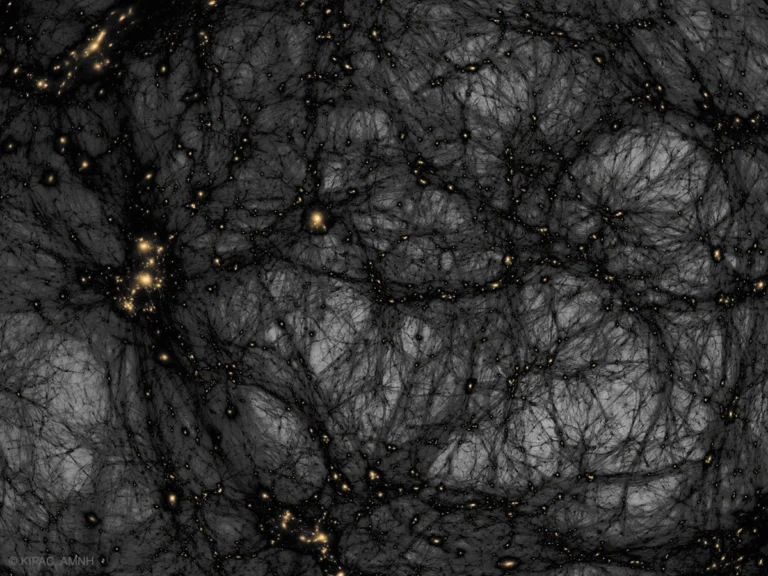
Beyond dark energy and exoplanets, the Roman Space Telescope will provide unprecedented views into the formation and evolution of galaxies over cosmic time. By capturing wide-field images of vast swathes of the sky, Roman will observe galaxies at various stages of their life cycles, from the early universe when they were just beginning to coalesce, to their current mature forms. This extensive dataset will allow astronomers to trace the cosmic web—the filamentary structure of matter that connects galaxies and galaxy clusters—and study how galaxies interact, merge, and grow.
The WFI’s broad spectral coverage and high sensitivity in the near-infrared are particularly valuable for observing distant galaxies. As the universe expands, light from remote objects is stretched to longer, redder wavelengths, a phenomenon known as cosmological redshift. Roman’s infrared capabilities will allow it to peer back in time, effectively observing galaxies as they appeared billions of years ago, when the universe was much younger. This will provide critical insights into the reionization era, when the first stars and galaxies emerged and transformed the neutral hydrogen gas of the early universe into the ionized state we observe today. Understanding these processes is fundamental to piecing together the universe’s grand evolutionary tapestry, revealing how structure emerged from the primordial soup after the Big Bang.
NASA Ames’s Crucial Innovations: ROSALIA and Beyond
The scientific ambitions of the Roman mission necessitate cutting-edge technological solutions, many of which have been developed and refined at NASA Ames Research Center. One such innovation is the ROSALIA (Roman Sky Analyst for Low Surface Brightness Imaging and Astronomy) software. Roman’s Wide Field Instrument is designed to capture incredibly faint signals from the distant universe, but even the most advanced cameras can be hampered by various forms of glare that diminish image quality. These can range from scattered photons within the telescope’s optical system, producing "stray light," to natural phenomena like zodiacal light.
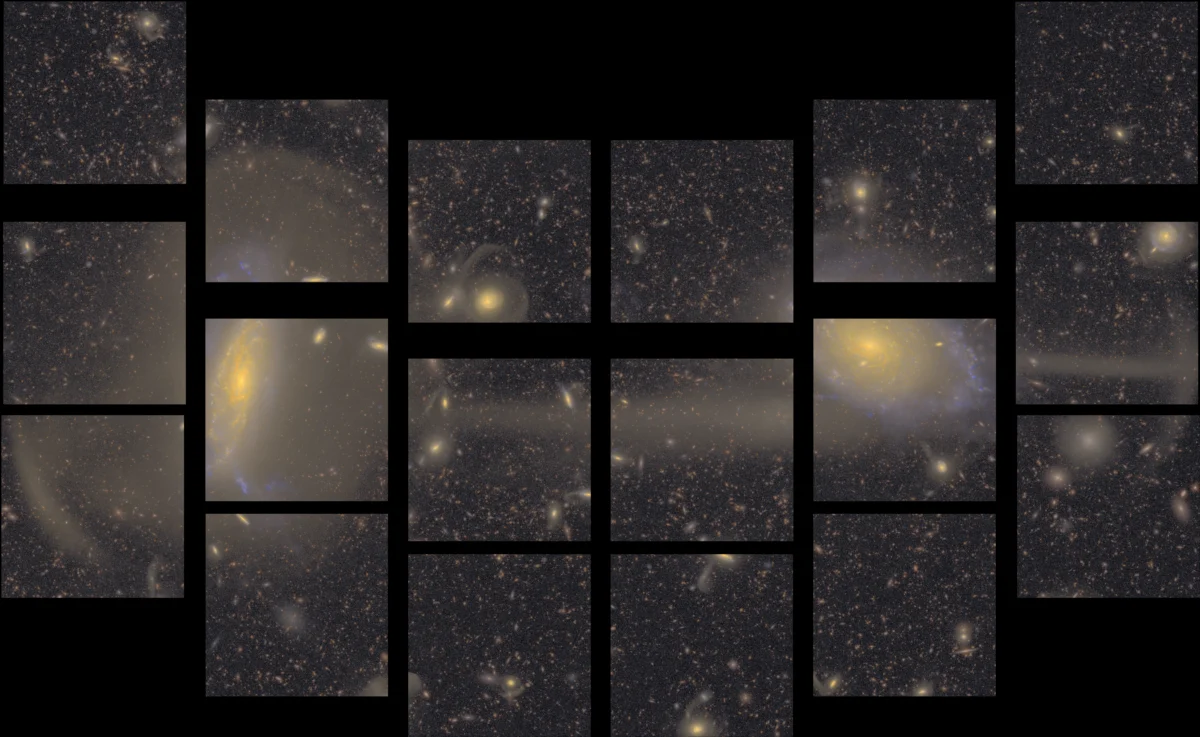
Stray light manifests in two primary ways: discrete bright glints and a diffuse background. Glints can be particularly problematic, creating deceptive image artifacts that might mimic real cosmic structures like planets or nebulae, leading to misinterpretations. ROSALIA predicts where these glints will occur and allows astronomers to adjust their observation plans to avoid contaminating scientific targets. Furthermore, stray light can appear as a pervasive, diffuse background glow, interfering with observations of the darkest regions of the universe – precisely where faint, extended structures critical to understanding large-scale cosmic evolution reside.
Even more pervasive is zodiacal light, a natural phenomenon originating from the scattering of sunlight by interplanetary dust particles within our own solar system. This faint, diffuse glow, visible to the naked eye under extremely dark conditions, creates a persistent background noise that obscures the even fainter emissions from the outer edges of galaxies, where crucial clues about their evolutionary histories are hidden. The ROSALIA software, developed by a team at NASA Ames in collaboration with NASA’s Goddard Space Flight Center and IPAC/Caltech, is designed to predict and strip away both zodiacal and stray light contamination from Roman’s images. This sophisticated digital "cleaning" process is essential for achieving the high-fidelity observations required for Roman’s ambitious scientific goals, enhancing the ability of astronomers to characterize faint cosmic structures and revealing the universe’s true, unobscured beauty.
The Power of Multi-Star Wavefront Control (MSWC)
The challenge of imaging exoplanets in multi-star systems is immense, requiring a level of precision that pushes the boundaries of current technology. NASA Ames researchers are directly addressing this with the Multi-Star Wavefront Control (MSWC) technology. While the Roman Coronagraph Instrument’s baseline operating mode supports observations only in single-star systems, the MSWC aims to overcome the inherent difficulties of suppressing multiple sources of starlight simultaneously.
The MSWC technology includes custom-designed light-blocking masks and accompanying software, engineered to suppress light from several stars at once, thereby revealing the hidden exoplanets orbiting them. These specialized masks are included on the Roman Coronagraph’s flight instrument as an added capability, developed through a collaboration with NASA’s Jet Propulsion Laboratory. While their use depends on additional observation time being granted after the primary technology demonstration phase, their inclusion signifies the profound potential of this innovation. If successful, MSWC would dramatically increase the likelihood of detecting habitable exoplanets and greatly expand our understanding of how planetary systems form and evolve in diverse stellar environments.
A compelling target for MSWC is the Alpha Centauri system, the nearest star system to our solar system, located just four light-years away. This triple-star system comprises a binary of Sun-like stars (Alpha Centauri AB) and a much smaller, dimmer star (Proxima Centauri), which is known to host at least two planets, including one in its habitable zone. Although no exoplanets are definitively confirmed around Alpha Centauri A or B, recent observations by NASA’s James Webb Space Telescope have identified a planet candidate in the habitable zone of Alpha Centauri A. Researchers, including the Ames MSWC team, are actively developing the capabilities required to observe this system directly with Roman, potentially offering an unprecedented view of a neighboring planetary system. NASA Ames also plays a leadership role in the hardware working group of the Roman Coronagraph Participation Program, fostering international collaborations to enable additional capabilities, including advanced multi-star modes that utilize different masks and novel wavefront control and sensing algorithms.
Supercomputing’s Role in Data Integrity and Discovery
The sheer volume and complexity of data expected from the Roman Space Telescope will be immense, requiring state-of-the-art computational infrastructure and expertise. The Advanced Supercomputing Division at NASA Ames is a cornerstone of this effort, bringing extensive experience in data pipelines and mission operations to the Roman project. Their guidance throughout key mission development phases is critical for ensuring the reliable performance of ground-based systems and operations. This oversight guarantees efficient processing of scientific data, maintaining the highest quality and integrity of the resulting scientific data products.
Specifically, NASA Advanced Supercomputing researchers have collaborated closely with the Ames MSWC team. They developed high-performance computing tools essential for conducting multi-star wavefront control simulations, which are vital for designing and validating the MSWC technique. These simulations allow engineers to model various scenarios, optimize the masks and algorithms, and assess the feasibility and performance of MSWC before it is deployed in space. The ability to simulate complex optical phenomena and data processing workflows at scale is indispensable for maximizing Roman’s scientific return and transforming raw telemetry into actionable scientific insights.
A Legacy of Exploration: Dr. Nancy Grace Roman and Future Horizons
The Nancy Grace Roman Space Telescope embodies a legacy of relentless scientific inquiry and technological advancement, fittingly named after a pioneer who shaped the landscape of space astronomy. Dr. Nancy Grace Roman, NASA’s first chief of astronomy, was instrumental in laying the groundwork for the Hubble Space Telescope, envisioning a future where space-based observatories could transcend Earth’s atmospheric limitations to reveal the universe in unprecedented detail. Her vision paved the way for missions like Roman, which now stands on the cusp of fulfilling long-held astronomical ambitions.
The launch of Roman marks not just the beginning of a new mission but a pivotal moment in the history of astronomy. Its wide-field imaging capabilities, combined with its advanced coronagraph, will bridge the gap between previous generation telescopes like Hubble and future observatories. Roman is expected to complement missions like the James Webb Space Telescope (JWST) by providing a broader contextual view of the universe, allowing JWST to then focus on detailed observations of specific targets identified by Roman.
The implications of Roman’s anticipated discoveries are profound. By precisely measuring dark energy, we could unlock new physics beyond the Standard Model. By mapping dark matter, we could finally understand the scaffolding upon which the cosmic web is built. And by directly imaging exoplanets in multi-star systems, we could fundamentally alter our understanding of planetary habitability and the potential for life beyond Earth. The mission is expected to operate for at least five years, with potential extensions, generating a treasure trove of data that will fuel astronomical research for decades to come. Scientists and the public alike eagerly await the first images and groundbreaking data from the Nancy Grace Roman Space Telescope, poised to rewrite our cosmic narrative.