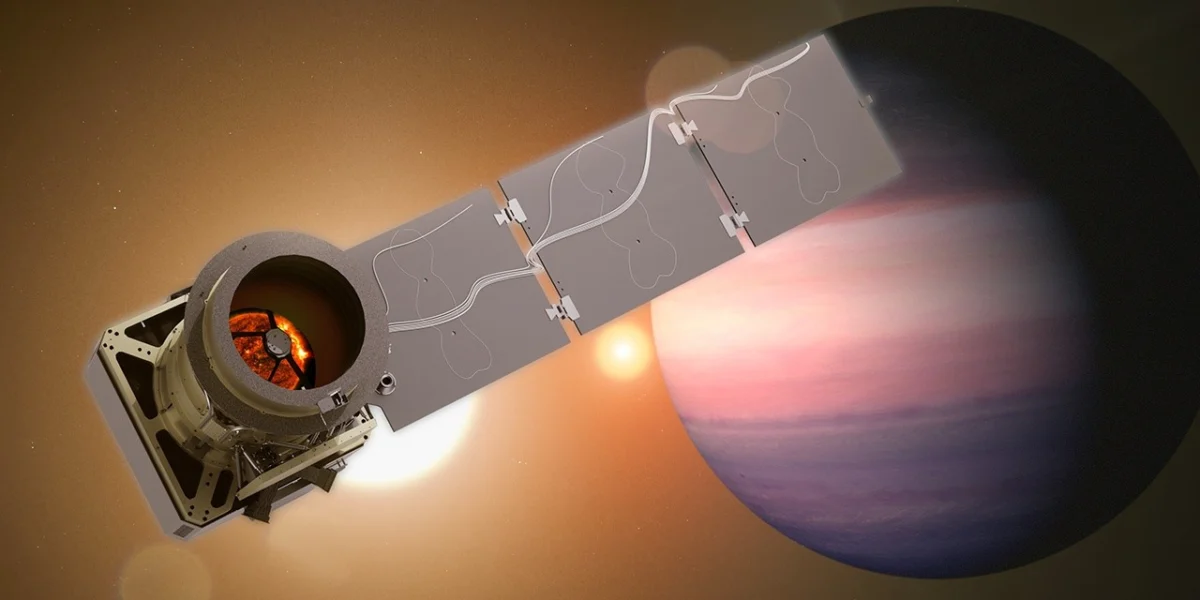
Pandora, NASA’s newest exoplanet mission and the first satellite to launch through the agency’s Astrophysics Pioneers program, is now making unique observations of worlds beyond our solar system and the stars they orbit, marking a significant stride in humanity’s quest to understand the universe’s most distant planetary systems. This innovative small satellite is tasked with determining the atmospheric make-up of at least 20 exoplanets, including the crucial presence of hazes, clouds, and, most importantly, water, offering an unprecedented look into the conditions prevalent on these alien worlds.
The commencement of scientific operations for Pandora follows a successful commissioning phase, during which the spacecraft and its sophisticated instruments demonstrated exceptional performance. Launched into low Earth orbit on January 11, 2024, Pandora represents a paradigm shift in space exploration, embodying the ethos of NASA’s Astrophysics Pioneers program – a initiative designed to foster rapid, cost-effective missions that tackle compelling scientific questions with a higher-than-usual tolerance for risk. This approach allows for the development and deployment of focused, high-impact missions that can deliver significant scientific returns without the extensive timelines and budgets associated with larger flagship observatories.
Addressing a Critical Gap in Exoplanet Research
A primary objective for Pandora is to resolve a longstanding challenge in exoplanet atmospheric characterization: the confounding effect of stellar activity on observational data. "Pandora’s data will help close a major gap in our knowledge about planets and their host stars because, right now, we can’t be entirely sure how the star’s light affects measurements of what makes up exoplanet atmospheres," stated Elisa Quintana, Pandora’s principal investigator at NASA’s Goddard Space Flight Center in Greenbelt, Maryland. This uncertainty has long complicated efforts to precisely decipher the atmospheric compositions of exoplanets, as the variability of their host stars can mimic or mask the subtle signals originating from the planetary atmospheres themselves. Quintana emphasized, "We designed the Pandora spacecraft and its in-depth observing program to better understand this vexing issue." By directly addressing this crucial measurement challenge, Pandora is set to provide more accurate and reliable data, thereby enhancing the fidelity of exoplanet atmospheric models.
The implications of Pandora’s findings are profound, laying a firm foundation for interpreting measurements from more powerful instruments, including NASA’s flagship James Webb Space Telescope (JWST), as well as future observatories specifically designed for the detection and characterization of habitable worlds. The synergy between Pandora and JWST is particularly noteworthy; Pandora’s near-infrared detector is, in fact, a spare originally developed for Webb, underscoring the high-quality instrumentation onboard this smaller, more agile mission. This shared heritage not only speaks to the detector’s capabilities but also highlights the strategic foresight in leveraging proven technologies for new scientific endeavors.
Mission Status and Operational Excellence
The successful transition from commissioning to science operations is a testament to the meticulous work of the mission teams. "The spacecraft is healthy and all of the instruments are performing as well as we could have hoped," reported Jordan Karburn, Pandora’s deputy project manager at Lawrence Livermore National Laboratory in California. This positive assessment confirms that Pandora is fully prepared to embark on its ambitious scientific agenda. Karburn added, "Our team’s hard work throughout the commissioning process has paid off, and we can now confidently start science." The seamless operation of the spacecraft and its instruments ensures that the mission is on track to deliver critical data to the scientific community.
The Astrophysics Pioneers Program: Fostering Innovation
Pandora stands as a shining example of the Astrophysics Pioneers program’s success. This program, initiated by NASA’s Science Mission Directorate, is specifically tailored to fund small, innovative missions that address high-priority science goals within a modest budget and a rapid development timeline. These missions, often utilizing CubeSat or SmallSat platforms, are designed to explore compelling questions about the universe with an inherent understanding that a higher tolerance for failure is acceptable, allowing for more experimental and groundbreaking approaches. This agility contrasts sharply with the multi-decade development cycles and multi-billion-dollar price tags of larger missions, enabling quicker turnaround times for scientific discovery. The Astrophysics Pioneers program acts as a vital incubator for novel technologies and scientific methodologies, fostering a dynamic environment for space exploration.
Pandora’s Tripartite Uniqueness
What sets Pandora apart in the increasingly crowded field of exoplanet research are three distinct features that collectively enhance its observational power and scientific utility:
- Novel All-Aluminum Telescope: Pandora carries a cutting-edge, all-aluminum telescope, approximately 18 inches (45 centimeters) in diameter. This innovative design offers exceptional thermal stability and lightweight properties, crucial for maintaining optical alignment and performance in the extreme conditions of space. The use of aluminum throughout the telescope structure minimizes differential expansion and contraction due to temperature fluctuations, ensuring consistent data quality over long observation periods.
- Simultaneous Multi-Wavelength Observation: A core strength of Pandora is its ability to study exoplanets and their host stars simultaneously in both visible and near-infrared light. This dual-wavelength approach is critical for distinguishing between signals originating from the exoplanet’s atmosphere and those caused by the star’s own activity. By observing across a broader spectrum, scientists can more effectively "disentangle" these signals, leading to more accurate atmospheric characterizations.
- Extended Observation Durations: Unlike larger, high-demand observatories like the James Webb Space Telescope, which have extremely competitive scheduling and limited observation windows for individual targets, Pandora is designed to observe its targets for much longer durations. This extended "stare" capability allows for the accumulation of more photons, leading to higher signal-to-noise ratios and the detection of fainter, more subtle atmospheric features.
The Intricacies of Transit Spectroscopy and Stellar Activity
The primary method employed by Pandora for atmospheric analysis is transit spectroscopy. This technique relies on observing a planet as it passes in front of its host star from our vantage point, an event known as a transit. During a transit, some starlight skims through the exoplanet’s atmosphere before reaching Pandora’s detectors. As this light interacts with the various molecules present in the atmosphere, specific wavelengths of light are absorbed or scattered, leaving behind unique "chemical fingerprints" embedded in the stellar spectrum. For each molecule, astronomers can identify characteristic brightness dips at specific wavelengths, revealing the atmospheric composition.
However, interpreting these delicate chemical signatures is complicated by the inherent variability of stars. Our instruments receive light from the entire stellar disk, not just the tiny sliver that grazes the planet’s atmosphere. Stellar surfaces are far from uniform; they exhibit dynamic features such as hotter, brighter areas known as faculae and cooler, darker regions akin to sunspots. Both faculae and sunspots can grow, shrink, and change position as the star rotates, introducing variability in the observed stellar flux. This stellar activity can significantly distort the atmospheric signals, particularly for molecules like water, which are crucial indicators of potential habitability.
"Water is one of the most important molecules we can measure to understand the composition and physical conditions of an exoplanet atmosphere," explained Benjamin Rackham, a team member at the Massachusetts Institute of Technology in Cambridge. He underscored the challenge: "But features on the star can distort the water signal we’re searching for. Pandora is designed to disentangle the signals from the planet and the star, helping us to understand the planets more accurately and laying the groundwork for the eventual study of planets that could harbor life." By simultaneously monitoring both the star and the planet in multiple wavelengths over extended periods, Pandora provides the necessary data to accurately model and subtract the stellar contamination, yielding clearer, uncontaminated atmospheric spectra.
Technological Heart of the Mission
At the core of Pandora’s scientific capabilities are its advanced telescope and detectors. The all-aluminum telescope, jointly developed by Lawrence Livermore National Laboratory and Corning Specialty Materials in Keene, New Hampshire, is paired with highly sensitive detectors. These detectors are engineered to capture the star’s brightness in visible light and its near-infrared spectrum concurrently, while also obtaining a precise near-infrared spectrum from the exoplanet during its transit. The infrared sensor, a critical component for detecting water and other key atmospheric gases, was provided by NASA Goddard, further showcasing the collaborative spirit of the mission.
Over its year-long primary mission, Pandora is slated to observe at least 20 exoplanets. Each exoplanet will be observed 10 times, with each observation consisting of a long-duration stare covering 24 hours, ensuring that at least one complete transit event is captured within each observation window. This systematic and extensive observational strategy is designed to build a robust dataset for each target, allowing for detailed analysis and cross-validation of results.
Synergy with Flagship Observatories
The scientific output of Pandora is not intended to operate in isolation but rather to complement and enhance the data gathered by other powerful telescopes, particularly the James Webb Space Telescope. "Pandora’s advantage is its ability to observe targets for extended periods at multiple wavelengths, something high-demand flagship missions like Webb cannot regularly do," said Knicole Colón, the mission’s project scientist at NASA Goddard. Webb, with its unparalleled sensitivity and resolution, can gather exquisite detail from a limited number of observations. Pandora, on the other hand, can provide the long-duration, multi-epoch observations necessary to characterize stellar variability with high precision. Colón highlighted the profound impact of this collaboration: "Combining Pandora and Webb data will uniquely enable scientists to determine the properties of stellar surfaces and cleanly separate star and planetary signals." This integrated approach promises to unlock a deeper understanding of exoplanet atmospheres than either observatory could achieve alone.
Implications for the Search for Habitable Worlds
Pandora’s mission directly contributes to the overarching goal of identifying and characterizing potentially habitable exoplanets. The accurate detection and quantification of water vapor in exoplanet atmospheres are paramount, as water is a fundamental prerequisite for life as we know it. By providing clearer, less contaminated atmospheric spectra, Pandora will enable scientists to make more definitive statements about the presence and abundance of water, hazes, and clouds. These insights are crucial for understanding planetary formation, evolution, and the potential for life beyond Earth. The mission’s focus on disentangling stellar and planetary signals is a critical step in refining our tools for future missions specifically designed to search for biosignatures in the atmospheres of Earth-like exoplanets.
A Collaborative Endeavor: The Teams Behind Pandora
The success of the Pandora mission is the result of a vast collaborative effort involving multiple institutions and dedicated teams. NASA’s Goddard Space Flight Center leads the mission, providing scientific oversight and project management expertise. Lawrence Livermore National Laboratory (LLNL) plays a pivotal role, providing the mission’s overall project management and engineering, and was instrumental in the collaborative development of Pandora’s unique telescope with Corning. LLNL also developed the imaging detector assemblies, the mission’s control electronics, and all supporting thermal and mechanical subsystems. The vital infrared sensor was provided by NASA Goddard, leveraging its deep expertise in space-borne instrumentation.
Blue Canyon Technologies was responsible for providing the spacecraft bus, performing the intricate spacecraft assembly, integration, and environmental testing, and continues to provide essential mission operations support. NASA’s Ames Research Center, located in California’s Silicon Valley, performs the crucial mission’s data processing, transforming raw telemetry into scientifically usable information. The valuable science data collected by Pandora is made publicly available at the NASA Exoplanet Archive, which is expertly operated by IPAC at the California Institute of Technology in Pasadena, ensuring broad access for the global scientific community. The University of Arizona leads mission operations for Pandora and contributes significantly to its science program, with numerous additional universities and research institutions also supporting the diverse science team.
Looking Ahead: The Promise of Pandora’s Data
As Pandora embarks on its year-long primary mission, the scientific community eagerly anticipates the wealth of data it will provide. By offering an unprecedented capability to separate stellar noise from planetary atmospheric signals, Pandora is set to remove a major hurdle in exoplanet characterization. The mission’s observations will not only enhance our understanding of the diverse range of exoplanet atmospheres but also significantly improve our ability to identify and prioritize targets for more in-depth study by future, even more powerful observatories. Pandora is not merely observing distant worlds; it is paving the way for a clearer, more accurate vision of their true nature, bringing humanity closer to answering fundamental questions about our place in the cosmos.