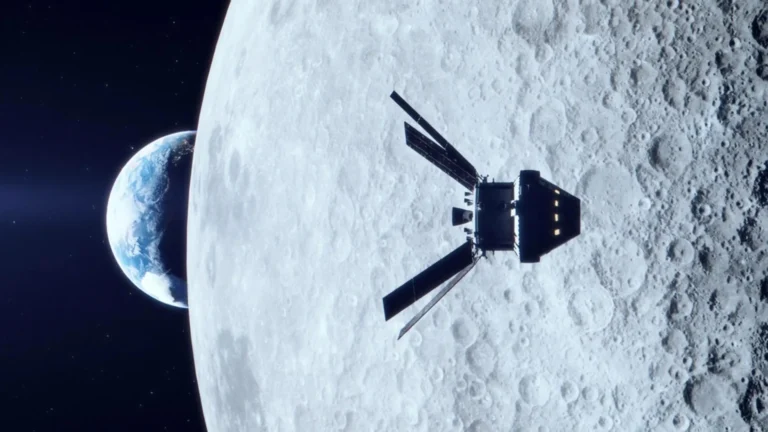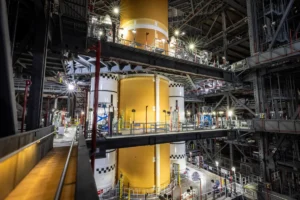



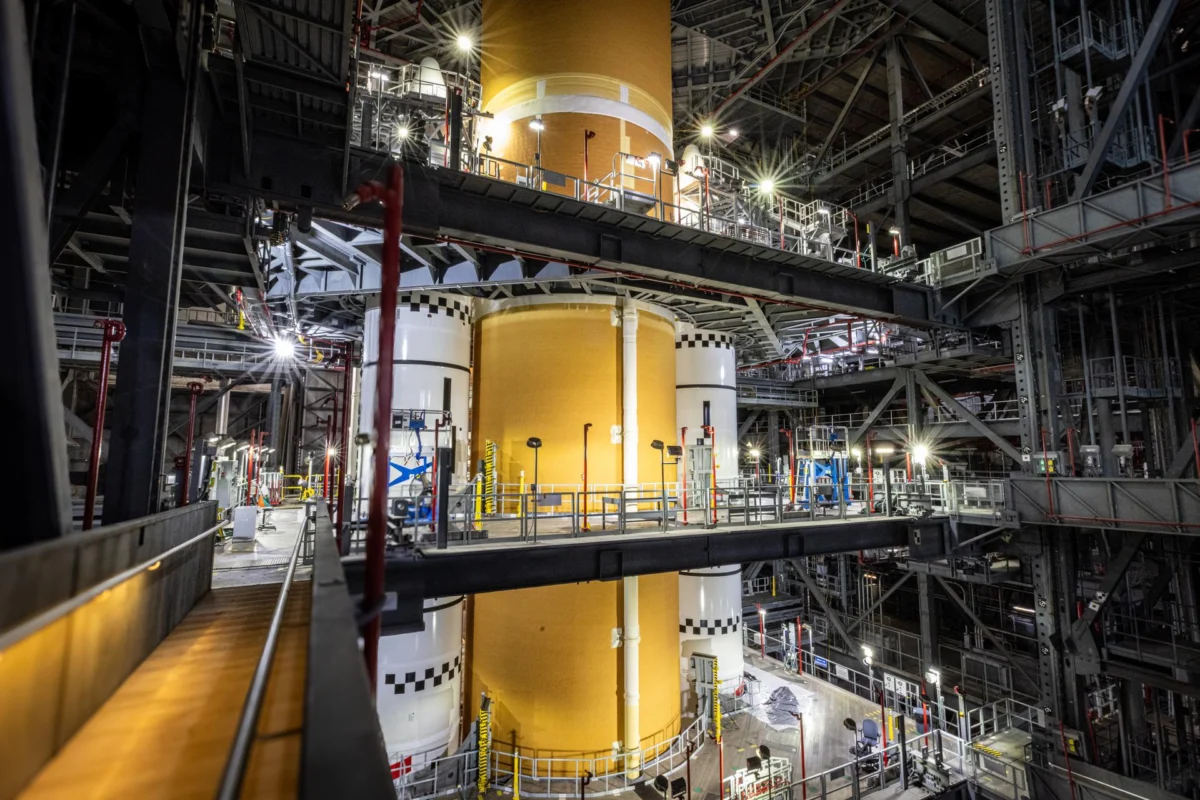
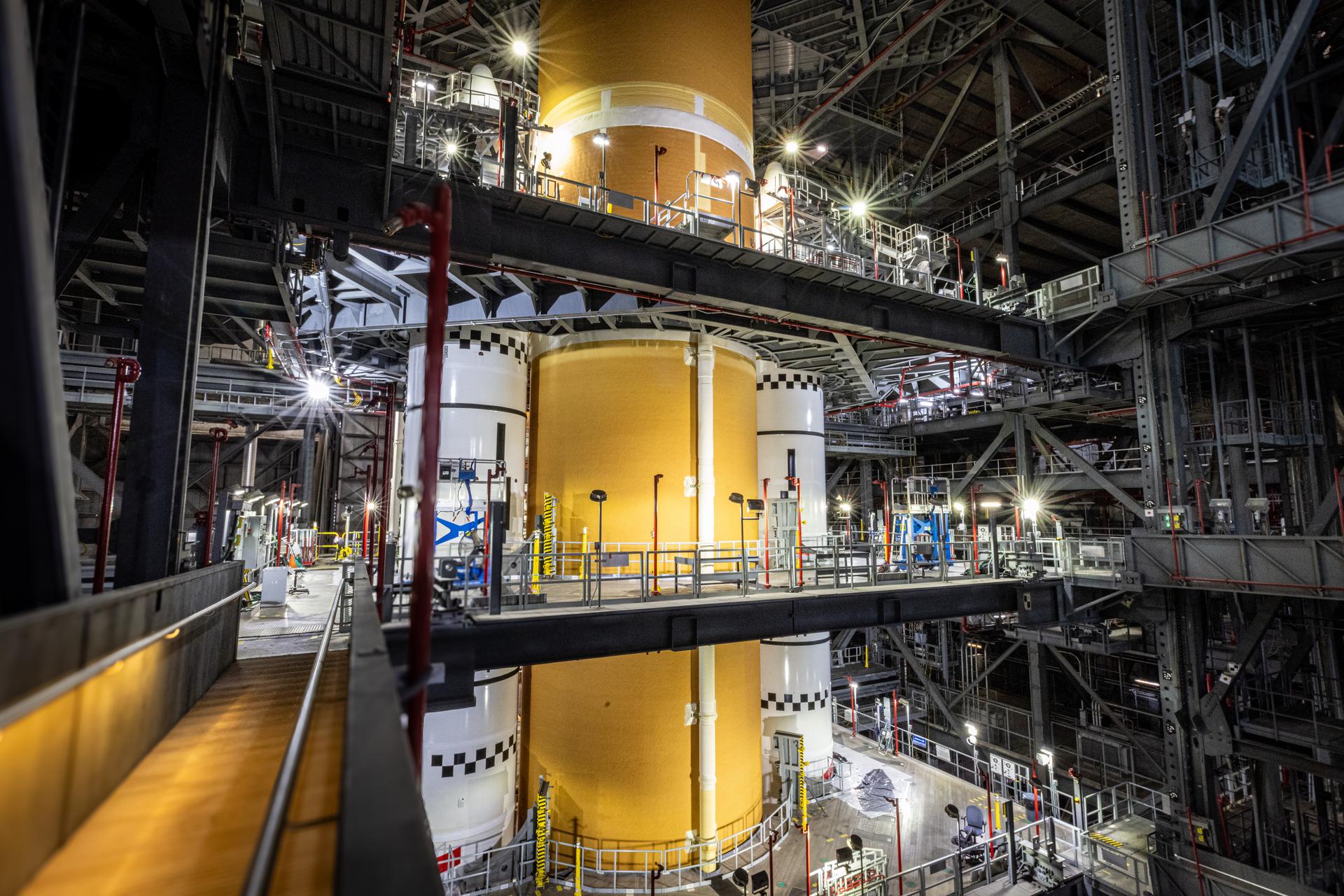
The monumental integration of the Space Launch System (SLS) core stage for NASA’s Artemis III mission with its twin solid rocket boosters (SRBs) was successfully completed on October 28, 2026, inside the towering Vehicle Assembly Building’s (VAB) High Bay 3 at NASA’s Kennedy Space Center (KSC) in Florida. This pivotal milestone signifies a tangible and highly visible progression in the United States’ ambitious endeavor to return humans to the lunar surface and establish a sustainable presence there, ultimately paving the way for future crewed missions to Mars. The meticulously orchestrated lift and mating operation underscores years of engineering development, manufacturing, and assembly, bringing the powerful heavy-lift rocket closer to its launch date.
The Heart of Artemis III: Core Stage Integration Details
The process of integrating the SLS core stage, the 212-foot backbone of the rocket, is an operation of immense scale and precision, demanding specialized equipment and highly skilled personnel. Technicians meticulously lifted the colossal core stage from High Bay 2 of the VAB using a custom-engineered, one-of-a-kind lifting beam. This specialized apparatus, designed to handle the immense weight and dimensions of the stage, carefully maneuvered it into High Bay 3. Here, it was precisely positioned and integrated onto the Mobile Launcher, a towering, transportable platform that serves as the base for assembly, testing, and ultimately, transport to the launch pad. The core stage, housing the rocket’s main propulsion system, now stands proudly flanked by the two five-segment SRBs, which were previously stacked segment by segment onto the Mobile Launcher. This combined stack represents the most powerful rocket ever built by NASA, capable of generating 8.8 million pounds of thrust at liftoff. The VAB itself, a historic landmark dating back to the Apollo era, once again demonstrated its indispensable role in the nation’s human spaceflight aspirations, providing the controlled environment necessary for such delicate and critical operations.
A Monumental Rocket: The Space Launch System
The SLS is the cornerstone of NASA’s Artemis program, designed to be the agency’s primary heavy-lift launch vehicle for deep space exploration. The core stage, built at NASA’s Michoud Assembly Facility in New Orleans, is equipped with four RS-25 engines – the same type used on the Space Shuttle – that collectively produce over 2 million pounds of thrust. Fueled by 730,000 gallons of super-chilled liquid hydrogen and liquid oxygen, these engines will fire for approximately eight minutes during ascent, providing the majority of the thrust to propel the Orion spacecraft and its crew toward the Moon. The twin solid rocket boosters, provided by Northrop Grumman, each stand 177 feet tall and generate 3.6 million pounds of thrust for the first two minutes of flight, supplementing the core stage’s power during the critical initial phase of launch. This combination of liquid and solid propulsion systems makes the SLS an unparalleled launch vehicle, surpassing the capabilities of even the mighty Saturn V rocket that launched the Apollo missions. Its design emphasizes reliability and safety, leveraging proven technologies while incorporating modern advancements to meet the demands of extended deep-space missions.
Path to the Pad: Pre-Launch Procedures and Tanking Test
With the core stage and booster stack now integrated, the focus shifts to a comprehensive series of testing and checkouts. These meticulous procedures are crucial to ensure that every system, connection, and component is functioning flawlessly and ready for the rigors of spaceflight. Engineers and technicians will conduct electrical, mechanical, and communications tests, verifying the integrity of the entire integrated stack.
Following these rigorous evaluations, the massive rocket assembly, securely fastened to the Mobile Launcher, will embark on its journey from the VAB to Launch Pad 39B. This slow, deliberate roll-out, carried out by the Crawler-Transporter, is an iconic spectacle at KSC, symbolizing the imminent launch. Once at the pad, a critical dress rehearsal known as the "wet dress rehearsal" or "tanking test" will be conducted. During this test, the core stage will be fully loaded with its cryogenic propellants – liquid hydrogen and liquid oxygen. This is a highly complex operation, as these propellants must be kept at extremely low temperatures (liquid oxygen at -297°F and liquid hydrogen at -423°F). The tanking test serves multiple vital purposes: it validates the ground systems at Launch Pad 39B, ensures the rocket’s plumbing can handle the cryogenic fuels, and allows launch teams to practice the intricate countdown procedures and timelines, simulating a full launch day scenario up to the final seconds before ignition. This rehearsal is paramount for identifying and resolving any potential issues before the actual launch day, ensuring the highest level of safety and operational readiness for the crewed mission.
Artemis III: A Stepping Stone to Lunar Landing
The Artemis III mission is poised to be a landmark achievement in human space exploration, marking the return of astronauts to the Moon’s surface for the first time in over half a century. The mission will launch four highly experienced astronauts aboard the Orion spacecraft atop the SLS rocket: NASA astronauts Randy Bresnik, Frank Rubio, and Andre Douglas, alongside European Space Agency (ESA) astronaut Luca Parmitano. These individuals represent the pinnacle of space exploration, bringing diverse backgrounds and extensive training to this historic endeavor.
Randy Bresnik, a veteran of two Space Shuttle missions and a long-duration stay on the International Space Station (ISS), brings a wealth of EVA (Extravehicular Activity) experience. Frank Rubio, a flight engineer on the ISS and a U.S. Army helicopter pilot, embodies resilience and precision. Andre Douglas, a relatively newer astronaut selected in 2020, has a background in electrical and computer engineering, contributing crucial technical expertise. Luca Parmitano, an Italian ESA astronaut, is a seasoned spacefarer with two ISS missions under his belt, known for his calm demeanor and extensive operational experience. His inclusion highlights the crucial international collaboration inherent in the Artemis program.
The primary objective of Artemis III is not just to reach lunar orbit but to perform a critical test of rendezvous and docking capabilities between the Orion spacecraft and commercial human landing systems (HLS) provided by private industry partners, namely Blue Origin and SpaceX. This orbital rendezvous and docking demonstration is a crucial precursor to the actual lunar landing, which will see two of the four astronauts transfer from Orion to the HLS for descent to the lunar south pole, while the other two remain in Orion in lunar orbit. The mission is designed to test the entire operational sequence necessary for a sustainable lunar presence, including crew transfer, independent lunar operations, and return to Orion for the journey home.
Commercial Partnerships: The New Era of Lunar Exploration
The integration of commercial space partners, Blue Origin and SpaceX, is a defining characteristic of the Artemis program, differentiating it significantly from the Apollo era. NASA has strategically leveraged private industry innovation and capabilities to develop the Human Landing System (HLS), fostering competition and driving technological advancement while potentially reducing costs and accelerating development timelines.
SpaceX’s Starship HLS variant has been selected for the initial crewed lunar landing for Artemis III. This ambitious system, based on SpaceX’s fully reusable Starship vehicle, is designed to transport astronauts from lunar orbit to the surface and back to Orion. Blue Origin, with its Blue Moon lander concept, is also a key partner, developing another HLS option for future Artemis missions, providing redundancy and diversity in lunar access. This dual-provider approach ensures a robust and competitive landscape for lunar transportation. These commercial vehicles represent a new paradigm in space exploration, where government agencies like NASA partner with private companies to achieve ambitious goals, combining public oversight with private sector agility and ingenuity. The rendezvous and docking test with these commercial spacecraft during Artemis III is therefore not just a technical milestone, but also a programmatic one, validating NASA’s strategy for sustainable lunar exploration.
The Artemis Program: Building a Sustainable Lunar Future
The Artemis program represents a bold new chapter in human space exploration, building upon the legacy of Apollo while setting its sights on a sustainable future beyond Earth orbit. Unlike the "flags and footprints" approach of Apollo, Artemis aims to establish a long-term human presence on and around the Moon, utilizing its resources and scientific opportunities to prepare for the ultimate journey to Mars. The program is built on several key pillars: the SLS rocket, the Orion spacecraft, the Human Landing System (HLS), and the Lunar Gateway, a planned orbital outpost around the Moon.
The Gateway will serve as a multi-purpose way station for astronauts, a science laboratory, and a staging point for lunar surface missions and eventually, deeper space exploration. This integrated approach, involving a robust launch system, a capable crew vehicle, innovative landers, and an orbital platform, is designed to create a flexible and sustainable architecture for continuous lunar exploration. The long-term vision includes establishing an Artemis Base Camp at the lunar South Pole, an area believed to hold water ice in permanently shadowed craters, a crucial resource for future long-duration missions.
Chronology of Lunar Ambition: From Artemis I to III and Beyond
The journey to Artemis III has been a carefully planned and executed sequence of missions, each building upon the successes and lessons learned from its predecessor.
Artemis I (November 2022): This uncrewed test flight successfully launched the SLS rocket and sent an uncrewed Orion spacecraft on a 25-day journey around the Moon and back. The mission thoroughly tested the SLS and Orion systems in the harsh environment of deep space, validating their performance, heat shield integrity, and re-entry capabilities. It gathered invaluable data that informed subsequent design improvements and operational procedures.
Artemis II (Planned 2024/2025): This mission will mark the first crewed flight of the Artemis program. Four astronauts will embark on a lunar flyby, orbiting the Moon without landing. The primary objectives are to test Orion’s life support systems, communications, and maneuvering capabilities with humans onboard, further proving the spacecraft’s readiness for deep-space travel. This mission is the final crucial step before the crewed lunar landing.
Artemis III (Planned 2026): As the current focus, Artemis III represents the pinnacle of the initial phase of the program – the return of humans to the lunar surface. Its success will validate the full operational architecture for lunar landings, including the integration of commercial landers.
Future Artemis Missions (Artemis IV, V, and beyond): Following Artemis III, subsequent missions will focus on the construction and utilization of the Lunar Gateway, deploying additional HLS systems, and establishing the Artemis Base Camp. These missions will enable longer stays on the lunar surface, more extensive scientific research, and the development of technologies crucial for eventual human missions to Mars. The program aims for a continuous and expanding human presence on the Moon.
Official Perspectives and Anticipation
The integration of the SLS core stage is met with palpable excitement and a sense of profound accomplishment across NASA and its partners. "This milestone is more than just a technical achievement; it’s a powerful visual testament to the incredible progress we are making toward returning humanity to the Moon," stated a NASA official, emphasizing the collaborative spirit. "Seeing the core stage and boosters united within the VAB ignites the imagination and reinforces our collective commitment to exploration."
The Kennedy Space Center Director, a hub of launch operations, likely echoed these sentiments. "KSC has been the launchpad for humanity’s greatest adventures, and with Artemis III, we continue that legacy. Our teams are working tirelessly, with precision and dedication, to prepare this magnificent rocket for its historic journey. Every step, from assembly to the tanking test, is meticulously planned to ensure mission success and the safety of our astronauts."
SLS Program Managers highlighted the engineering marvel. "The SLS core stage is the most complex rocket stage ever built, and its integration is a testament to the ingenuity and perseverance of thousands of engineers and technicians across the country. This vehicle is designed to take us farther than ever before, enabling unprecedented exploration."
The astronauts themselves, poised for this historic mission, expressed their anticipation. "To witness the rocket that will carry us to the Moon coming together is incredibly inspiring," shared one of the Artemis III crew members. "We are keenly focused on our training, and seeing these physical milestones gives us immense confidence in the vehicle and the ground teams supporting us. We are ready to make history."
Broader Implications: Science, Economy, and the Future of Spaceflight
The Artemis program, and specifically the progress towards Artemis III, carries profound implications that extend far beyond the immediate goal of lunar return.
Scientific Discovery: The Moon, particularly its South Pole, offers unprecedented opportunities for scientific research. The potential presence of water ice could revolutionize long-duration space missions by providing resources for drinking water, breathable air, and rocket fuel. Lunar geology, volcanism, and the study of impact craters offer insights into the early solar system and planetary formation. Deploying advanced scientific instruments and eventually establishing a permanent research station will significantly expand humanity’s understanding of our cosmic neighborhood.
Economic Impact: The Artemis program acts as a significant economic driver, fostering innovation and creating high-tech jobs across numerous industries. Contracts awarded to companies like Boeing, Lockheed Martin, Northrop Grumman, SpaceX, and Blue Origin stimulate growth in aerospace manufacturing, advanced materials, software development, and robotics. The burgeoning commercial space industry, fueled by NASA partnerships, is creating new markets and opportunities, from lunar logistics to space tourism, projecting a multi-trillion-dollar space economy in the coming decades.
Technological Advancement: The challenges of lunar and deep-space exploration necessitate the development of cutting-edge technologies. These include advanced life support systems, radiation shielding, autonomous navigation, sophisticated robotics, in-situ resource utilization (ISRU) for living off the land, and improved propulsion systems. Many of these innovations will inevitably find terrestrial applications, benefiting various sectors from medicine and energy to communications and environmental monitoring, driving progress across society.
International Cooperation and Global Leadership: The Artemis program is fundamentally an international endeavor, with significant contributions from the European Space Agency, Canadian Space Agency, and Japan Aerospace Exploration Agency, among others. Over two dozen nations have signed the Artemis Accords, a set of principles for peaceful and sustainable lunar exploration. This broad international collaboration reinforces global leadership in space, fostering goodwill, sharing expertise, and distributing the costs and risks of ambitious missions. It positions the United States at the forefront of a new era of space exploration, promoting peaceful and responsible conduct in the lunar environment.
The Long-Term Vision: Mars and Beyond: Ultimately, the Moon is envisioned as a critical proving ground and stepping stone for human missions to Mars. Technologies and operational procedures developed and tested on the Moon – such as long-duration habitats, closed-loop life support, and radiation mitigation – will be directly applicable to the much longer and more challenging journey to the Red Planet. The Artemis program is not just about returning to the Moon; it is about building the foundation for humanity to become a multi-planetary species.
The integration of the Artemis III SLS core stage is more than a technical procedure; it is a profound symbol of humanity’s enduring quest for discovery and exploration. It marks a definitive step towards an exciting future where humans will not only walk on the Moon again but will establish a sustainable presence, setting the stage for the next giant leaps into the cosmos.