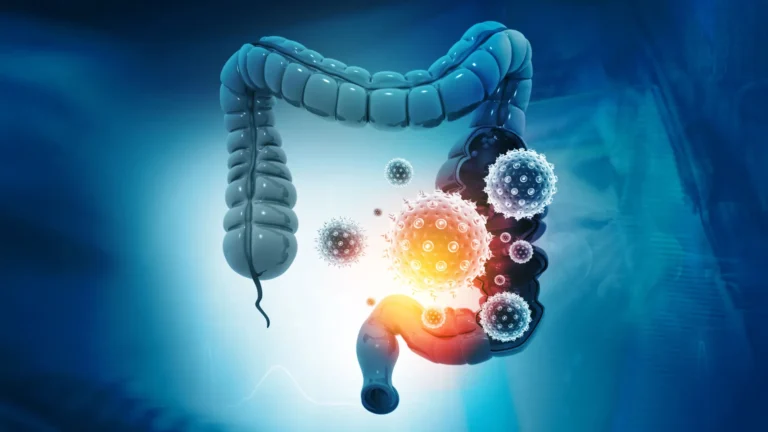



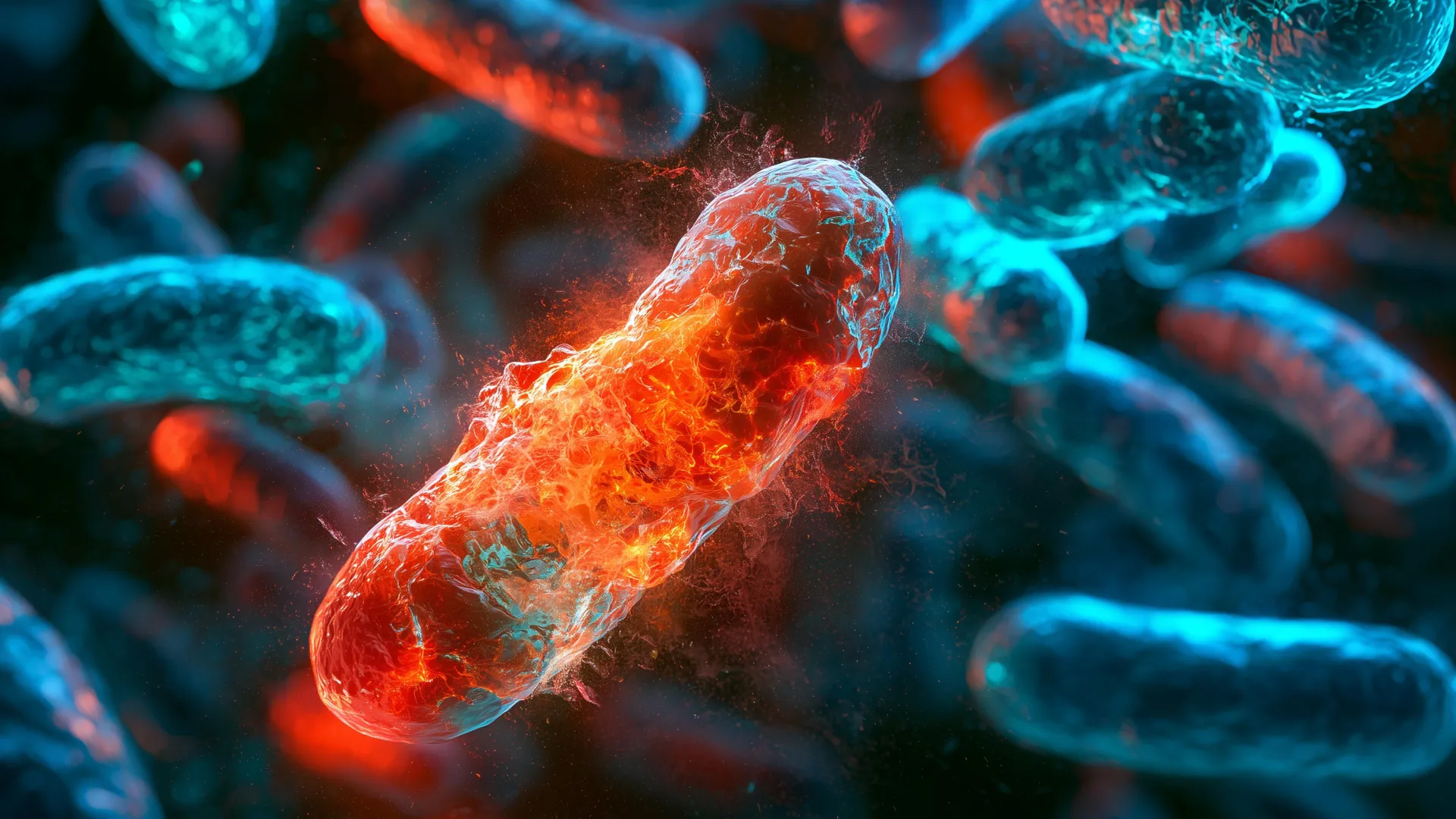
San Francisco, CA – In a groundbreaking discovery that challenges long-held scientific paradigms, researchers at the Gladstone Institutes have identified a novel bacterial immune system that operates in a manner almost diametrically opposed to previously understood defenses. This unique mechanism, detailed in the latest issue of Molecular Cell, involves bacteria deliberately triggering a self-destructive process upon viral attack, a revelation that holds significant promise for advancing medical treatments and gene-editing technologies.
The findings stem from an in-depth investigation into a class of bacterial defense systems known as "type VI retrons." These systems, unlike their previously characterized counterparts, employ an intricate and surprisingly complex sequence of molecular events to combat viral infections. Instead of suppressing a toxin, these type VI retrons leverage DNA to actively activate a lethal toxin only when a threat is detected, a stark departure from the established understanding of retron function. This discovery not only expands the scientific community’s knowledge of bacterial immunity but also lays crucial groundwork for the development of more precise and effective DNA-editing tools, potentially enabling the correction of genetic mutations with unprecedented accuracy.
"This is, by far, the strangest of the retron systems that we or anyone else has come across," stated Dr. Seth Shipman, a Gladstone Investigator and senior author of the study. "These retrons operate with Rube Goldberg-level complexity, using molecular mechanisms that we would never have thought to invent, but that we’ll use in future technologies."
The Paradoxical Defense: Bacteria’s Ultimate Sacrifice
Bacteria, microscopic organisms fundamental to life on Earth, are under constant siege from bacteriophages, or phages – viruses that specifically target and infect bacterial cells. These phages hijack the bacterial machinery to replicate themselves, posing a persistent existential threat to bacterial populations. Over millions of years of evolution, bacteria have developed an array of sophisticated defense mechanisms to counter these viral assaults.
Among these defenses are retrons, remarkable molecular systems that possess the ability to detect specific viral infections. Upon detection, they can initiate a programmed cell death sequence within the infected bacterium. While this act of self-sacrifice results in the demise of an individual cell, it serves a critical colony-level purpose: preventing the virus from multiplying and spreading to neighboring bacterial cells, thereby safeguarding the larger microbial community.
The scientific interest in retrons extends beyond their role in bacterial survival. Their inherent capability to efficiently produce and deliver single-stranded DNA makes them highly attractive candidates for the development of next-generation genetic engineering tools, particularly for editing DNA within human cells. Dr. Shipman’s team, alongside other research groups, is actively exploring the potential of these systems to correct disease-causing mutations with exceptional precision.
Prior to this recent discovery, the prevailing scientific consensus held that the fundamental operational principles of retron defenses were well-understood. The established model posited that in uninfected cells, a toxic protein is present but is kept in check by short segments of single-stranded DNA. Viral infection disrupts this delicate balance, allowing the toxin to become active and initiate cell death, thus thwarting viral propagation.
A Backward Mechanism: The Type VI Retron Anomaly
The newly investigated type VI retrons, however, deviated significantly from this established blueprint. Researchers initially became aware of their peculiar nature when they failed to detect the single-stranded DNA that is typically a hallmark of retron activity in uninfected cells.
"The way we typically detect retrons inside uninfected cells is by looking for this single-stranded DNA," explained Karen Zhang, a PhD student in Dr. Shipman’s lab and lead author of the study. "But type VI retrons caught our attention because they didn’t appear to have this signature. It was very odd, and we wondered if they might be broken."
Despite their apparent lack of expected molecular indicators, experimental evidence unequivocally demonstrated that bacteria equipped with type VI retrons were indeed capable of mounting a robust defense against phage infections. The systems were demonstrably functional, even in the absence of the previously assumed molecular markers.
"That kicked off a long molecular odyssey," Dr. Shipman recounted. "Whenever we tried the experiments we normally use to study retrons, they would fail, so we kept having to think of new ways to figure out how these retrons work."
Through extensive and persistent investigation, the team ultimately uncovered that type VI retrons operate by reversing a crucial step in the conventional defense cascade. Instead of maintaining a substantial stockpile of single-stranded DNA and toxin in a healthy, uninfected cell, these retrons produce minimal detectable DNA and virtually no discernible toxin. The arrival of a phage triggers a dramatic surge in DNA production.
As this DNA accumulates, it initiates an interaction with an RNA molecule that had been actively suppressing toxin synthesis. This interaction effectively disarms the suppression mechanism, enabling the bacterium to rapidly produce the toxic protein. The toxin itself appears to be a remarkably small protein that integrates into the bacterial cell membrane, destabilizing it and leading to cell death. This sacrifice effectively halts the viral replication cycle before it can spread.
In essence, the DNA in this system functions not as a restraint but as an activation switch. Rather than preventing an already synthesized toxin from causing harm, it plays a pivotal role in initiating toxin production precisely when the bacterium senses an external threat.
"It’s almost the mirror-image version of how we traditionally view retrons, because the DNA switches on toxin production instead of inhibiting an already-produced toxin," Ms. Zhang elaborated. "It would be fascinating to explore how bacterial evolution could have resulted in such a complex molecular system — whether type VI retrons are older or newer than other retrons, or whether they’re a stepping stone between different types."
Navigating the Unknown: Pioneering New Experimental Avenues
The elucidation of the type VI retron’s mechanism proved to be an exceptionally challenging endeavor. Many established laboratory techniques, routinely employed for retron research, yielded no meaningful results, compelling the researchers to devise novel experimental strategies and adapt existing methodologies.
A significant hurdle involved the detection of the DNA produced by type VI retrons in uninfected cells. Initial attempts using conventional methods proved futile. The breakthrough came when the team employed a technique called Spacer-seq, a method previously developed within Dr. Shipman’s own laboratory. This technique ingeniously utilizes components of the CRISPR-Cas system, another well-known bacterial immune defense mechanism, to record and analyze molecular activity within cells.
While CRISPR-Cas is widely recognized for its transformative role in modern gene-editing technologies, its evolutionary origin lies in bacterial defense against viruses. Spacer-seq capitalizes on this inherent biological machinery to provide researchers with a window into cellular processes.
This alternative approach ultimately revealed a faint but detectable signal of single-stranded DNA, which had been missed by all prior, conventional experiments. "We had just about given up hope that any DNA was being made when this approach finally revealed a very, very low level of production in uninfected cells," Ms. Zhang shared.
This crucial finding emboldened the researchers to continue their investigation. Subsequent experiments provided definitive confirmation that type VI retrons produce DNA at exceedingly low levels under normal physiological conditions, with production rates escalating significantly only after a phage infection. This discovery provided a clear explanation for why the defense system had initially appeared dormant and illuminated the intricate, reverse-acting sequence of events underlying its antiviral efficacy.
Implications for Medicine and Biotechnology: A Glimpse into the Future
The implications of this discovery are already resonating within Dr. Shipman’s laboratory, where efforts are underway to translate the natural machinery of the type VI retron into practical technological applications.
One particularly promising avenue involves the development of synthetic molecular sensors and switches capable of precisely regulating gene activity. Such systems could potentially empower researchers to control the activation or suppression of specific genes, thereby opening up new avenues for studying diseases and designing targeted therapeutic interventions.
"This system represents a unique way to potentially build a molecular sensor and switch encoded in DNA and RNA, that no one has thought of before," Ms. Zhang remarked. "Synthetic sensors and switches have many possible applications, both in treating disease and in designing experiments to better understand how certain diseases operate."
Another area of active exploration centers on the retron’s unusually potent, albeit small, toxins. Given their ability to disrupt bacterial membranes and induce cell death, researchers are investigating their potential adaptation into novel antimicrobial treatments. Such therapies could offer a new paradigm for combating bacterial infections that are responsible for a significant burden of human disease, providing an alternative to existing antibiotics which are increasingly facing challenges due to rising resistance.
While these medical applications are still in their nascent stages of development, the discovery underscores the profound value of observing and learning from nature’s existing solutions. It provides a molecular blueprint that would have been exceptionally difficult to conceive through purely theoretical design.
"This study highlights why it’s so important for a molecular technology development lab like ours to keep looking to nature for inspiration," Dr. Shipman emphasized. "We can use what evolution has given us as starting points to build complex machines that would have been tremendously hard to even conceptualize."
Beyond its technological potential, the research also ignites a host of intriguing questions regarding bacterial evolution. Scientists are keen to understand the evolutionary pressures that could have led to the development of such a complex and seemingly counterintuitive defense mechanism. Determining whether type VI retrons represent an ancestral, derived, or intermediate stage in the evolutionary trajectory of bacterial immune systems will be a key focus for future research.
For scientists dedicated to advancing DNA manipulation techniques, gene regulation strategies, and infection control, this unexpectedly backward-acting bacterial defense system offers a novel and potentially revolutionary starting point.
The comprehensive findings of this research, titled "Reverse transcribed ssDNA derepresses translation of a retron antiviral protein," were published on October 13, 2026, in the esteemed journal Molecular Cell. The study’s authorship includes a collaborative team comprising Matías Rojas-Montero, Darshini Poola, and Alejandro González-Delgado from Gladstone; Josepha Klas, Arturo Carabias, Dennis Zhang, Mario Mestre, Ruiliang Zhao, Ana Dávila-Hidalgo, Guillermo Montoya, and Rafael Pinilla-Redondo from the University of Copenhagen; and Lieza Chan and Kliment Verba from UC San Francisco.
This groundbreaking research was made possible through generous support from a consortium of esteemed organizations, including the National Science Foundation, the Robert J. Kleeberg Jr. and Helen C. Kleberg Foundation, the Gordon and Betty Moore Foundation, the Lundbeck Foundation, the Fulbright U.S. Student Program, the Junta de Castilla y León and European Social Fund Plus, the European Molecular Biology Organization, the Novo Nordisk Foundation, the European Research Council, and the Villum Foundation.